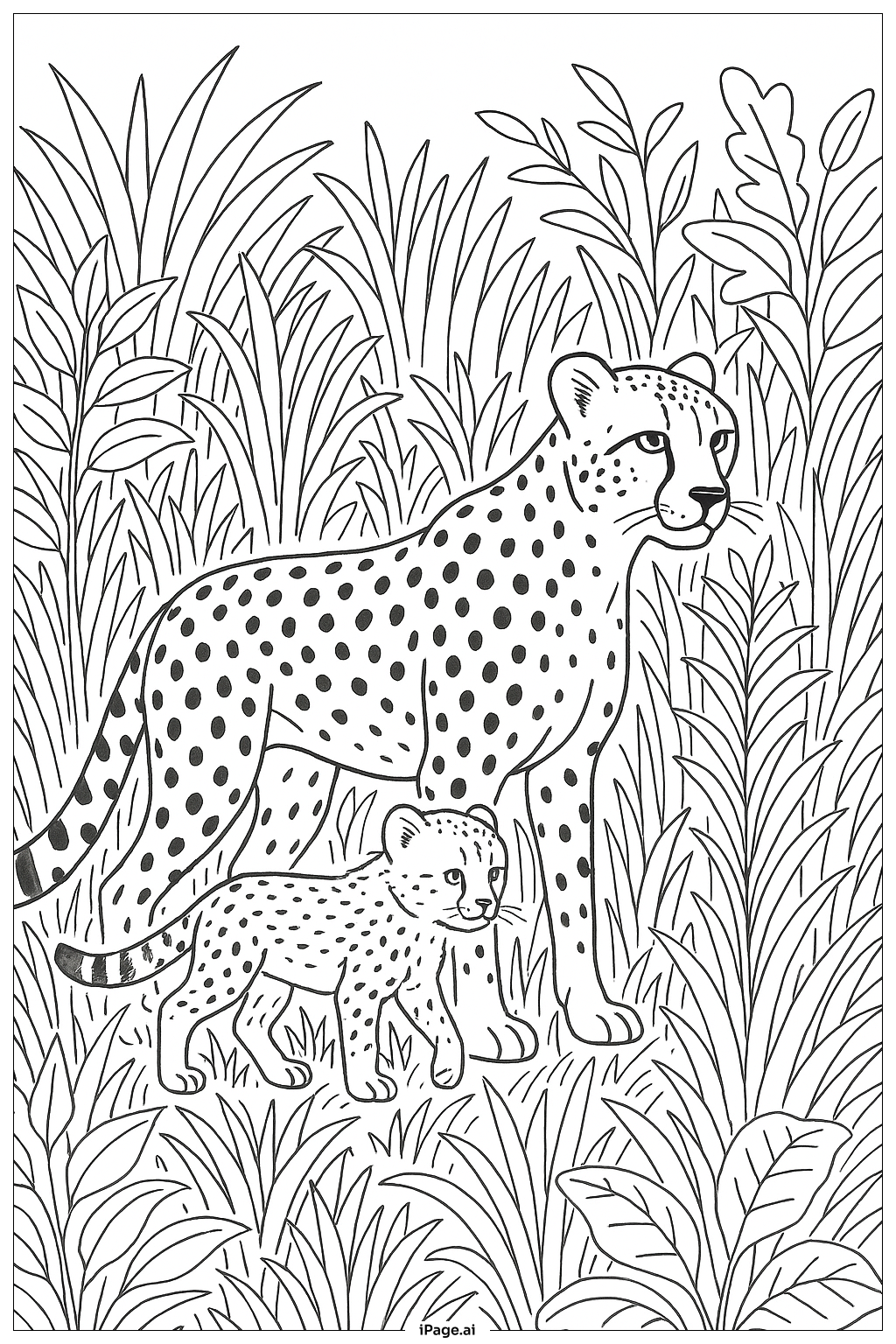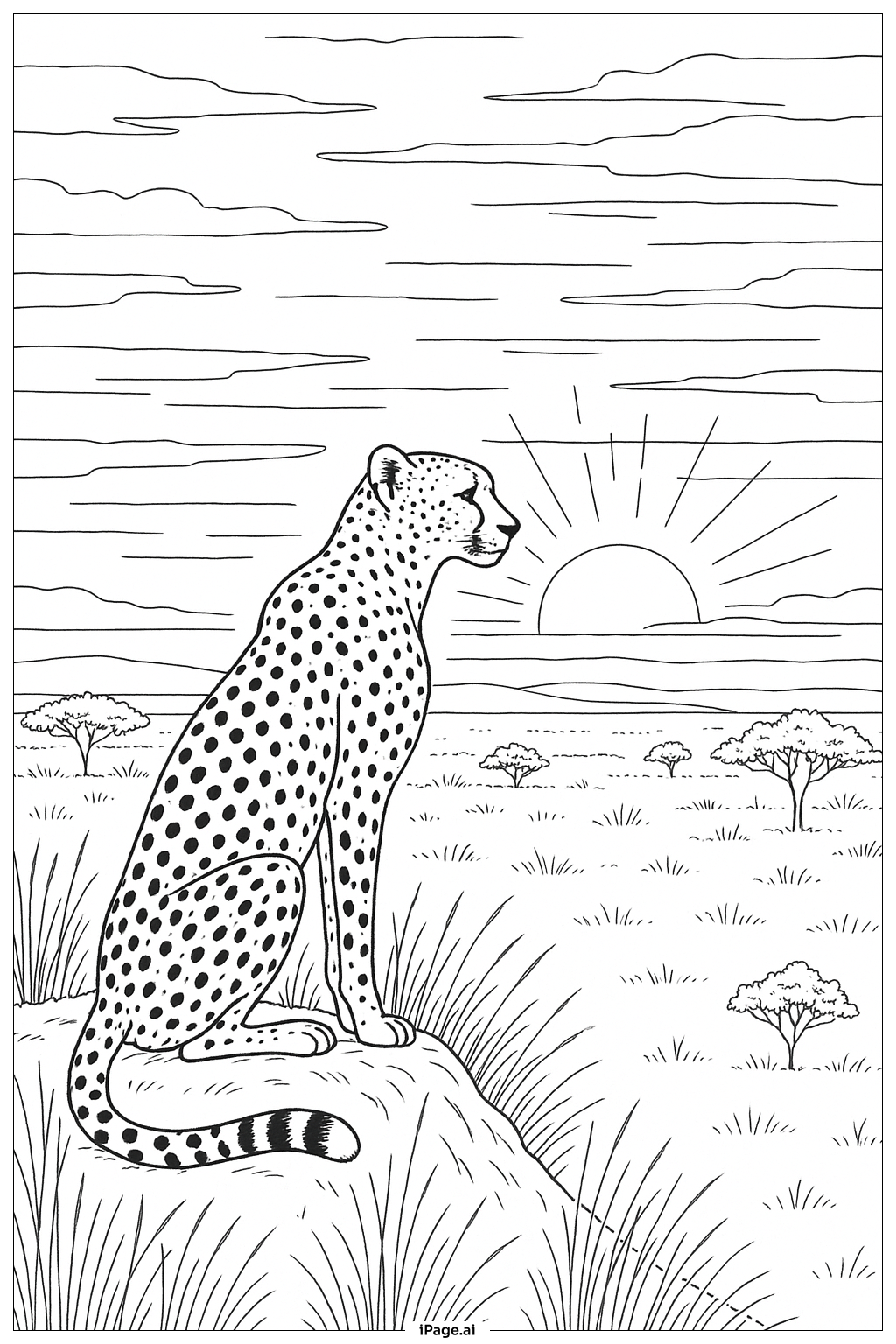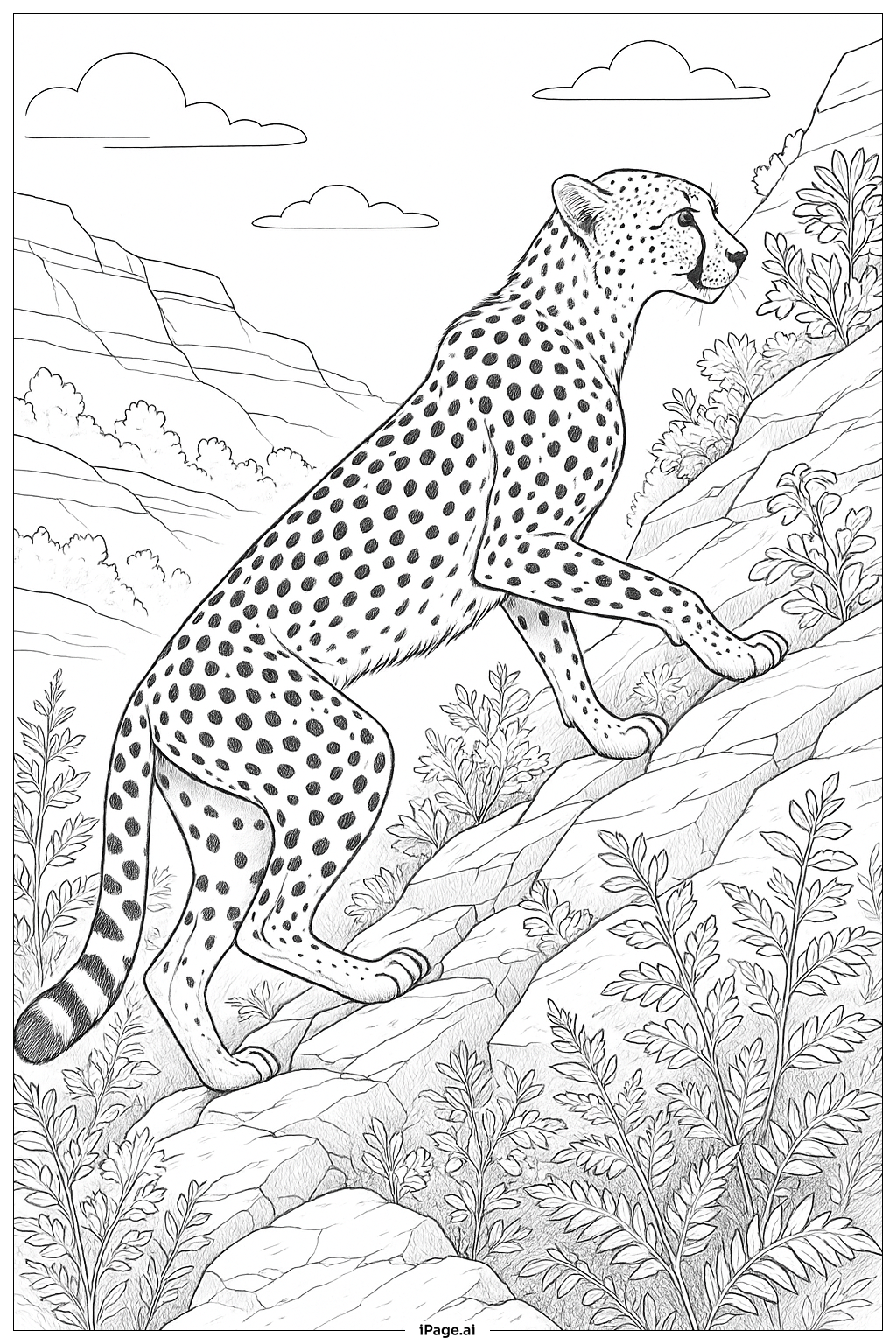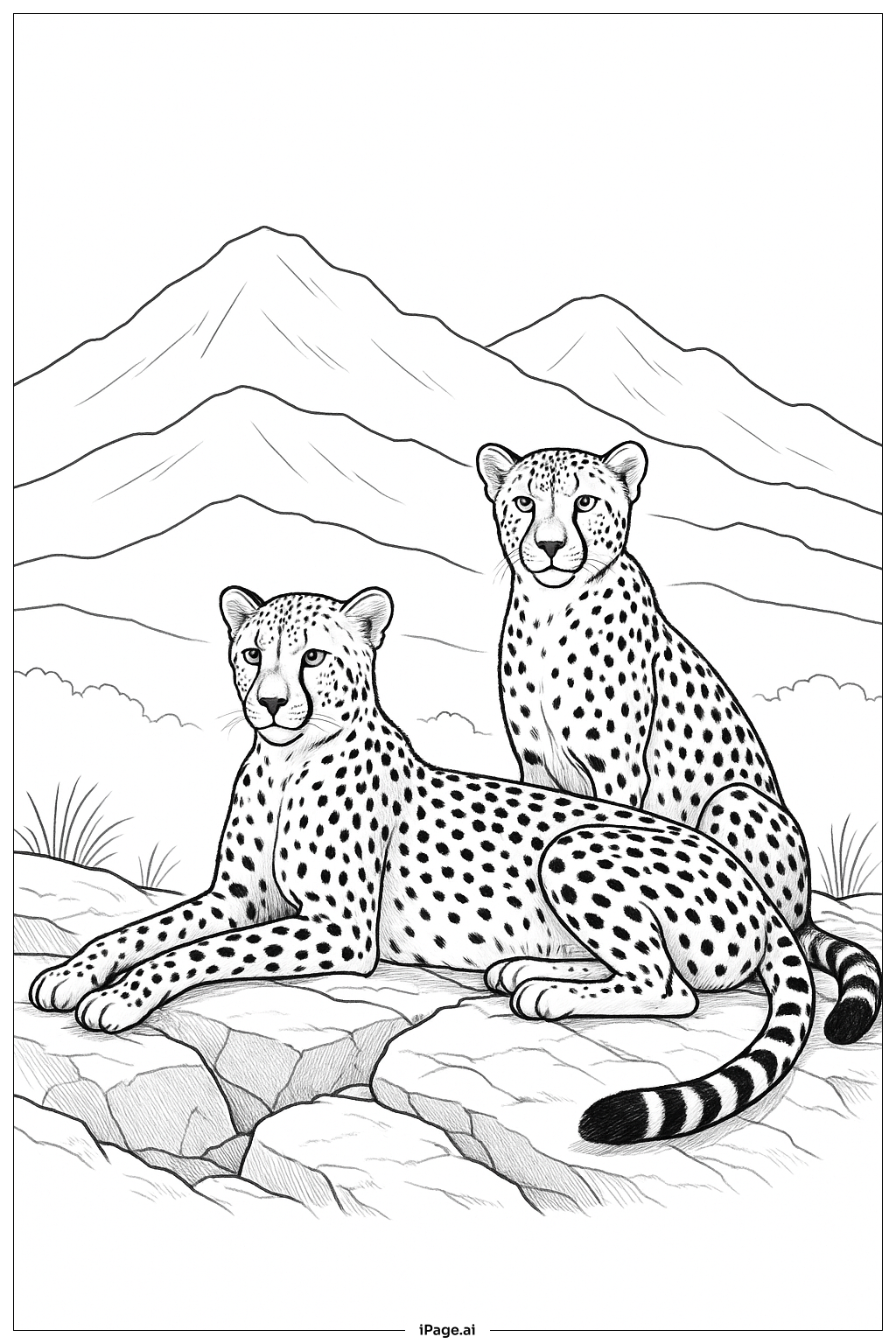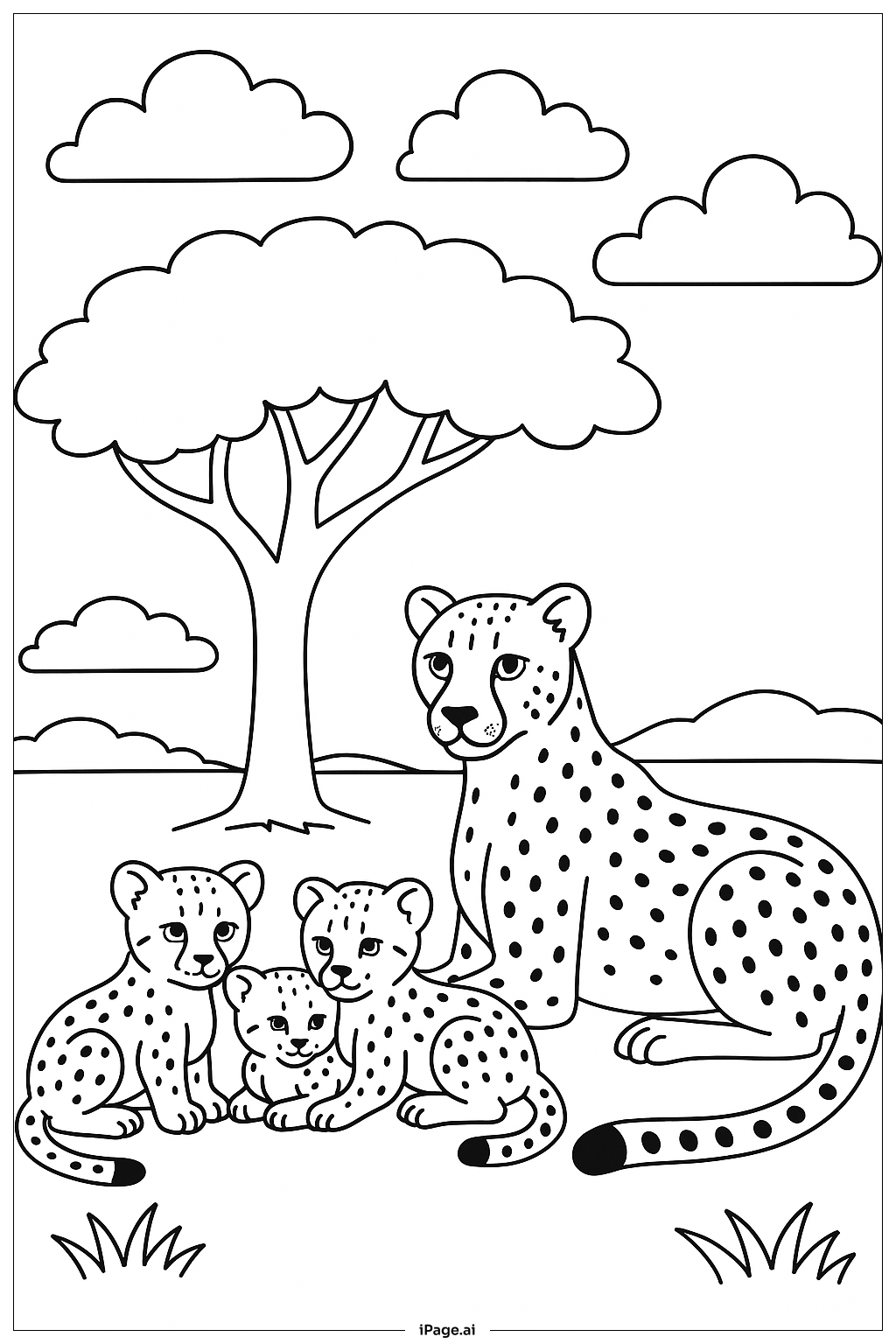
Coloring tips: How to color Cheetah Family Under Tree coloring page well?
For the cheetahs, use golden yellow or tan as the base coat color, then add black or dark brown spots throughout their fur. Make each spot unique in size and shape for a realistic look. Color their bellies and face markings with white or cream. Use black for the distinctive tear marks running from their eyes to their mouths. The acacia tree trunk can be colored in shades of brown and gray, while the leaves work beautifully in various greens. Try mixing yellow-green for sunlit leaves and darker forest green for shaded areas. The savanna grass can be golden yellow, tan, or light brown to show the dry season, or fresh green if you prefer a rainy season scene. Add a bright blue sky with white clouds, and consider using orange, pink, or purple for a stunning sunset background. Don't forget to add shadows beneath the cheetahs and tree using light gray or purple to give your picture depth and make it come alive.
Coloring challenges: Which parts are difficult to color and need attention for Cheetah Family Under Tree coloring page?
• Spot Pattern Complexity: The cheetah's iconic spotted coat presents the biggest challenge in this coloring page. Each family member has hundreds of individual spots that need to be colored consistently. Young artists must carefully fill each spot without going outside the lines, which requires patience and fine motor control. The spots vary in size and are irregularly distributed across the body, making it time-consuming to complete. Keeping the spots dark and distinct while maintaining a lighter base coat requires planning which areas to color first.
• Fine Detail Work: The image contains numerous small details that demand precision coloring. The cheetah cubs' facial features, including eyes, noses, ears, and the characteristic tear marks, are intricate and small. The tree's branches create thin, intersecting lines that form complex patterns requiring careful attention. Grass tufts scattered throughout the scene add texture but need steady hands to color within their small boundaries. These delicate elements can be frustrating for younger children or those still developing pencil control.
• Layering and Depth: Creating realistic dimension in this scene requires understanding of shading and color blending. The tree's canopy needs darker and lighter greens to show leaf layers and shadows. The cheetahs' bodies require subtle shading to show their rounded forms and muscular structure. Background elements should be lighter than foreground subjects to create distance. This concept of atmospheric perspective and shadow placement challenges artists to think beyond simple flat coloring.
• Maintaining Consistency: With multiple cheetahs in the scene, keeping their coloring consistent presents a challenge. Each family member should have the same base color and similar spot intensity. The repetitive nature of coloring spots on several animals can lead to fatigue, causing variations in pressure or color choice. Younger artists may struggle to remember their initial color choices when moving from one cheetah to another, resulting in a mismatched family appearance.
Benefits of coloring books: Advantages of drawing Cheetah Family Under Tree coloring page
Coloring this cheetah family scene offers wonderful developmental benefits for children. The intricate spot patterns provide excellent practice for fine motor skills and hand-eye coordination, as young artists carefully fill each small shape. This activity builds concentration and patience, teaching children to work steadily on detailed projects over time. The family theme encourages emotional connection and discussions about animal families, nurturing, and protection in nature. Children learn about African wildlife and savanna ecosystems while being creative. The repetitive action of coloring spots can be calming and meditative, helping reduce stress and anxiety. This page also teaches color recognition and mixing as children experiment with earth tones and natural hues. Completing such a detailed picture builds confidence and provides a sense of accomplishment. The scene sparks imagination about wildlife and faraway places, encouraging curiosity about the natural world and different habitats around our planet.