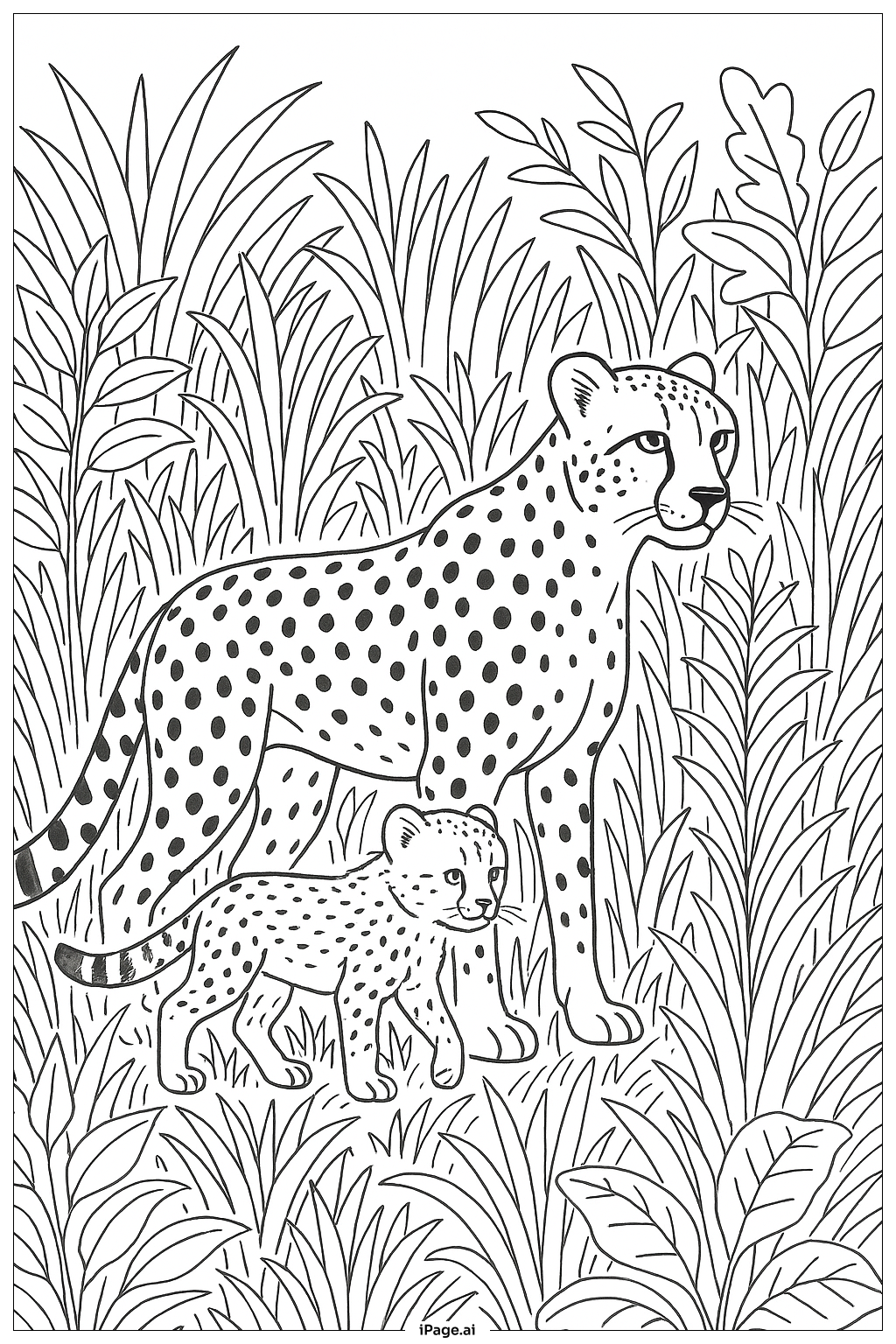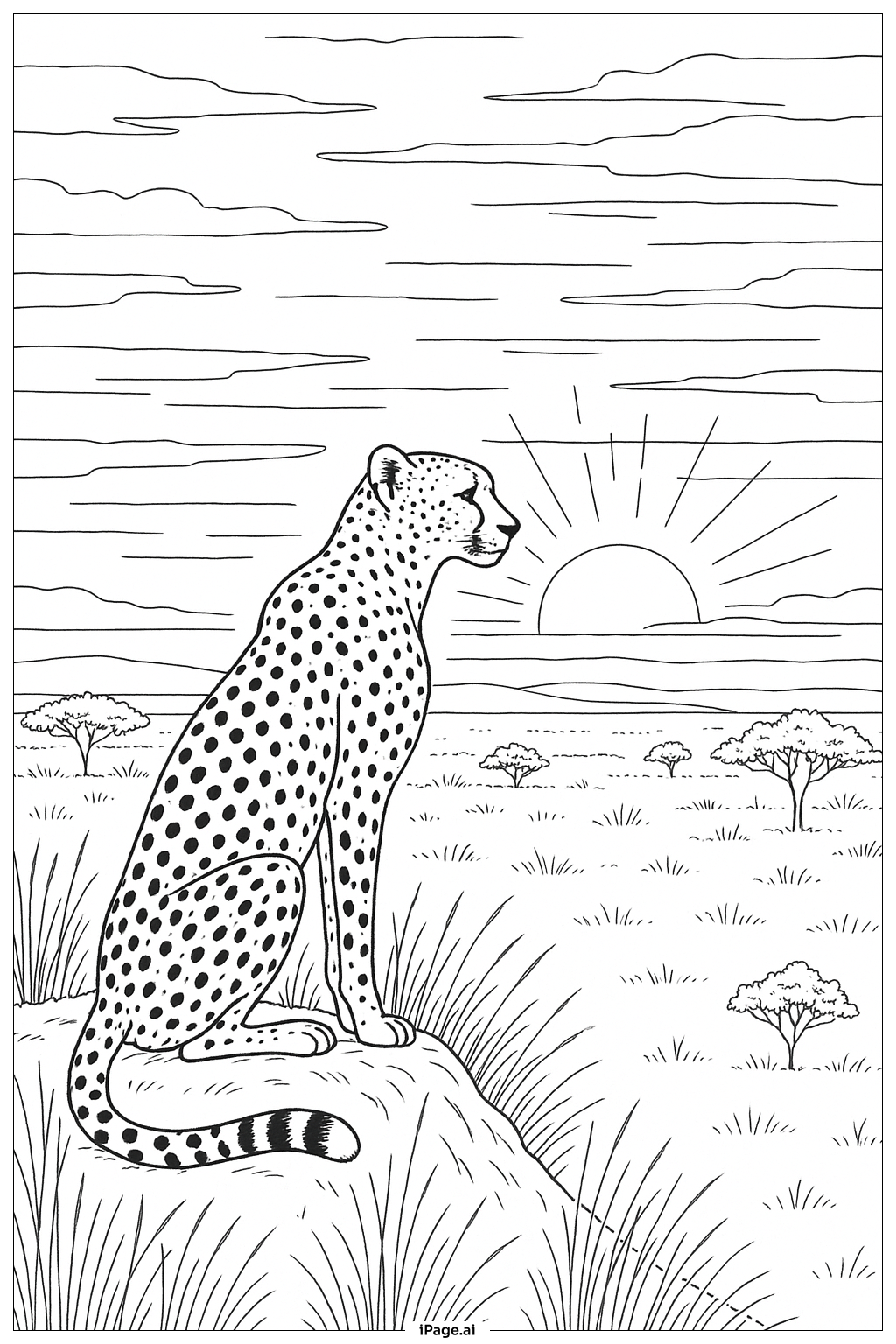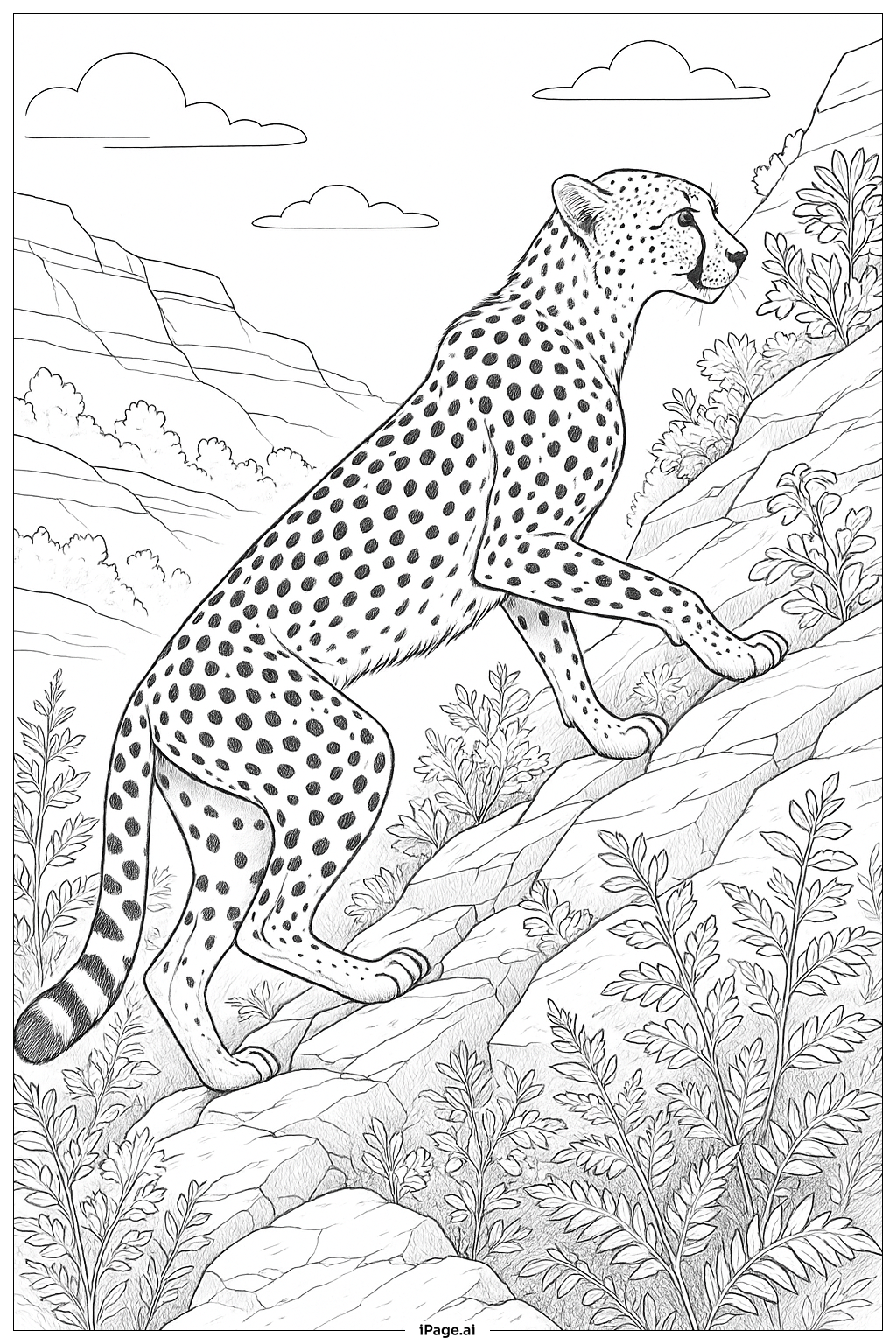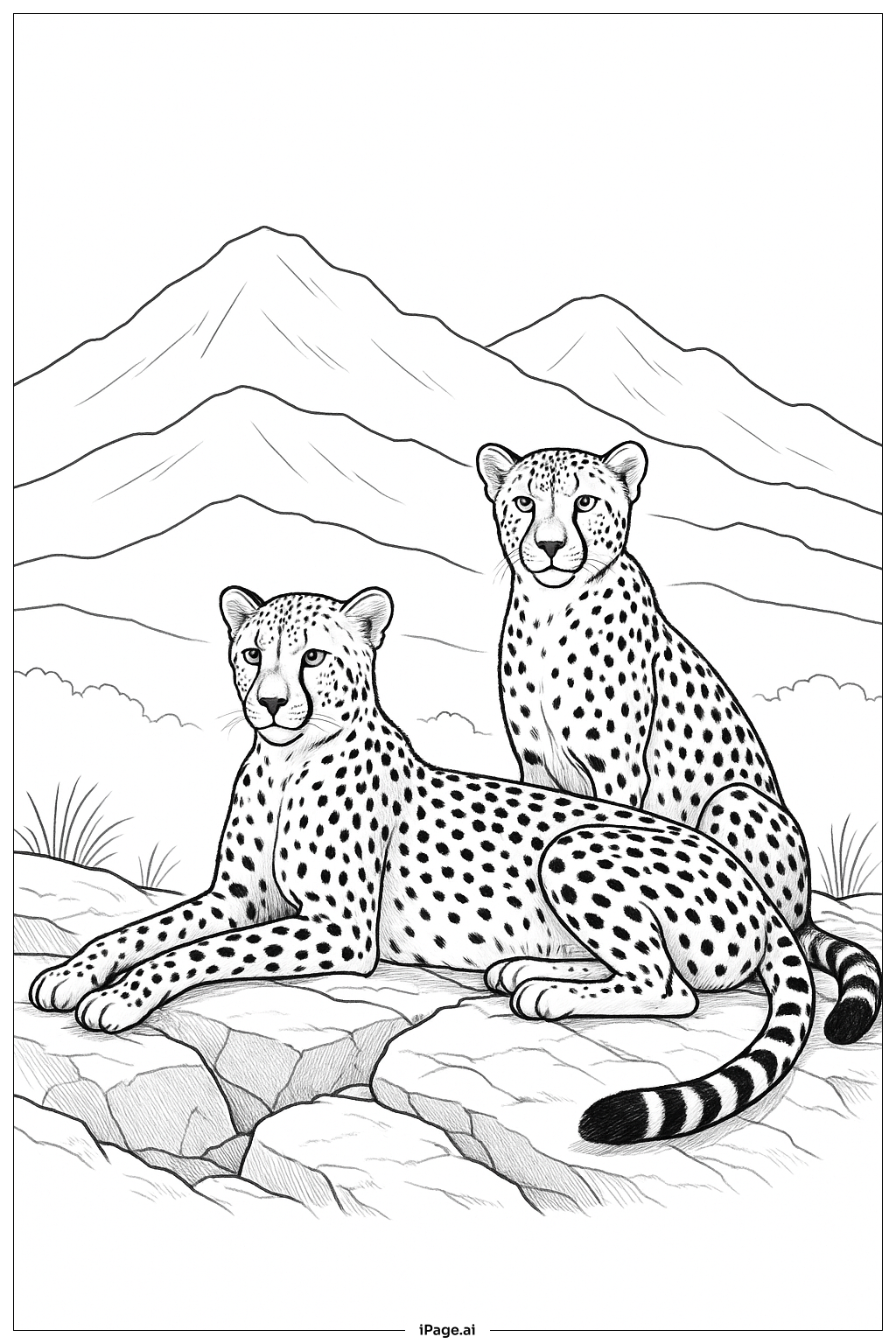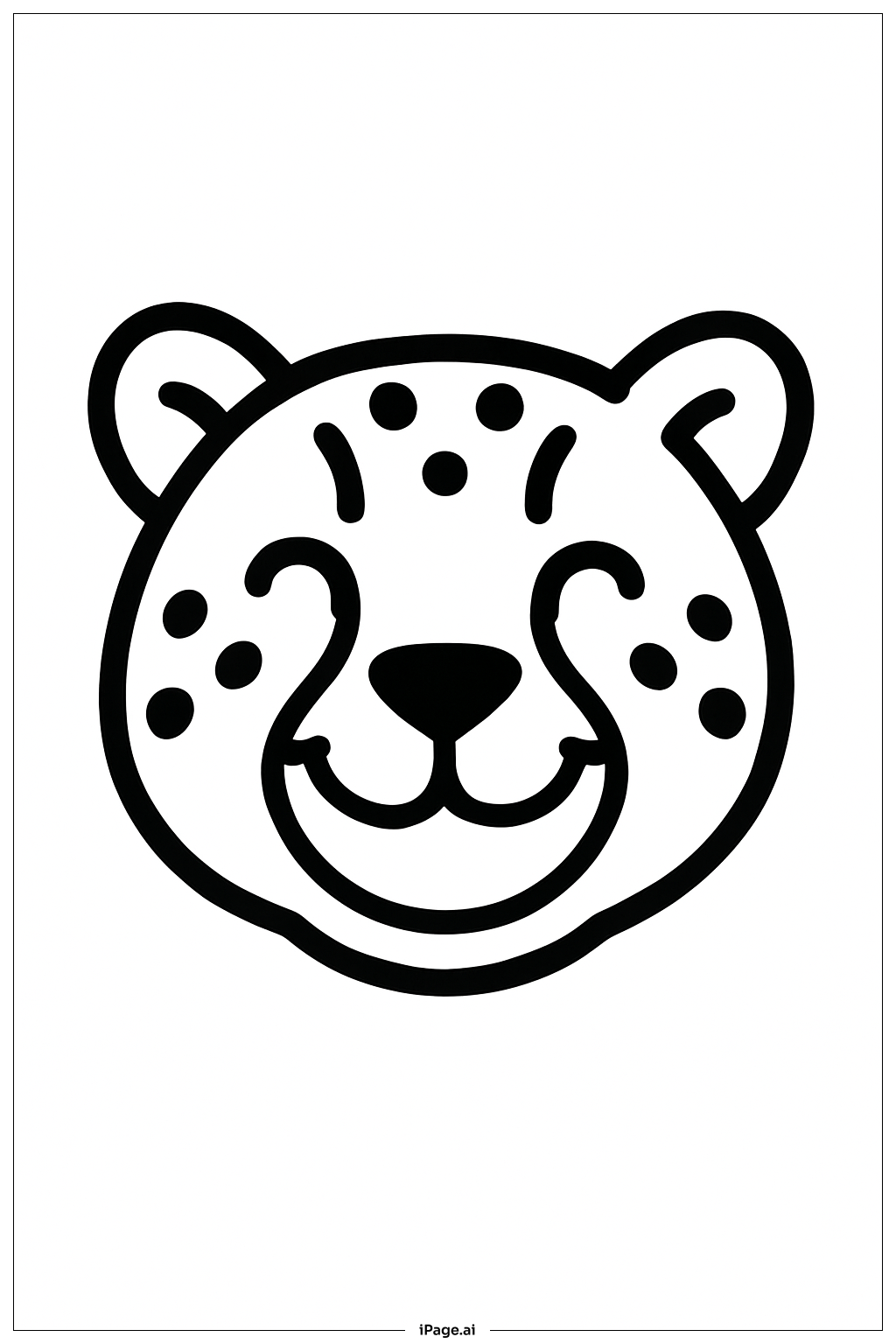
Coloring tips: How to color Cheetah Face Smile coloring page well?
Start with the cheetah's base coat using warm golden yellow or tan for the main facial areas. Use a darker orange-brown for shading around the edges of the face and under the chin to add depth. Color the distinctive spots with black, dark brown, or even chocolate brown, making them various sizes across the face. The iconic tear marks should be colored in black or very dark brown. For the eyes, try bright amber, golden yellow, or even green to make them sparkle. Add white highlights to the eyes for extra life. The nose can be pink, black, or brown. Consider using a lighter cream or off-white color for the muzzle area around the mouth and smile. For a creative twist, you might experiment with unusual color combinations like purple spots or blue-tinted fur while keeping the overall cheetah pattern recognizable.
Coloring challenges: Which parts are difficult to color and need attention for Cheetah Face Smile coloring page?
• Spot Pattern Consistency: The cheetah's signature spots require careful attention to maintain even color density and consistent shapes throughout the entire face. Young artists may find it challenging to color within each individual spot without going outside the lines, especially when spots are clustered closely together. The varying sizes of spots across different facial areas demand patience and steady hand control.
• Tear Mark Precision: The distinctive black tear marks running from the eyes to the mouth are narrow curved lines that need precise coloring to maintain their characteristic appearance. Staying within these thin lines while achieving solid color coverage can be difficult, particularly for younger children who are still developing fine motor control.
• Facial Contour Shading: Creating realistic depth and dimension on the cheetah's face requires understanding where to apply lighter and darker shades. The rounded curves of the cheeks, forehead, and muzzle need gradual color transitions to avoid a flat appearance, which can be complex for beginners to execute smoothly.
• Eye Detail Work: The large expressive eyes contain multiple small areas including pupils, irises, and highlight spots that need different colors in tight spaces. Achieving the bright, lively look requires careful color selection and precise application within these small circular sections.
• Background Integration: Deciding whether to add a background and choosing colors that complement rather than overwhelm the cheetah's spotted pattern requires color theory knowledge and artistic judgment that may challenge less experienced colorists.
Benefits of coloring books: Advantages of drawing Cheetah Face Smile coloring page
Coloring this cheerful cheetah face helps children develop essential fine motor skills through the detailed spot work and precise line control needed throughout the image. The repetitive action of filling in numerous spots strengthens hand-eye coordination and builds patience. Learning about the cheetah's distinctive markings, including the unique tear marks and spotted pattern, provides an engaging introduction to wildlife and animal anatomy. The friendly, smiling expression promotes positive emotional connections with nature and wild animals, fostering empathy and appreciation for wildlife conservation. Children practice important decision-making skills when selecting color combinations and determining shading techniques. The variety of areas, from large facial sections to tiny spots, accommodates different skill levels and builds confidence as colorists progress from simpler to more challenging sections. This coloring page encourages creativity while teaching about one of nature's fastest and most fascinating creatures.