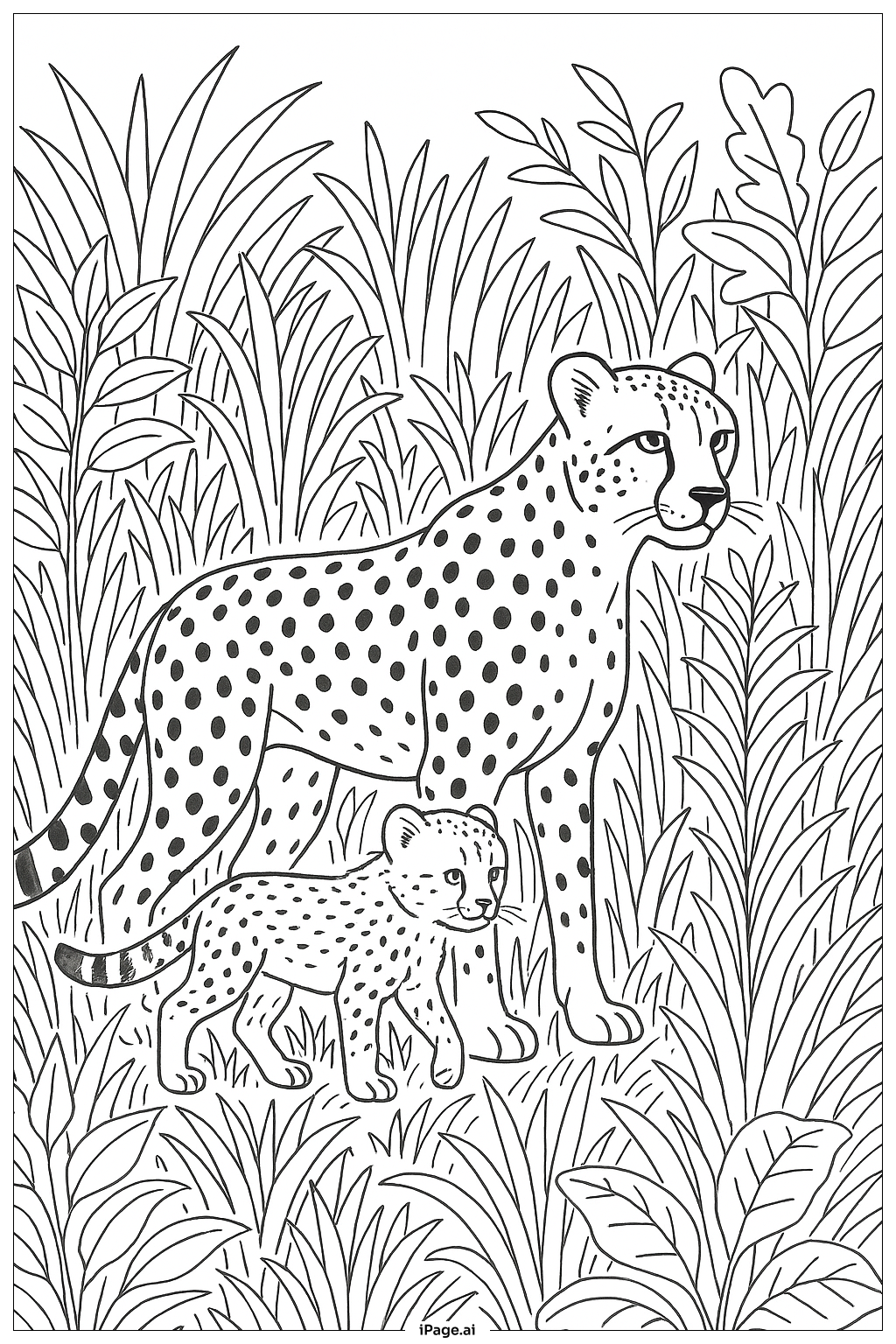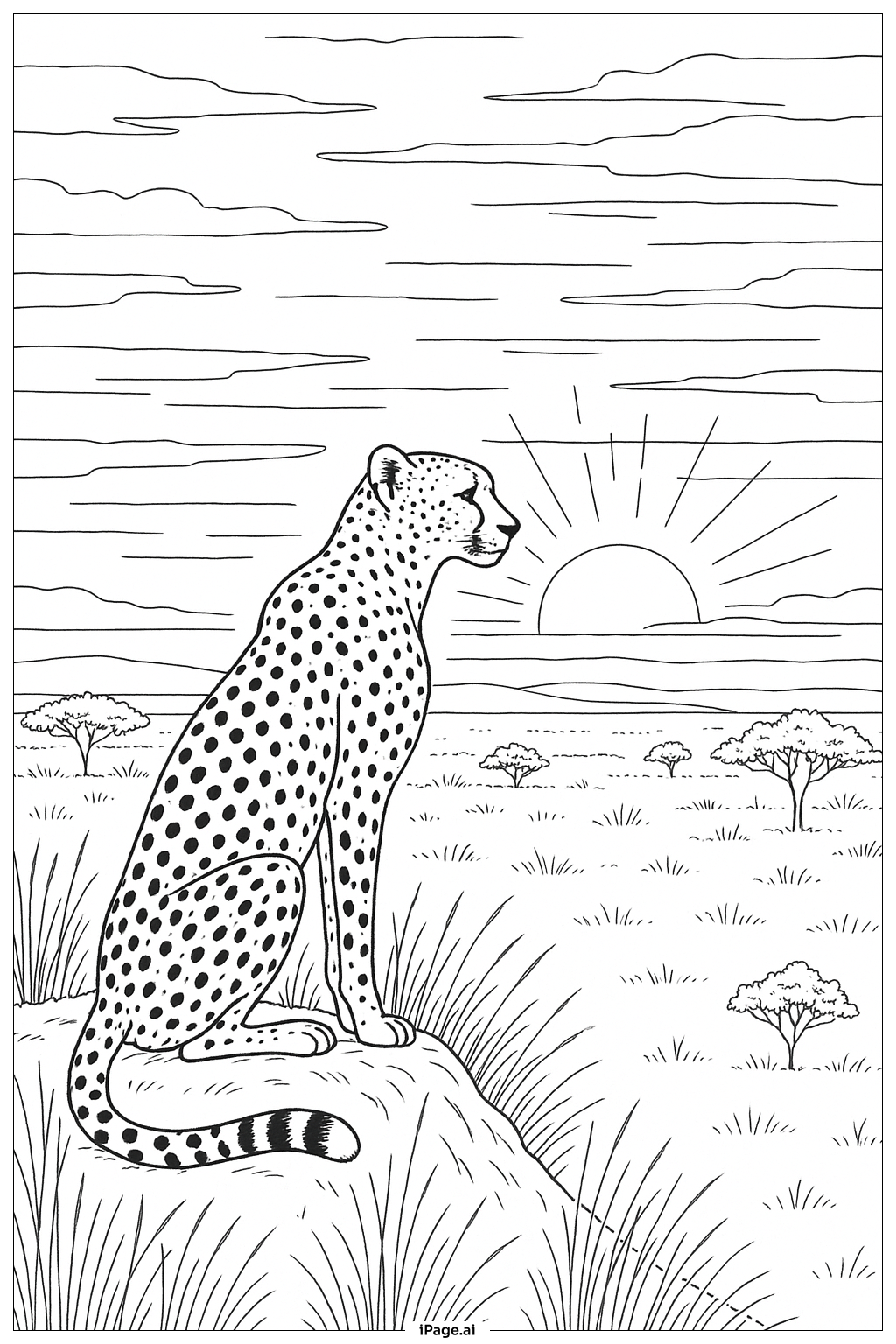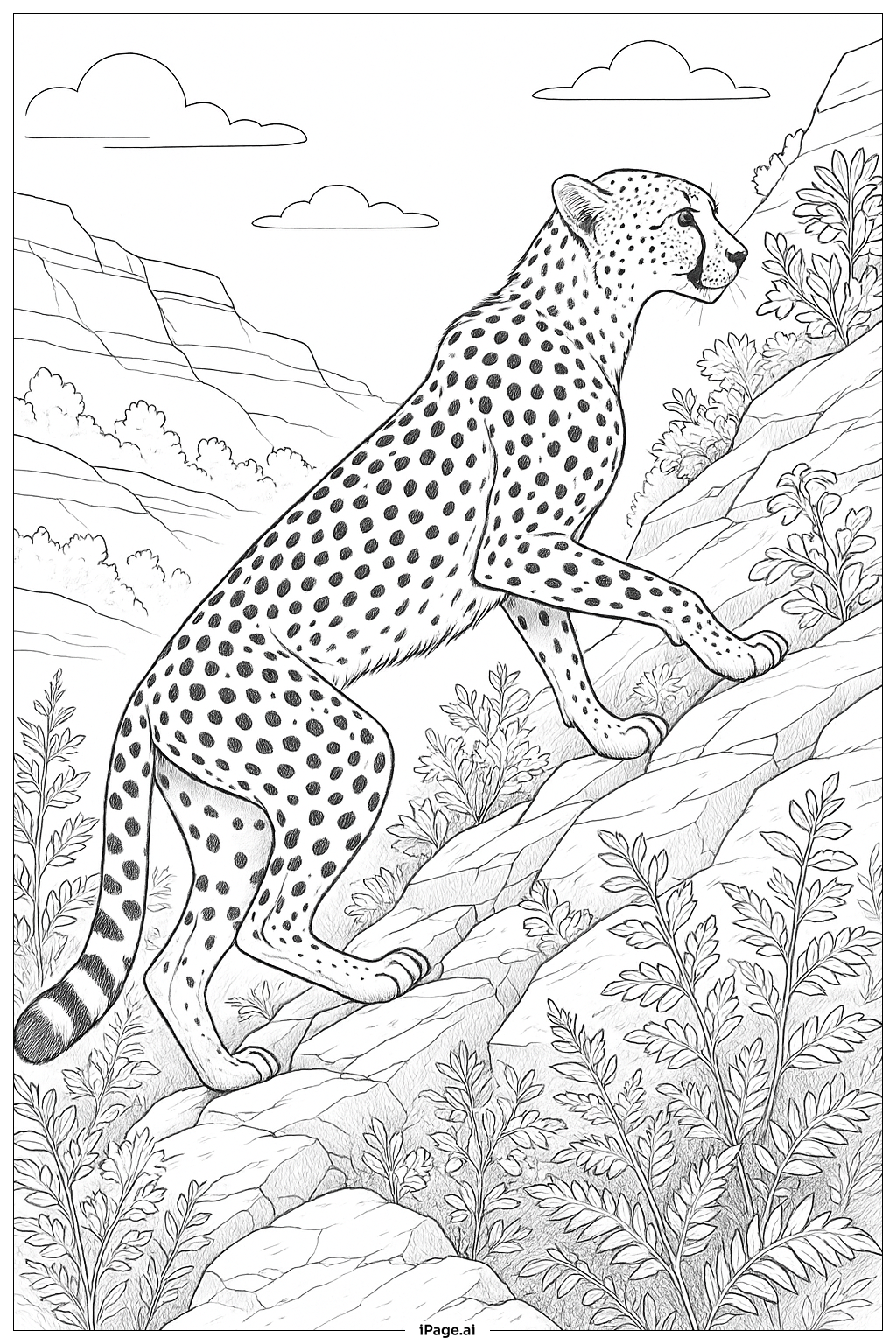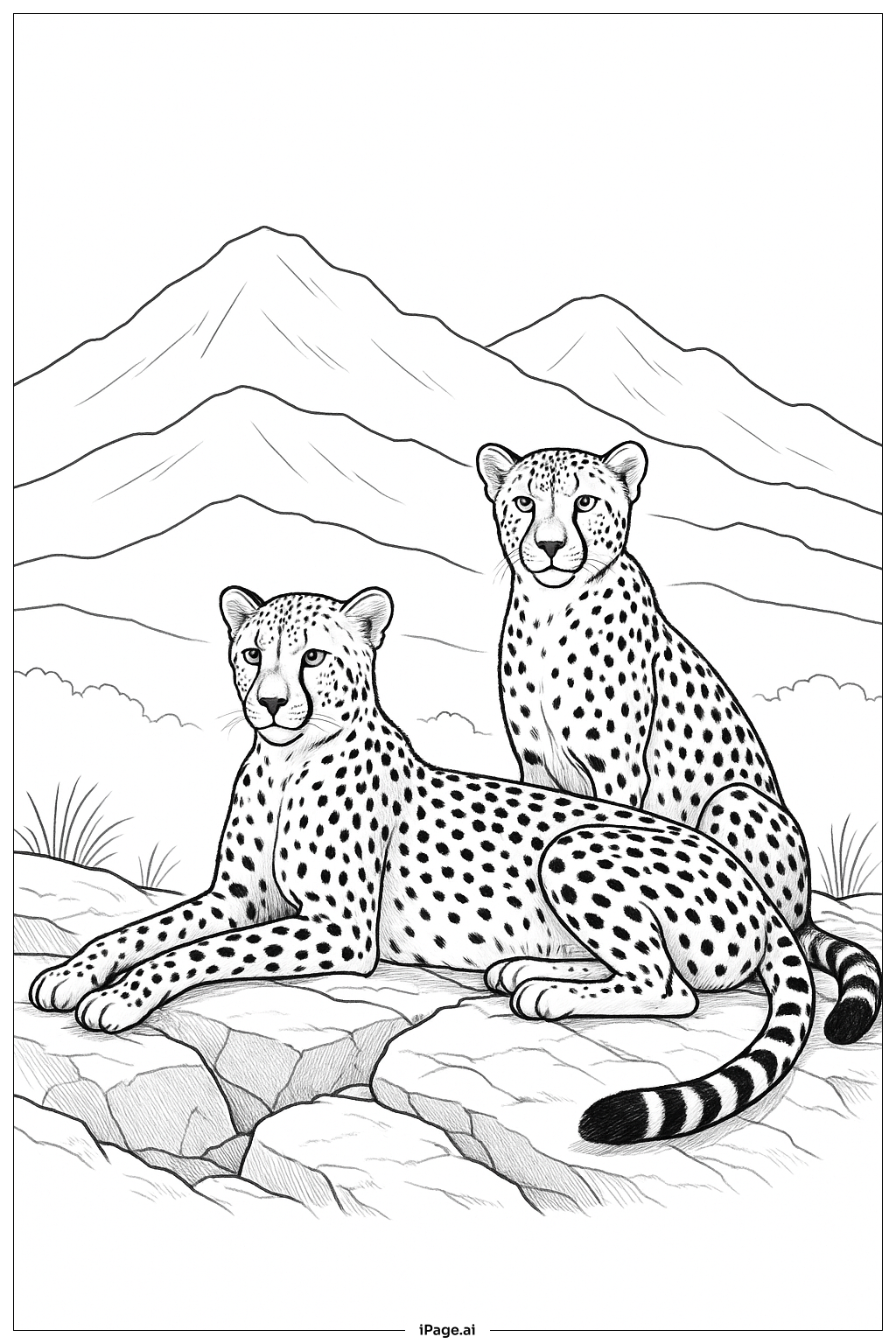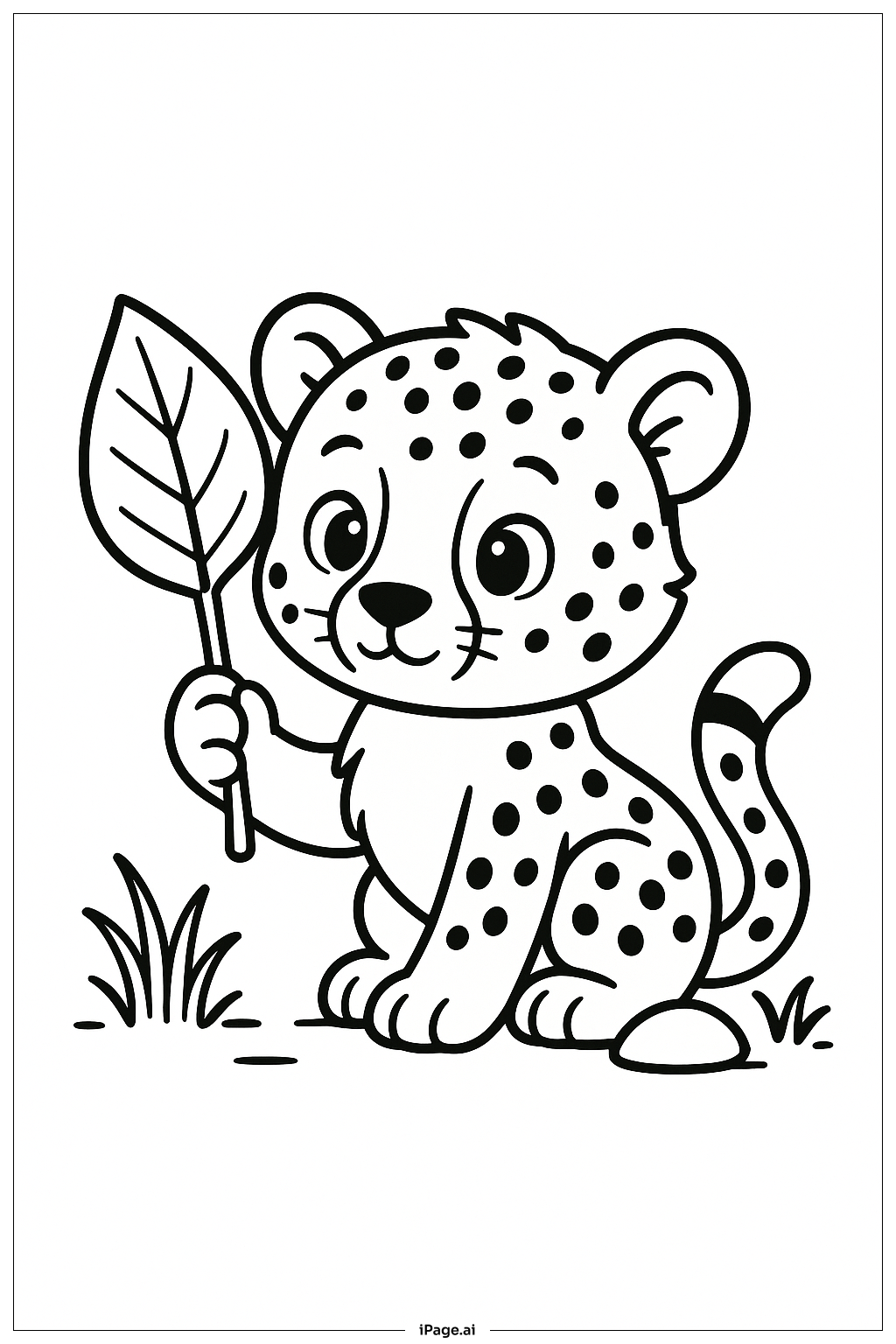
Coloring tips: How to color Cheetah Cub With Leaf coloring page well?
Use yellow or light orange shades for the cheetah's body to show its real color. Color the spots and the tip of the tail with black or dark brown. The leaf can be colored in different shades of green to make it look fresh and lively. Use light green or brown for the grass and grey or brown for the rock. You can add some shading with darker tones around the edges of the cheetah to give a three-dimensional look. Don't forget to color the eyes with a bright color like blue or green to make them stand out.
Coloring challenges: Which parts are difficult to color and need attention for Cheetah Cub With Leaf coloring page?
1. Small Spots: Coloring the many small spots neatly can be tricky for younger children as it requires control and precision.
2. Leaf Details: The leaf has sharp lines showing the veins, which might be hard to color inside without going over the lines.
3. Different Textures: Coloring the cheetah’s fur, leaf, grass, and rock with different textures and colors needs careful attention to keep each part distinct.
4. Curved Lines: The cub’s rounded shapes mean children need to follow the curves smoothly to color evenly.
5. Eyes and Facial Features: Coloring the eyes and small facial features need careful work to keep the character cute and expressive without coloring outside the lines.
Benefits of coloring books: Advantages of drawing Cheetah Cub With Leaf coloring page
Coloring this page helps children practice fine motor skills and hand-eye coordination by filling in small areas like the spots and leaf veins. It also encourages creativity as they choose colors and experiment with shading. The simple yet detailed design teaches children to focus and be patient when coloring. Additionally, it introduces them to animal recognition and nature, sparking curiosity about wildlife. The fun and friendly cheetah cub design keeps children engaged and motivated to complete the coloring page.