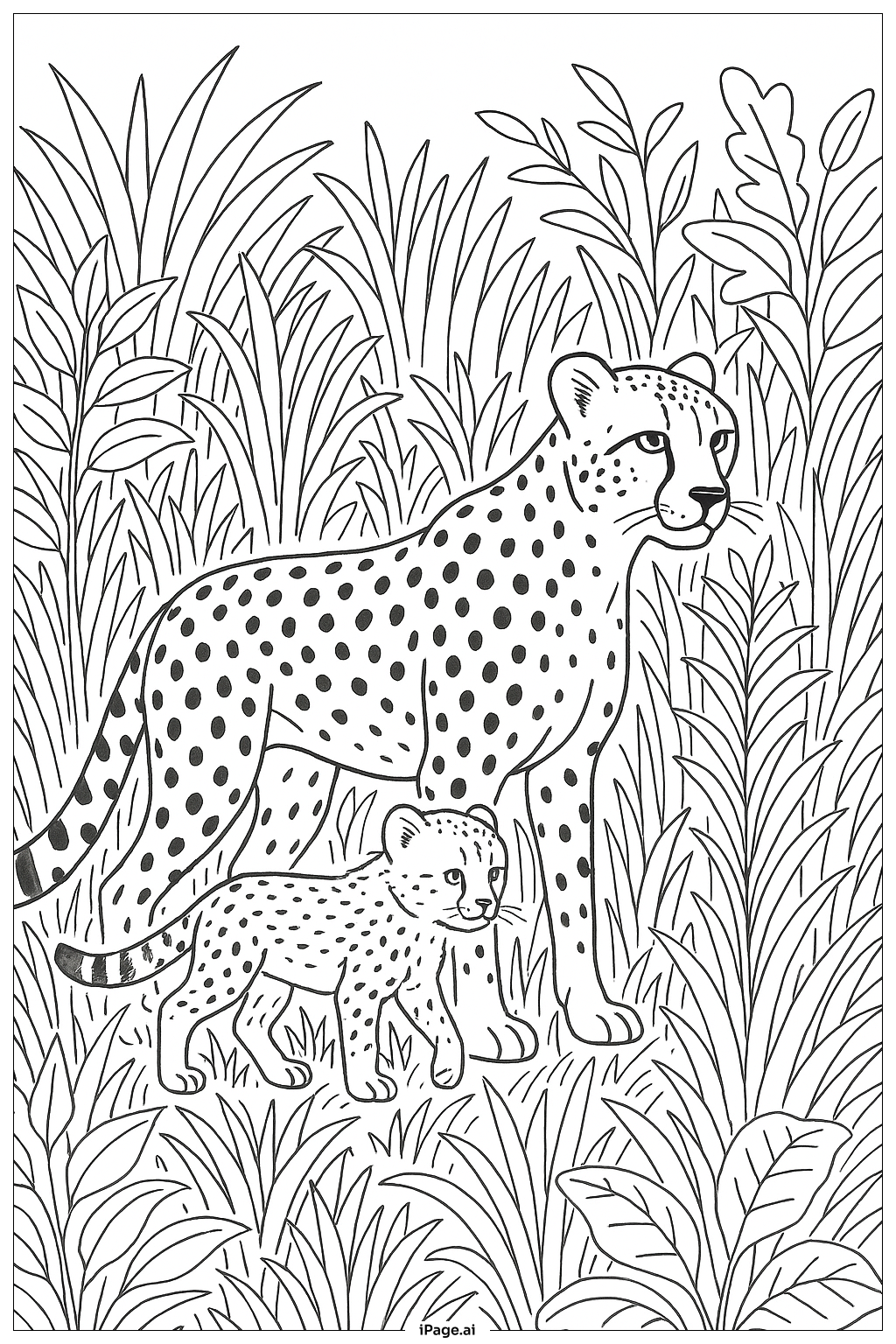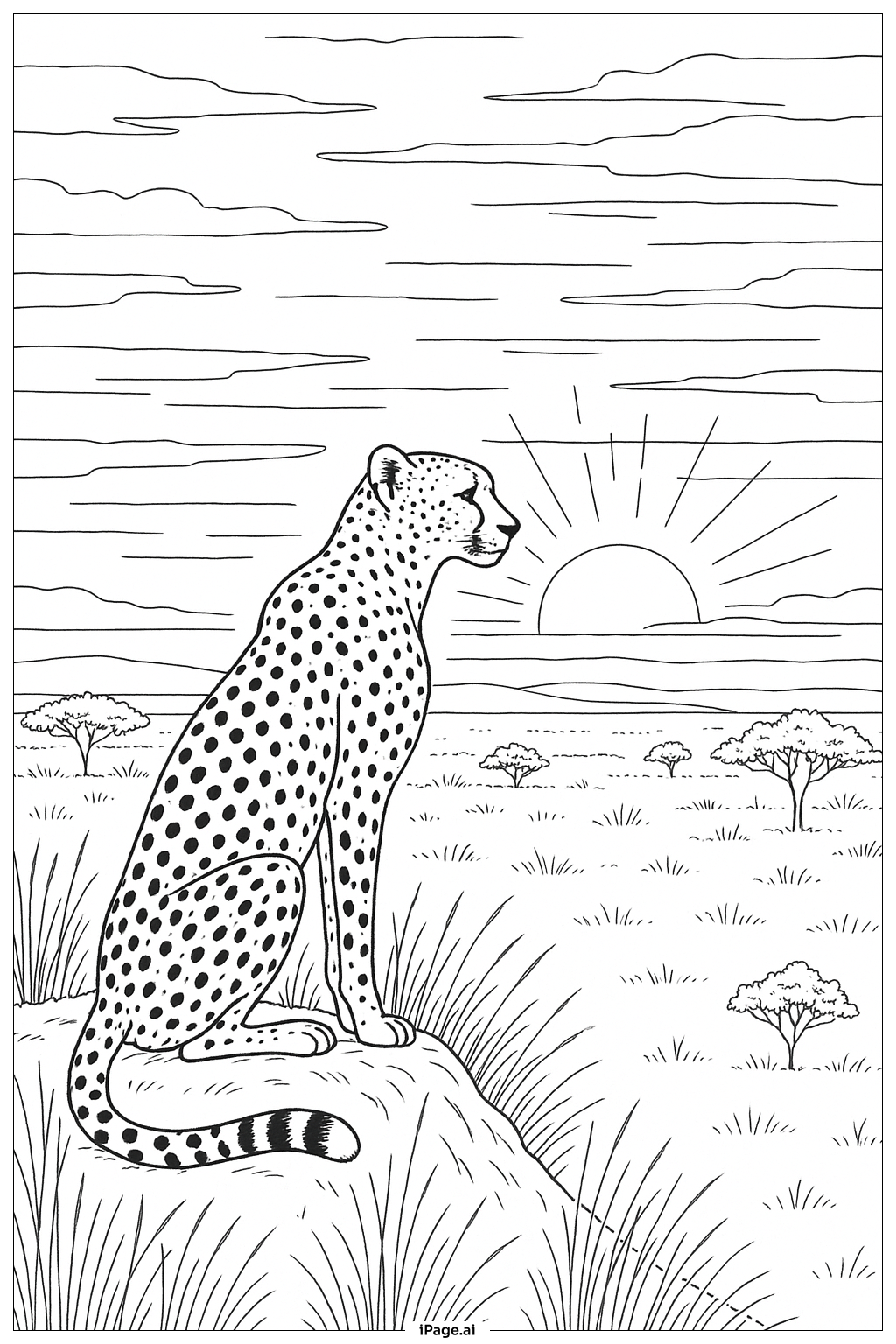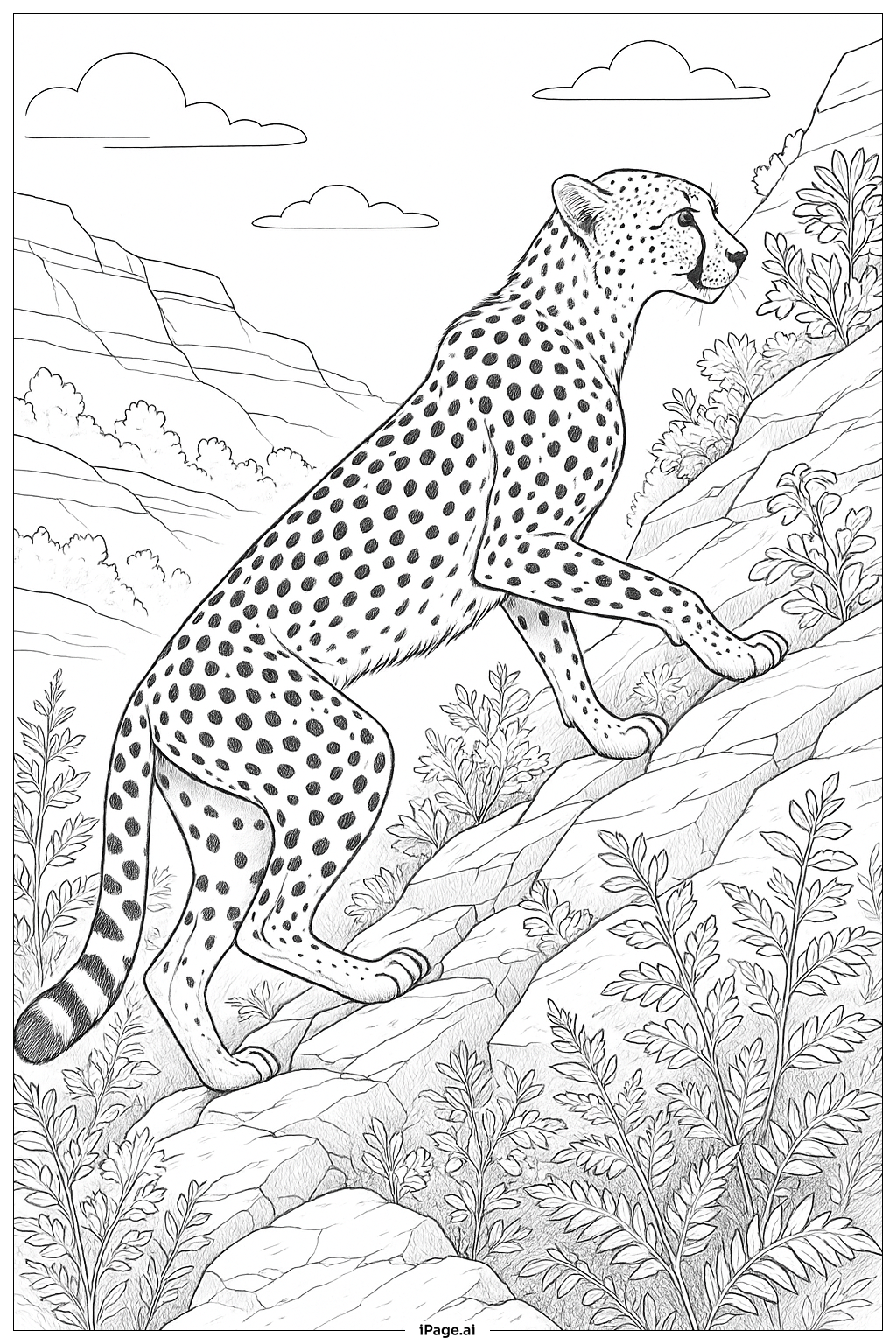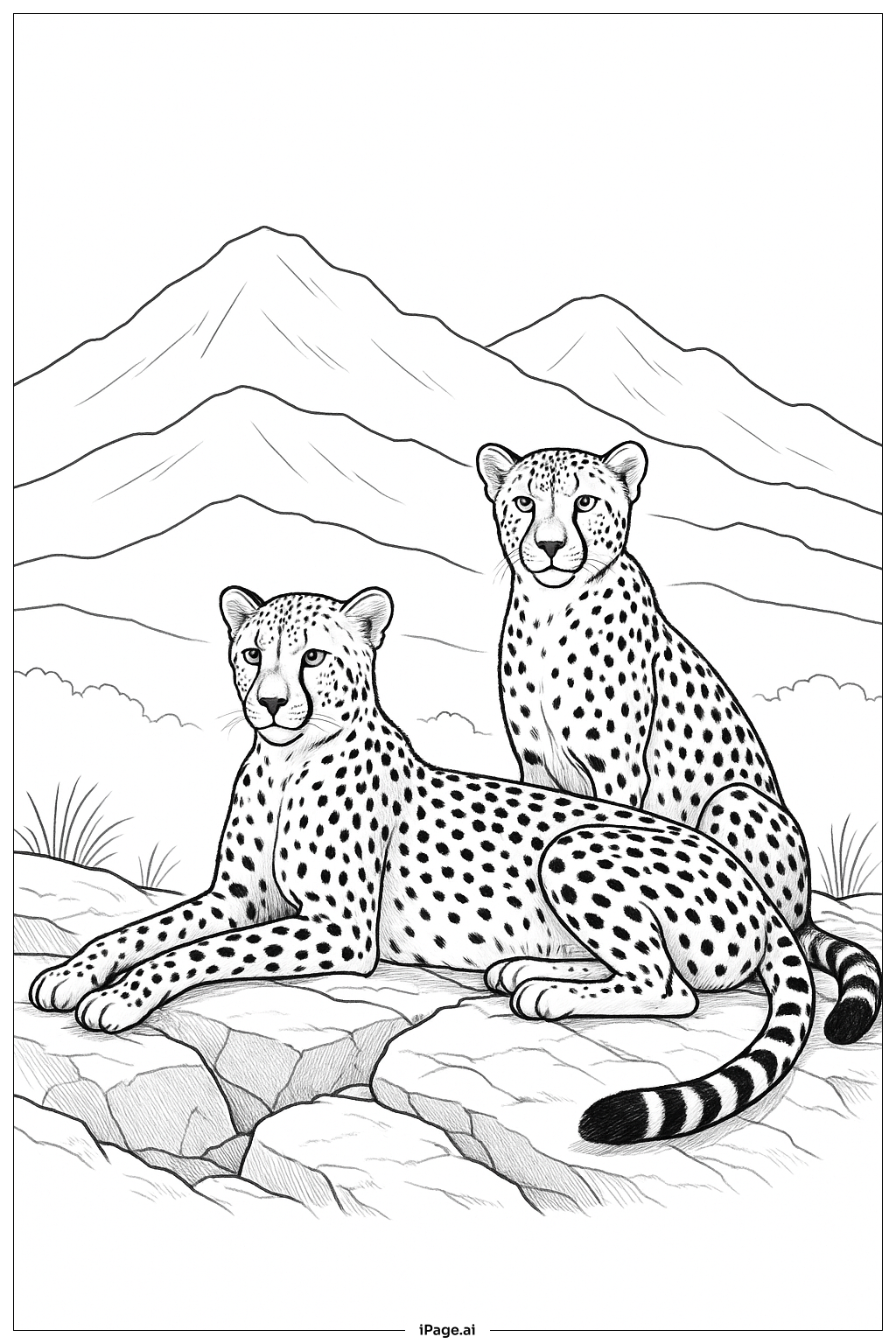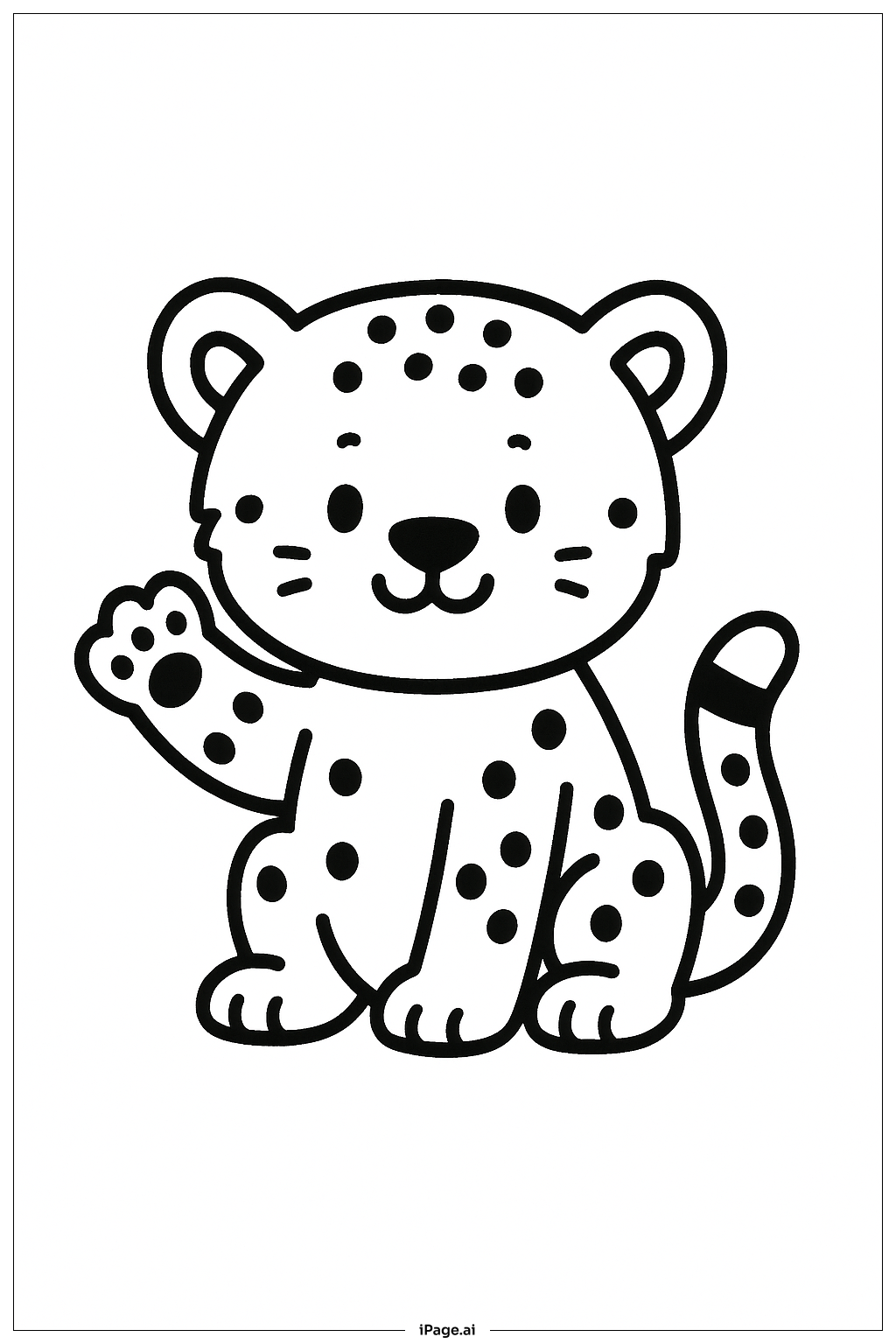
Coloring tips: How to color Cheetah Cub Waving coloring page well?
Start with the lightest colors first and work toward the darker ones. Use a warm golden yellow or tan shade as the base coat for the cub's body. Once dry, carefully add the dark brown or black spots on top. For the face, use a slightly lighter shade around the muzzle and inner ears. The eyes can be colored in bright amber or golden tones to bring them to life. Add a small pink blush to the cheeks for an extra cute touch. The nose can be a soft pink or brown. Use a white or light cream color for the belly area. The background can be left plain or filled with soft greens and blues to suggest a sunny savanna. Take your time with the spots — they make the cheetah look real and special. Have fun mixing shades to give the fur some depth and texture.
Coloring challenges: Which parts are difficult to color and need attention for Cheetah Cub Waving coloring page?
• Spot Pattern Consistency: One of the biggest challenges is coloring the cheetah's signature spots evenly across the body. The spots vary in size and are scattered in an irregular pattern, so it takes patience to fill each one neatly without accidentally blending them into the base fur color. Younger colorists may find it tricky to stay inside the small rounded shapes.
• Fur Shading and Texture: Creating a realistic or visually appealing fur effect requires blending multiple tones of yellow, tan, and brown. Flat single-color coverage can make the cub look stiff. Achieving a soft, layered look with colored pencils or markers demands careful pressure control and smooth color transitions, which can be challenging for beginners.
• Facial Details: The cub's face has several small features packed closely together — eyes, nose, mouth, cheeks, and inner ear markings. Coloring these tiny areas with precision without smudging neighboring sections requires a sharp, fine-tipped tool. Getting the eyes to look bright and expressive is particularly rewarding but also tricky.
• Raised Paw and Waving Pose: The waving paw has small toe pads and subtle line details that are easy to miss or overcolor. Keeping the paw looking natural while still adding color and definition takes a gentle, controlled hand.
• Background Balance: Deciding how to color the background without overshadowing the cub can be a creative challenge. Choosing colors that complement the warm tones of the cheetah without clashing requires a basic sense of color harmony, which younger children are still developing.
Benefits of coloring books: Advantages of drawing Cheetah Cub Waving coloring page
Coloring this cheerful cheetah cub page offers a wide range of wonderful benefits for kids. First, it builds fine motor skills. Carefully filling in spots, fur, and tiny facial features trains small hand muscles and improves pencil control. These skills directly support handwriting and everyday tasks. Second, it encourages focus and patience. Completing a detailed image like this teaches children to slow down, concentrate, and work step by step — habits that help in school and beyond. Third, it sparks creativity. Choosing colors for the fur, spots, and background gives kids the freedom to make their own artistic choices, boosting confidence and imaginative thinking. Fourth, it introduces children to the natural world. The cheetah cub image opens up conversations about wild animals, their habitats, and why they matter — turning a fun activity into a gentle learning moment. Fifth, it supports emotional well-being. Coloring is calming and meditative. It gives children a healthy outlet for energy and emotions, helping them feel relaxed and accomplished when they finish. Overall, this page is a joyful and enriching activity for any young artist.