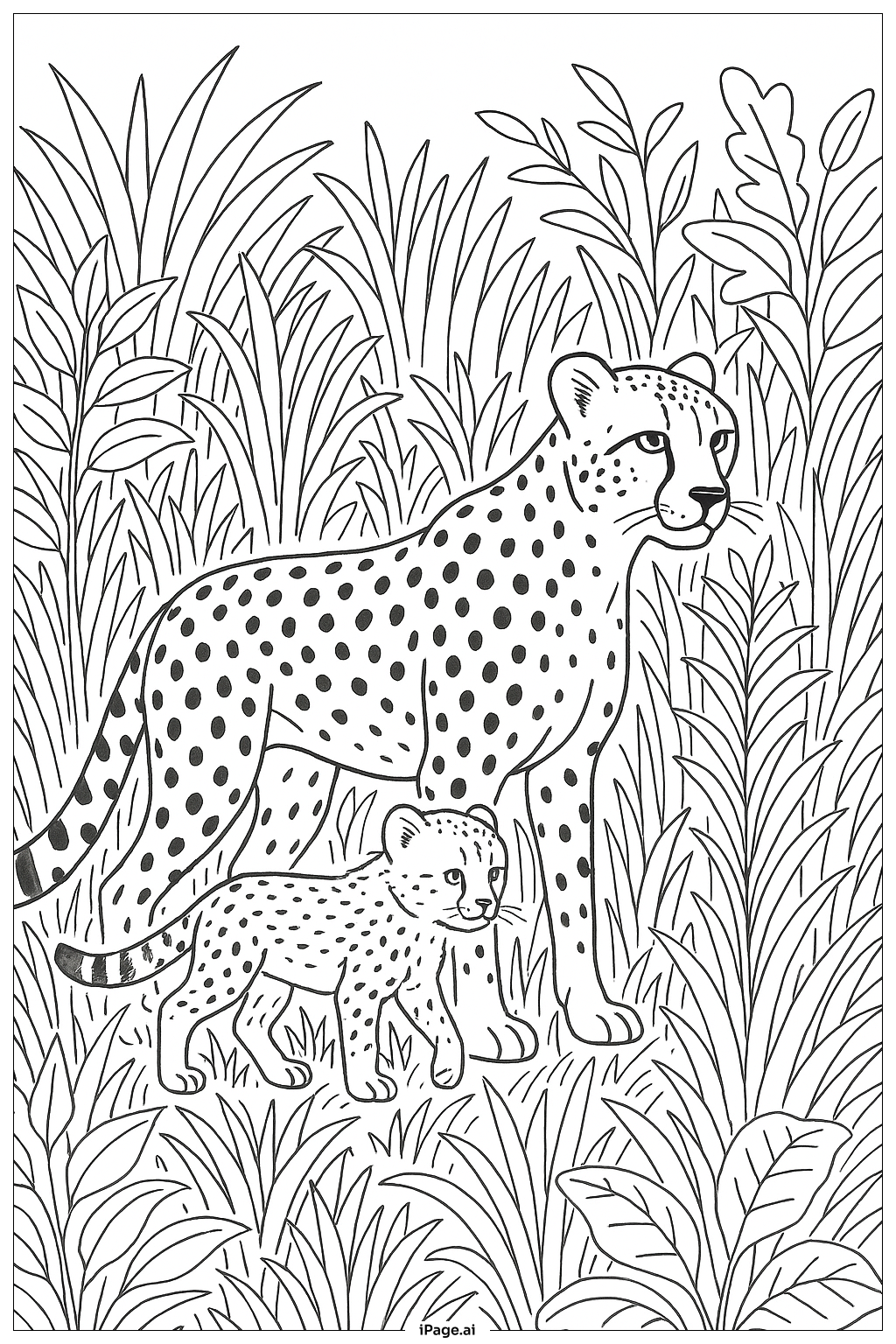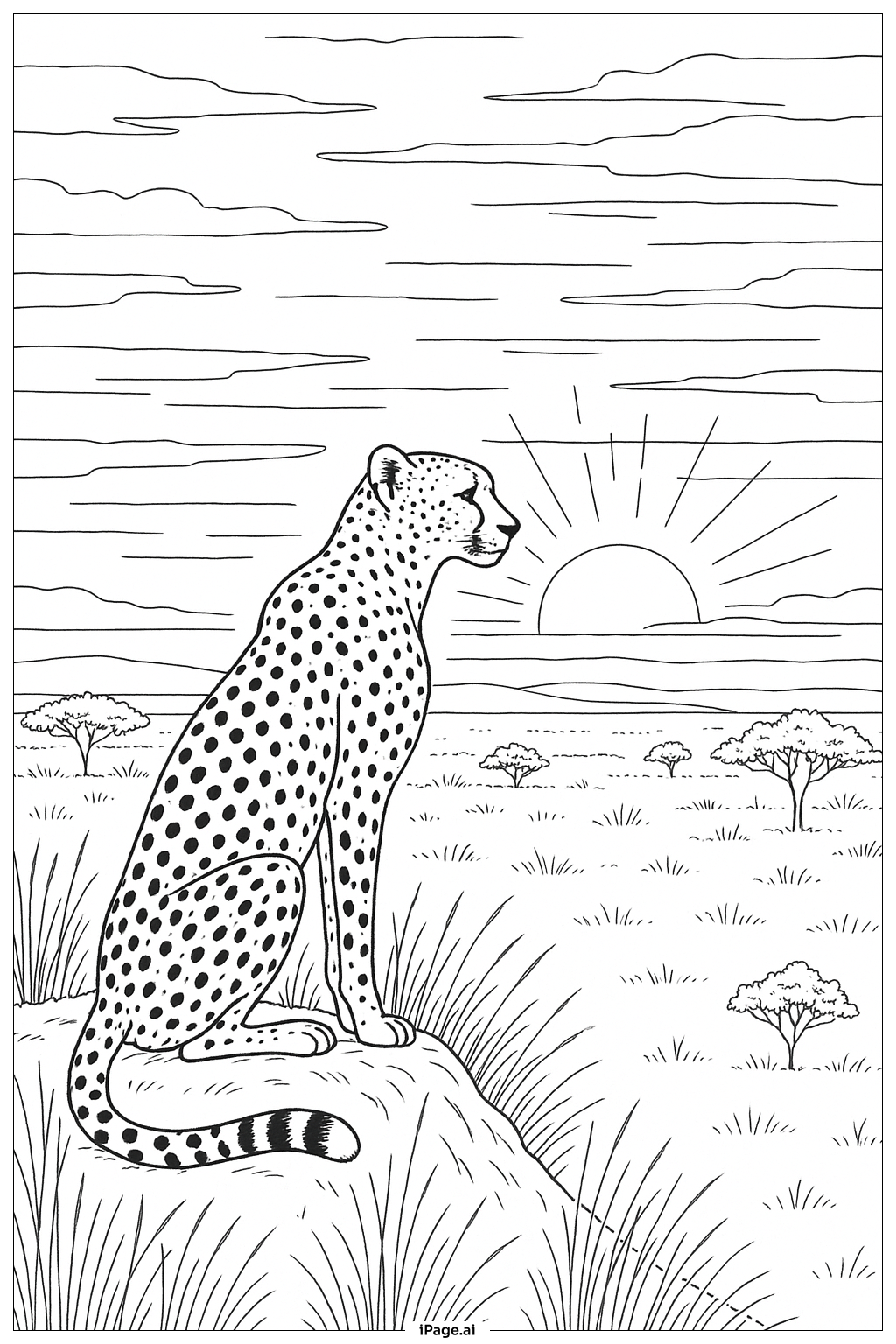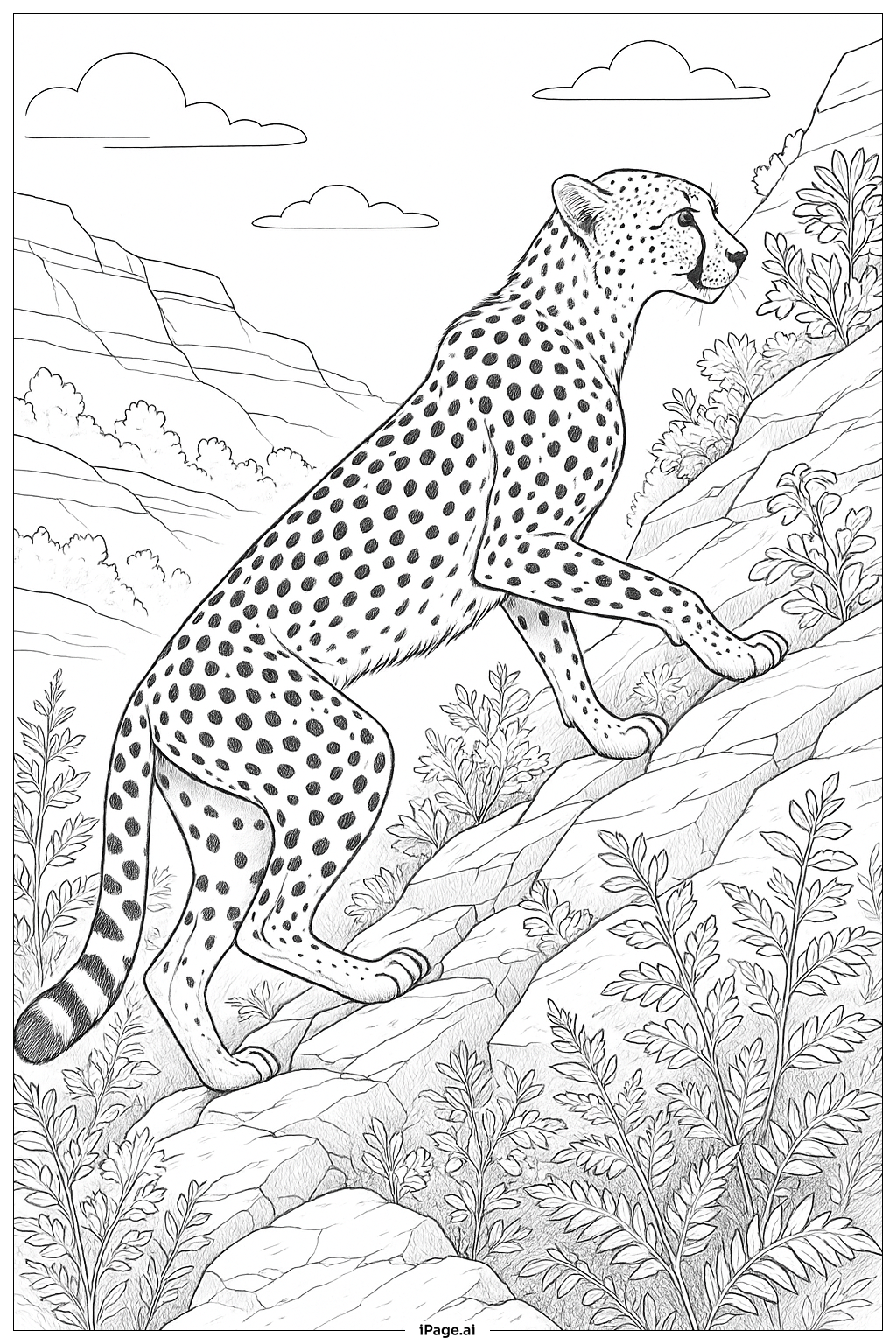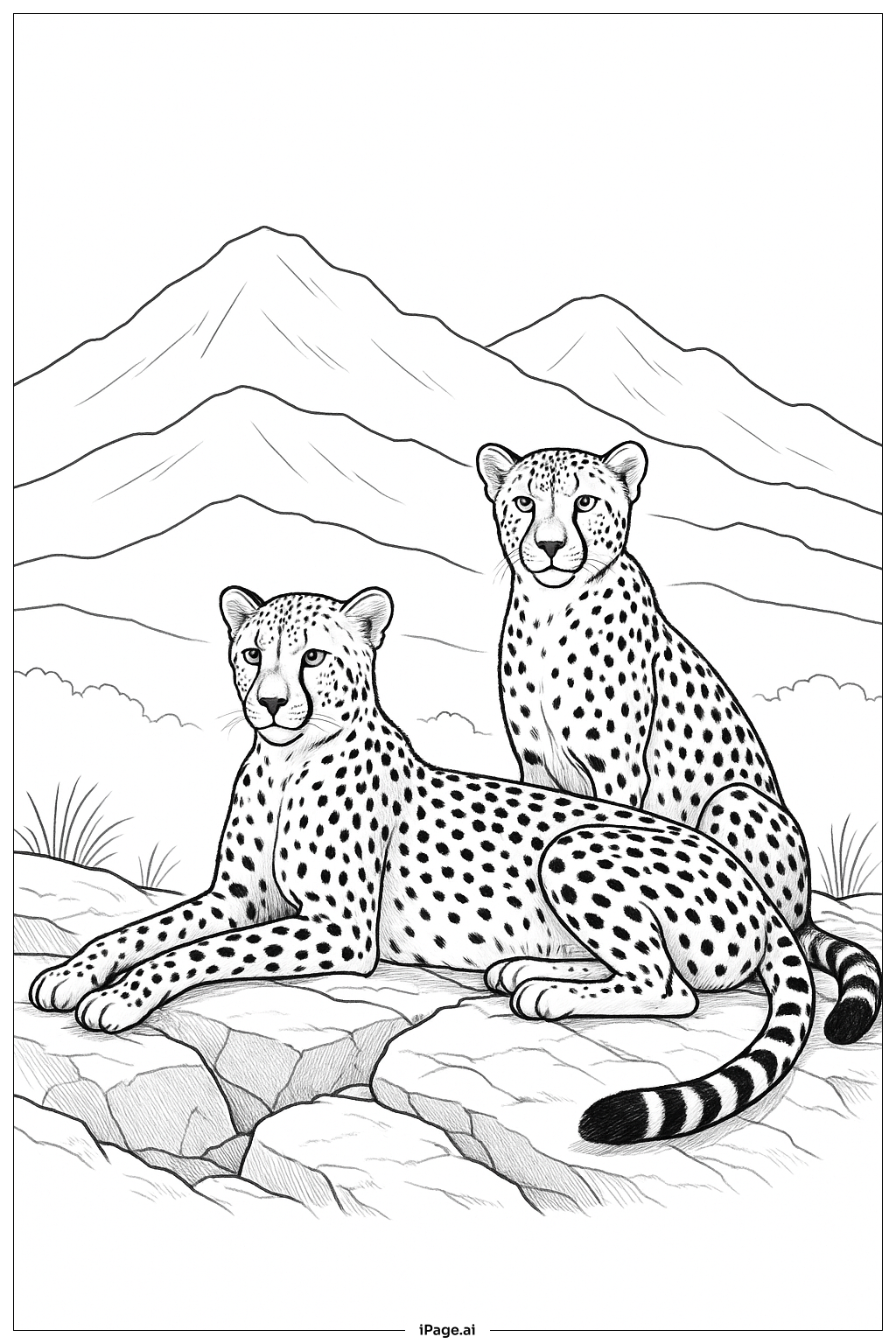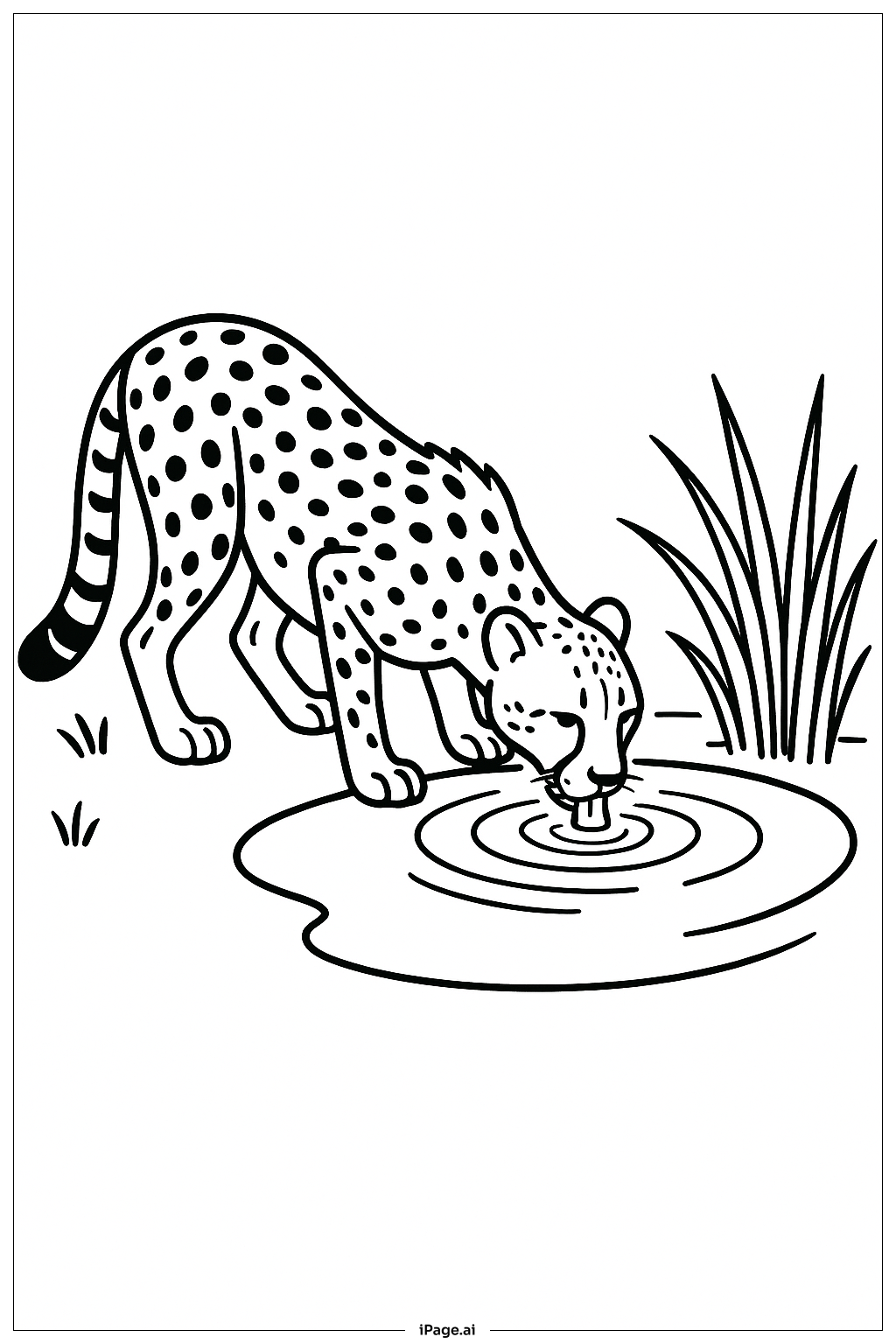
Coloring tips: How to color Cheetah At Pond coloring page well?
Use yellow or light gold for the cheetah’s body. Color the spots and stripes in black for a realistic look. The tongue can be a soft pink. For the water, use different shades of blue to show the ripples and reflections near the cheetah’s tongue. The grass should be different greens to add depth and contrast. The pond edges can be a light brown or sandy color. Use lighter shades for the background to keep the main focus on the cheetah and the water.
Coloring challenges: Which parts are difficult to color and need attention for Cheetah At Pond coloring page?
1. Coloring the many small spots on the cheetah can be tricky because they are close together and need careful attention to avoid color smudging.
2. Creating the water ripples around the tongue needs careful shading to show the reflections without making the colors look dirty.
3. Coloring the grass with different shades is important to make it look natural but can be hard to blend smoothly.
4. Keeping the cheetah’s face clean and detailed while coloring the small features like eyes and nose requires precision.
5. Balancing colors so the cheetah stands out against the pond and grass needs careful choice of colors and contrast.
Benefits of coloring books: Advantages of drawing Cheetah At Pond coloring page
Coloring this picture helps children improve their fine motor skills by carefully filling in small spots and details. It encourages observation of animals and nature. Using different shades for water and grass helps develop an understanding of light and color blending. It also teaches patience and attention to detail, as the small parts need careful coloring. Overall, it is a fun and educational activity that connects kids with wildlife.