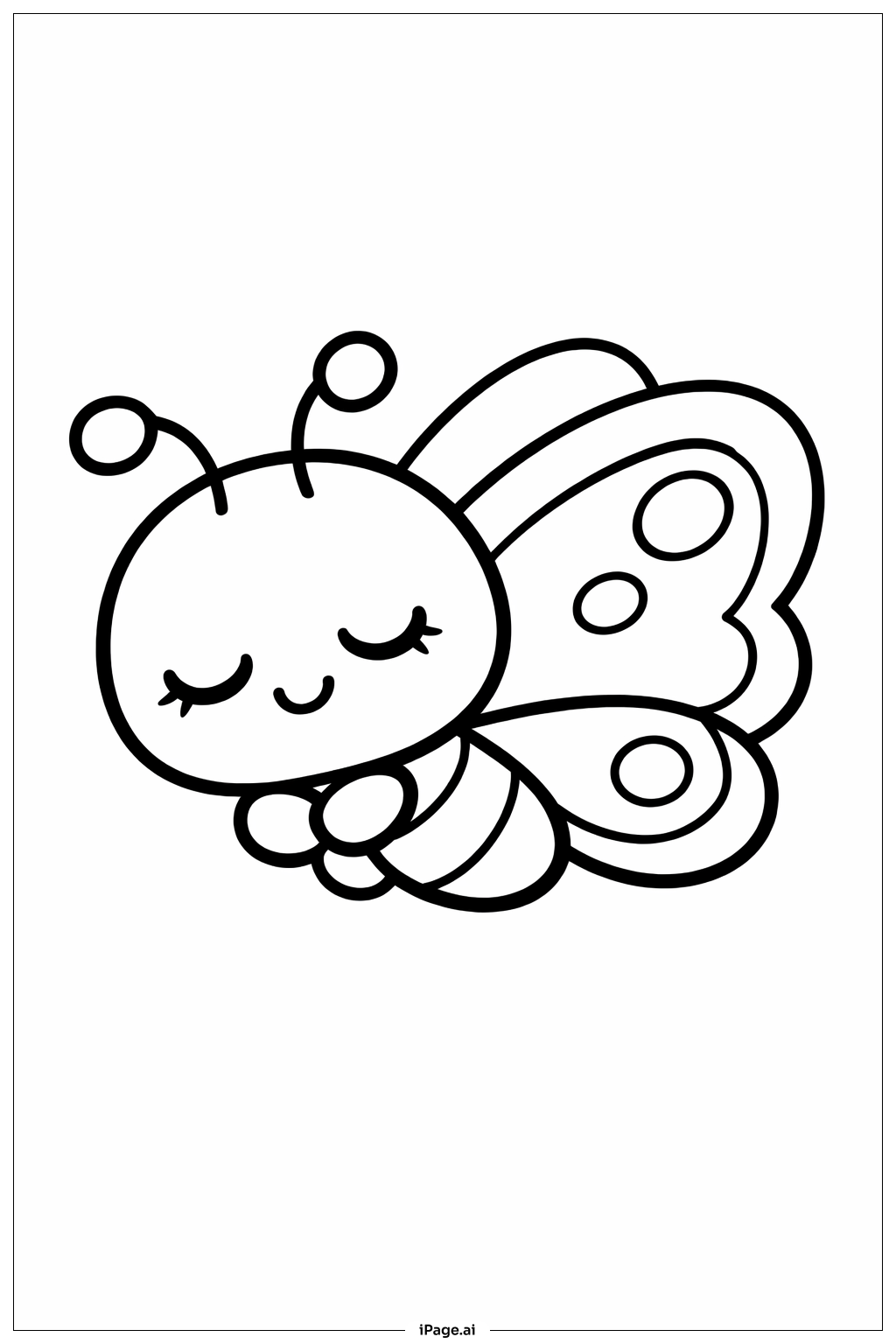
Coloring tips: How to color Sleeping Butterfly coloring page well?
For this coloring page, you can use soft and light colors to show the butterfly's peaceful sleep. Try pastel shades like light pink, baby blue, pale yellow, or soft lavender for the wings. Use a gentle brown or light orange for the butterfly’s body. You can also add a little bit of shading to make the wings look soft and delicate. Feel free to color the round spots on the wings in contrasting colors to make them stand out. The background can be left white or colored with soft green or sky blue to highlight the butterfly.
Coloring challenges: Which parts are difficult to color and need attention for Sleeping Butterfly coloring page?
1. Small details on the wings, like the round spots, might be tricky to color inside the lines, especially for younger children.
2. The smooth curves of the wings require careful coloring to keep the colors even and neat.
3. Coloring the antennae with the round ends needs attention to avoid coloring outside the small areas.
4. Adding shading or blending colors gently can be challenging since it needs steady hands and good control of coloring tools.
5. Balancing the colors on both sides of the wings to create a symmetrical look might be difficult for beginners.
Benefits of coloring books: Advantages of drawing Sleeping Butterfly coloring page
Coloring this sleeping butterfly helps improve fine motor skills and hand-eye coordination. It encourages creativity in choosing colors and patterns for the wings. By focusing on the small details, children can develop concentration and patience. This calm and gentle image can also promote relaxation and mindfulness while coloring. Overall, it is a fun way to learn about butterflies and practice art techniques.



