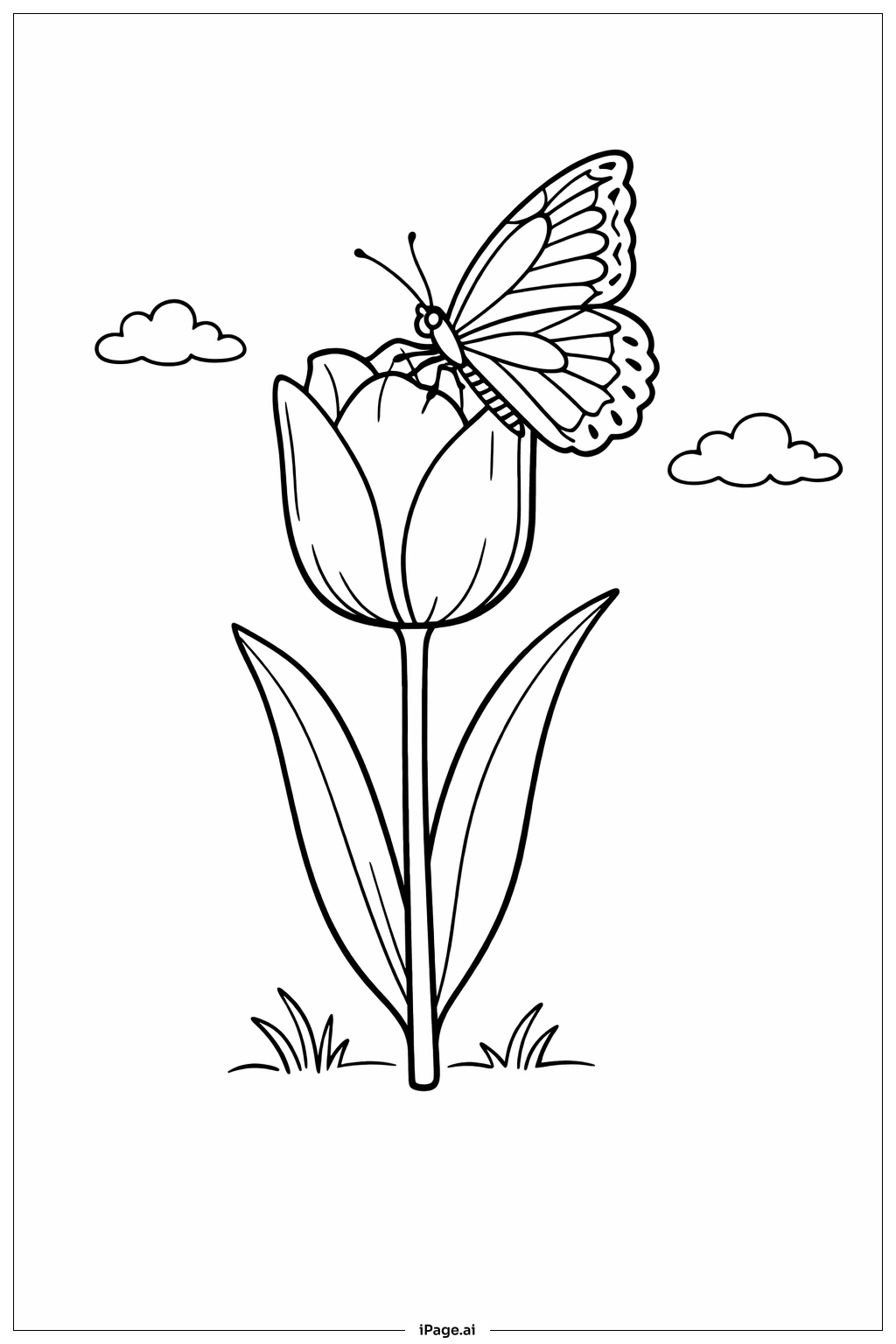
Coloring tips: How to color Butterfly on Tulip coloring page well?
For the butterfly wings, consider using vibrant colors like orange, yellow, and blue to create eye-catching patterns. You can make the circular spots on the wings stand out by using contrasting colors such as white or light yellow against darker wing backgrounds. Try blending warm colors like orange and red for a monarch butterfly effect, or use cool blues and purples for a more magical appearance. The tulip can be colored in classic shades like red, pink, yellow, or purple. Don't forget to add depth by using darker shades along the petal edges and lighter tones in the center. The stem and leaves work beautifully in various shades of green, from lime to forest green. You can add realism by making the leaves slightly darker than the stem, or create a fantasy effect with unconventional colors like blue or purple foliage.
Coloring challenges: Which parts are difficult to color and need attention for Butterfly on Tulip coloring page?
• Butterfly Wing Patterns: The symmetrical wing patterns contain multiple small sections and circular spots that require careful attention to detail. Keeping colors consistent on both wings while staying within the lines of these intricate patterns can be challenging. Young colorists may find it helpful to color matching sections on both wings at the same time to maintain symmetry.
• Small Detailed Areas: The butterfly's body, antennae, and the fine lines separating wing segments are narrow spaces that require precision coloring. Using fine-tipped coloring tools like colored pencils or thin markers works best for these areas. Patience is needed to avoid coloring outside these delicate boundaries.
• Petal Shading and Depth: Creating a three-dimensional look on the tulip petals requires understanding light and shadow. Deciding where to place darker and lighter shades to make the petals appear curved and realistic takes practice. Blending colors smoothly without harsh lines between shades adds another layer of difficulty.
• Color Coordination: Choosing a harmonious color scheme that makes both the butterfly and tulip stand out without clashing requires some color theory knowledge. Balancing warm and cool colors, and deciding which element should be the focal point, helps create a pleasing overall composition.
Benefits of coloring books: Advantages of drawing Butterfly on Tulip coloring page
Coloring this butterfly and tulip scene offers wonderful benefits for young artists. It helps develop fine motor skills and hand-eye coordination through the careful coloring of detailed wing patterns and small spaces. The symmetrical nature of the butterfly wings teaches children about balance and pattern recognition while encouraging attention to detail. This nature-themed image provides an opportunity to learn about butterflies, flowers, and their relationship in the ecosystem, combining art with science education. The activity promotes patience and focus as children work through the intricate details, while also allowing creative freedom in color choices. Completing this coloring page builds confidence and provides a sense of accomplishment. The calming subject matter of nature can have a relaxing effect, making it a perfect mindful activity that reduces stress while fostering appreciation for the natural world and its beautiful creatures.