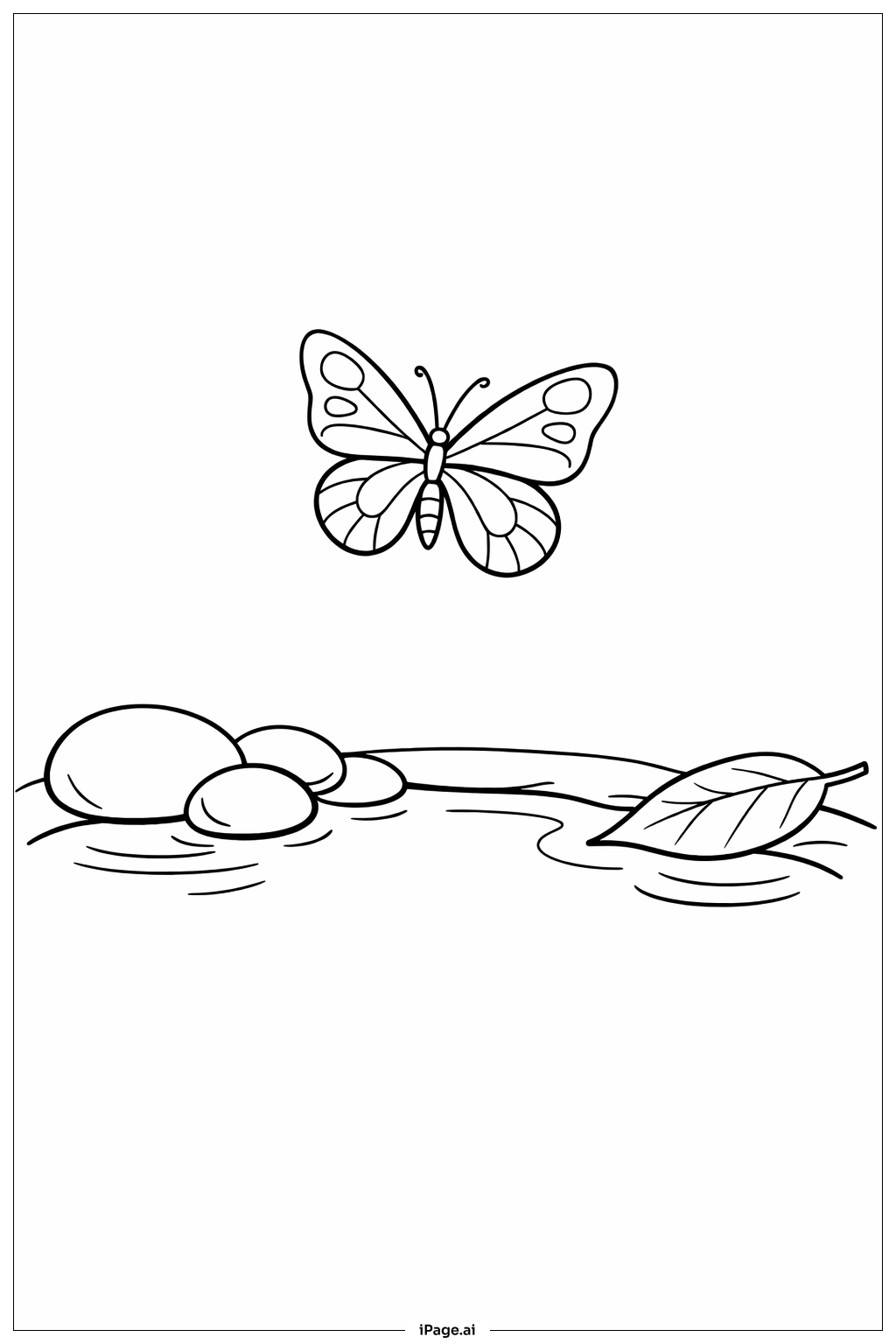
Coloring tips: How to color Butterfly Near Pond coloring page well?
Try using bright colors for the butterfly, like yellows, oranges, blues, or purples, to make it stand out. For the stones, use gray or brown shades to keep them natural looking. The leaf can be colored in different shades of green, with some yellow or brown to show age. Use light blue or teal for the water to show its calm surface. You can also add some white or light gray highlights on the water ripples to show reflection. Mix colors gently to create a peaceful pond scene.
Coloring challenges: Which parts are difficult to color and need attention for Butterfly Near Pond coloring page?
1. Coloring the butterfly wings can be tricky because of the small sections inside the wings that need different colors. Staying inside the lines will help keep the butterfly neat.
2. The stones have smooth edges but shading them well to show their round shapes is a challenge. Use light and dark grays to give a 3D effect.
3. The leaf veins need careful coloring to keep the lines visible and realistic. Coloring the leaf evenly while showing texture may require attention.
4. Representing the water involves blending colors smoothly because the ripples are delicate and need subtle shading.
5. Balancing colors between the butterfly and the background parts like the pond and leaf can be hard to keep the picture bright but natural.
Benefits of coloring books: Advantages of drawing Butterfly Near Pond coloring page
Coloring this picture helps improve fine motor skills because it requires careful hand control to stay inside the lines, especially on the butterfly wings and leaf veins. It also encourages creativity to choose colors that make the scene lively. The process of shading stones and water develops an understanding of light and shadows. Coloring calm natural scenes like this can be relaxing and boost focus for young artists. It is a fun way to learn about nature and colors while practicing art skills.