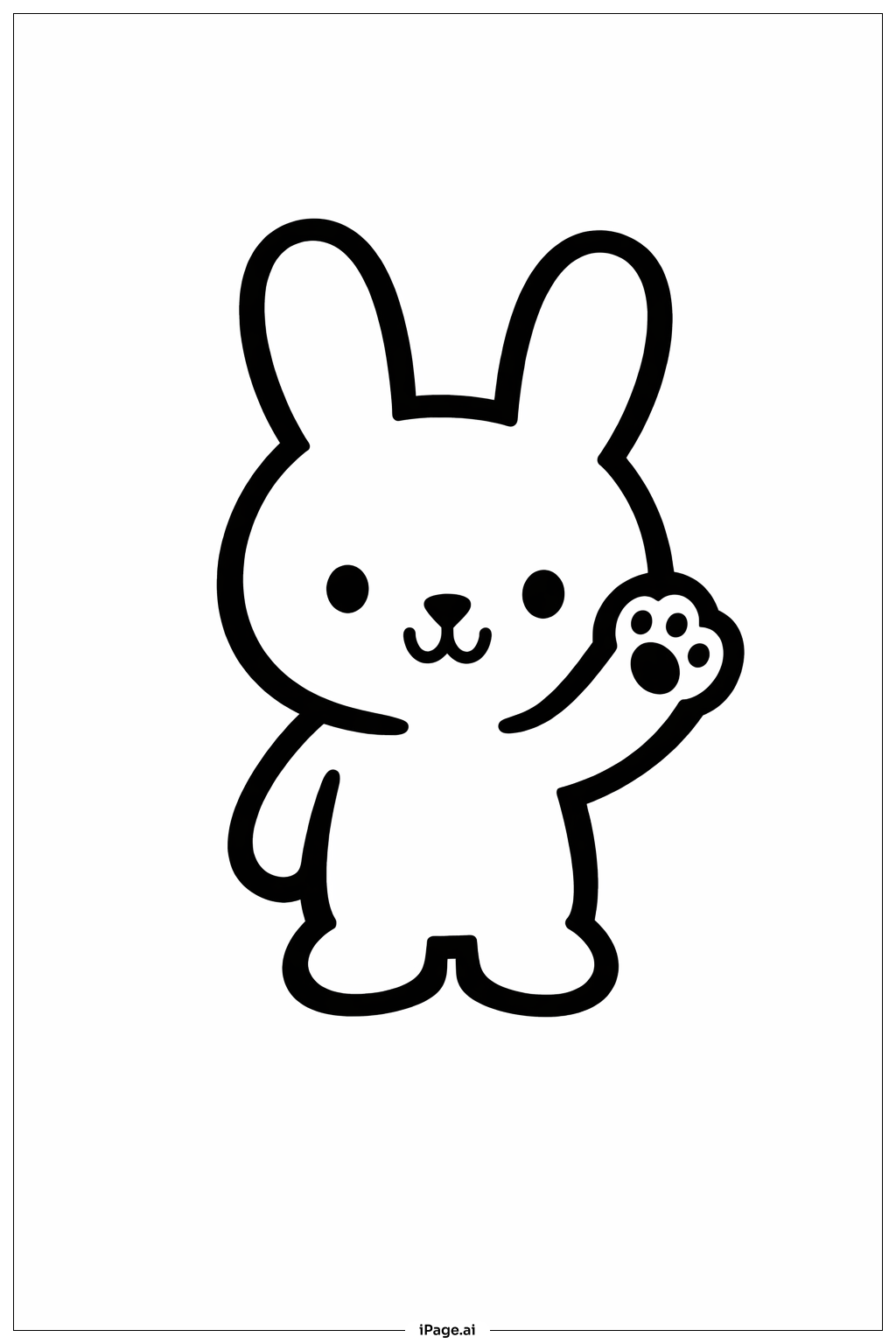
Coloring tips: How to color Bunny Waving Paw coloring page well?
For this cheerful bunny, consider using soft, warm colors that bring out its friendly personality. Traditional bunny colors include light brown, tan, beige, or classic white with pink accents for the inner ears and paw pads. The nose can be colored pink or light brown to add a cute touch. For the eyes, use black or dark brown to create depth, leaving small white highlights to make them sparkle with life. You might add subtle shading around the body's curves using slightly darker versions of your base color to create dimension. Consider a gentle blue or green background to make the bunny stand out, or leave it white for a clean, simple look. Younger children might enjoy using bright, imaginative colors like purple, blue, or rainbow patterns to create their own unique bunny friend.
Coloring challenges: Which parts are difficult to color and need attention for Bunny Waving Paw coloring page?
• Paw Details and Proportions: The waving paw requires careful attention to keep the individual digits clearly defined while maintaining proper proportions. Young colorists may find it challenging to stay within the lines of each small finger section, especially when the paw is positioned at an angle. Using fine-tipped coloring tools can help maintain precision in these smaller areas without colors bleeding together.
• Ear Shading and Dimension: The long ears present an opportunity for shading but can be tricky for beginners. Creating the distinction between the outer and inner ear requires understanding which areas should be darker or lighter. Children may struggle with deciding where to add pink tones for inner ear detail versus the main body color, and how to blend or separate these areas effectively.
• Body Contour and Roundness: Capturing the bunny's three-dimensional, fluffy appearance through color requires some understanding of light and shadow. The rounded body shape needs subtle shading to avoid looking flat, but adding too much contrast might overwhelm the simple design. Young artists may find it difficult to determine where shadows naturally fall on a seated bunny's body.
• Facial Feature Balance: The eyes, nose, and mouth are concentrated in a small area and require precise coloring to maintain the bunny's sweet expression. Coloring outside the lines or using inconsistent pressure can affect the character's friendly appearance. Keeping both eyes symmetrical in color intensity and ensuring the nose remains distinct from surrounding features takes steady hands and focus.
Benefits of coloring books: Advantages of drawing Bunny Waving Paw coloring page
Coloring this friendly bunny waving its paw offers wonderful developmental benefits for children. The clear, bold outlines help young artists practice fine motor control and hand-eye coordination as they carefully fill each section. The varying sizes of areas, from the large body to the tiny paw details, provide opportunities to practice both broad strokes and precision work. This image encourages emotional connection, as the bunny's welcoming wave and friendly expression help children explore feelings of kindness and friendship through creative expression. The simple yet engaging design builds confidence in beginning colorists while still offering enough detail to keep more experienced children interested. Additionally, coloring this cheerful character can have calming effects, helping children develop focus and patience while creating something they can be proud of. The finished artwork makes a perfect decoration or gift, teaching children about the joy of creating and sharing their work with others.