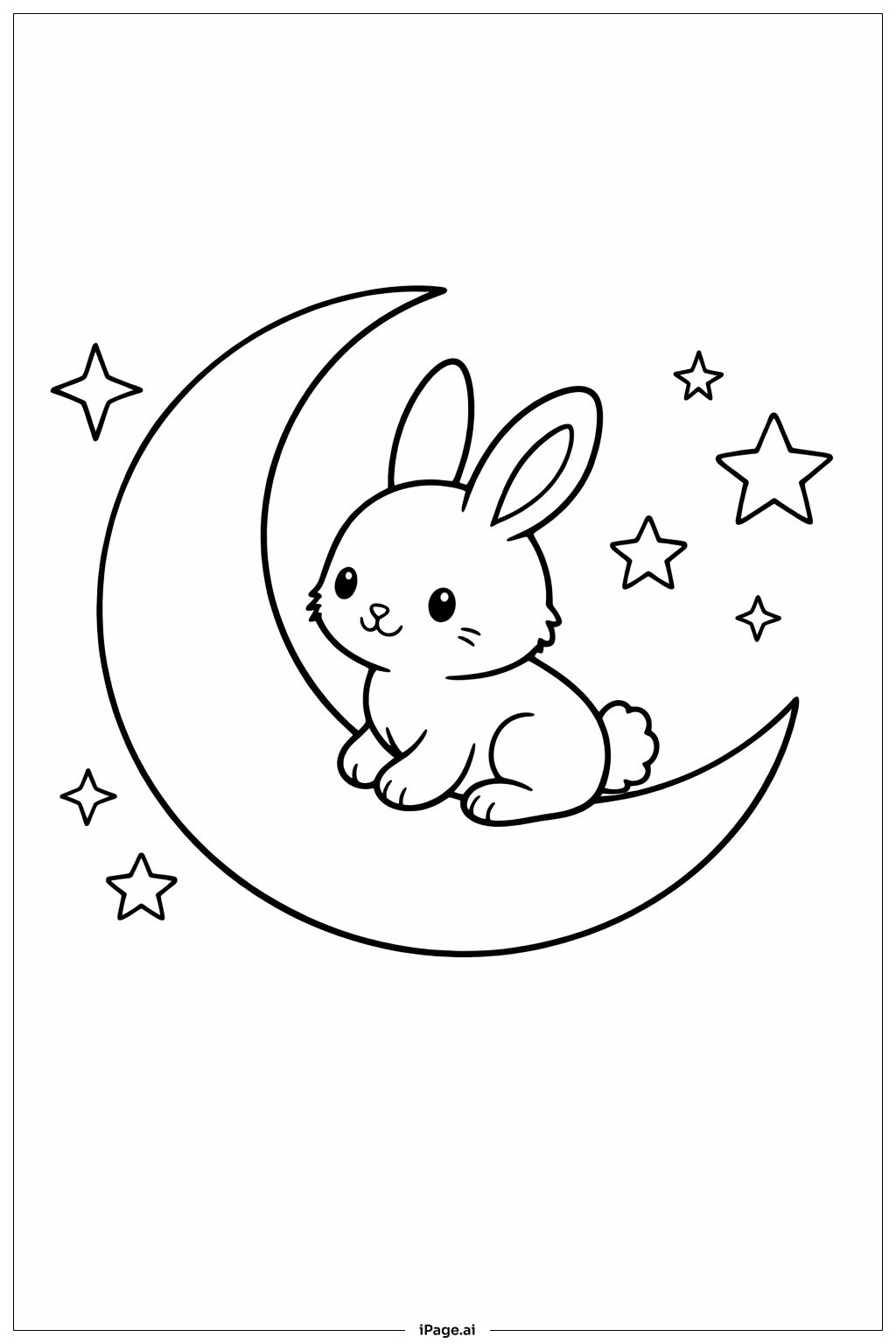
Coloring tips: How to color Bunny On Moon coloring page well?
For the bunny, consider using soft colors like white, cream, light gray, or pale pink to capture its gentle nature. The inner ears could be colored in a delicate pink or peach tone to add dimension. Give the bunny rosy cheeks with light pink for extra sweetness. The crescent moon offers wonderful creative possibilities: try classic yellow or golden tones, or experiment with soft blues, purples, or even silver for a magical effect. The night sky background can be colored in deep blues, purples, navy, or even black to create contrast. Make the stars sparkle by using yellow, white, gold, or silver. You could also add gradient effects, blending lighter colors near the moon into darker shades at the edges to create depth and atmosphere in this dreamy celestial scene.
Coloring challenges: Which parts are difficult to color and need attention for Bunny On Moon coloring page?
• Bunny Fur Texture: Creating realistic fur texture on the bunny requires careful coloring techniques. Young colorists may find it challenging to add depth and dimension to the bunny's body without making it look flat. Using light strokes in the same direction and gradually building up layers of similar colors can help achieve a soft, fluffy appearance. Consider leaving some white spaces or using lighter shades along the edges to suggest fur highlights.
• Moon Shading and Dimension: The crescent moon needs proper shading to look three-dimensional rather than flat. Colorists must understand where light would naturally fall and where shadows would form on the curved surface. The inner curve of the crescent typically appears darker, while the outer edge catches more light. Blending colors smoothly from light to dark areas requires patience and practice, especially for younger children.
• Star Placement and Consistency: The scattered stars of various sizes present a challenge in maintaining visual balance and consistency. Deciding whether to color each star the same way or create variety requires planning. Some colorists may struggle with keeping smaller stars neat and precise. Additionally, making stars appear to twinkle or glow requires highlighting techniques that might be advanced for beginners.
• Background Color Blending: Creating a smooth, gradual night sky effect involves blending multiple shades together seamlessly. This technique can be difficult without the right tools or experience. Harsh lines between color transitions can disrupt the dreamy atmosphere. Younger artists might find it easier to use a single background color, while more experienced colorists can attempt ombre or gradient effects for a more sophisticated result.
Benefits of coloring books: Advantages of drawing Bunny On Moon coloring page
Coloring this Bunny On Moon image offers numerous developmental benefits for children. It helps improve fine motor skills and hand-eye coordination as they carefully color within the lines of the bunny's features and the moon's curves. The variety of elements, from large areas like the moon to tiny details like the stars, allows children to practice control and precision with their coloring tools. This dreamy nighttime scene encourages creativity and imagination, inviting children to envision stories about the bunny's adventure in space. The calming nature of the image promotes relaxation and stress relief, making it perfect for quiet time activities. Children learn about color theory by experimenting with contrasting colors between the bunny, moon, and sky. The celestial theme introduces basic astronomy concepts in a fun, accessible way. Completing this coloring page builds confidence and provides a sense of accomplishment, especially when the finished artwork is displayed proudly.