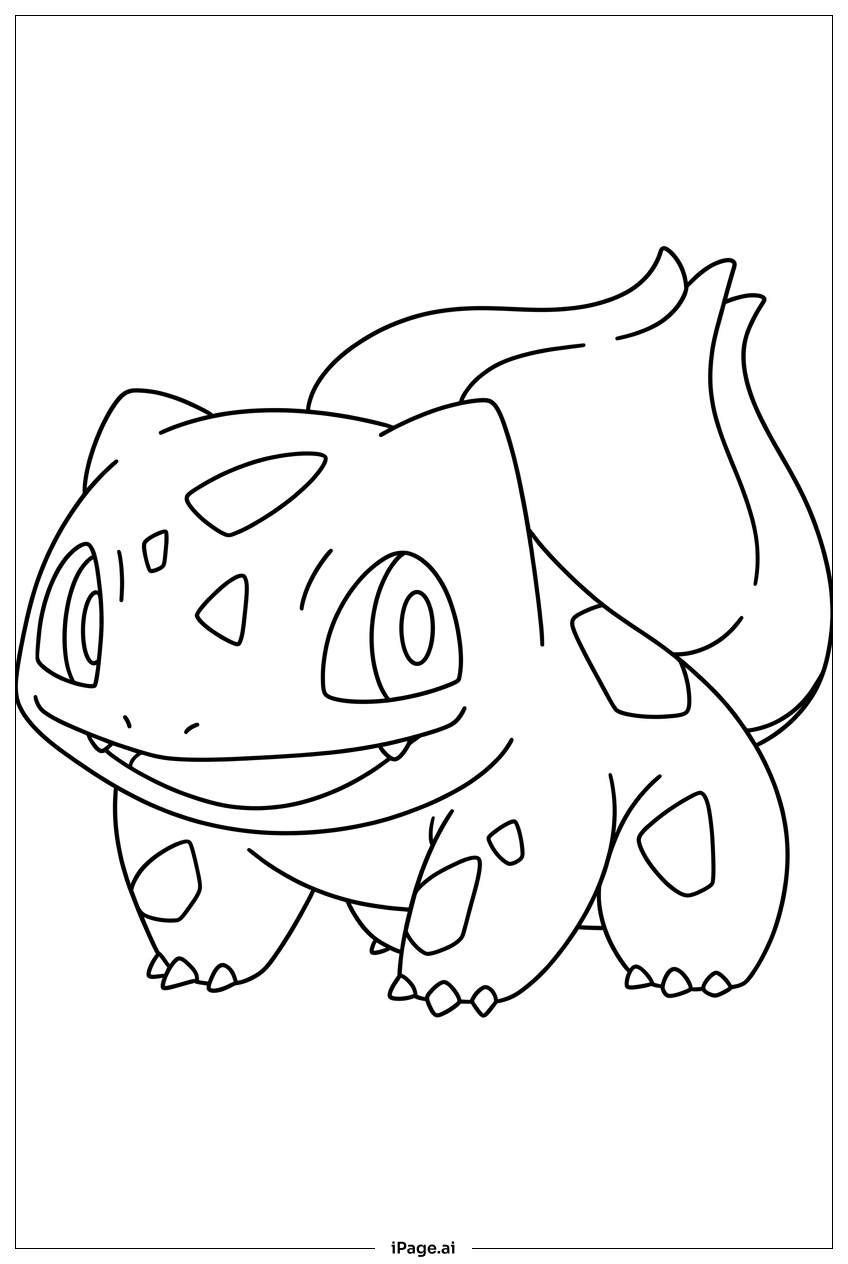
Coloring tips: How to color Curious Bulbasaur Posing for the Camera coloring page well?
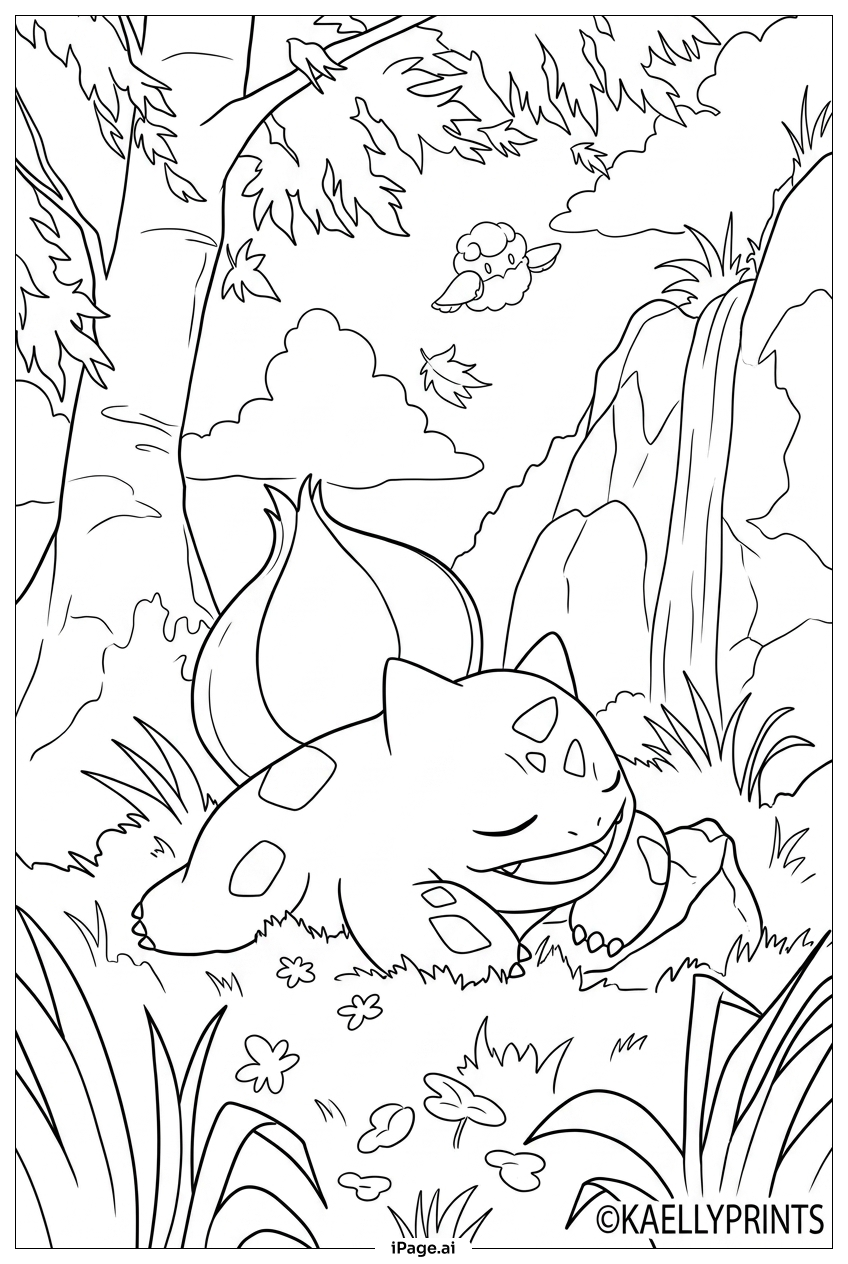
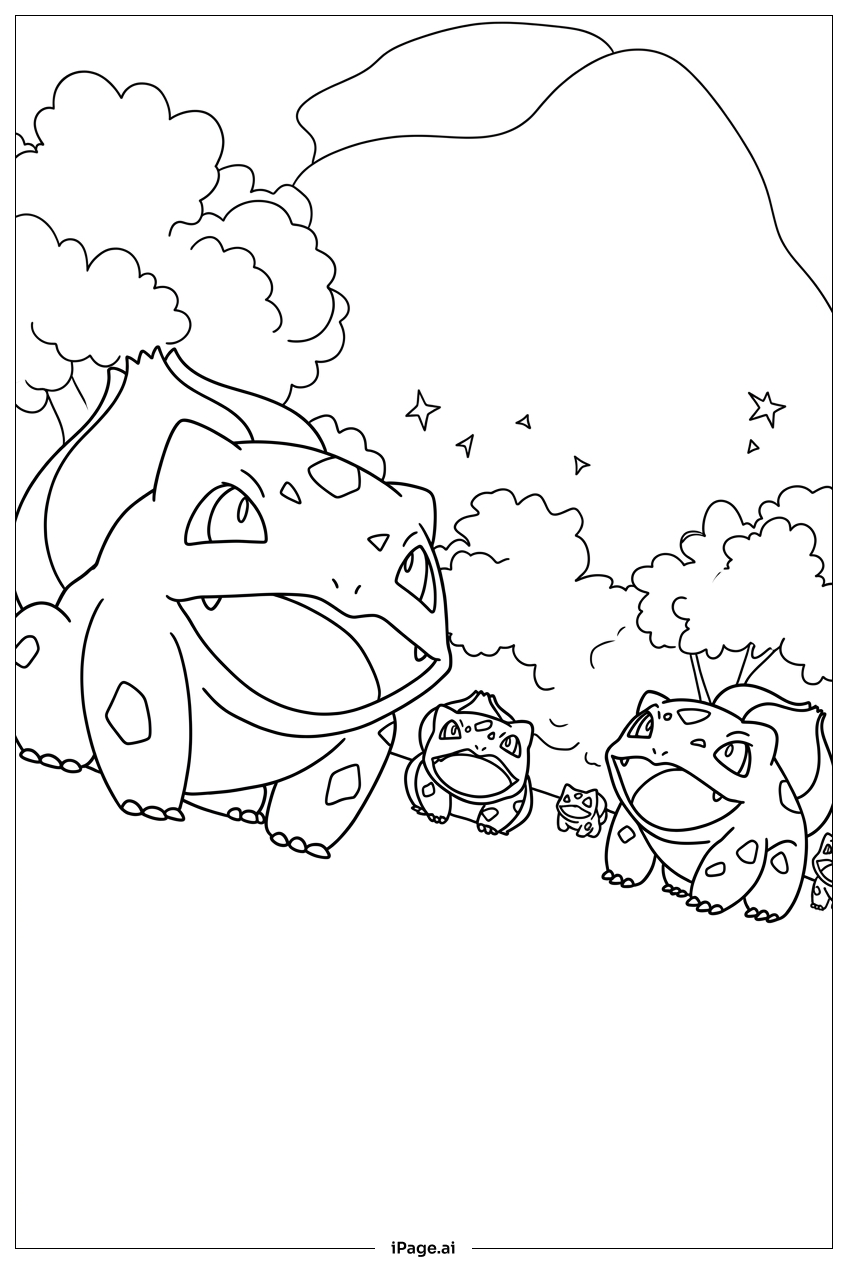
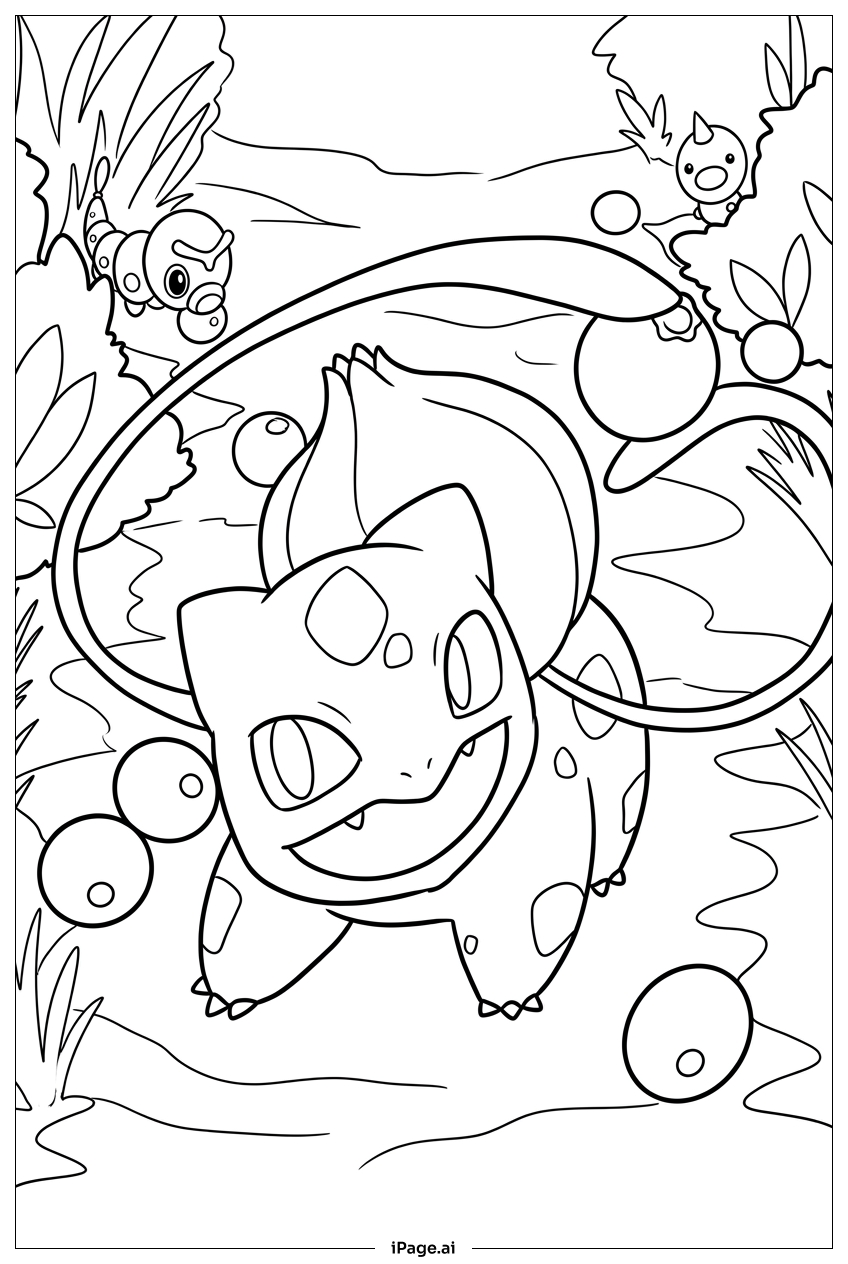
Start with Bulbasaur's skin using a soft blue-green or teal color. Use a slightly darker shade for the spots scattered across its body to add depth. The large bulb on its back looks great in a medium green, with darker green for the leaf ridges and tips to give it a natural, plant-like feel. Use a warm olive or yellow-green for the underside of the bulb. Color the eyes a bright red or deep crimson, leaving a small white dot for a shiny highlight. The claws can be a light cream or tan. Try adding gentle shading under the belly and around the legs using a deeper blue-green to make Bulbasaur look round and three-dimensional. Keep the background simple — a soft grassy green or a light sky blue works beautifully to make Bulbasaur pop off the page.
Coloring challenges: Which parts are difficult to color and need attention for Curious Bulbasaur Posing for the Camera coloring page?
Coloring this Bulbasaur page is a fun challenge with a few tricky areas to watch out for:
• **The bulb texture:** The seed bulb on Bulbasaur's back has multiple overlapping ridges and leaf-like sections. Keeping each section neatly colored without bleeding into the next requires a steady hand and a fine-tipped coloring tool. Using different shades of green for each layer helps define the shape clearly.
• **The body spots:** Bulbasaur's skin is covered in small, irregular dark spots. Carefully filling each spot without smudging the surrounding skin color can be time-consuming. A thin marker or a sharpened colored pencil works best for these small details.
• **Blending skin tones:** Bulbasaur's body isn't a single flat color — it has subtle variations from its belly to its back. Achieving a smooth, natural-looking blend between lighter and darker blue-green tones takes patience, especially with colored pencils or watercolors.
• **The expressive eyes:** The eyes are small but full of detail, including a dark pupil, a colored iris, and a bright highlight spot. Coloring such a small area with precision while keeping the highlight white is one of the trickiest parts of the whole image.
• **Outlining and staying inside the lines:** Because Bulbasaur has a compact, rounded shape with many small details close together — like the toes, face features, and bulb ridges — younger colorists may find it challenging to stay within the lines in these tight spaces. Using thinner tools in detailed areas and broader tools for large open sections is a smart strategy.
Benefits of coloring books: Advantages of drawing Curious Bulbasaur Posing for the Camera coloring page
Coloring this Bulbasaur page offers a wonderful mix of fun and learning for kids and Pokémon fans of all ages.
**Builds focus and patience:** Carefully coloring Bulbasaur's spots, bulb ridges, and tiny facial features helps children practice concentration and attention to detail — skills that are useful in school and everyday life.
**Sparks creativity:** Choosing colors for Bulbasaur's skin, bulb, and background encourages kids to think creatively. There's no single right answer, so every child's version becomes a unique piece of art.
**Develops fine motor skills:** Staying within the lines and handling coloring tools strengthens hand-eye coordination and the small muscle movements needed for writing and drawing.
**Connects to a beloved character:** Coloring a favorite Pokémon like Bulbasaur makes the activity feel exciting and personally meaningful, which keeps kids engaged longer and makes the experience more enjoyable.
**Promotes relaxation:** The calm, repetitive motion of coloring is a great way for children to unwind after a busy day, reducing stress and encouraging a peaceful, focused mindset.
**Encourages pride and confidence:** Finishing a detailed coloring page gives kids a real sense of accomplishment, boosting their self-esteem and motivating them to take on new creative challenges.