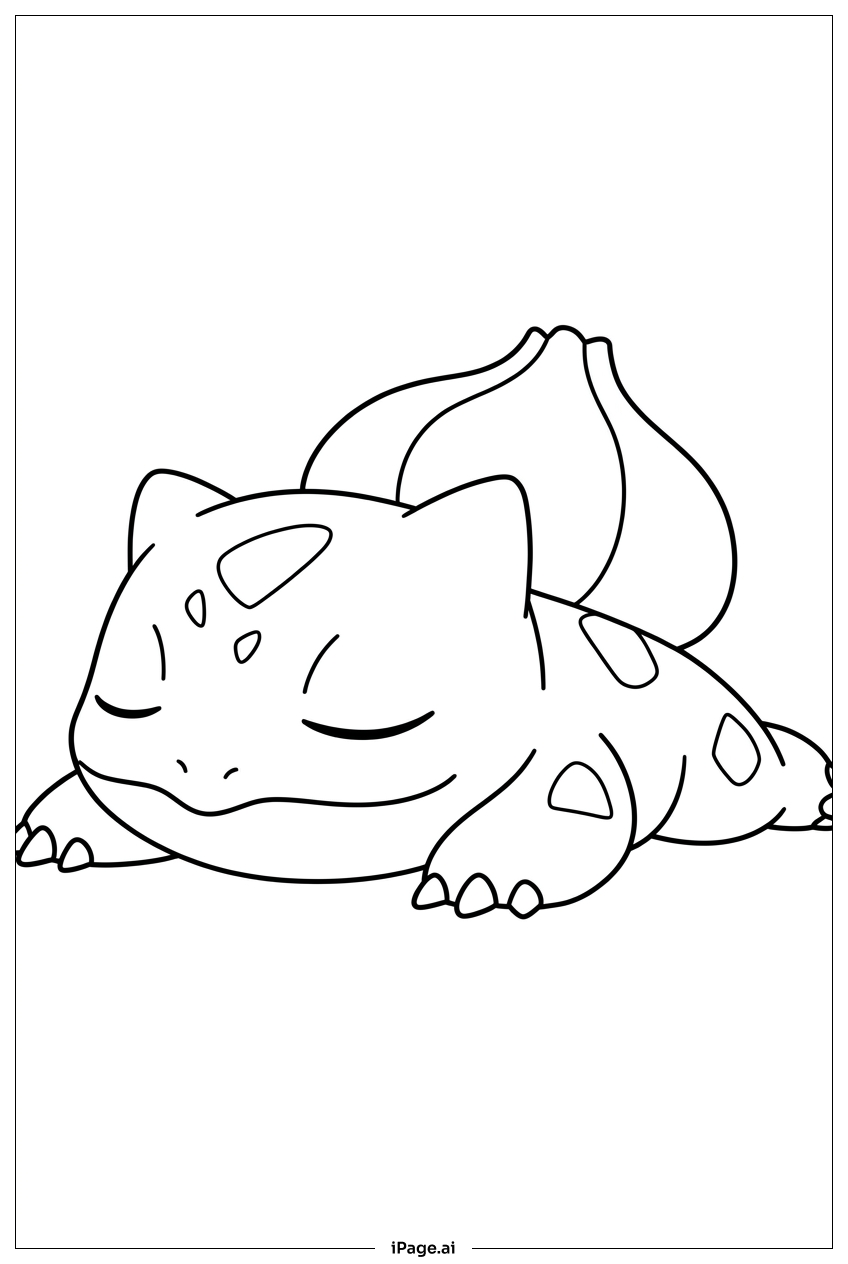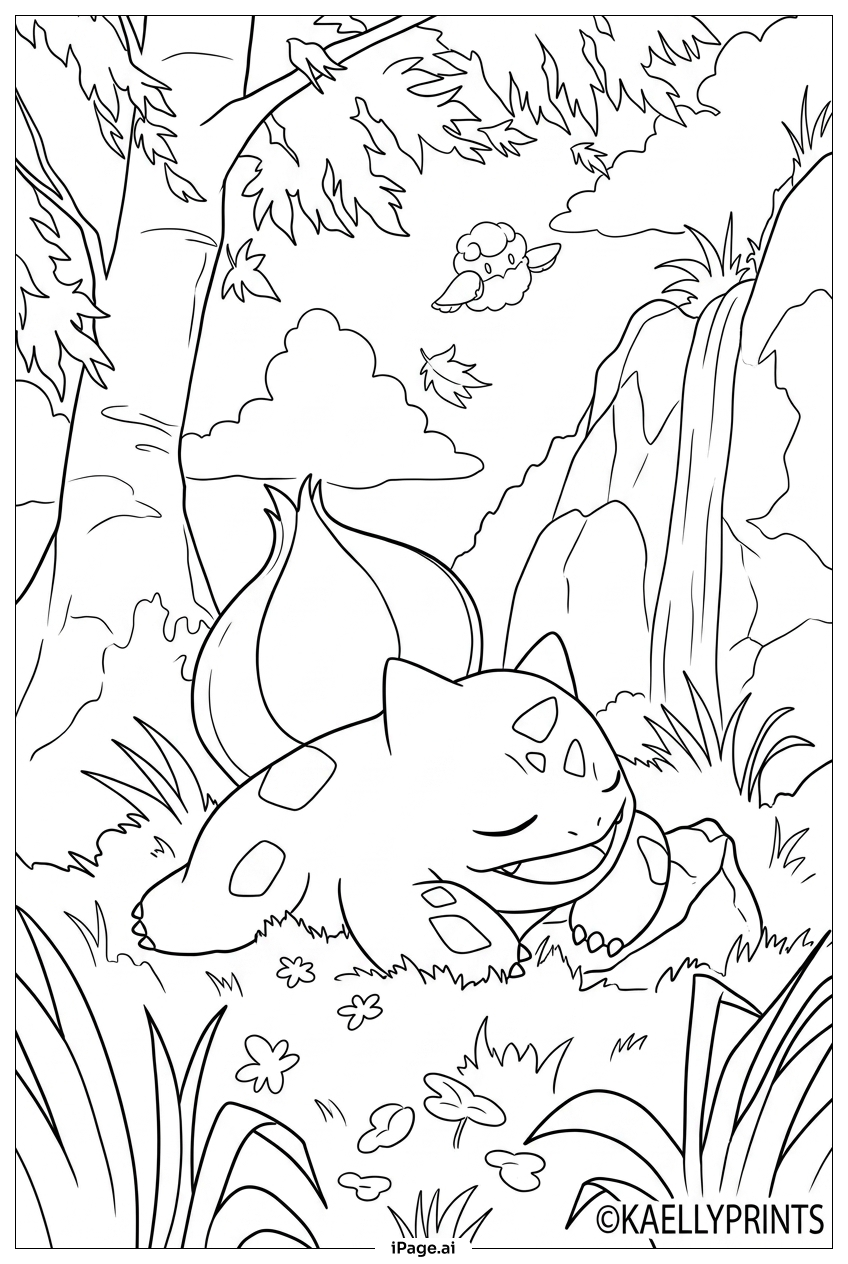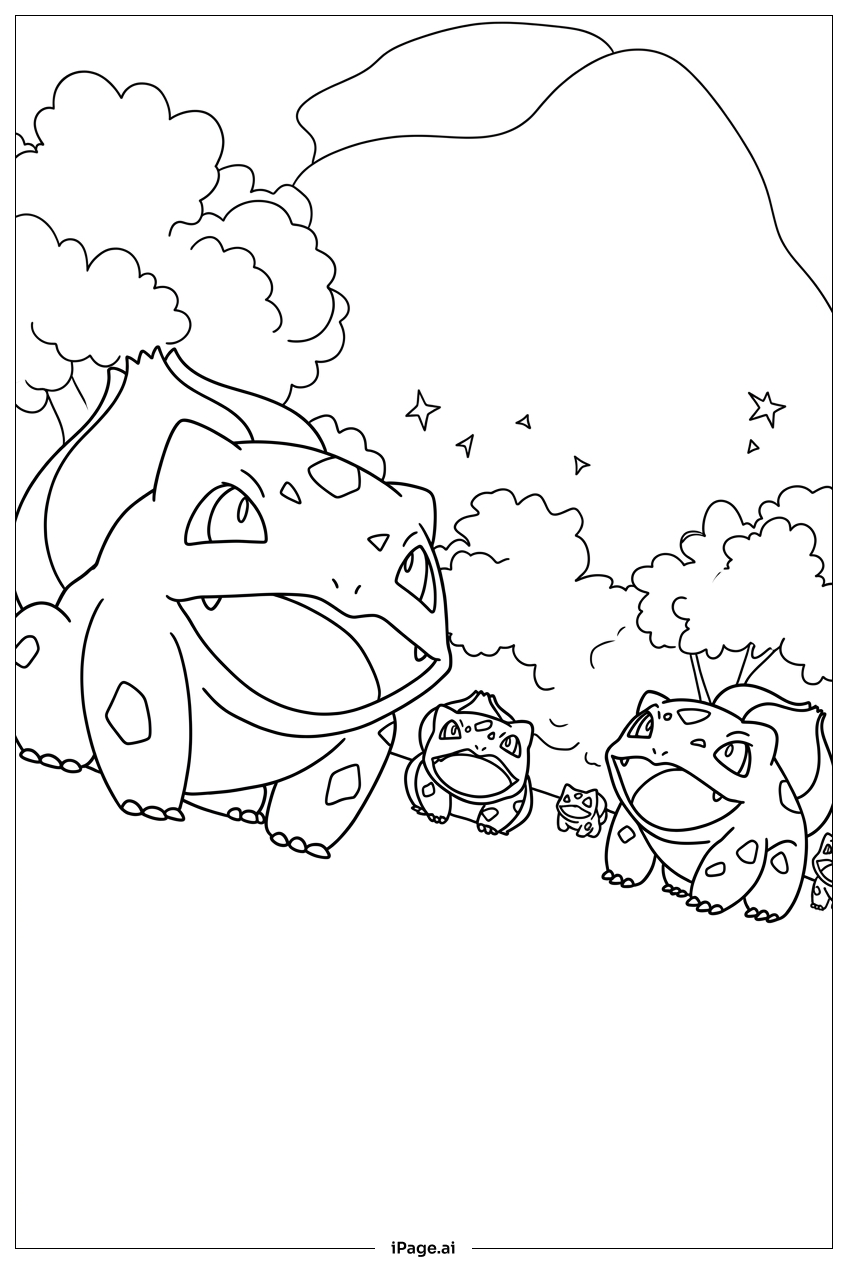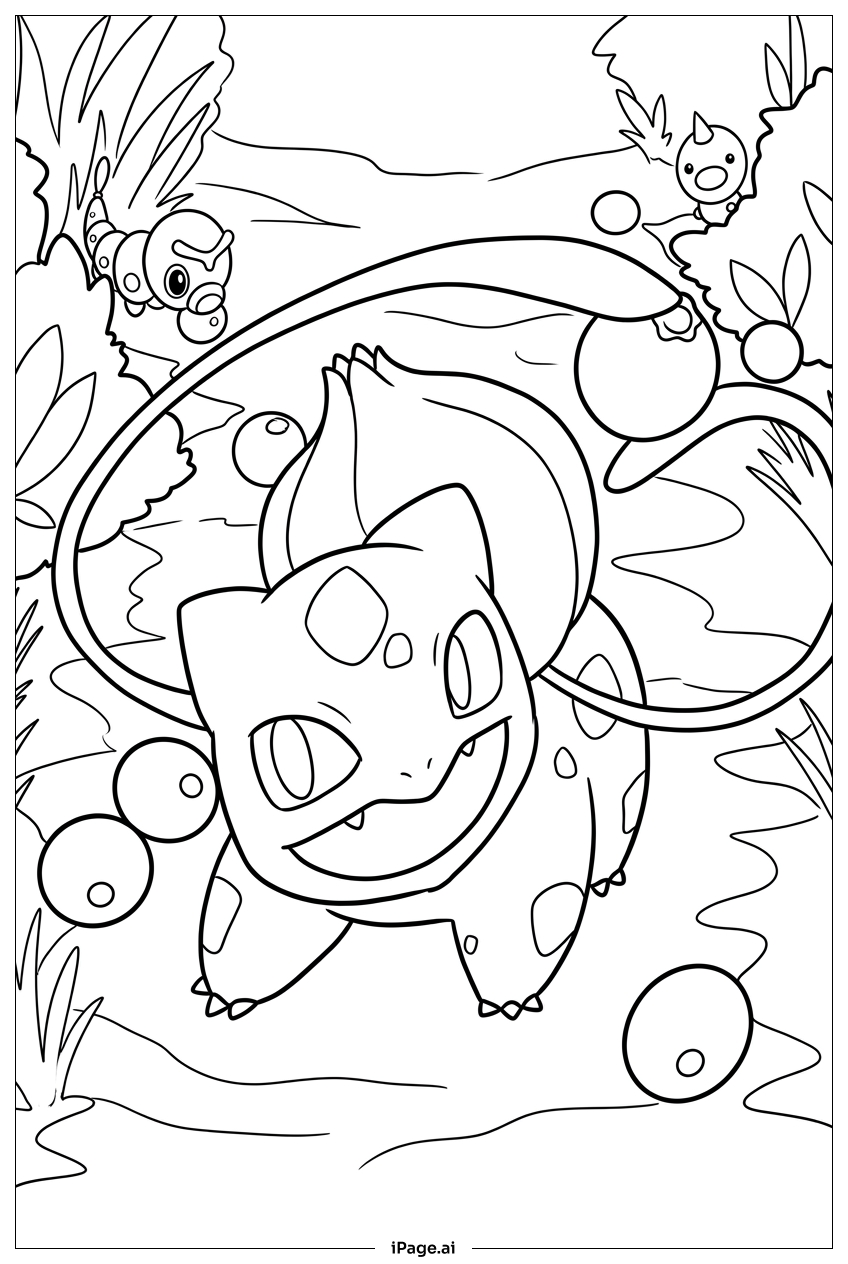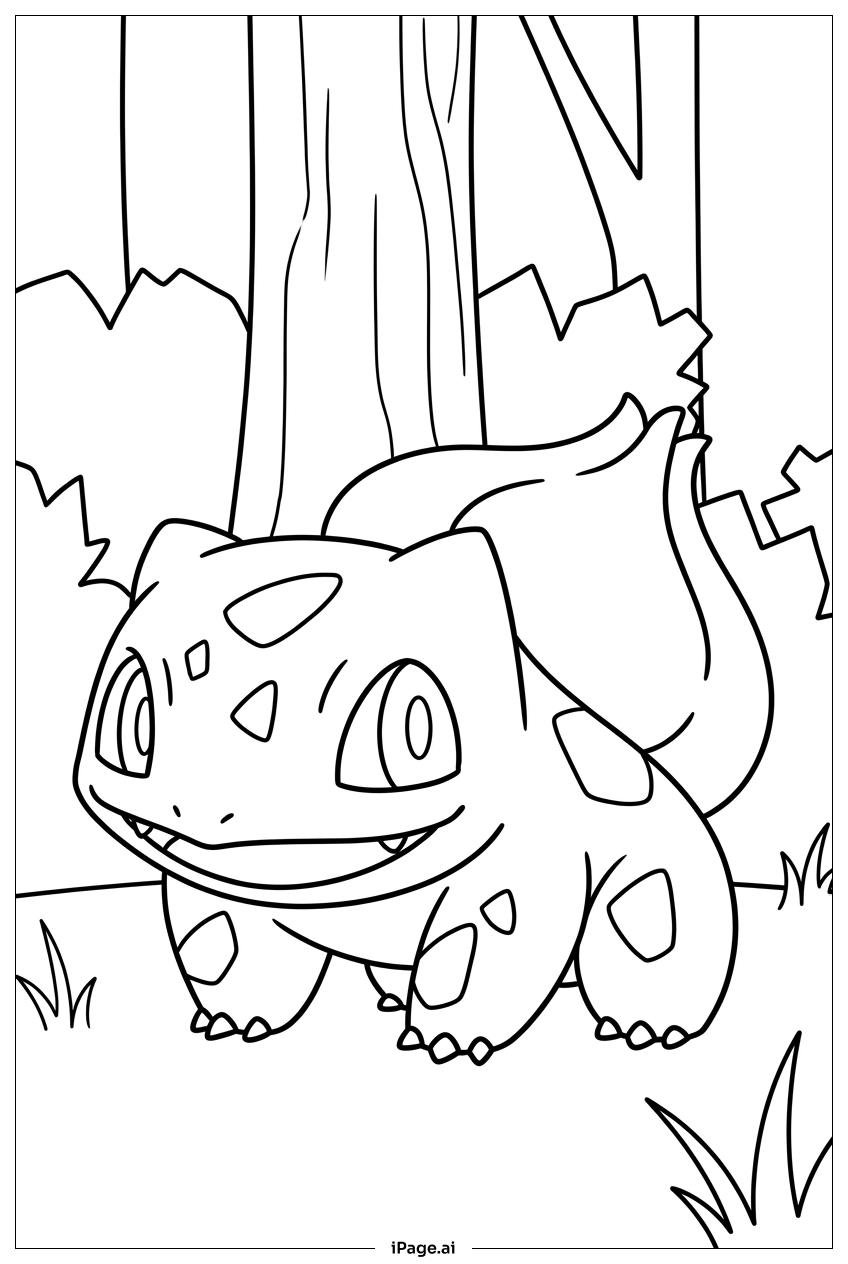
Coloring tips: How to color Bulbasaur Strolling Through a Quiet Forest coloring page well?
Start with Bulbasaur's body using a soft blue-green or teal shade. Use a darker green for the large bulb on its back, adding hints of olive or forest green for depth. The vines can be a rich, deep green. For the forest background, layer different shades of green — light lime for sunlit leaves and deep emerald for shadowed areas. Color the dirt path in warm tan or light brown tones. Use soft yellows and oranges to show sunlight filtering through the trees. Paint the mushrooms in earthy reds, browns, or creamy whites. Add small pops of color with wildflowers in purple, pink, or yellow. Keep Bulbasaur's eyes a warm red with a dark pupil for a friendly look. Use light, gentle strokes throughout to match the calm, peaceful mood of the forest scene.
Coloring challenges: Which parts are difficult to color and need attention for Bulbasaur Strolling Through a Quiet Forest coloring page?
• **Bulbasaur's Textured Body:** Bulbasaur's skin has a bumpy, reptile-like texture that can be tricky to color evenly. To bring it to life, try using two or three shades of blue-green — a base tone, a lighter highlight, and a darker shadow. Blend carefully around the legs and underbelly where the skin folds.
• **The Bulb and Vines:** The large bulb on Bulbasaur's back is one of the most detailed parts of the image. It has curved surfaces and overlapping vines that require careful shading. Use multiple greens and add subtle brown or purple tones near the base of the bulb to show depth and dimension.
• **Layered Forest Background:** The forest is filled with overlapping trees, ferns, and bushes at different distances. Coloring these layers without making the scene look flat takes patience. Try using lighter greens for faraway trees and darker, richer greens for plants closer to Bulbasaur to create a natural sense of depth.
• **Dappled Light Effect:** Sunlight filtering through the tree canopy creates patches of light and shadow across the forest floor and on Bulbasaur's body. Recreating this effect means leaving some areas lighter while carefully darkening others — a fun but challenging technique for young colorists.
• **Small Details on the Forest Floor:** Tiny mushrooms, pebbles, and flowers scattered along the path require a steady hand and small, precise strokes. Using fine-tipped colored pencils or markers works best for these delicate details without accidentally coloring outside the lines.
Benefits of coloring books: Advantages of drawing Bulbasaur Strolling Through a Quiet Forest coloring page
Coloring this Bulbasaur forest scene offers wonderful benefits for kids and Pokémon fans of all ages. Working through the many shades of green in the trees and on Bulbasaur's body helps children learn about color mixing and how light and shadow change the way colors look. This builds strong artistic skills in a fun, low-pressure way.
The peaceful forest setting encourages calm, focused attention. Sitting quietly and coloring helps reduce stress and supports mindfulness — kids slow down, breathe, and enjoy the moment. It's a great activity after a busy school day.
Coloring Bulbasaur also sparks creativity. Children get to make their own color choices, deciding what kind of forest world Bulbasaur lives in. This builds confidence and encourages imaginative thinking.
Fine motor skills also get a great workout. Staying inside the lines, shading the bulb, and adding tiny details to the forest floor all strengthen hand-eye coordination and pencil control — skills that directly support handwriting and other school tasks.
Finally, completing the page gives kids a real sense of pride and accomplishment. Displaying their finished artwork is a simple but powerful confidence boost that makes them excited to color again.