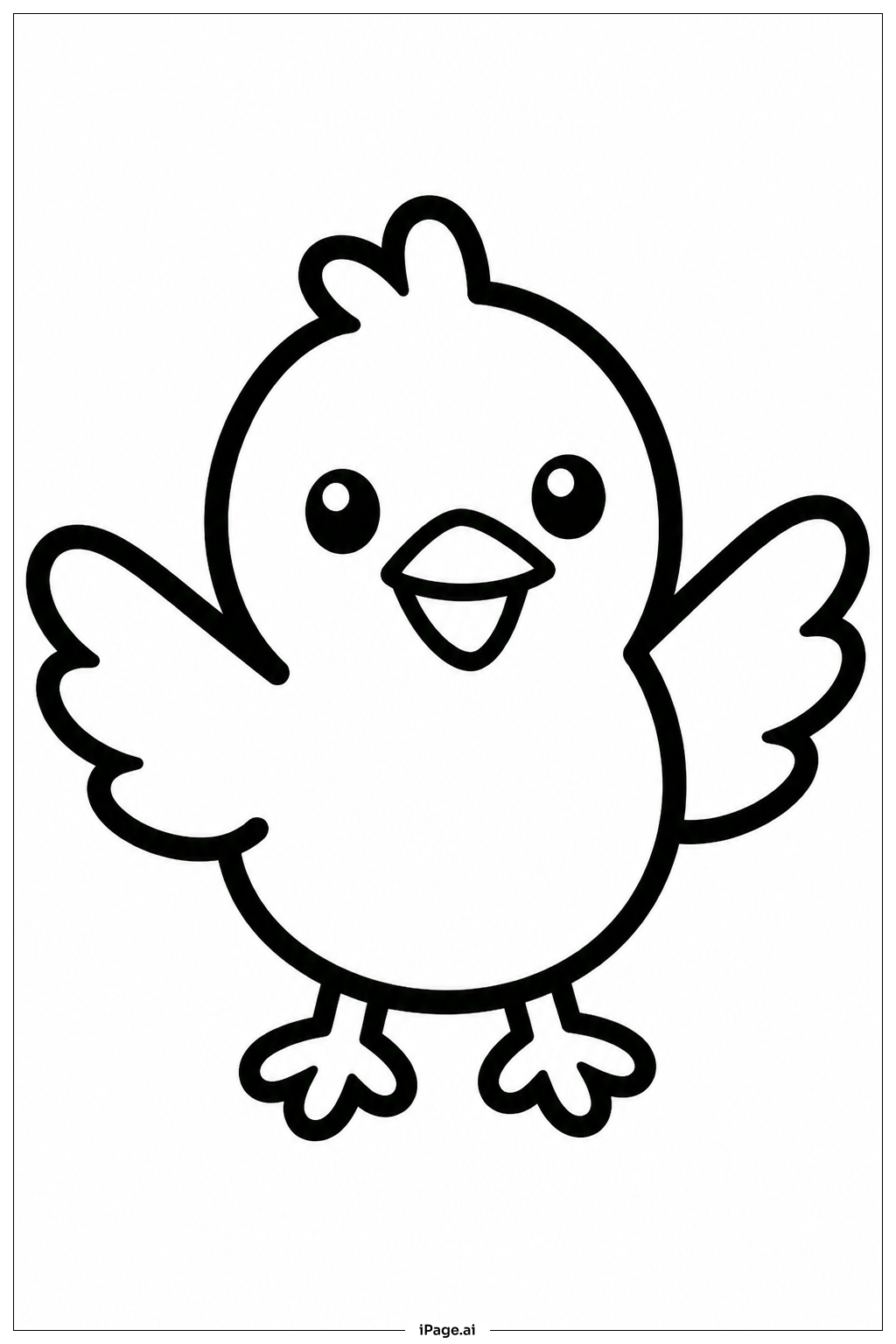
Coloring tips: How to color Smiling Bird coloring page well?
Start by choosing bright, cheerful colors to match the bird's happy mood. Yellow and orange work beautifully for the body, giving it a warm, sunny feel. You can use a soft sky blue or green for the wings to add a pop of color. Try a light pink or peach for the cheeks to highlight the smile. Use a darker shade of any base color to add shading along the edges of the feathers, giving the bird a sense of depth. The beak looks great in bright orange or golden yellow. For the eyes, use black for the pupils and leave a small white dot to make them look bright and lively. The feet can be colored in a light tan or orange. Feel free to add your own background — a blue sky, green tree branch, or colorful flowers will make the scene come alive. Have fun and use as many colors as you like!
Coloring challenges: Which parts are difficult to color and need attention for Smiling Bird coloring page?
• Feather Details: The bird's wings and tail feature layered feather patterns with fine lines close together. Staying within each individual feather without smudging into neighboring areas requires a steady hand and a sharp, fine-tipped colored pencil or thin marker. Take your time with each feather layer.
• Facial Expression: The bird's smile and round eyes are small but central to the image's charm. Coloring the curved beak and the small cheek areas neatly without losing the expressive quality of the face can be tricky, especially for younger colorists. Use a thin tool and light strokes to keep the details clean.
• Smooth Body Shading: Achieving a smooth, even color across the bird's round, plump body without leaving streaks or uneven patches is a common challenge. Younger children may prefer bold, flat color, while older kids and teens can practice blending techniques by layering a lighter base and adding a slightly darker tone near the edges for a rounded effect.
• Color Transitions on Wings: If you choose to use more than one color on the wings, blending those colors smoothly where they meet can be difficult. Gradual layering and gentle circular strokes help create a natural transition without harsh lines.
• Background Balance: Adding a background is optional but rewarding. Choosing colors that complement the bird without overpowering it takes some thought. Light, pastel tones for the sky or surroundings help keep the cheerful bird as the clear focal point of the composition.
Benefits of coloring books: Advantages of drawing Smiling Bird coloring page
Coloring this Smiling Bird page brings a wide range of benefits for children of all ages. The bird's joyful expression naturally lifts your mood, making the coloring experience feel fun and relaxing from the very first stroke.
For younger children aged 4 to 7, tracing around the bird's rounded body and simple shapes helps develop fine motor skills and hand-eye coordination. Choosing colors also encourages creative decision-making from an early age.
For kids aged 8 to 12, working on the feather details and practicing shading techniques builds patience and attention to detail. It also strengthens concentration, as careful coloring requires focus for longer periods.
For teens, this page offers a calming, screen-free activity. Blending colors and experimenting with light and shadow on the feathers provides a satisfying artistic challenge that builds real drawing and coloring skills.
Across all age groups, coloring a happy character like this bird encourages positive emotions and can reduce stress or anxiety. It also sparks imagination — kids often begin to create stories about where the bird is flying or what it is smiling about.
Sharing the finished page with friends or family builds confidence and a sense of pride in creative work. Overall, this page is a wonderful mix of fun, learning, and emotional well-being.