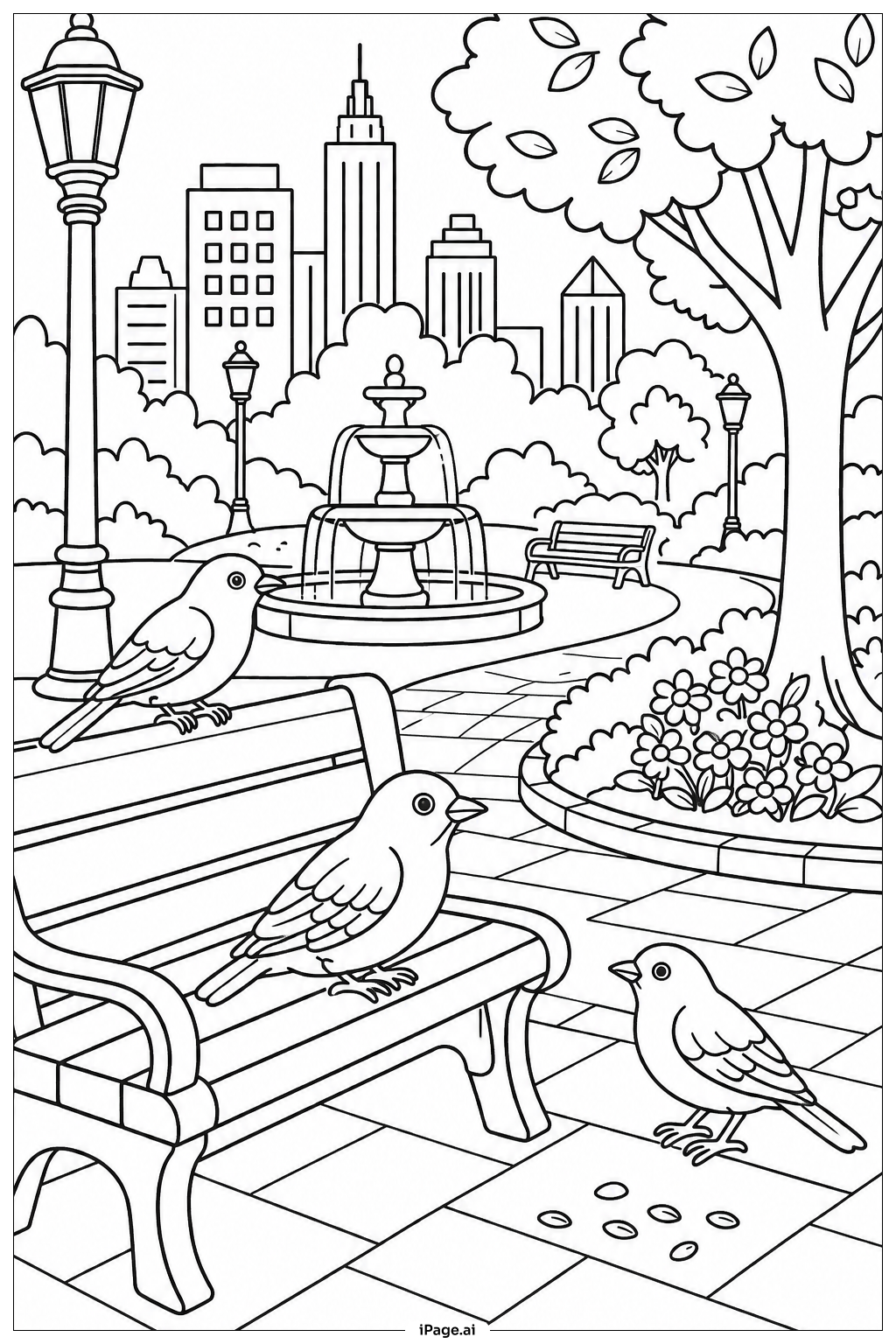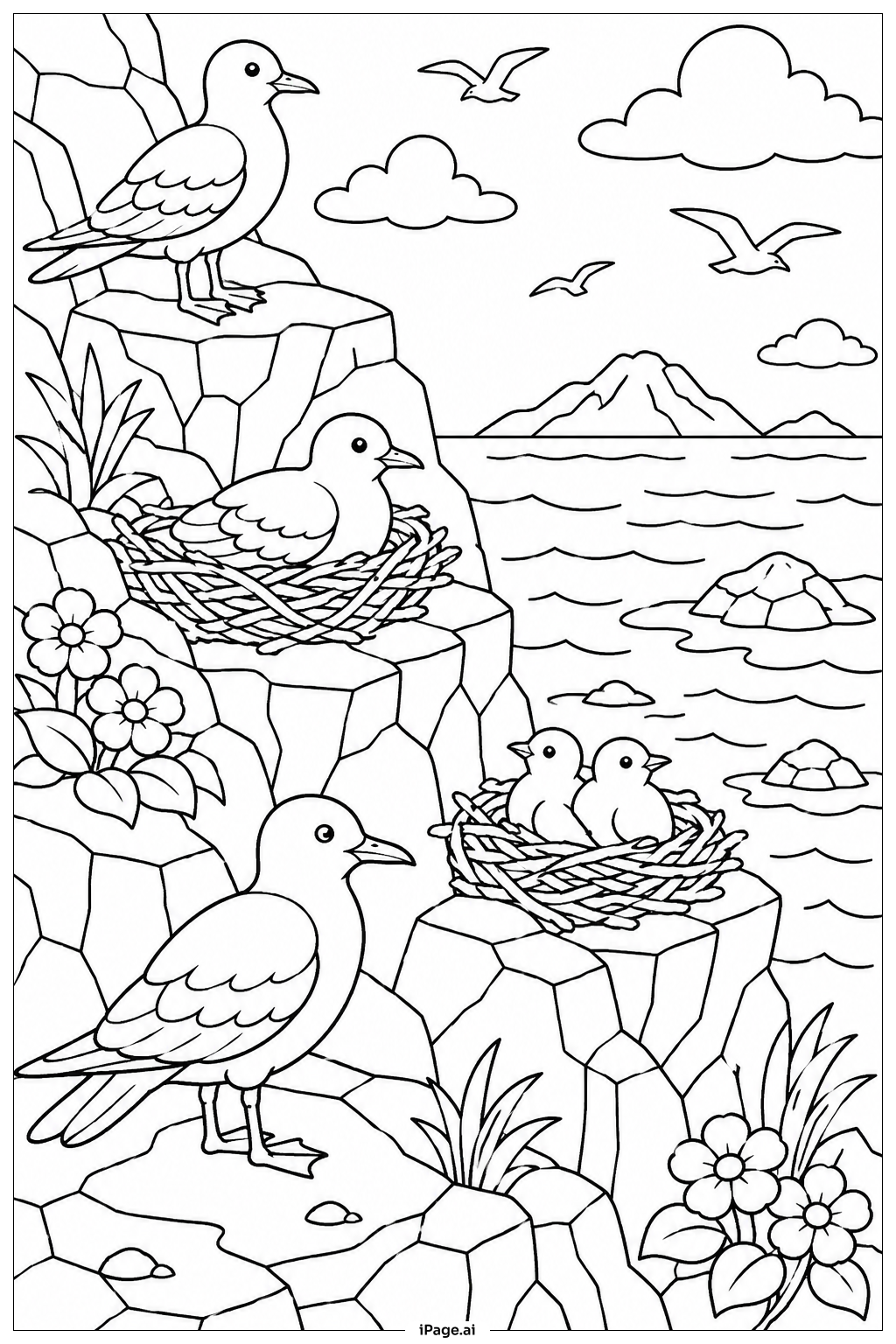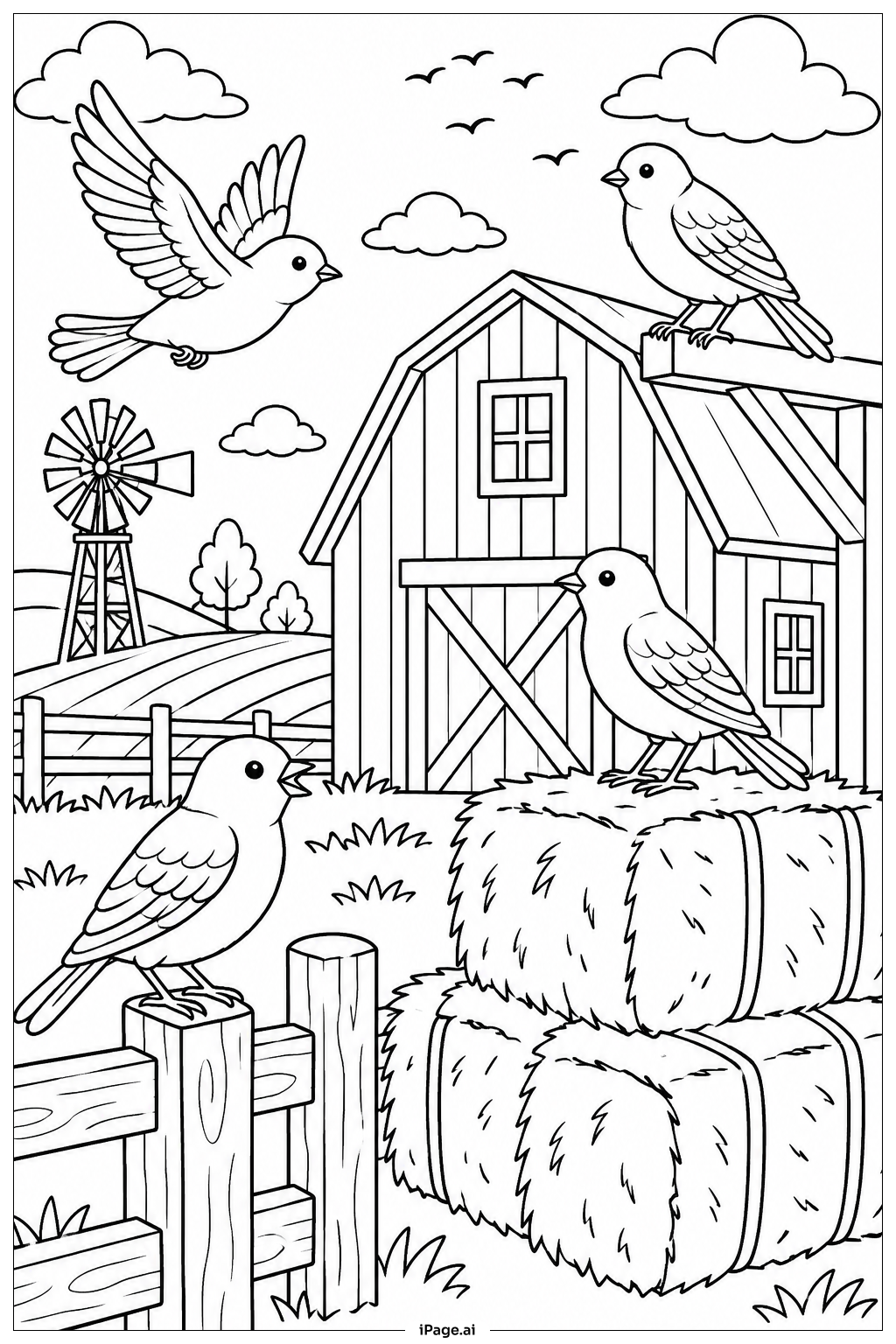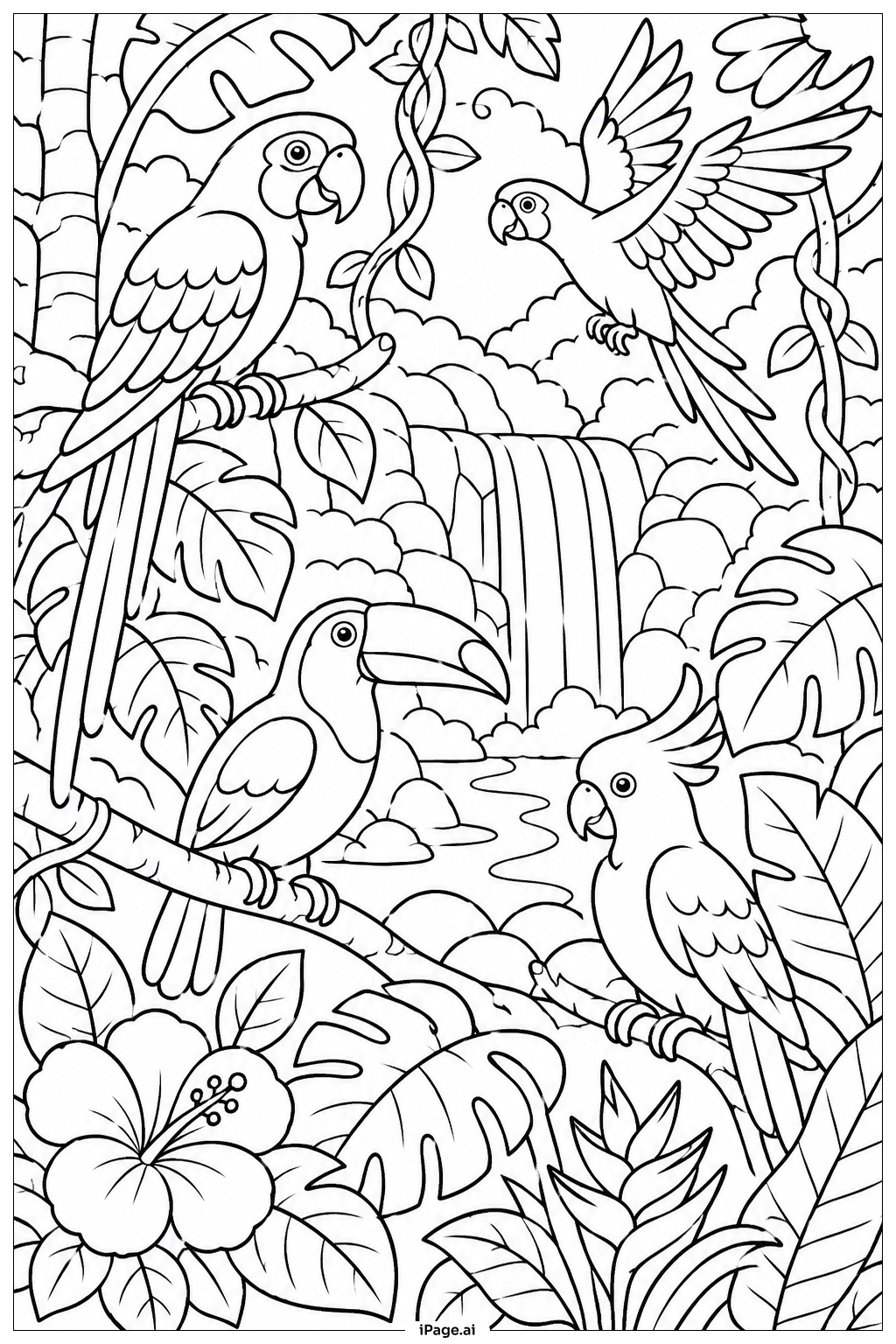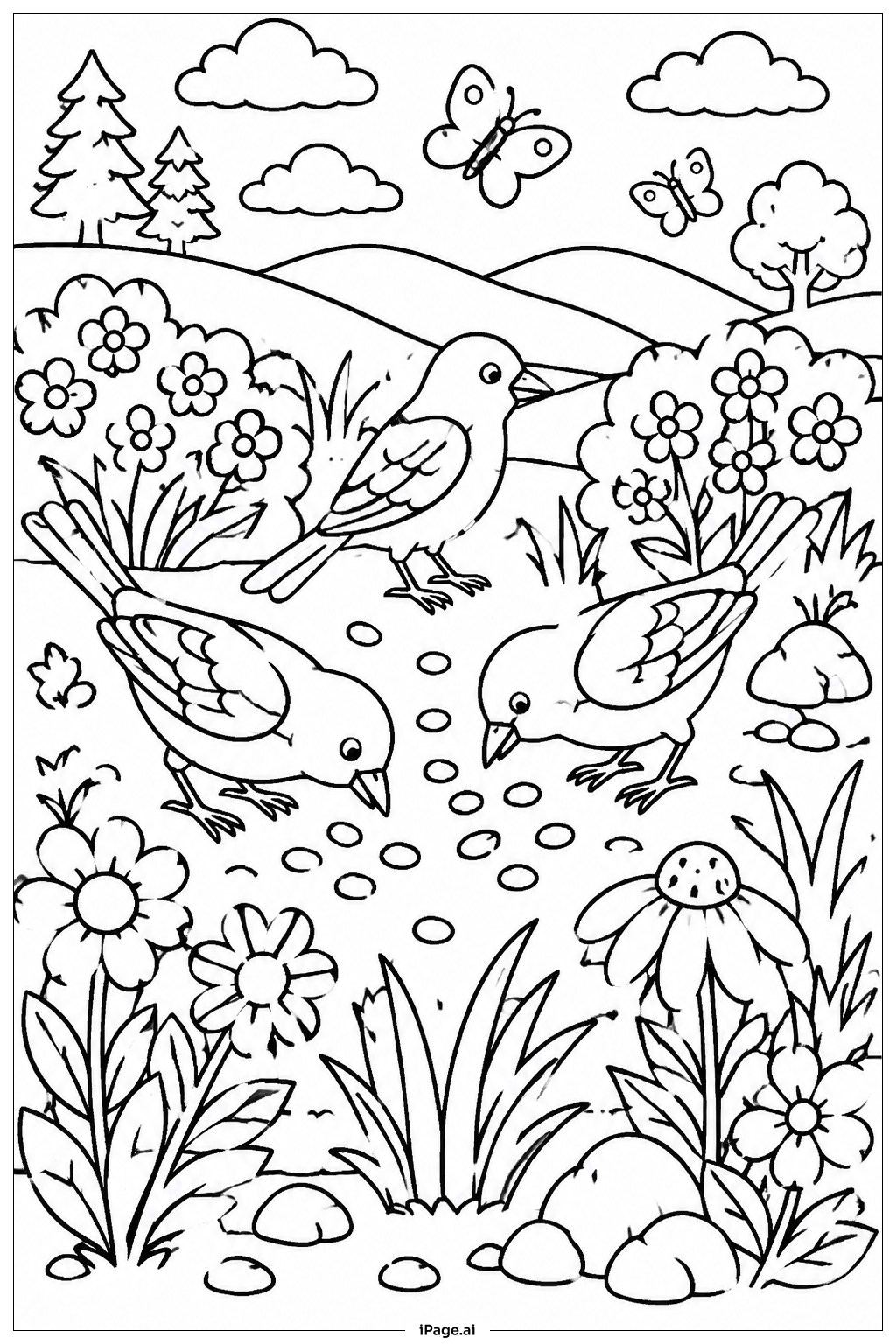
Coloring tips: How to color Birds Feeding In Meadow coloring page well?
Start with the sky or background grasses using soft greens and light yellows to set a warm, sunny meadow mood. For the birds, look at real bird species for color inspiration — robins have red-orange chests, sparrows are warm brown, and bluebirds shine with bright blue feathers. Use darker shades of the same color to add shadows under wings and along body curves. Color the beaks and feet in yellow, orange, or pale gray. For the wildflowers, try purple, pink, yellow, and white to keep the scene cheerful and colorful. The ground can be filled with light tan or earthy brown tones mixed with patches of green. Layer your colors lightly at first, then build up deeper tones for richness. Colored pencils work great for feather details, while markers or watercolors are perfect for the grassy background. Have fun mixing colors to make each bird look unique and full of life.
Coloring challenges: Which parts are difficult to color and need attention for Birds Feeding In Meadow coloring page?
• Feather Texture Details: Birds have many small, overlapping feathers that require careful coloring. Each feather should follow the natural direction of the body, curving along the wings and chest. Rushing through this area can make the bird look flat. Take your time and use short, light strokes to build up the texture layer by layer.
• Multiple Bird Coloring Consistency: When coloring several birds of the same species, keeping their colors consistent across the page can be tricky. It helps to color all birds of one type before moving on to the next. This way, you can use the same color combination throughout without losing track of which shades you used.
• Small Beak and Feet Areas: The beaks and feet are very small and detailed. Filling these tiny shapes neatly without coloring outside the lines takes steady hands and a sharp pencil or fine-tipped marker. These areas are especially challenging for younger colorists, so going slow and using a well-sharpened tool makes a big difference.
• Layered Grass and Background Elements: The meadow background has overlapping grasses, leaves, and flowers all layered together. Deciding which element sits in front of another and using lighter or darker shades to show depth can be confusing. Start with the background elements in lighter tones and gradually work forward using stronger, richer colors.
• Blending Natural Color Transitions: Birds rarely have just one flat color. Their feathers often shift gradually from one tone to another. Blending colors smoothly, such as going from a dark back to a lighter belly, takes practice. Using two or three shades of the same color family and blending gently at the edges helps create a realistic, natural look.
Benefits of coloring books: Advantages of drawing Birds Feeding In Meadow coloring page
Coloring this Birds Feeding In Meadow page offers a wonderful range of benefits for children and young artists. Carefully filling in the feathers, grasses, and flowers helps develop fine motor skills and strengthens hand control, which supports everyday tasks like writing and drawing. Choosing colors for different bird species encourages creative thinking and sparks curiosity about nature and wildlife. Kids may feel inspired to learn more about the birds they are coloring and the meadow habitats where they live. The peaceful, nature-themed scene also has a calming effect, helping children slow down, focus, and relax after a busy day. Working through the detailed areas of feathers and background plants builds patience and persistence, teaching young colorists that taking their time leads to a more satisfying result. The sense of accomplishment that comes from completing a detailed scene like this boosts confidence and self-esteem. Sharing the finished page with family or friends adds a social and emotional layer to the activity, making it even more rewarding. Overall, this coloring page turns a simple creative activity into a meaningful experience that nurtures the mind, body, and imagination.