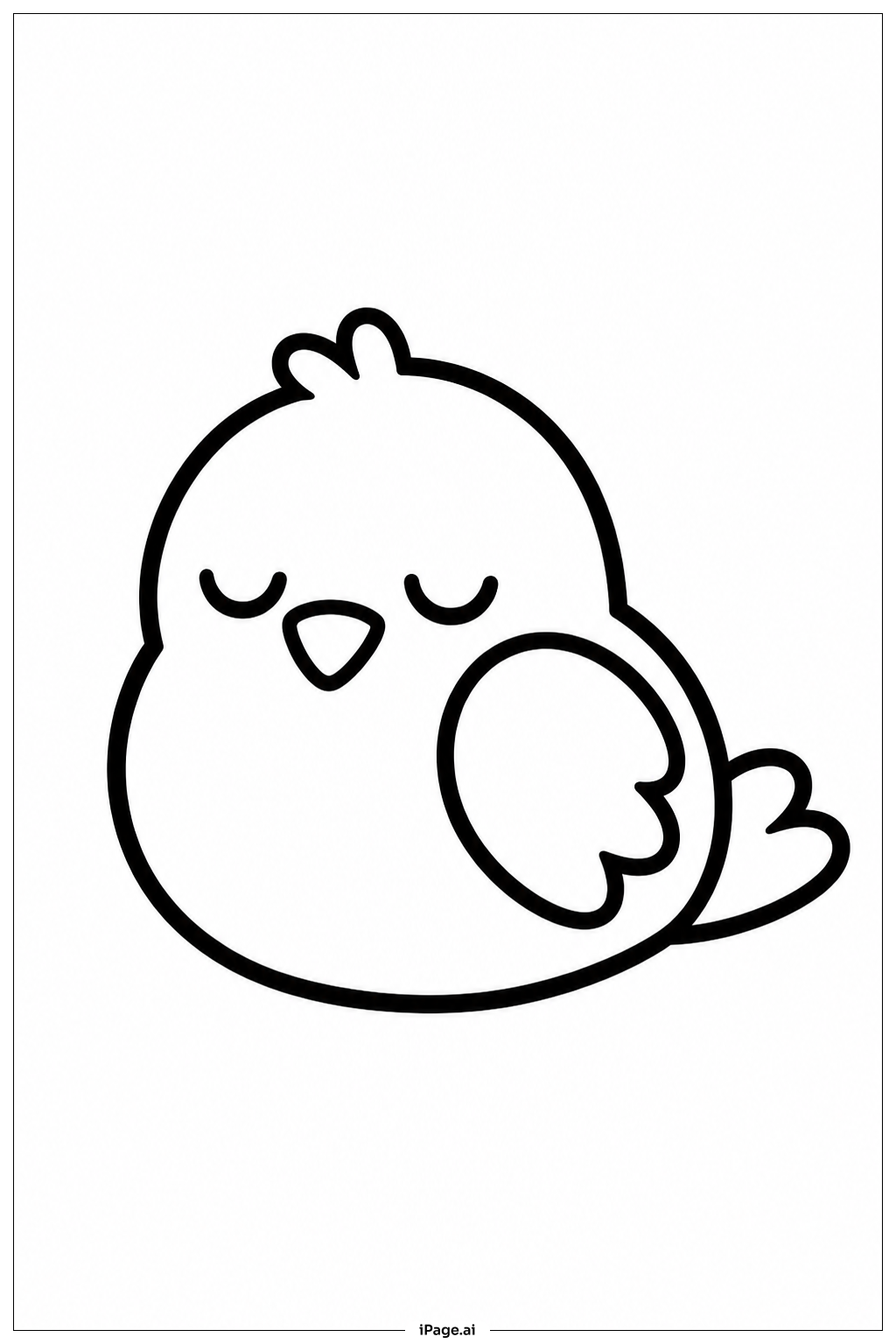
Coloring tips: How to color Sleepy Bird coloring page well?
Use warm, soft colors for the bird to show how cozy and sleepy it feels. Shades of light brown, cream, or soft gray can work well for the feathers. Add gentle touches of pastel colors like pale yellow or light blue to the wings and tail for a calm effect. For the branch, try natural colors like brown or green to keep it realistic. You can color the leaves with different shades of green to add depth. The background can be light and not too busy, perhaps a gentle sky blue or soft pink to represent early morning or sunset.
Coloring challenges: Which parts are difficult to color and need attention for Sleepy Bird coloring page?
• Feather Texture: The bird’s feathers have many small lines and details that require careful coloring to avoid going outside the lines and to keep the texture realistic.
• Small Details: The eyes, beak, and claws are tiny parts that need steady hands to color without overlapping.
• Blending Colors: To show the softness of the feathers, blending light and shadow colors smoothly can be challenging, especially for beginners.
• Branch and Leaves: Coloring the thin branch with thin strokes requires precision. Leaves overlapping the branch also need attention to avoid mixing colors.
• Background Balance: Keeping the background light and soft while still filling the space evenly demands careful choice of colors and pressure to keep the sleepy mood intact.
Benefits of coloring books: Advantages of drawing Sleepy Bird coloring page
Coloring this Sleepy Bird image helps develop fine motor skills because of the detailed feather and small parts. It encourages focus and patience as you carefully fill in delicate areas. Choosing soft, calming colors can be relaxing and may improve mood, making it a peaceful activity. It also lets children practice blending and shading techniques, useful skills for more advanced coloring. Overall, this image promotes mindfulness and a gentle attention to detail while engaging creativity.