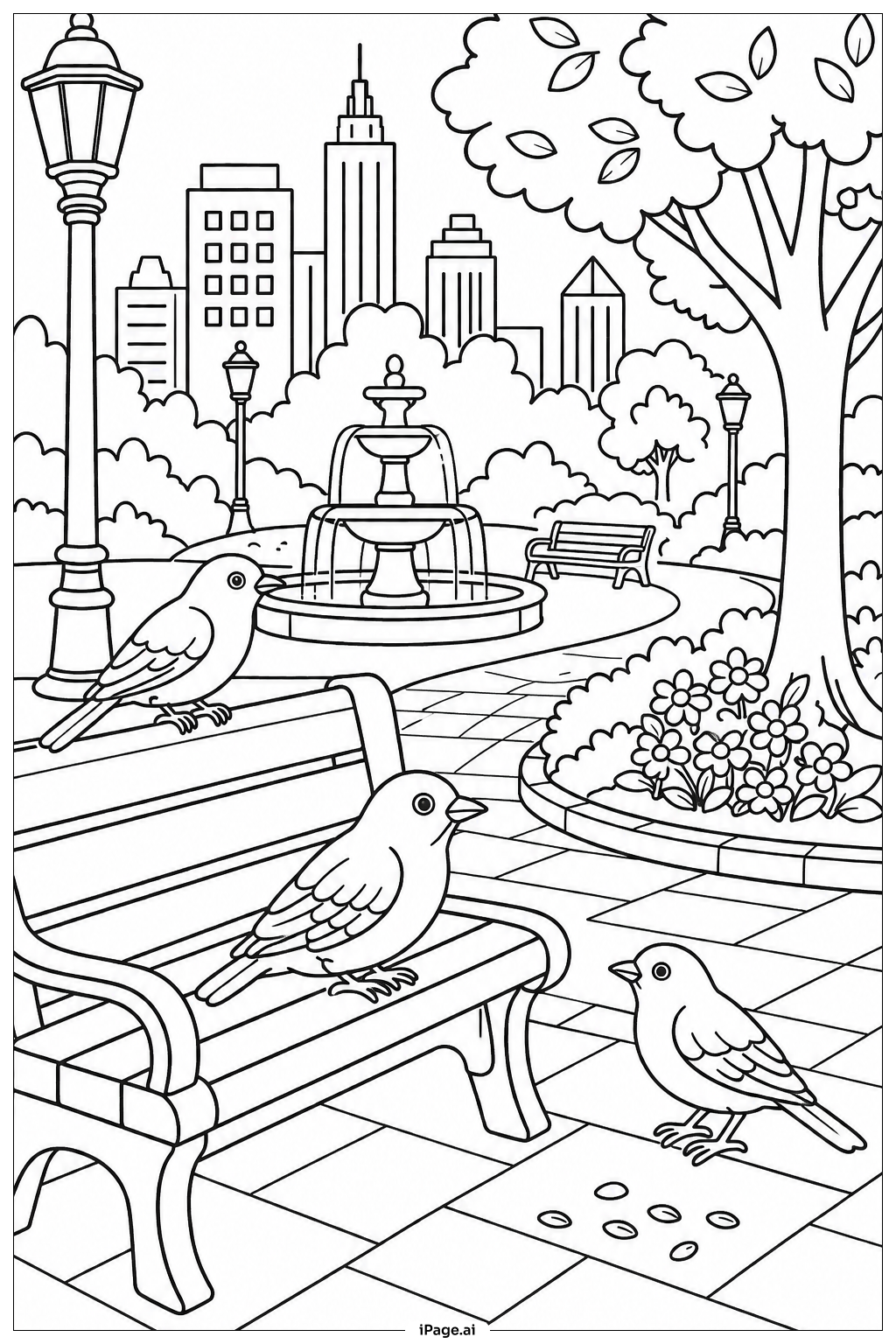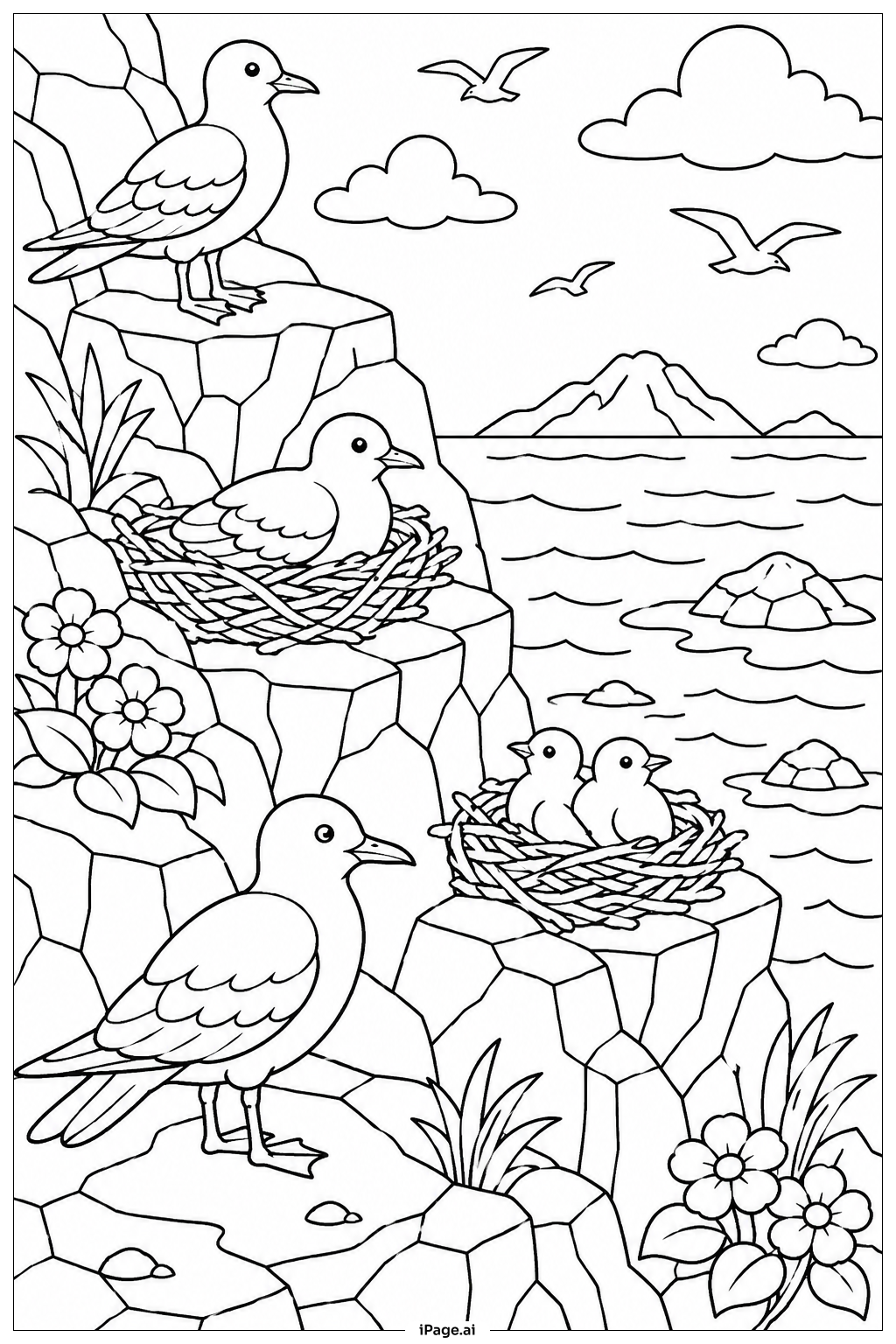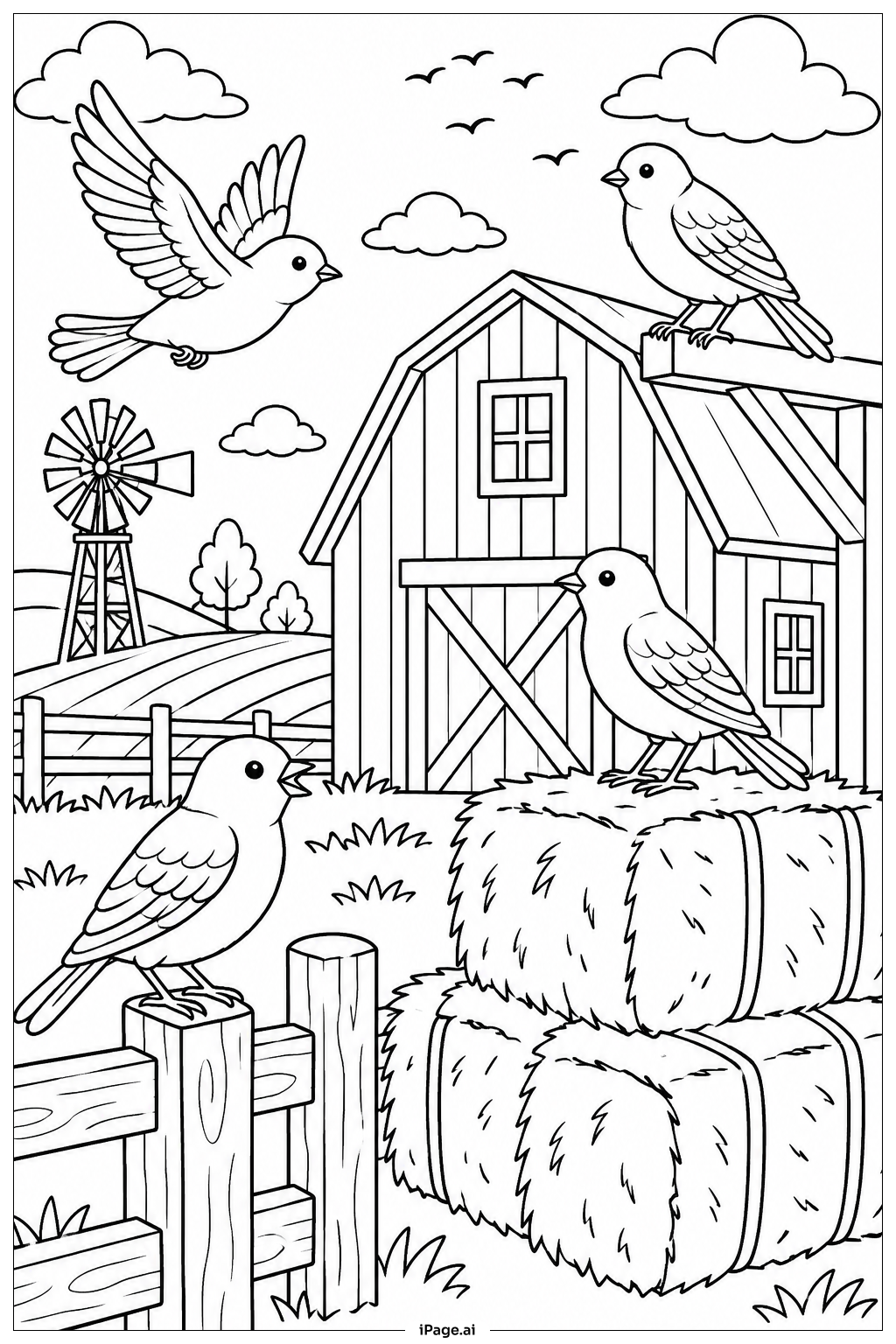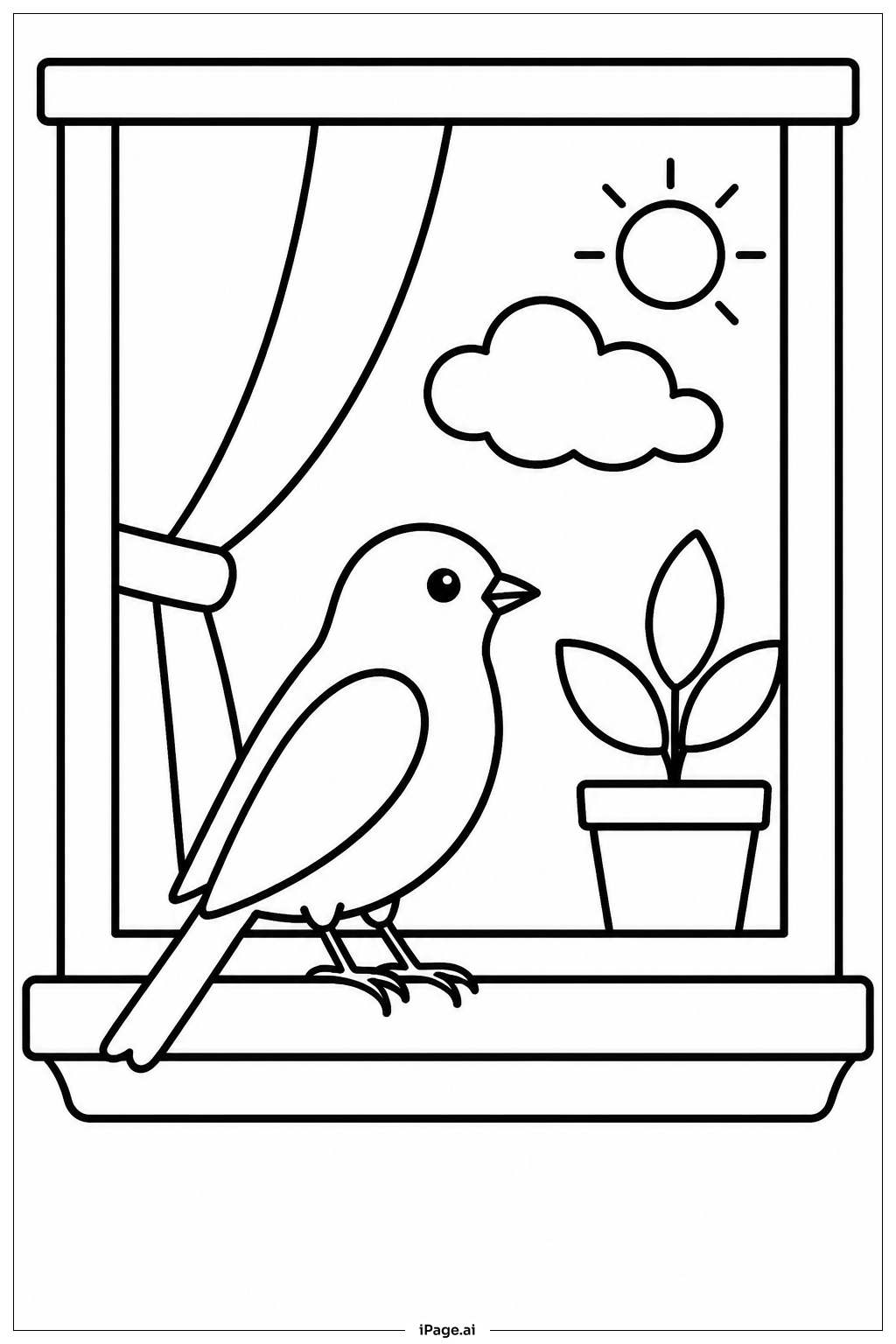
Coloring tips: How to color Bird Visiting Window coloring page well?
Use bright and cheerful colors to bring the Bird Visiting Window to life. For the Bird, try shades like blue, yellow, or red to highlight its feathers and make it stand out. The window frame can be colored in warm browns or soft grays to show wood or painted surfaces. Use greens for the leaves and plants outside the window, with touches of light pink or lavender for the flowers to add a gentle contrast. To make the scene feel natural, add light shading on the window glass with pale blues or whites. Feel free to experiment with different color combinations to create a cozy and inviting atmosphere.
Coloring challenges: Which parts are difficult to color and need attention for Bird Visiting Window coloring page?
• Feather Texture: The Bird’s feathers have fine lines and small details that require careful coloring to keep the texture visible without smudging. Coloring within these small shapes can be challenging but helps make the Bird look realistic. • Window Frame Detail: The wooden window has many sections, including corners and edges, which need steady strokes to avoid coloring outside the lines. Choosing consistent colors for wood grain effects may require patience. • Overlapping Elements: Leaves and flowers partially overlap the window, making it tricky to decide how to color edges so objects look separate yet connected naturally. • Small Features: Tiny flower petals and the Bird’s beak require precision and delicate effort, especially for younger colorers who are still mastering fine motor skills. • Light Reflection: Depicting the glass window’s transparent effect needs subtle use of lighter colors or white spaces to create a believable shine, which might be difficult to balance when filling in colors.
Benefits of coloring books: Advantages of drawing Bird Visiting Window coloring page
Coloring this Bird Visiting Window image offers many benefits. It helps develop fine motor skills and hand-eye coordination through careful coloring of detailed areas like feathers and window edges. The scene encourages creativity as colorers choose hues for natural elements such as the Bird, leaves, and flowers. It also fosters attention to detail by requiring focus on small, overlapping parts. Children can learn about color harmony when blending warm tones of the wood with cool greens and bright colors of nature. Overall, this image provides a relaxing and educational activity that connects kids with nature and improves their artistic confidence.