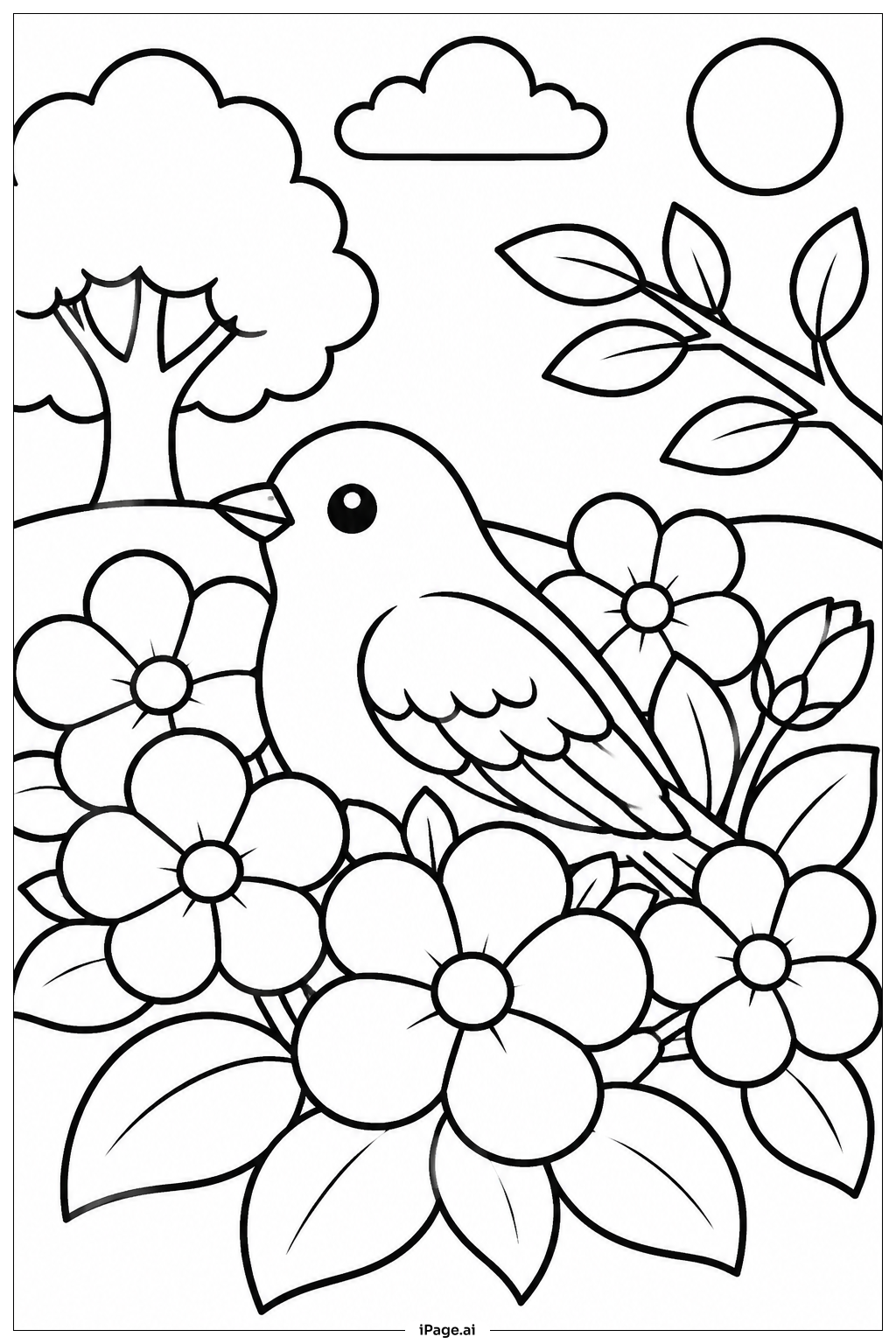
Coloring tips: How to color Bird In Flower Bush coloring page well?
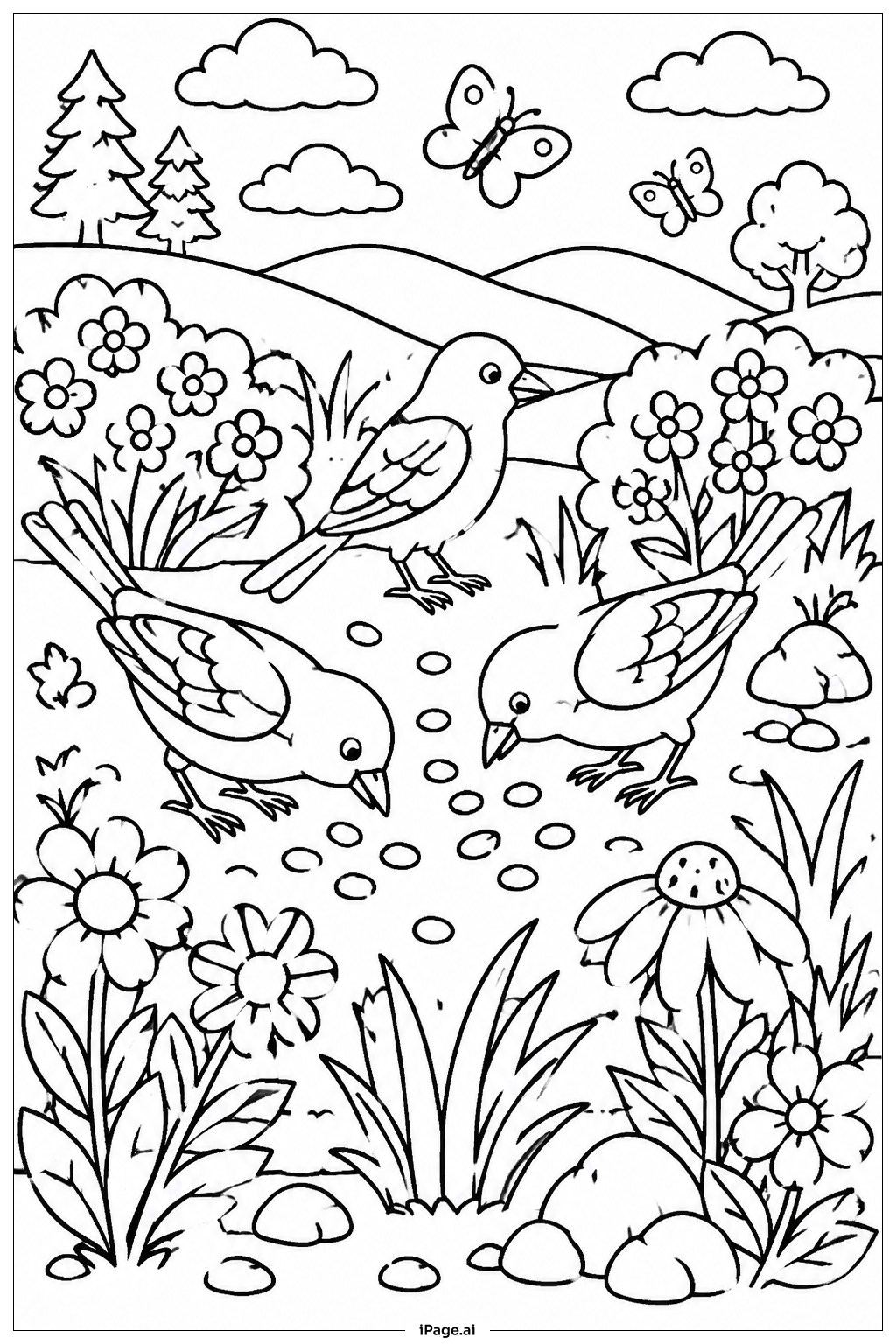
To bring this Bird In Flower Bush to life, try using bright and cheerful colors. You can color the Bird with shades of blue, red, or yellow to make it stand out. For the flowers, use a mix of pinks, purples, reds, and oranges to create a beautiful garden. The leaves can be different greens, from light lime to deeper forest green, to show depth. Consider blending colors on the petals to show light and shadow, making the flowers look round and soft. You can also add some small details like yellow or white dots in the flowers’ centers. Have fun experimenting with different color combinations to create a lively and natural scene.
Coloring challenges: Which parts are difficult to color and need attention for Bird In Flower Bush coloring page?
• Fine Details: The feathers on the Bird and the delicate flower petals have many small lines. Coloring these carefully without going outside the lines can be challenging for younger children.
• Overlapping Elements: The leaves, flowers, and Bird overlap in several places. It requires attention to avoid mixing colors between these parts and to keep the image clear.
• Layer Depth: Showing depth by using darker and lighter shades on petals and leaves is tricky but adds realism. It needs patience and some blending skills.
• Small Buds and Leaves: Tiny parts like flower buds and smaller leaves need precision. Coloring them neatly might be hard for little hands.
• Smooth Transitions: Creating smooth color gradients on flowers or feathers to imitate light falling on surfaces can be challenging, especially with crayons or markers.
Benefits of coloring books: Advantages of drawing Bird In Flower Bush coloring page
Coloring this Bird In Flower Bush helps improve fine motor skills because it requires careful use of the hands and fingers to stay within the small spaces. It encourages creativity as children choose colors for the Bird and flowers, learning about nature’s variety. The image also promotes focus and patience through its detailed areas. It can boost a child’s understanding of color harmony by mixing different shades and textures. Furthermore, coloring natural themes like this fosters a connection with the environment and inspires curiosity about birds and plants. Overall, it is a fun and educational activity suitable for different ages.