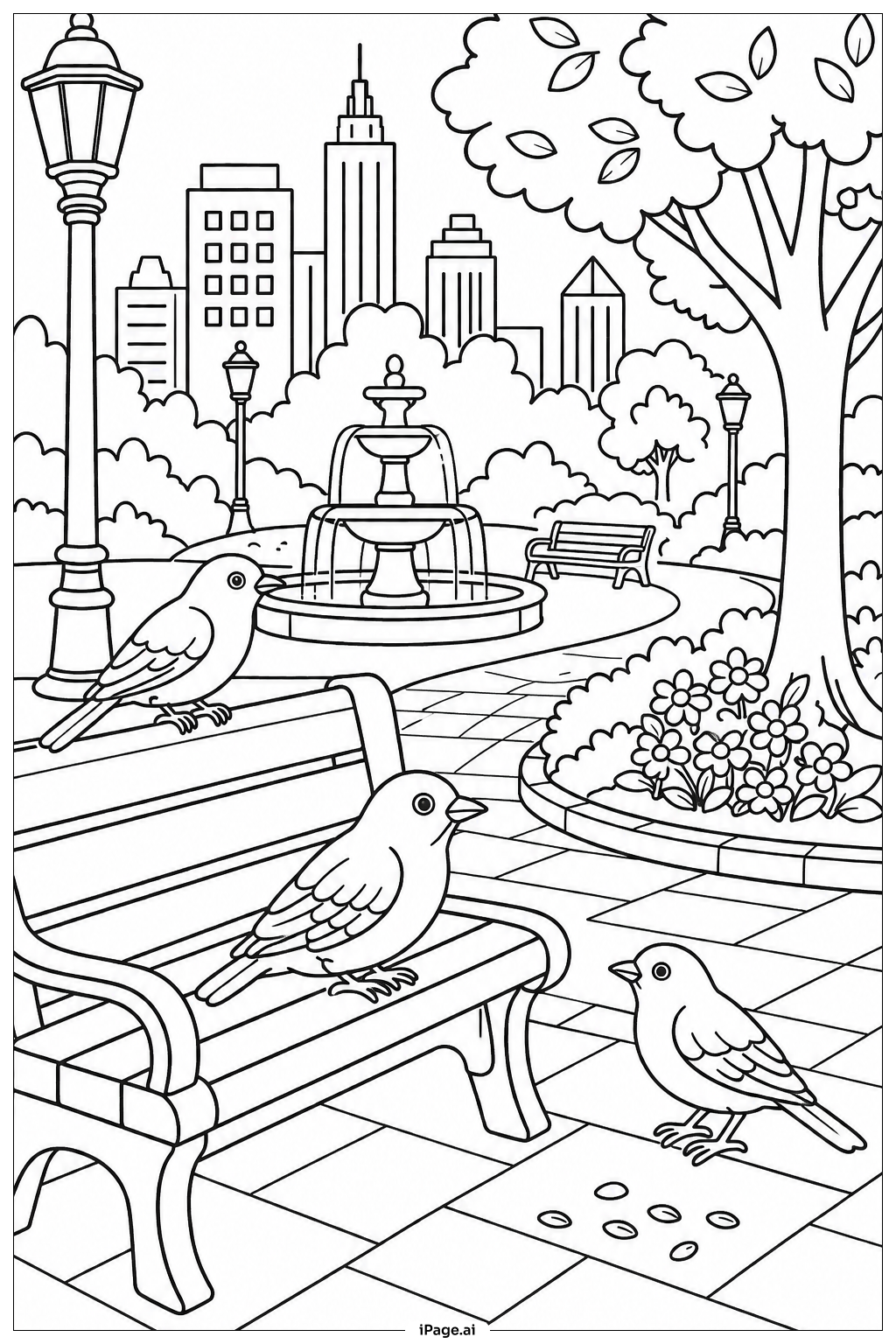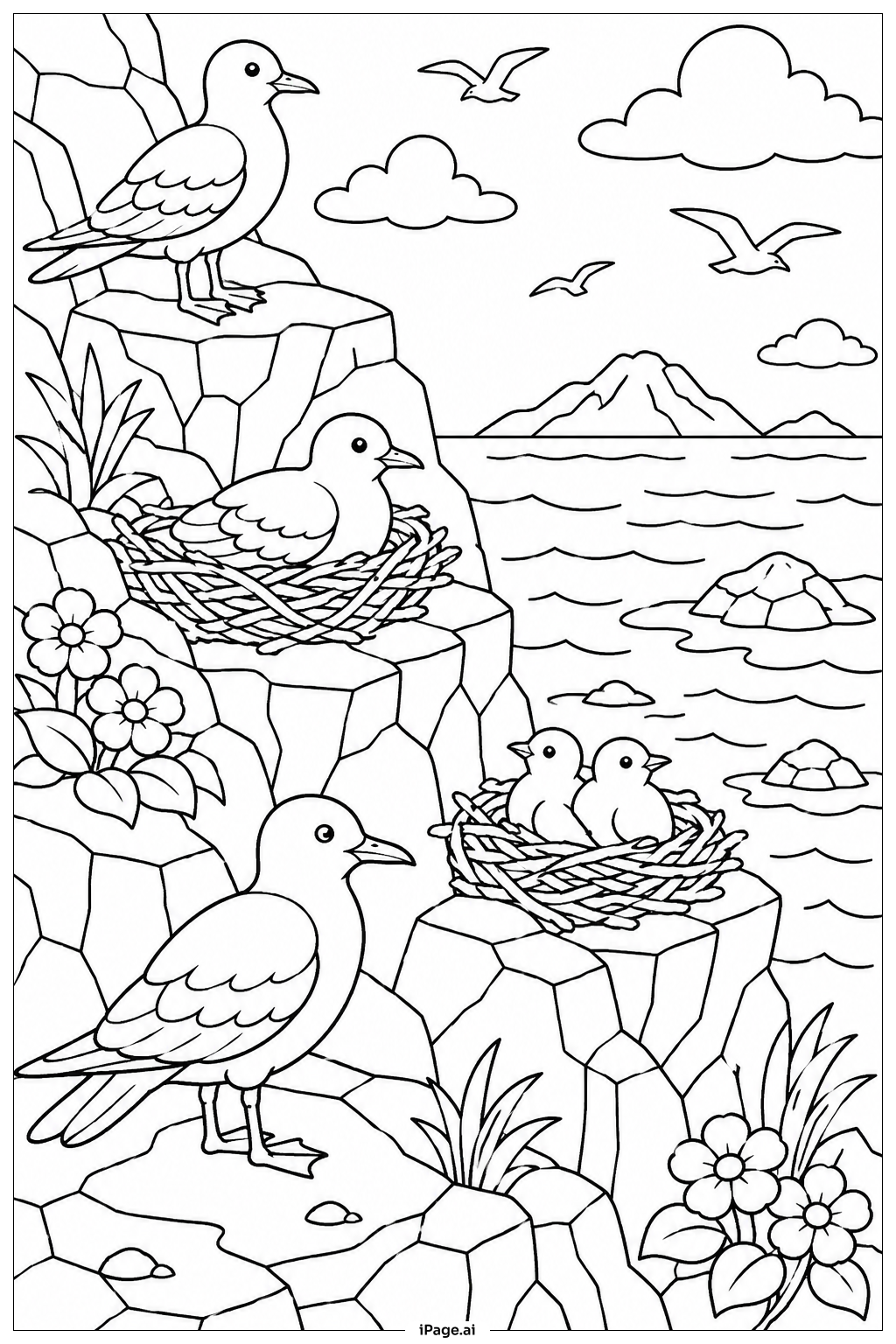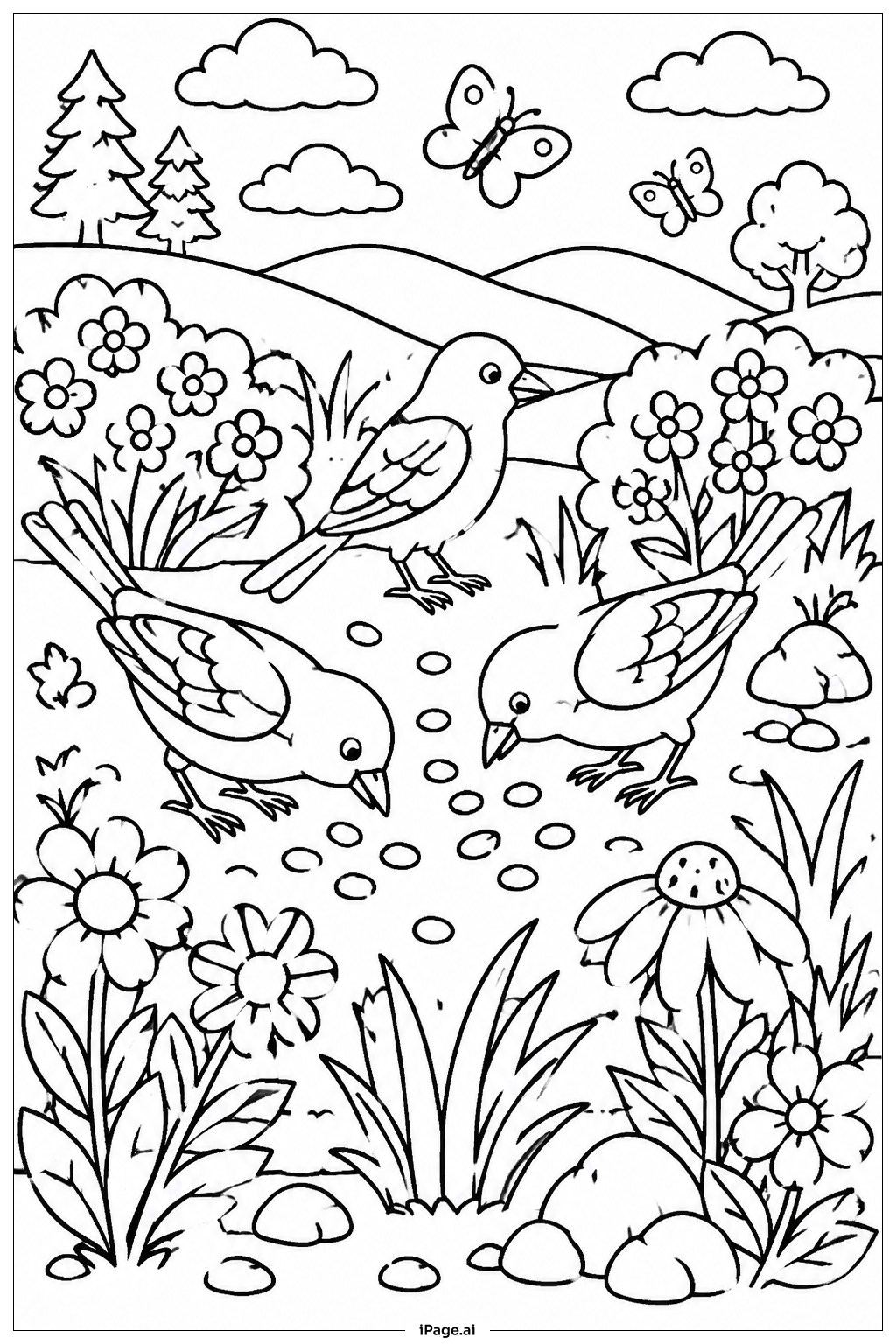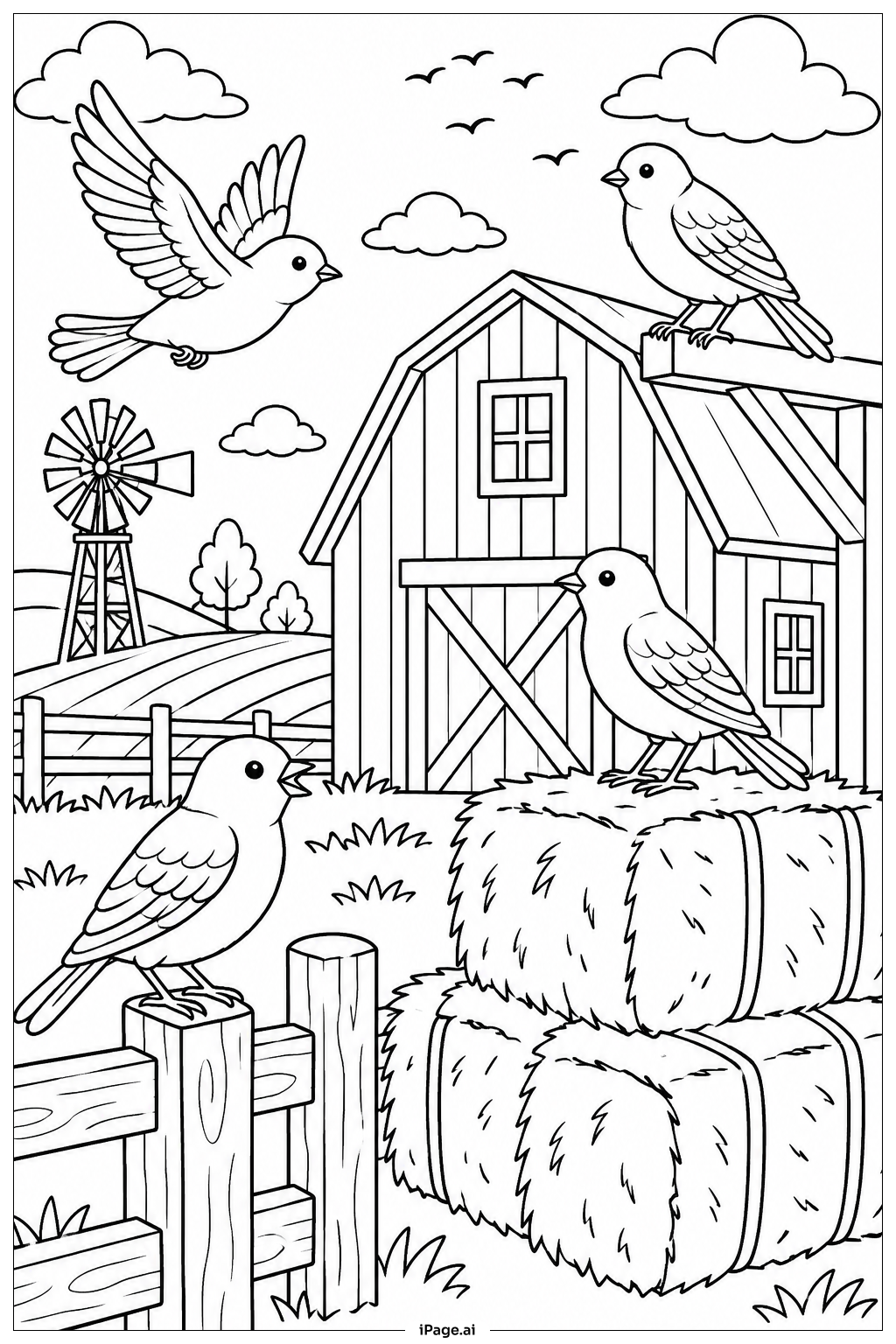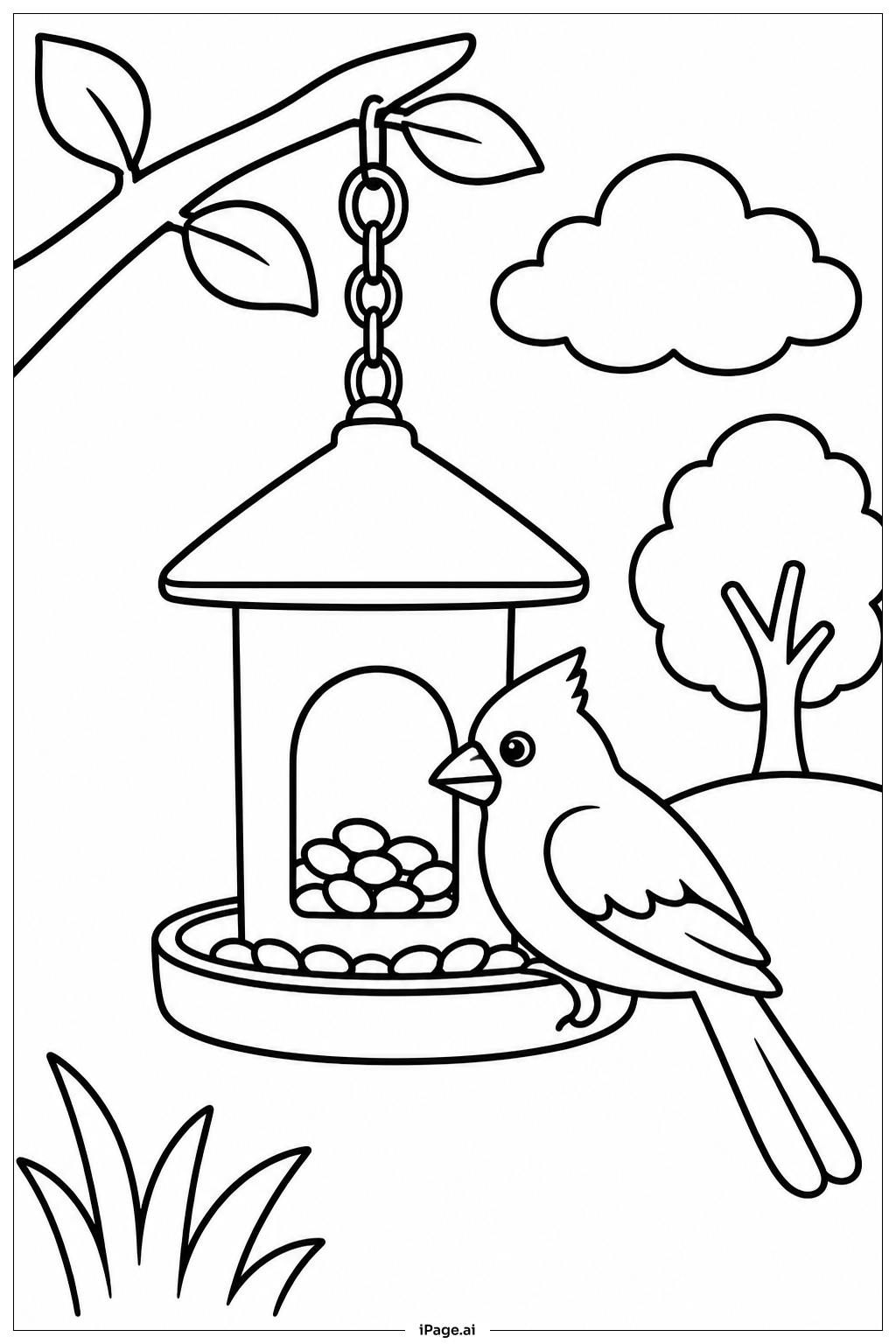
Coloring tips: How to color Bird At Feeder coloring page well?
For the bird, try vibrant colors like red for a cardinal, blue for a bluebird, or yellow for a goldfinch. Use brown tones for sparrows or mix orange and black for orioles. Color the feather details with slightly darker shades to add dimension. The bird feeder can be painted in natural wood tones like brown, tan, or gray. The roof might be red, green, or dark brown to resemble real birdhouses. Add shadows under the roof and around the posts using darker pencil strokes. The birdseed can be yellow, brown, or mixed earth tones. Consider adding a soft blue or light green background to suggest sky or foliage. Use colored pencils for fine feather details and markers for larger areas like the feeder structure.
Coloring challenges: Which parts are difficult to color and need attention for Bird At Feeder coloring page?
• Feather Texture and Layering: The bird's feathers require careful attention to create realistic texture. Each feather section on the wings and tail needs individual coloring with proper shading to show overlapping layers. Young colorists may find it challenging to maintain consistent direction and pressure while coloring multiple small feather shapes. Using light strokes in the direction of feather growth and gradually building up color intensity helps achieve a natural look.
• Small Detailed Areas: The bird's beak, eye, feet, and the birdseed on the feeding tray are tiny spaces that require precision. Children may struggle to stay within these small boundaries without colors bleeding into adjacent areas. Using fine-tipped markers or sharp colored pencils is essential. Taking time and working slowly prevents frustration and improves accuracy in these confined spaces.
• Wood Grain and Structure: Creating realistic wood texture on the feeder requires understanding of grain patterns and color variation. Coloring straight lines to represent wood planks while adding knots and natural imperfections takes practice. Blending different shades of brown and using directional strokes that follow the wood grain direction adds authenticity but demands patience and observation skills.
• Depth and Shadow Creation: Adding dimension to make the feeder look three-dimensional involves strategic shading. Darker colors belong under the roof overhang, behind posts, and beneath the feeding platform. Understanding where light sources come from and how shadows fall naturally requires spatial reasoning that develops with practice and guidance.
Benefits of coloring books: Advantages of drawing Bird At Feeder coloring page
Coloring this bird feeder scene offers wonderful educational and developmental benefits. Children learn about different bird species and their colors, sparking interest in nature and wildlife observation. The detailed feather patterns improve fine motor skills and hand-eye coordination as young artists carefully fill small spaces. Focusing on the intricate architectural details of the feeder enhances concentration and patience. Making color choices for realistic or imaginative birds encourages creative thinking and decision-making skills. The combination of organic shapes in the bird and geometric structures in the feeder helps children understand different forms in nature and human-made objects. This peaceful nature scene also provides a calming activity that reduces stress and promotes mindfulness, making it perfect for quiet time or relaxation.