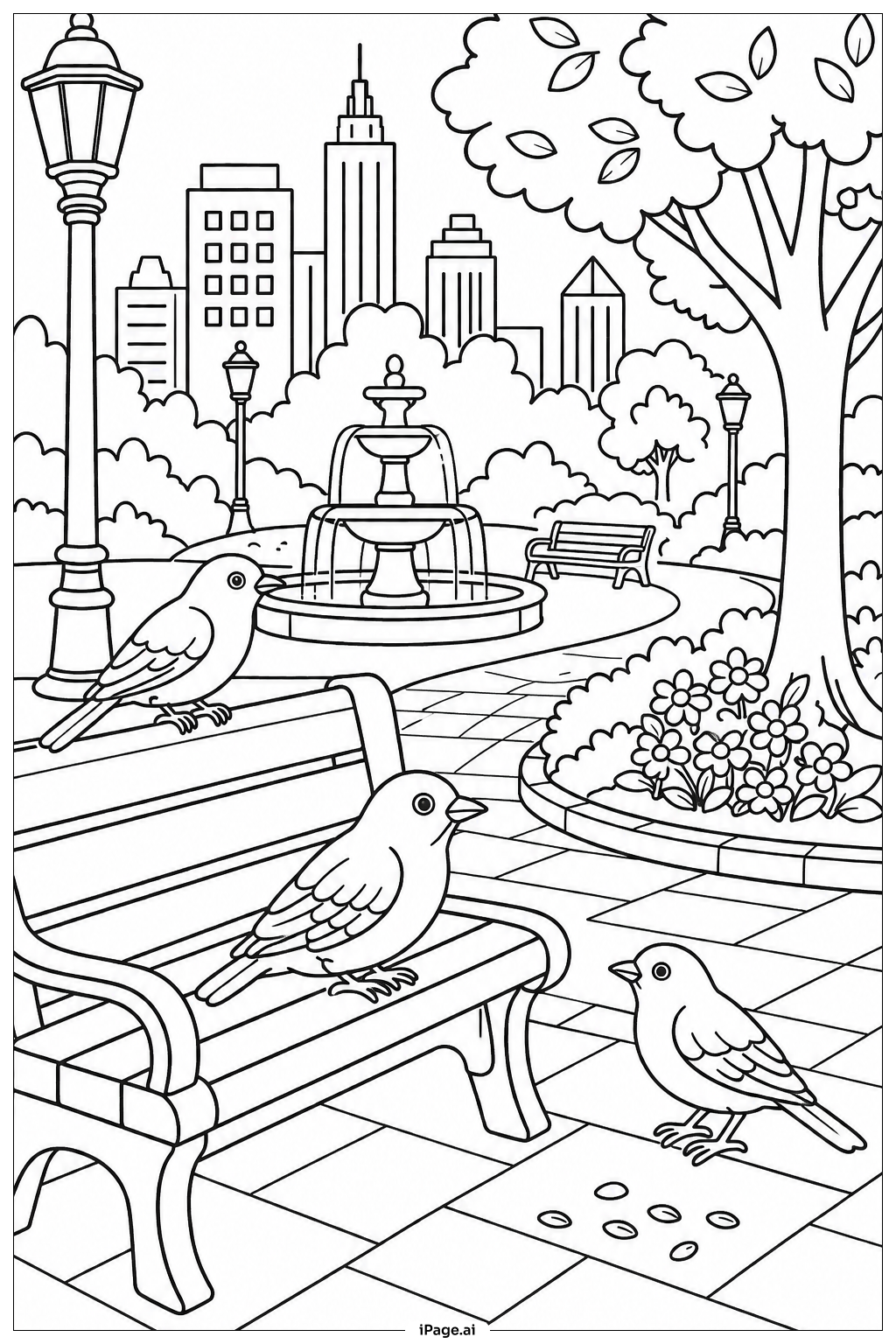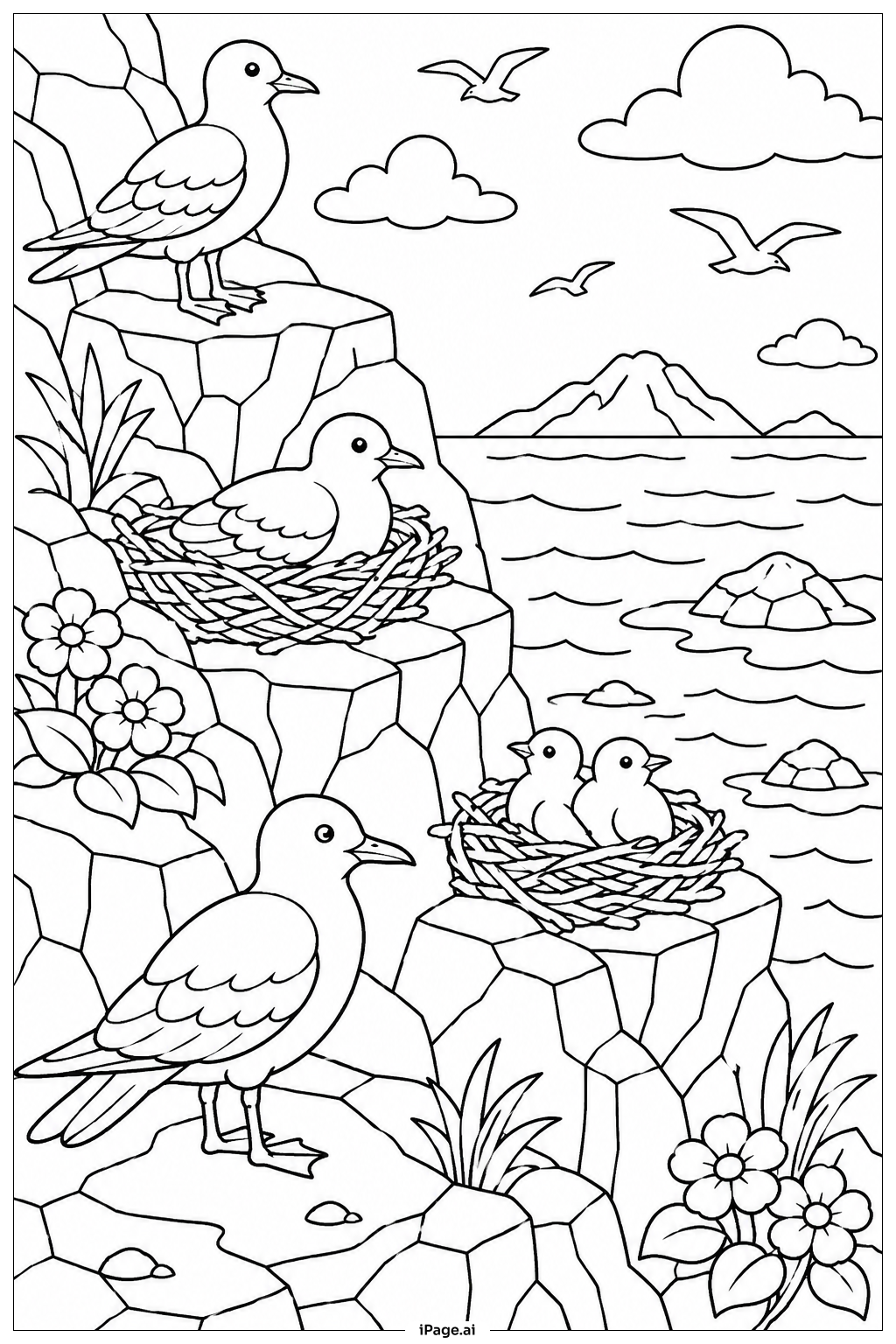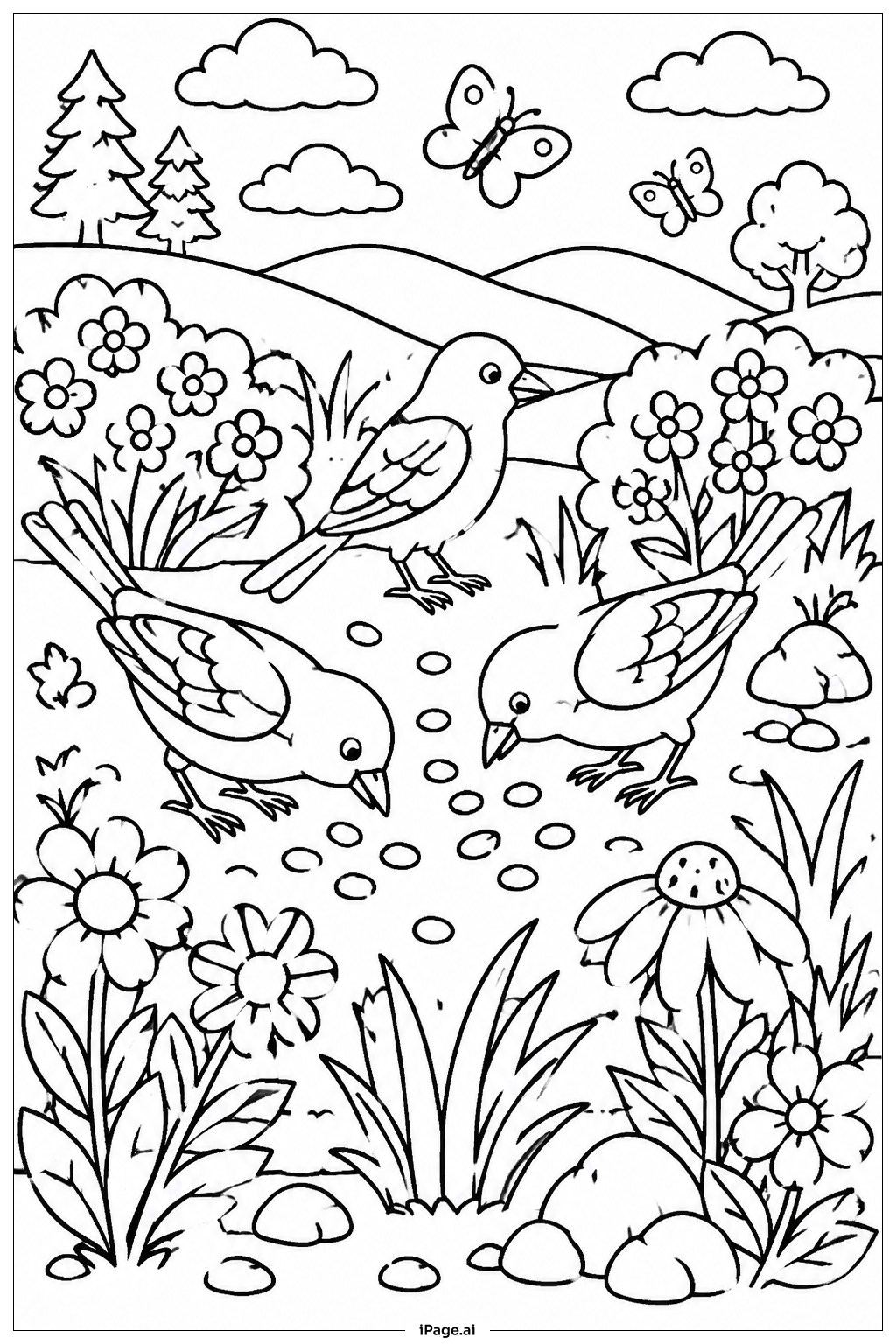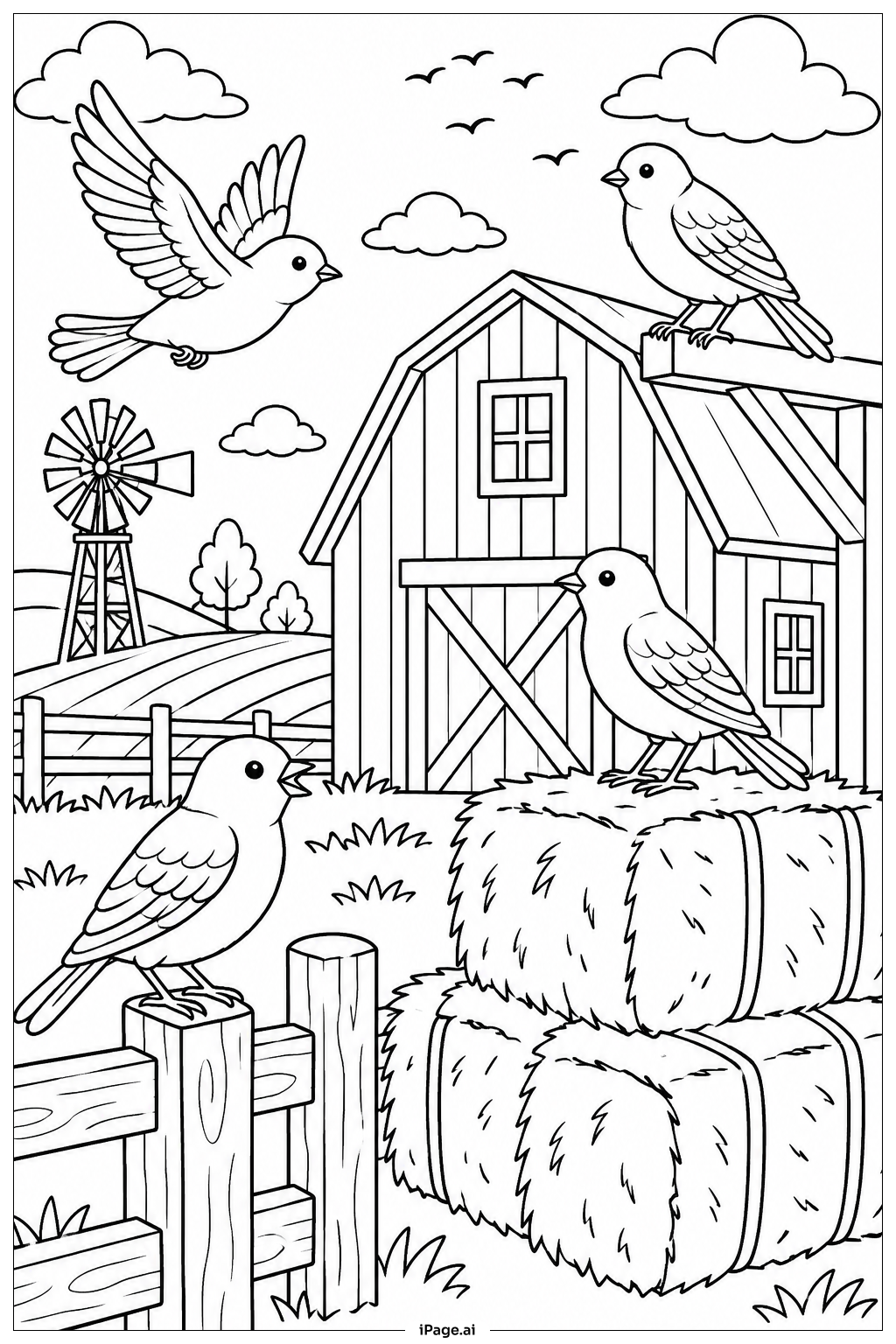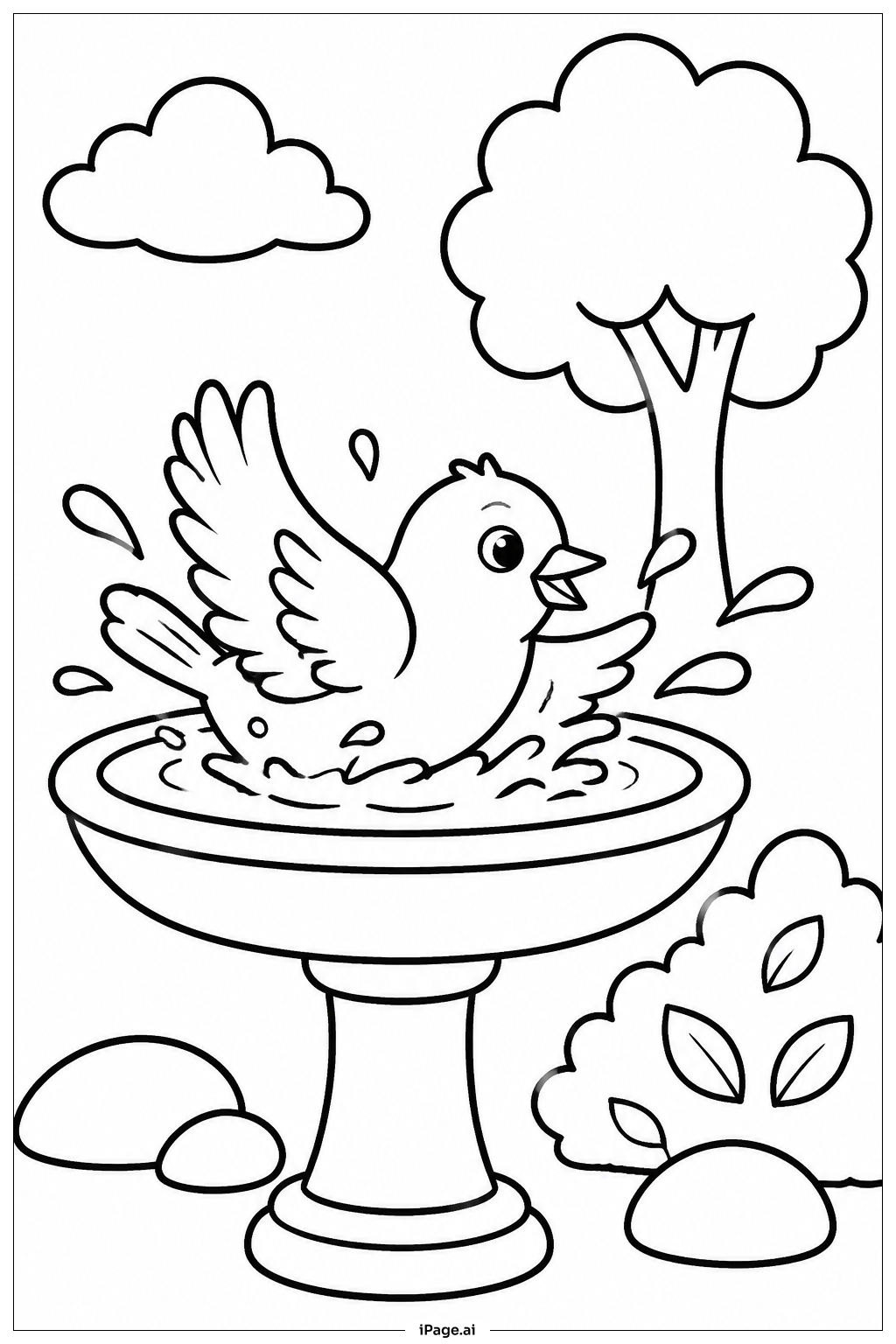
Coloring tips: How to color Bird At Birdbath coloring page well?
Start with the bird itself. Use warm colors like golden yellow, soft orange, or bright red for the body. Add a darker shade on the wings and tail feathers to show depth. The beak and feet can be colored in light orange or tan. For the birdbath basin, try light blue or sky blue to show the water. Use a soft gray or stone beige for the pedestal. The leaves around the scene look great in different shades of green — mix light green and dark green to make them pop. Add yellow or pink to the flowers for a cheerful garden feel. You can use colored pencils for small details and markers or crayons for larger areas. There is no wrong color choice — feel free to make the bird any color you like, such as purple, teal, or even rainbow!
Coloring challenges: Which parts are difficult to color and need attention for Bird At Birdbath coloring page?
• Bird Feather Layers: The bird has many overlapping feathers on its wings, body, and tail. Each feather has its own shape and edge. Coloring them neatly without going outside the lines takes patience. Try using a sharp pencil or thin marker to fill in each feather one at a time. Using two shades of the same color helps show where one feather ends and another begins.
• Small Details on the Beak and Feet: The bird's beak and clawed feet are very small. These tiny areas are tricky to color cleanly. A fine-tipped colored pencil works best here. Take your time and use light strokes to stay within the small spaces without smudging nearby areas.
• Birdbath Pedestal Curves: The pedestal has decorative curves and rounded shapes. Coloring along curved edges smoothly can be difficult, especially where two shapes meet. Using a light base color first and then adding shading along the edges helps give the pedestal a three-dimensional, stone-like look.
• Water Texture in the Basin: The water in the birdbath basin has soft ripple lines. Showing the look of real water using colored pencils or crayons requires blending light and slightly darker blues together. Leaving a few small white highlights can make the water look shiny and realistic.
• Leaves and Floral Background: The leaves and flowers surrounding the birdbath overlap in several places. Keeping neighboring leaves and petals in clearly different shades prevents the background from looking flat or muddled. Alternating light and dark greens across the leaf clusters helps each shape stand out clearly.
Benefits of coloring books: Advantages of drawing Bird At Birdbath coloring page
Coloring this Bird At Birdbath page offers many wonderful benefits for children and beginners alike. First, it helps improve fine motor skills. Carefully staying within the small feather shapes and tiny foot details strengthens hand control and pencil grip. Second, it builds focus and patience. A detailed scene like this encourages kids to slow down, look carefully, and work section by section — great practice for concentration. Third, it sparks creativity. Choosing colors for the bird, water, and flowers lets children express their own ideas and imagination. There is no single right answer, which makes the process fun and freeing. Fourth, it introduces children to nature. The image shows a real behavior — a bird visiting a garden birdbath — which can spark curiosity about birds, wildlife, and outdoor environments. Fifth, it is calming and relaxing. The peaceful garden scene, with its soft shapes and natural elements, creates a soothing coloring experience that helps reduce stress and anxiety. Overall, this page is a joyful, enriching activity that blends art, nature, and learning in one simple sheet.