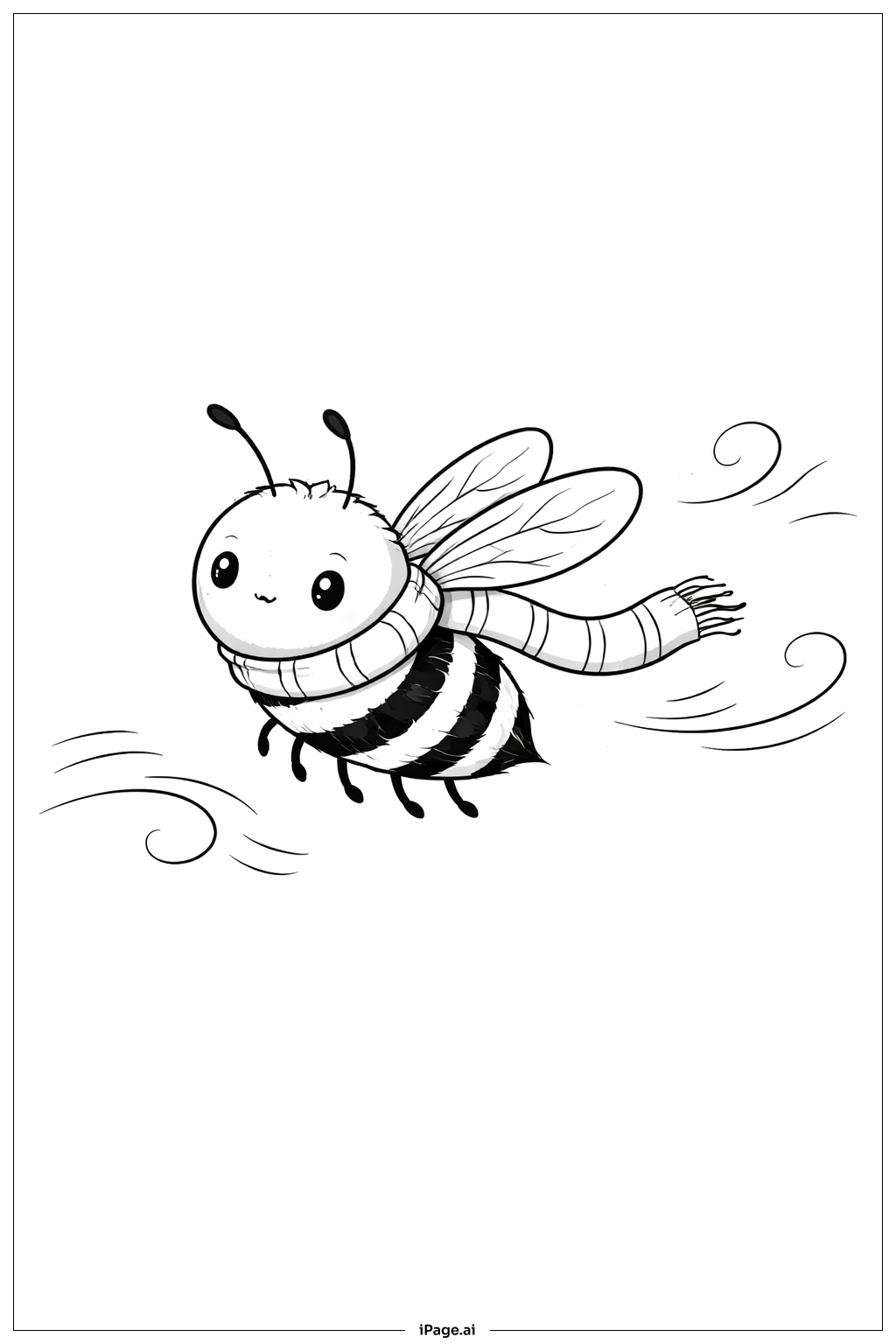
Coloring tips: How to color Bee With Scarf coloring page well?
Start with the bee's body using bright yellow for the main sections and deep black or dark brown for the stripes. The wings can be colored in light blue, lavender, or left pale with just a hint of shimmer using light gray or silver. For the scarf, choose warm, cozy colors like red, orange, burgundy, or winter blue to emphasize the cold-weather accessory. You can add stripes or patterns to the scarf using complementary colors. The face details work well with black for outlines, pink for cheeks, and white highlights in the eyes to make them sparkle. Consider using colored pencils for the knit texture on the scarf, layering strokes to create depth. The background can remain white or add a soft pastel sky color to make the bee pop forward.
Coloring challenges: Which parts are difficult to color and need attention for Bee With Scarf coloring page?
• Stripe Precision: The alternating stripes on the bee's body require careful attention to stay within the lines and maintain consistent color separation. Young children may find it challenging to switch between yellow and black repeatedly without the colors bleeding into each other, especially when using markers or wet media.
• Scarf Texture Details: The knitted pattern on the scarf presents small, repetitive sections that need uniform coloring to create a realistic fabric appearance. Maintaining the texture while keeping the scarf visually distinct from the bee's body requires patience and fine motor control, which can be demanding for younger colorists.
• Wing Transparency Effect: Creating the delicate, translucent look of bee wings involves subtle color choices and light pressure. Children may struggle with using light enough colors or keeping the wings from looking too solid and heavy, which requires understanding of layering and color intensity.
• Small Facial Features: The eyes, antennae, and smile contain small areas that need precision coloring. These tiny spaces can be difficult to fill neatly, especially for children still developing fine motor skills, and may require thin-tipped coloring tools.
• Color Coordination: Choosing colors that work well together for the bee, scarf, and background while maintaining visual harmony and contrast requires some understanding of color relationships, which might challenge beginners in creating a balanced, appealing final image.
Benefits of coloring books: Advantages of drawing Bee With Scarf coloring page
Coloring this charming bee with a scarf helps children develop fine motor skills through careful hand movements within defined spaces. The varying sizes of areas, from large body sections to tiny facial details, provide practice with both broad strokes and precision work. The repetitive stripe pattern builds focus and patience as children work methodically across the body. Choosing colors for the scarf encourages creative decision-making and personal expression. The friendly character design creates emotional engagement, making the coloring experience enjoyable and calming. This image also introduces children to the concept of seasonal adaptations in a playful way, sparking conversations about weather and how we dress warmly. The combination of natural elements (the bee) with human accessories (the scarf) stimulates imagination and storytelling possibilities, allowing children to create narratives around their colored creation.