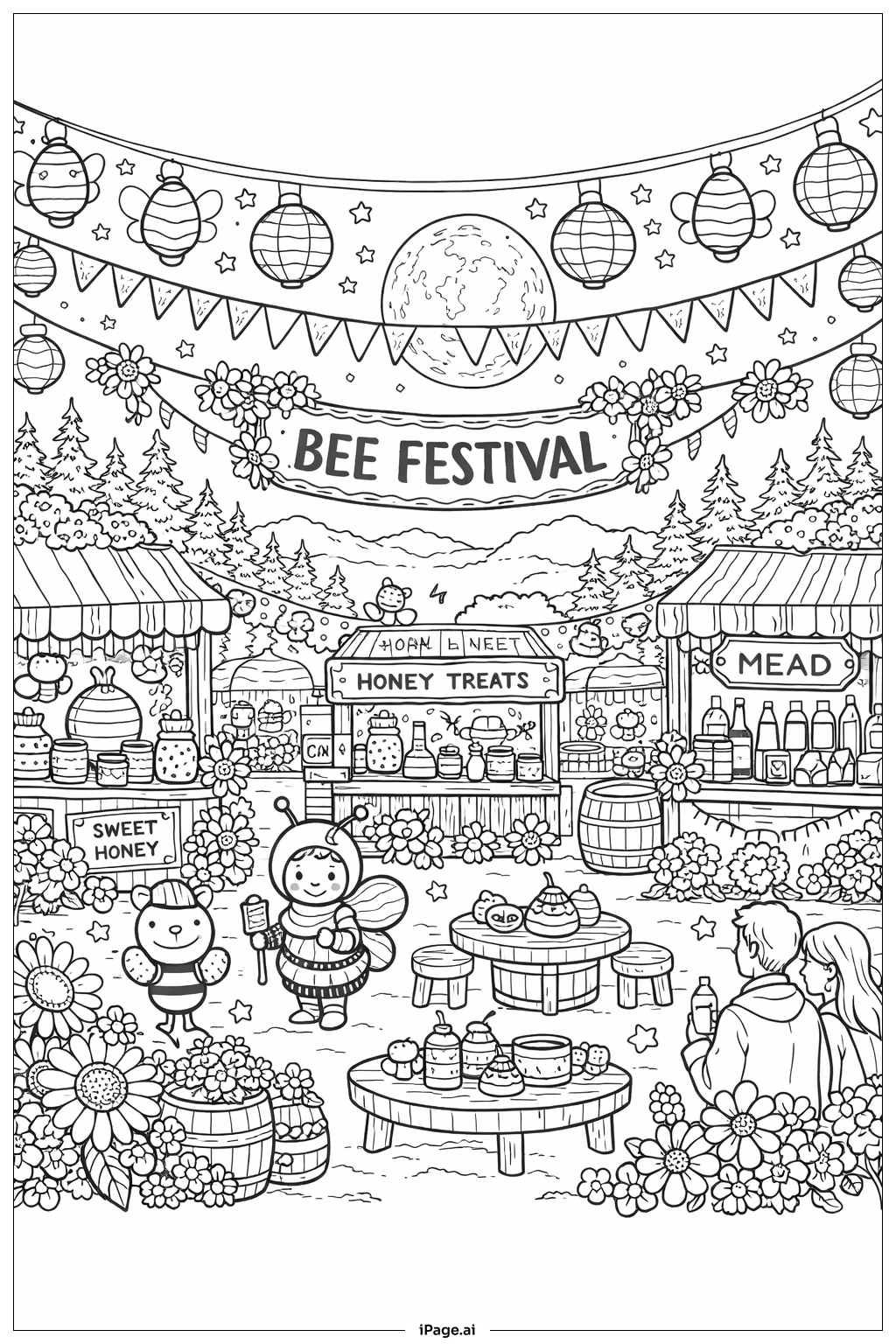
Coloring tips: How to color Bee Lantern Festival coloring page well?
Start with the bee character as your focal point. Use classic yellow and black stripes for the body, with soft orange or amber for warmer tones. The wings can be colored in translucent light blue or pale purple with white highlights. For the lanterns, embrace traditional festival colors like bright red, gold, orange, and pink. Consider using warm yellows and oranges for the glowing effect inside the lanterns. The tassels can be colored in contrasting shades of red, gold, or burgundy. The decorative clouds work beautifully in soft pastels like light pink, lavender, or pale blue. Hearts can be filled with various shades of pink and red. Add depth by using darker shades for shadows on the lanterns and lighter tones where light would naturally hit. Consider adding gradients to create a magical, glowing atmosphere throughout the festival scene.
Coloring challenges: Which parts are difficult to color and need attention for Bee Lantern Festival coloring page?
• Intricate Lantern Patterns: The lanterns feature complex geometric designs and detailed decorative elements that require careful attention. Staying within the fine lines of these patterns can be challenging, especially the diamond shapes and circular motifs. Young colorists may find it helpful to use fine-tipped coloring tools and take their time with each small section. Consider using a single color family for each lantern to maintain visual clarity.
• Bee Wing Details: The wings contain delicate vein patterns with thin lines creating small cellular sections. Coloring these tiny spaces without crossing lines requires precision and patience. Using light pressure and sharp pencils or fine markers works best. Younger children might choose to color the entire wing one color, while older colorists can experiment with gradients and translucent effects.
• Overlapping Elements: Multiple lanterns, clouds, and decorative elements overlap throughout the composition, creating layers that need careful color planning. Deciding which elements are in front and which are behind helps create depth. Colorists should identify these layers before starting and consider using lighter colors for background elements and brighter, bolder colors for foreground objects.
• Small Decorative Details: Tassels, tiny patterns, and small heart shapes scattered throughout require steady hands and focus. These small areas can be time-consuming but add wonderful detail to the finished piece. Breaking the work into sections and taking breaks can help maintain precision and prevent hand fatigue.
Benefits of coloring books: Advantages of drawing Bee Lantern Festival coloring page
Coloring this Bee Lantern Festival page offers wonderful developmental benefits for children. The intricate patterns help improve fine motor skills and hand-eye coordination as young artists carefully navigate detailed spaces. The combination of large areas like the bee's body and tiny details like lantern patterns allows colorists of different skill levels to find their comfort zone while being gently challenged. This image introduces cultural elements, sparking curiosity about lantern festivals and traditions from around the world. The festive, joyful theme promotes positive emotions and can be a calming, meditative activity. Planning color schemes for multiple lanterns encourages decision-making and creative thinking. The symmetrical elements of the bee help children understand balance and pattern recognition. Completing such a detailed image builds confidence, patience, and perseverance. The cheerful subject matter makes coloring feel like a celebration itself, turning artistic practice into joyful play.