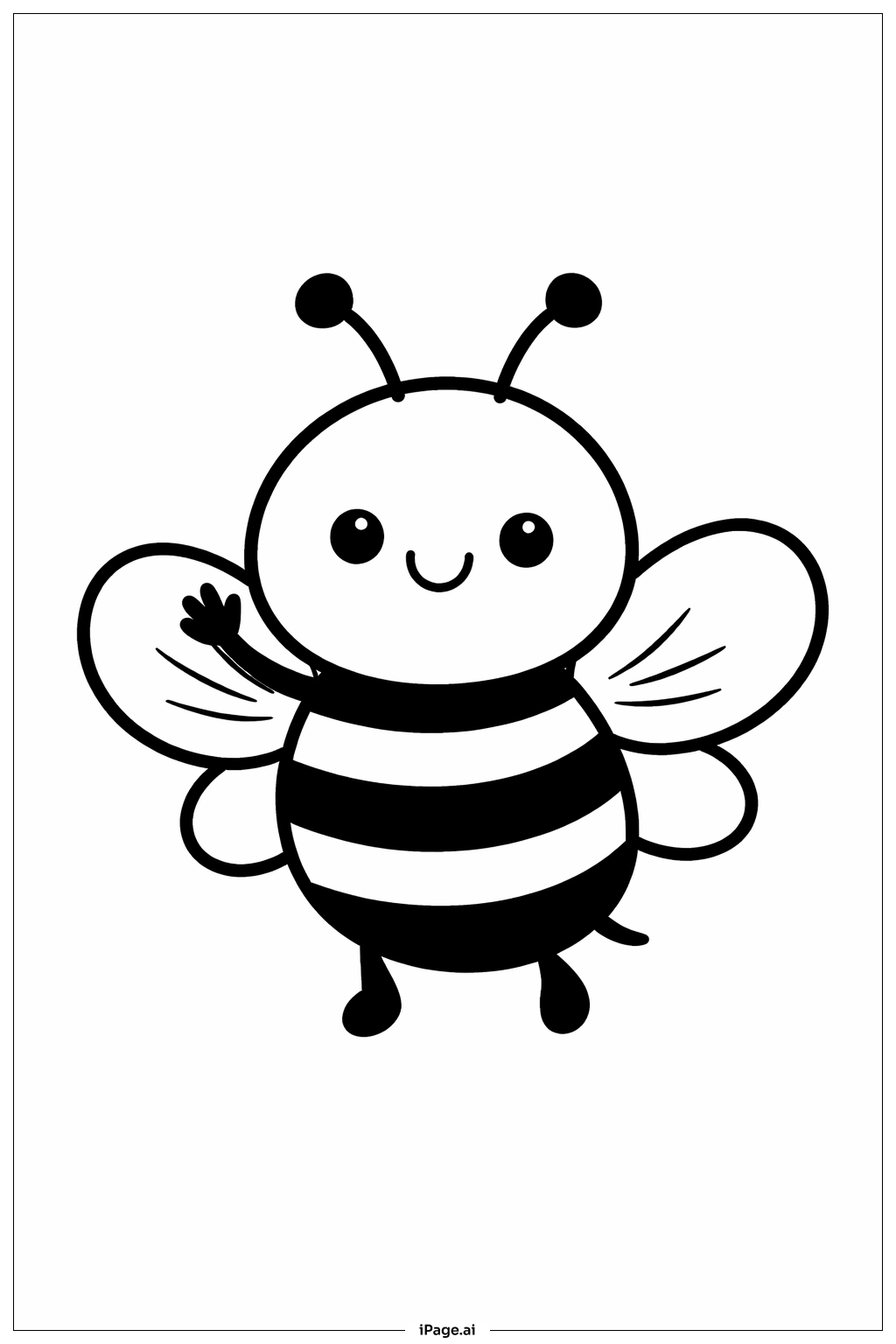
Coloring tips: How to color Bee Waving Wing coloring page well?
Start with the bee's body by coloring the stripes in bright yellow and bold black, which are the classic bee colors. You can also try orange and dark brown for a warmer look. For the wings, use a light sky blue, pale lavender, or a soft silver to give them a delicate, see-through feel. Leave some white highlights on the wings to make them look shiny and light. Color the eyes with dark brown or black pupils and add a tiny white dot to make them sparkle. Use a light pink or peach for the cheeks to give the bee a cute, rosy glow. The antennae can be black or dark brown, with small golden tips. Feel free to add a colorful background — a bright blue sky, green meadow, or blooming flowers would make the bee really pop off the page. Don't be afraid to experiment with your favorite colors and make this bee your own!
Coloring challenges: Which parts are difficult to color and need attention for Bee Waving Wing coloring page?
• Stripe Accuracy: The alternating stripes on the bee's body can be tricky to color neatly. The lines between each stripe need to stay clean and even. Using a fine-tipped marker or a sharpened colored pencil along the edges first, then filling in the middle, will help keep each stripe looking tidy and distinct.
• Wing Transparency Effect: The wings are designed to look thin and see-through, which is a real challenge to recreate with color. Applying very light, gentle strokes with a pale blue or lavender pencil, and leaving some areas white, helps capture that airy, translucent quality. Pressing too hard will make the wings look heavy and flat.
• Small Detail Areas: The antennae, tiny legs, and the curved outline of the waving wing are all quite small and closely spaced. Coloring these narrow areas without going outside the lines requires a sharp tool and a steady hand. Working slowly and carefully in these sections makes a big difference in the final result.
• Expressive Eyes: The bee's large eyes have multiple small parts — the outer ring, the iris, the pupil, and a highlight dot. Each part benefits from a different shade or tone. Keeping these layers separate and clean adds a lot of life and expression to the bee's face, but it does require patience and precision.
• Background Balance: If you choose to add a background, making sure it doesn't overpower the bee itself can be challenging. Picking colors that contrast well with yellow and black — like soft blues or light greens — helps the bee remain the clear focal point of the page.
Benefits of coloring books: Advantages of drawing Bee Waving Wing coloring page
Coloring this friendly bee waving its wing brings a wonderful mix of fun and learning for kids of all ages. Here are some of the great benefits:
Creativity and self-expression: Choosing colors for the bee's stripes, wings, and background encourages children to make their own creative decisions and express their personal style.
Fine motor skill development: Carefully coloring the bee's small details — like the antennae, legs, and tiny wing lines — helps children strengthen the hand muscles and pencil control they need for writing and drawing.
Focus and concentration: Staying inside the lines and working through each section of the image trains children to slow down, pay attention, and concentrate on the task in front of them.
Color recognition and mixing: Experimenting with different shades for the wings or body helps young colorists learn how colors interact and how mixing can create new and exciting results.
Relaxation and emotional well-being: The simple, joyful nature of this bee image makes coloring it a calm and satisfying activity. It gives children a positive creative outlet that helps reduce stress and build confidence.
Nature appreciation: This cute bee character can spark curiosity and conversations about real bees, their role in nature, and why they are so important to our world.