Coloring tips: How to color Bee Over Tulips coloring page well?
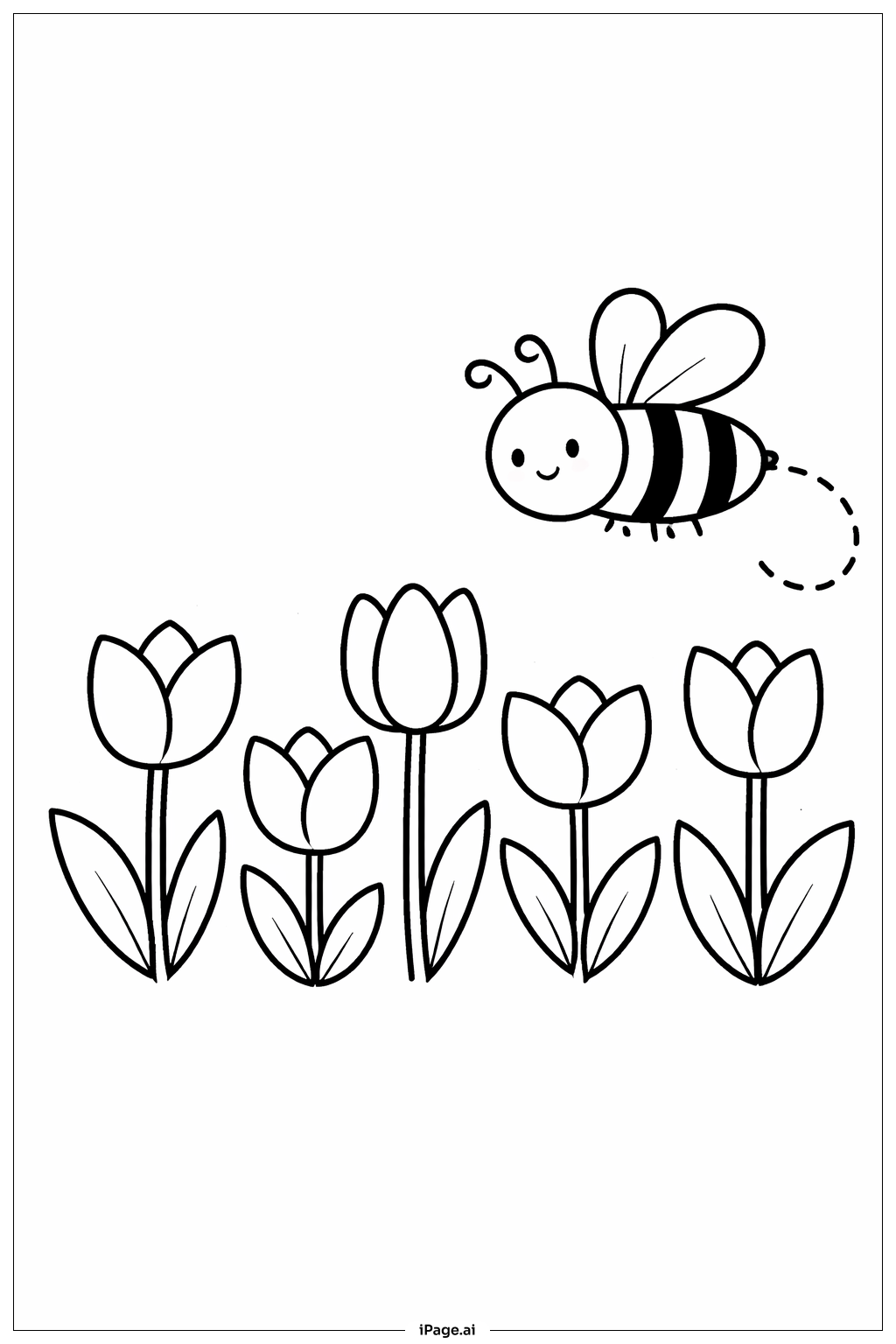
Start with the bee by using bright yellow and black stripes for the body, creating the classic bumblebee appearance. Add translucent light blue or pale purple to the wings for a delicate effect. The bee's face can have rosy cheeks for extra charm. For the tulips, choose vibrant spring colors like red, pink, purple, yellow, or orange for each bloom. You can make each tulip a different color or create a coordinated color scheme. Use various shades of green for the stems and leaves, perhaps darker green for the stems and lighter green for the leaves. Consider adding subtle shading by pressing harder in certain areas to create depth. The background can be left white or filled with a soft sky blue or pale yellow to suggest sunshine.
Coloring challenges: Which parts are difficult to color and need attention for Bee Over Tulips coloring page?
• Bee Stripe Precision: The alternating stripes on the bee's body require careful attention to keep the bands even and consistent. Young children may find it challenging to stay within the narrow stripe boundaries without colors bleeding into adjacent sections. Using shorter coloring strokes and working slowly helps maintain clean lines between the yellow and black sections.
• Wing Transparency Effect: Creating the delicate, see-through appearance of bee wings presents a unique challenge. Children need to apply very light pressure with pale colors to suggest the translucent quality of real wings. Overdoing the color intensity can make the wings look heavy and solid rather than light and airy.
• Petal Smoothness and Shading: The tulip petals feature smooth, curved surfaces that benefit from gradual color transitions. Creating realistic depth by making the petal edges slightly darker than the centers requires blending skills that may be difficult for younger colorists. Keeping the coloring even without visible streaks across large petal areas also demands patience and consistent hand pressure.
• Small Details: The bee's antennae, facial features, and leg segments are small elements that require fine motor control and precision. Children using thick crayons or markers may struggle to color these tiny areas without going outside the lines or obscuring the details completely.
Benefits of coloring books: Advantages of drawing Bee Over Tulips coloring page
Coloring this bee and tulips scene offers wonderful developmental benefits for children. It helps improve fine motor skills and hand-eye coordination as they navigate the various shapes and sizes, from the bee's small stripes to the tulips' larger petals. The image teaches children about nature and the important role bees play in pollinating flowers, making it both artistic and educational. Working with the different elements encourages color recognition and decision-making as children choose appropriate colors for each part. The cheerful, friendly design promotes positive feelings and reduces stress, making it perfect for relaxation. Completing the entire scene builds patience, concentration, and a sense of accomplishment. The combination of detailed areas and larger spaces accommodates different skill levels, allowing children to progress at their own pace while creating a beautiful finished piece they can proudly display.