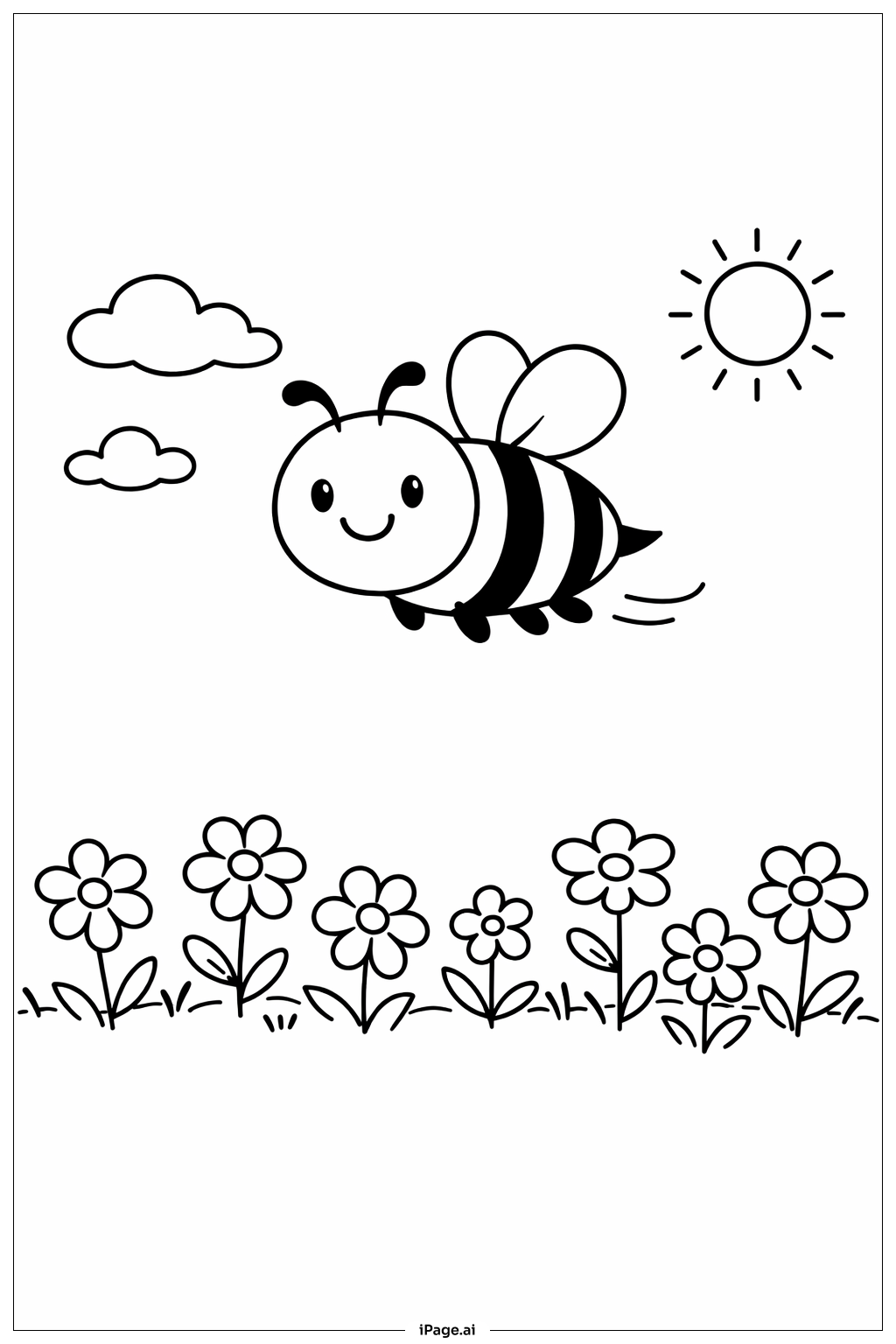
Coloring tips: How to color Bee Over Flower Field coloring page well?
Start with the bee by using yellow and black stripes on its body, making sure to alternate the colors evenly. The wings can be colored with light blue or purple with a touch of shimmer if you have gel pens. For the eyes, use black pupils with white highlights to make them sparkle. Move to the flowers next, choosing a rainbow of colors like pink, orange, red, purple, and yellow to create variety. Make some flowers the same color to create patterns across the field. Color the leaves and stems in different shades of green, using darker green for shadows and lighter green where sunlight hits. The background hills can be soft green or blue-green, and the sky can be colored with light blue and the sun in bright yellow or orange. Add depth by using lighter colors in the distance.
Coloring challenges: Which parts are difficult to color and need attention for Bee Over Flower Field coloring page?
• Bee Wing Details: The bee's wings have delicate veining and thin membrane sections that require careful coloring to avoid going outside the lines. Young children may find it challenging to stay within these small spaces, so using fine-tipped markers or colored pencils works best. The transparency effect of wings can be tricky to achieve, requiring light pressure and possibly layering colors.
• Flower Field Density: The image contains numerous flowers packed closely together, creating overlapping petals and stems. This density makes it difficult to distinguish where one flower ends and another begins. Children need to pay close attention to the outlines and may need to color slowly to ensure each flower remains distinct. Planning a color scheme beforehand helps avoid confusion.
• Stripe Precision on Bee Body: The bee's body features alternating stripes that need to be colored accurately to maintain the classic bee appearance. Keeping the stripes even and not letting colors bleed into adjacent stripes requires steady hand control. Younger children might struggle with this precision and may benefit from using thicker coloring tools.
• Background Depth and Perspective: Creating a sense of distance between the foreground flowers, middle-ground bee, and background hills requires understanding of color intensity and shading. Children need to use lighter, softer colors for distant elements and brighter, bolder colors for closer objects. This concept of atmospheric perspective can be challenging for beginners to grasp and execute properly.
Benefits of coloring books: Advantages of drawing Bee Over Flower Field coloring page
Coloring this bee and flower field scene helps children develop fine motor skills through the detailed wing patterns and numerous small flower petals. The repetitive action of coloring stripes on the bee's body improves hand-eye coordination and concentration. This image also teaches children about nature, encouraging them to learn about bees, their important role in pollination, and the variety of flowers in gardens. The scene promotes color recognition and decision-making as children choose which colors to use for different flowers, creating their own unique garden. The peaceful, nature-themed content has a calming effect, helping reduce stress and anxiety while fostering creativity. Completing this detailed page gives children a sense of accomplishment and boosts confidence in their artistic abilities. It's an excellent activity for quiet time that combines learning about the natural world with artistic expression.