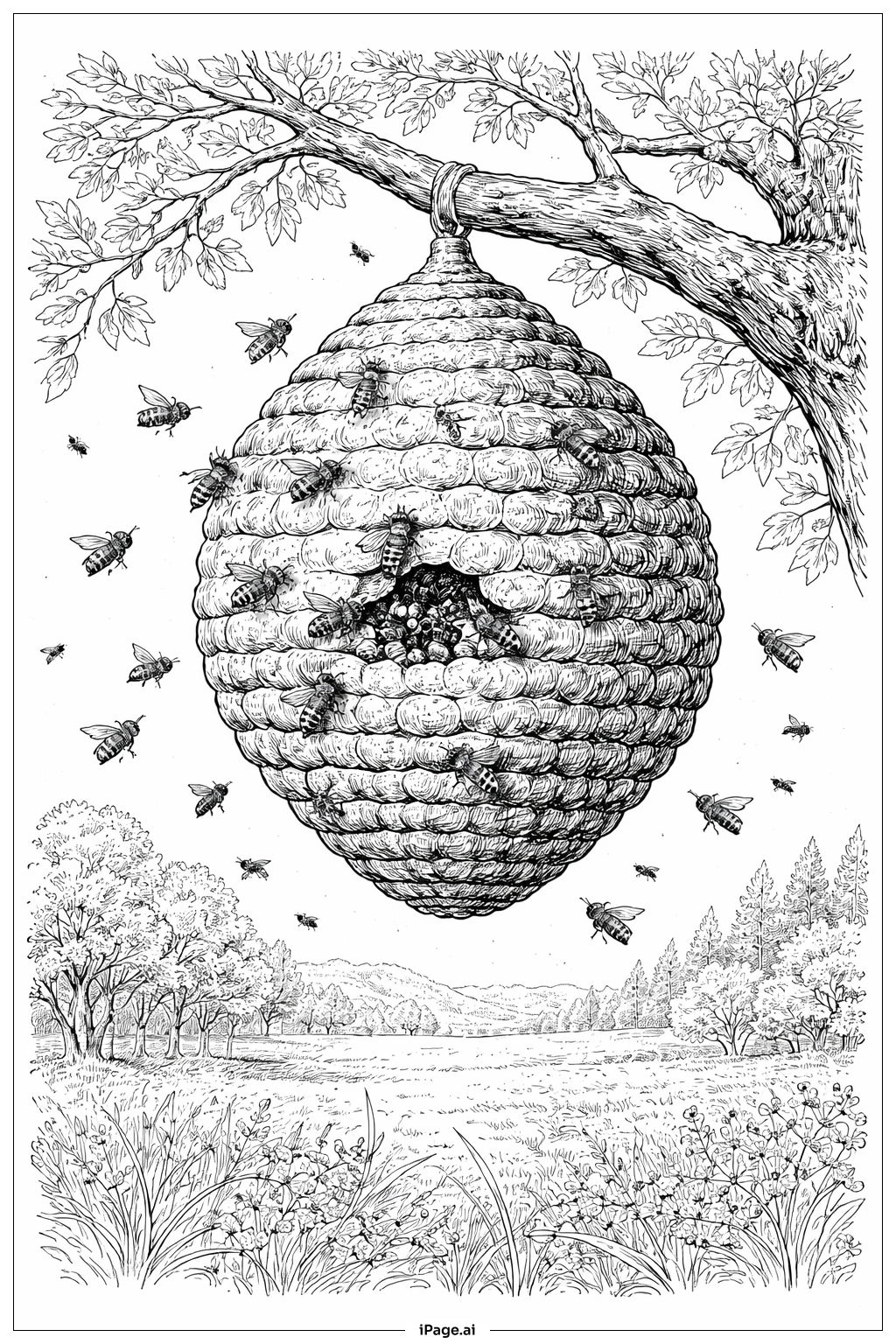
Coloring tips: How to color Bee Nest On Branch coloring page well?
Start with the branch. Use warm browns and tans for the bark. Add darker brown lines to show the rough texture. For the leaves, use different shades of green to make them look natural. Color the bee nest in shades of golden yellow and light brown. Use slightly darker tones to shade the layered sections and give the nest depth. For the bees, use bright yellow and bold black stripes on their bodies. Their wings can be colored with a very light gray or pale blue to look transparent. Add a soft orange or amber glow around the nest entrance to show warmth and activity. Use a light blue or soft white background to make all the colors pop. Take your time with each bee — small details make a big difference!
Coloring challenges: Which parts are difficult to color and need attention for Bee Nest On Branch coloring page?
• Honeycomb Nest Texture: The surface of the nest is made up of many small, repeating sections that look like a layered pattern. Staying consistent with color and shading across all these tiny areas takes patience. Using a fine-tipped marker or a sharpened pencil will help you fill each section neatly without going outside the lines.
• Bee Stripe Details: Each bee has alternating yellow and black stripes on a very small body. It can be tricky to color these thin stripes cleanly, especially on the smaller bees in the background. Work slowly and use the tip of your coloring tool to keep the lines crisp and sharp.
• Transparent Wings: Bee wings are nearly see-through in real life. Capturing that look means using a very light touch with pale gray or light blue. Pressing too hard will make the wings look solid and heavy. Blending lightly over the wing area helps create that soft, delicate effect.
• Branch Bark Texture: The tree branch has a rough, uneven surface with visible lines and grooves. Shading it with two or three shades of brown adds realism, but keeping the transitions smooth without smudging can be a challenge. Try hatching or layering strokes in the same direction as the bark lines.
• Depth and Layering: With bees, a nest, and a branch all in the same scene, creating a sense of depth matters. Objects in the front should be colored with bolder, darker tones, while items farther back should be lighter. Getting this balance right takes some planning before you start coloring.
Benefits of coloring books: Advantages of drawing Bee Nest On Branch coloring page
Coloring this Bee Nest On Branch image offers a wonderful mix of fun and learning. As you fill in the details of the nest, bees, and branch, you naturally build focus and concentration. Staying inside small, detailed areas trains your hand to move with control and precision, which strengthens fine motor skills over time.
This image also sparks curiosity about nature. Kids can learn about how bees live, build their homes, and work together as a colony — all while doing something creative and relaxing.
Choosing colors for the bees, nest, and leaves encourages creative thinking. There is no single right answer, so every child gets to make their own choices and feel proud of their finished page.
For older kids and adults, the repetitive patterns of the nest texture offer a calming, almost meditative coloring experience. It is a great way to unwind after a busy day.
Completing a detailed coloring page like this one also builds patience and a sense of accomplishment. When the page is done, it feels like a real achievement — something worth showing off or even displaying on the wall. Overall, this page is a great blend of art, nature, and mindful activity for colorists of all ages.