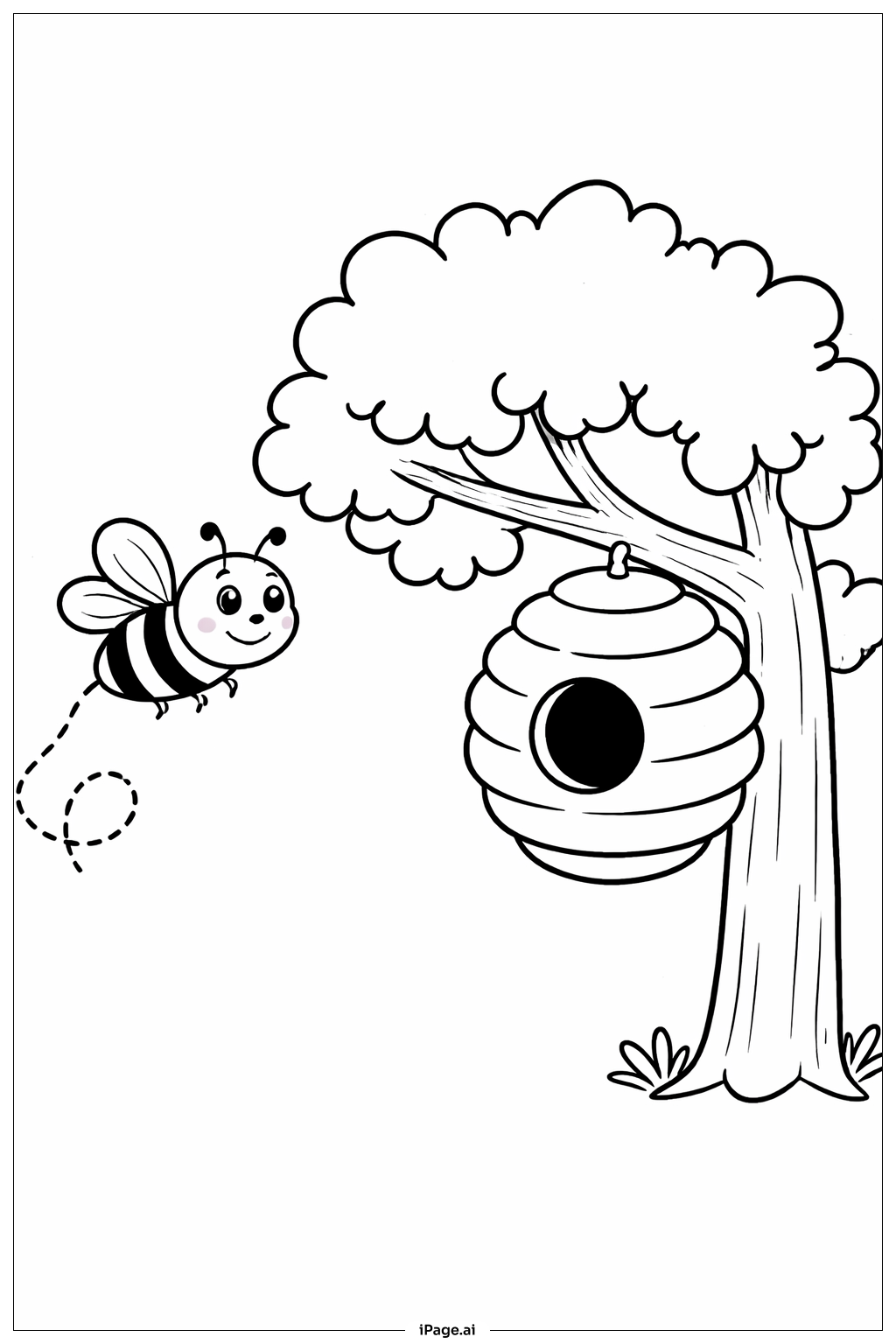
Coloring tips: How to color Bee Near Tree Hive coloring page well?
Use bright yellow and black for the bee's body to make it stand out. Try light blue or transparent colors for the wings. The tree trunk can be brown with darker lines to show texture. For the leaves, use different shades of green to add depth and make the tree look lively. Color the beehive in warm golden tones like orange and yellow to make it inviting. You can use light greens or browns for the grass to keep it realistic. Try to color carefully inside the lines for a neat picture.
Coloring challenges: Which parts are difficult to color and need attention for Bee Near Tree Hive coloring page?
1. Coloring the small details on the bee, like its eyes and antennae, requires careful attention to avoid coloring outside the lines.
2. The curved shapes on the tree's leaves and the beehive may be tricky to fill evenly without leaving white spaces.
3. The beehive's round shape needs smooth coloring to look natural and finished.
4. Using different shades of green for the leaves might be challenging for younger children to blend well.
5. The dotted line showing the bee's flight path needs to be left uncolored, which some kids might find hard to remember.
Benefits of coloring books: Advantages of drawing Bee Near Tree Hive coloring page
Coloring this page helps children develop their fine motor skills as they work on small details like the bee and the tree bark. It encourages creativity by allowing kids to choose different colors for leaves and the hive. It also teaches children about nature—bees, trees, and how they live together. Coloring inside the lines improves focus and patience. Overall, this picture is a fun way for kids to learn new skills while enjoying art.