Coloring tips: How to color Bee Friends Flying coloring page well?
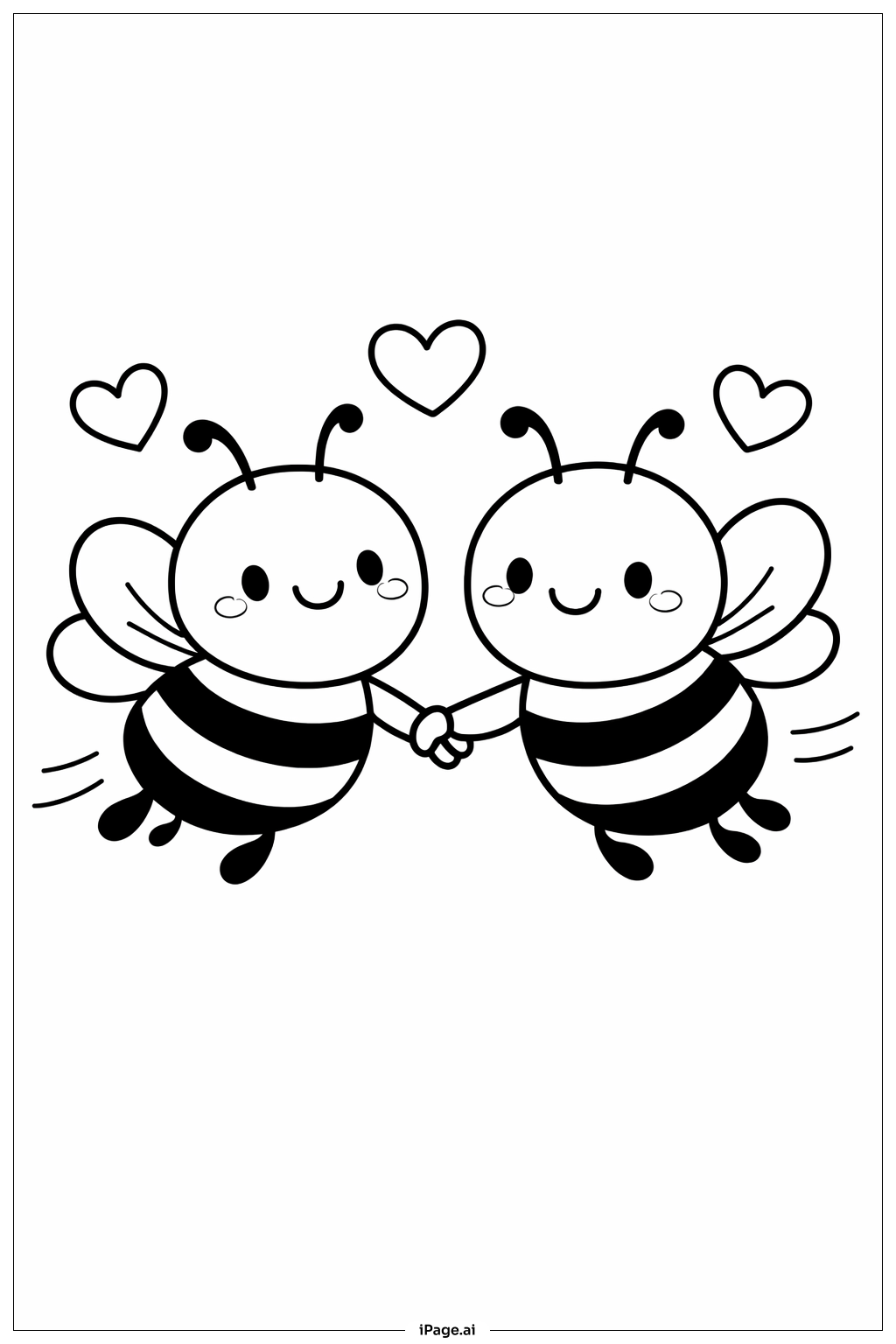
For the bee bodies, use bright yellow for the main sections and alternate with black or dark brown stripes to create the classic bee pattern. The wings can be colored with light blue, pale purple, or even left white with just the veins traced in gray or light blue for a translucent effect. Color the eyes with black pupils and leave white highlights to make them sparkle with life. The smiles can be colored with soft pink or coral tones. For the background clouds, try soft blues, light grays, or gentle purples. The hearts can be colored in various shades of pink, red, or even rainbow colors to emphasize the friendship theme. Consider using warm golden yellows for the bees to make them glow, and add shading with orange or darker yellow to create dimension. The sky background could be a light blue wash or left white for simplicity.
Coloring challenges: Which parts are difficult to color and need attention for Bee Friends Flying coloring page?
• Wing Details: The bee wings contain delicate vein patterns that require careful coloring to maintain their transparent, gossamer-like appearance. Children may find it challenging to color these thin lines without going outside the boundaries or making them too dark, which could make the wings look heavy instead of light and airy. Using light pressure with colored pencils or diluted watercolors can help achieve the right effect, but this requires fine motor control and patience.
• Stripe Precision: Creating neat, even stripes on the bee bodies demands steady hand control and attention to detail. Young colorists might struggle to keep the stripes uniform in width and to avoid color bleeding between the yellow and black sections. Alternating colors in tight spaces can be frustrating, especially for younger children who are still developing their coloring skills. Taking time to carefully fill each stripe section completely while staying within the lines will help create a polished, professional-looking result.
• Facial Features: The eyes and smiles are small details that require precision to color effectively. Making the eyes look bright and expressive involves creating contrast between the pupils and highlights, which can be tricky. Children need to be careful not to color over the highlight spots that make the eyes appear lively and three-dimensional.
• Background Balance: Deciding how much detail to add to the clouds and sky without overwhelming the main bee subjects requires artistic judgment. Too much color in the background might distract from the bees, while too little might make the picture look unfinished. Finding the right balance helps young artists learn about composition and focal points.
Benefits of coloring books: Advantages of drawing Bee Friends Flying coloring page
Coloring these bee friends helps children develop fine motor skills and hand-eye coordination through the precise movements needed for stripes and wing details. The repetitive pattern of the bee stripes provides a calming, meditative activity that can reduce stress and improve focus. This image teaches children about bees and their importance in nature while reinforcing concepts of friendship and cooperation. The varying sizes of details, from large body sections to tiny wing veins, allow children to practice different coloring techniques and pressure control. Choosing colors for the bees, clouds, and hearts encourages creative decision-making and color theory understanding. Completing this friendly scene builds confidence and provides a sense of accomplishment. The cheerful subject matter promotes positive emotions and can spark conversations about nature, insects, and environmental awareness. This coloring page is suitable for various age groups, allowing both younger children and older kids to engage at their skill level.