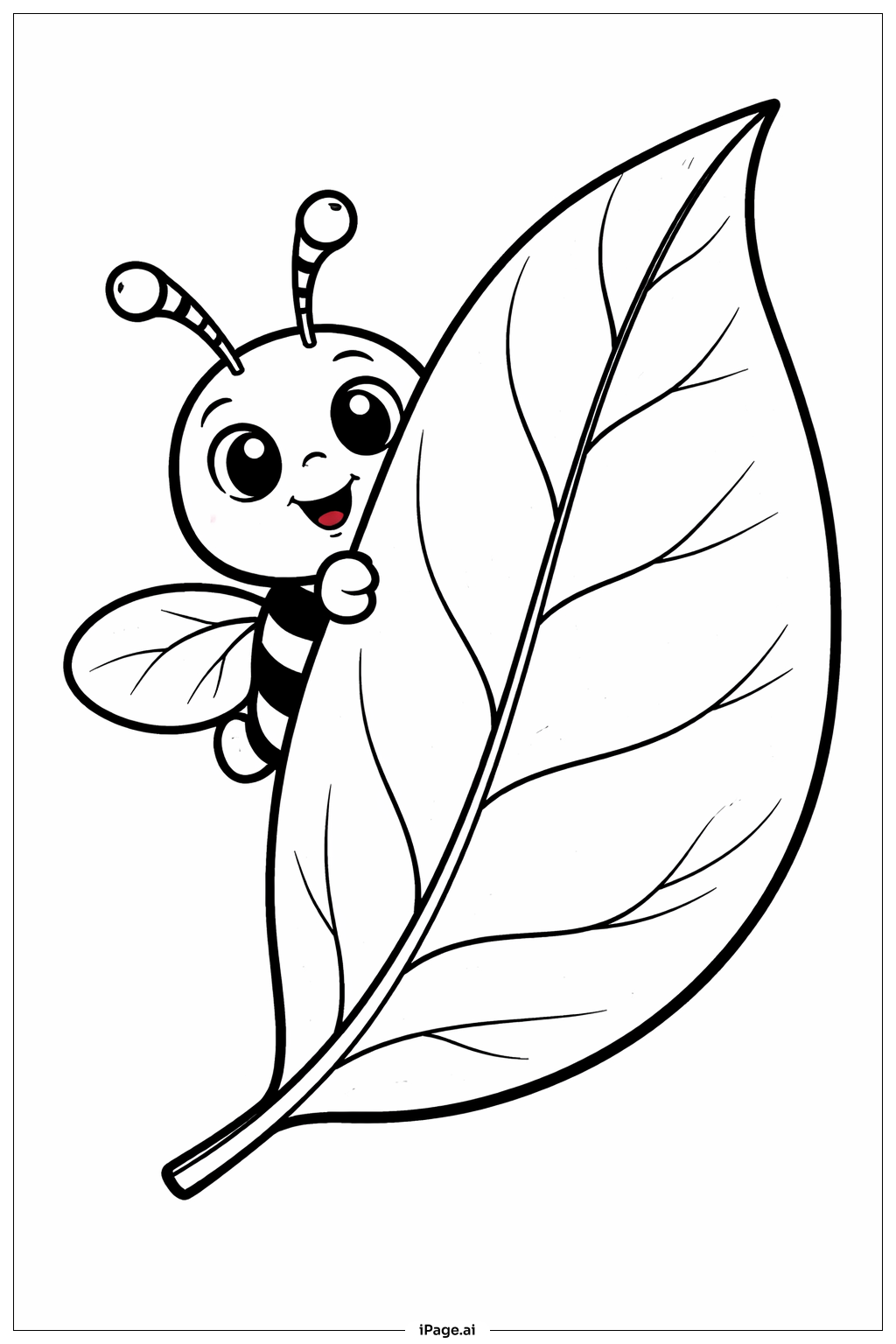
Coloring tips: How to color Bee Behind Leaf coloring page well?
Use bright yellow and black for the bee’s body to make it look lively. Color the antennae and stripes carefully to show the bee’s details. Use green shades for the leaf, starting with a darker green for the edges and stem, and lighter green for the inside areas and veins. You can add some shading by blending two or three shades of green to make the leaf look more real. For the wings, use a light blue or very pale gray to keep them soft and gentle. Remember to color the bee’s eyes black with a white spot to make them shiny and lively.
Coloring challenges: Which parts are difficult to color and need attention for Bee Behind Leaf coloring page?
1. Coloring the thin stripes on the bee's antennae and body can be tricky because it requires small, careful strokes.
2. The leaf’s veins are fine lines that need gentle coloring to avoid overpainting them.
3. Making the wings look transparent with soft colors can be difficult for beginners.
4. Balancing the light and dark shades on the leaf to give it a natural look takes some practice.
5. Keeping the bee’s facial features neat while coloring requires attention to detail.
Benefits of coloring books: Advantages of drawing Bee Behind Leaf coloring page
Coloring this picture helps improve fine motor skills as children work on small, detailed areas like the bee’s stripes and antennae. It encourages the use of blending and shading techniques, especially on the leaf, to create a more realistic effect. The friendly bee image supports creativity and imagination while making the coloring activity fun. It also teaches children about nature by focusing on a bee and a leaf, increasing their awareness of the environment. Overall, this coloring page is great for developing patience, focus, and artistic skills.