Coloring tips: How to color Bee And Ladybug coloring page well?
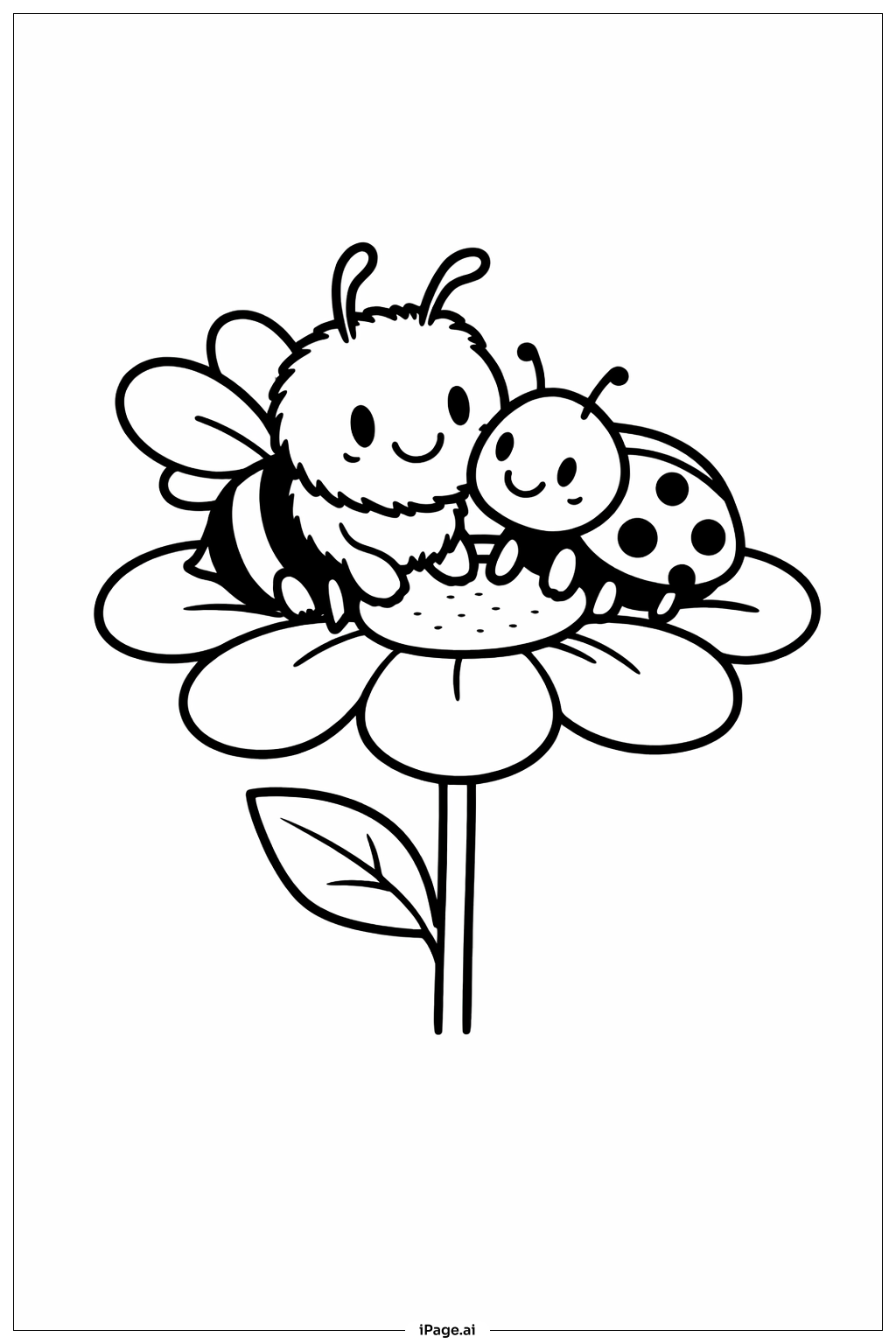
Use bright yellows and blacks for the bee’s body to make it stand out. The ladybug can be colored with red and black spots. For the flower, use cheerful colors like pink, purple, or yellow for the petals and green for the stem and leaf. Make sure to color inside the lines to make the picture neat and vibrant. You can also add different shades to petals and leaves to create a more realistic look.
Coloring challenges: Which parts are difficult to color and need attention for Bee And Ladybug coloring page?
1. Small Details: The bee's fuzzy body and the ladybug's spots require careful coloring to avoid going outside the lines. 2. Overlapping Shapes: The bee and ladybug overlap on the flower’s center, which may be tricky to color neatly. 3. Thin Antennae: The thin antennae on both insects need gentle and precise coloring to keep them clear and visible. 4. Petal Shapes: The flower petals are large but have curves that need smooth coloring strokes to look even. 5. Leaf Veins: The leaf has thin lines for veins that might be challenging to color without going beyond the lines.
Benefits of coloring books: Advantages of drawing Bee And Ladybug coloring page
Coloring this picture helps improve focus and hand-eye coordination as kids carefully color small shapes like the bee’s fuzz and ladybug’s spots. It encourages creativity by letting children choose colors for nature elements. Coloring the flower and insects also teaches children about different parts of bugs and plants. This activity boosts patience and fine motor skills while providing fun and relaxation.