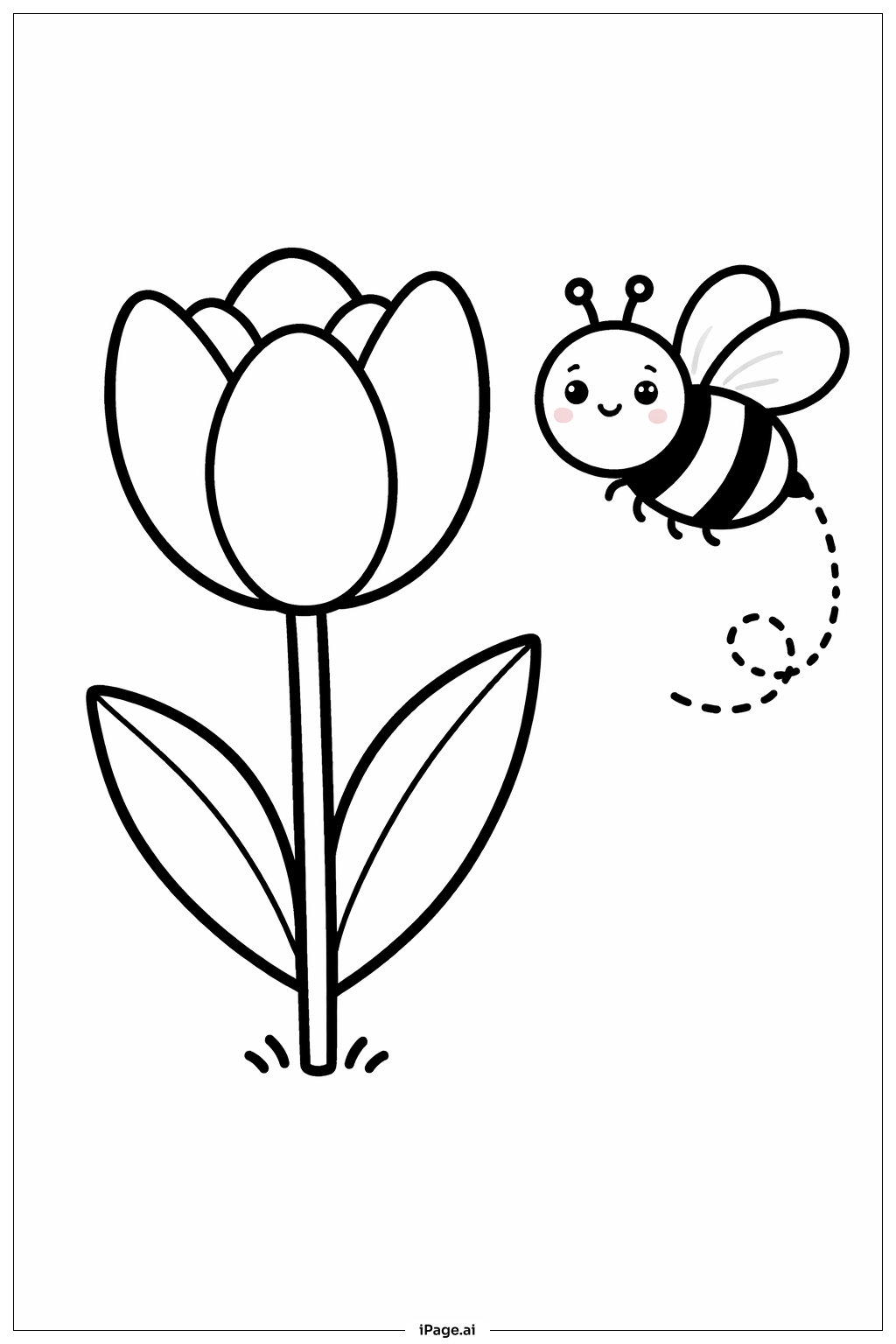
Coloring tips: How to color Bee And Big Tulip coloring page well?
For the tulip, use bright colors like red, pink, yellow, or purple for the petals to make the flower vibrant. Color the leaves and stem in different shades of green to give a natural look. The bee can be colored with classic black and yellow stripes. You can give its wings a light blue or gray shade to show their delicate texture. Try to use smooth, even strokes when coloring to keep the picture neat. Feel free to add color backgrounds like blue sky or green grass if you want to make the page more lively and engaging.
Coloring challenges: Which parts are difficult to color and need attention for Bee And Big Tulip coloring page?
1. Coloring the bee's small legs and antennas can be tricky because of their tiny size. Take your time and use a sharp coloring tool. 2. The tulip petals overlap each other, so be careful to color inside the lines without mixing the areas. 3. The two leaves are close together, so it might be hard to keep their colors separate. 4. Coloring even shades on the stem and leaves can be challenging for younger children. 5. Adding color to the wings without making them too dark or messy requires gentle coloring strokes.
Benefits of coloring books: Advantages of drawing Bee And Big Tulip coloring page
Coloring this image helps children develop fine motor skills by coloring small details like the bee's antennas and legs. It also encourages creativity, as kids can choose different colors for the flower and bee. The simple shapes and clear lines make it suitable for beginners while still providing a fun challenge. Coloring nature scenes like a bee and flower helps children learn about the environment. Lastly, it fosters concentration and patience as kids focus on coloring each section carefully.