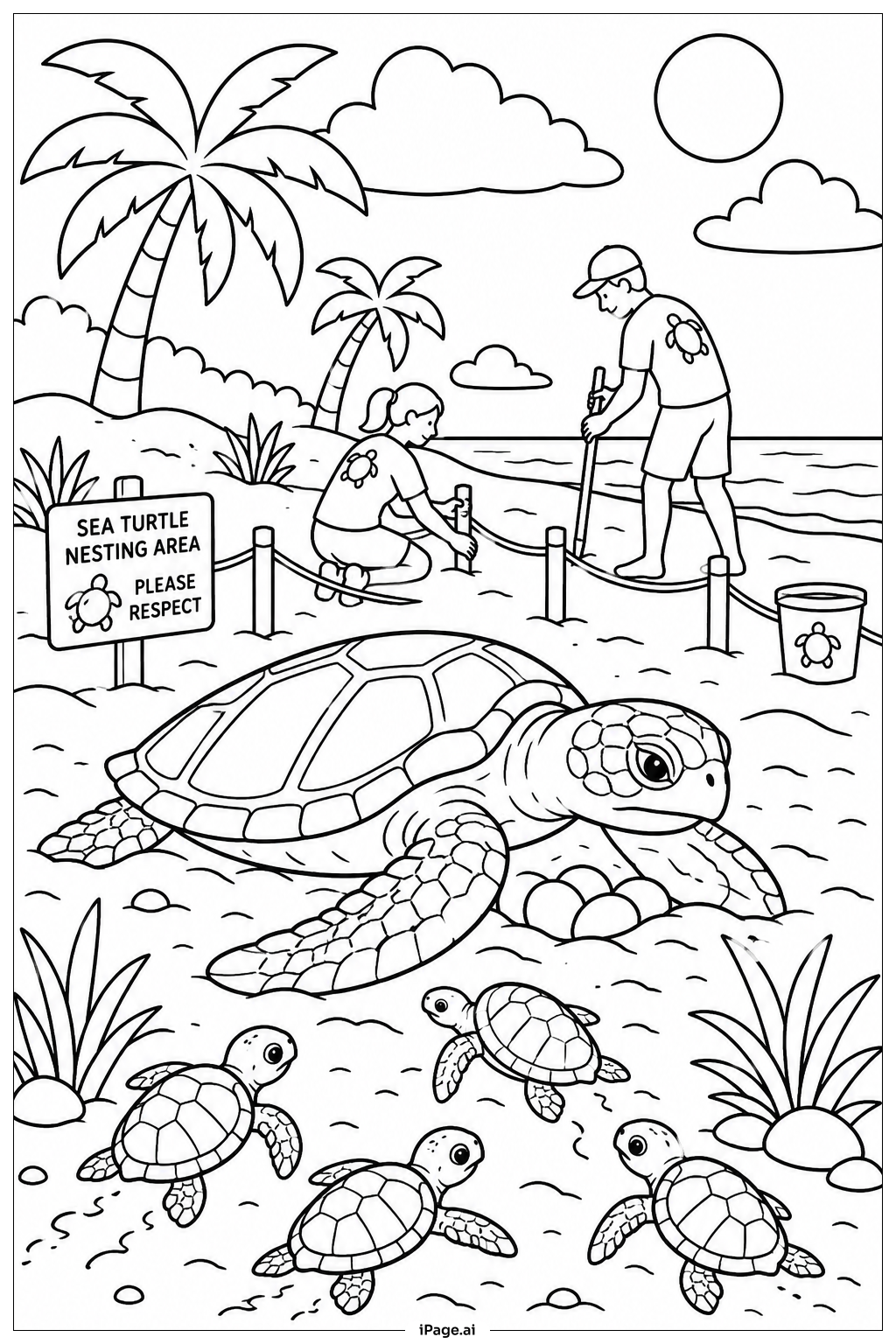
Coloring tips: How to color Beach Turtle Nesting Scene coloring page well?
Start with the turtle's shell. Use deep greens and warm browns for the large plates, with darker shading along the edges to give them depth. The turtle's skin can be olive green or gray-green with lighter tones on the underside. Color the sand in soft golds and warm tans, adding gentle shadows around the nest and footprints. The eggs look great in creamy white or soft beige. For the ocean, try layered blues — darker toward the horizon and lighter near the shore. The night sky is perfect for deep navy or purple, with bright yellow or white stars. Add a soft glow around the moon. The sea grass can be colored in various shades of green, and the small crabs can be orange or red. Encourage kids to blend colors gradually and experiment with light and shadow to make the scene feel alive and magical.
Coloring challenges: Which parts are difficult to color and need attention for Beach Turtle Nesting Scene coloring page?
• Turtle Shell Pattern Complexity: The turtle's shell is made up of many individual scutes, each with its own shape and border. Staying inside these small sections while using multiple shades of green and brown requires a steady hand and patience. Younger colorists may find it helpful to outline each section first before filling it in.
• Blending Sand Textures: Sand is not a single flat color. It has highlights, shadows, and subtle variations in tone. Achieving a realistic sandy look means layering light golden yellows, warm tans, and soft shadows around footprints and the nest. This kind of gradual blending can be tricky without the right technique or tools.
• Night Sky Depth and Glow: Creating a believable night sky means working with dark base colors while still making stars and the moon feel bright and luminous. Layering deep blues and purples without covering the star and moon details takes care and control, especially for beginners.
• Ocean Waves and Water Movement: The background ocean requires smooth color transitions from dark blue in the deep water to lighter aqua and white foam near the shoreline. Capturing the sense of gentle movement without making the water look flat is a real challenge.
• Small Detail Elements: Items like the tiny crabs, scattered seashells, and individual blades of sea grass are small and closely spaced. Coloring these fine details neatly without going outside the lines demands precision, especially for younger children just learning to color carefully.
Benefits of coloring books: Advantages of drawing Beach Turtle Nesting Scene coloring page
Coloring this Beach Turtle Nesting Scene offers a wonderful mix of creativity, learning, and calm. As kids focus on filling in the turtle's detailed shell, they build fine motor skills and hand-eye coordination. Working with a wide range of colors — from ocean blues to sandy golds and earthy greens — helps children understand how colors work together and how shading creates depth.
This scene also sparks curiosity about nature and wildlife. Children learn about sea turtles, their nesting habits, and the importance of protecting ocean animals and their environments. It opens the door to conversations about conservation and caring for our planet.
The quiet, nighttime mood of the image naturally encourages a calm and focused mindset. Spending time on a detailed coloring page like this builds patience and concentration, both valuable skills inside and outside the classroom.
For older kids and adults, the intricate patterns on the turtle's shell and the layered textures of sand, sea, and sky offer a genuinely satisfying challenge. Completing the page gives a strong sense of accomplishment and pride.
Overall, this coloring page is a fun and meaningful activity that connects artistic expression with an appreciation for the natural world.