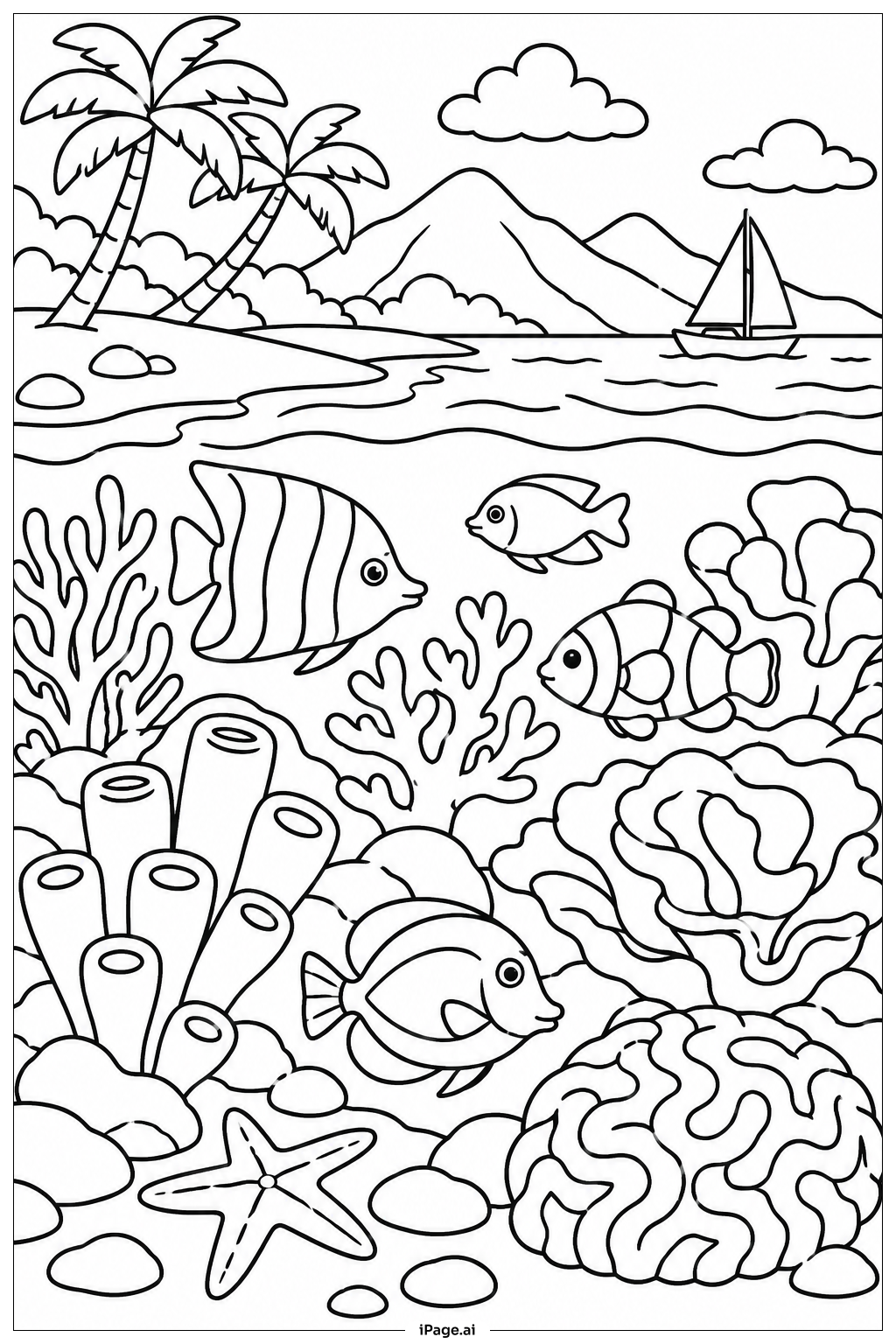
Coloring tips: How to color Beach Coral Reef Closeup coloring page well?
Start with the background water using light shades of blue and turquoise to create a warm, tropical ocean feel. Use multiple shades of blue to show depth and movement in the water.
For the corals, have fun with bright colors. Brain corals look great in orange, tan, or pink. Branching corals can be purple, yellow, or red. Fan corals work well in soft lavender or deep violet.
Give the tropical fish bold, eye-catching colors. Mix bright yellows, oranges, blues, and greens. You can add stripes or spots to make them look more realistic.
Color the starfish in orange or red, and use sandy brown or tan tones for the ocean floor. Sea anemones can be bright pink, orange, or green with white tips.
Use darker shades to add shadows beneath coral ledges and around rocks. This will give the scene a sense of depth and make it feel alive and three-dimensional.
Coloring challenges: Which parts are difficult to color and need attention for Beach Coral Reef Closeup coloring page?
• Complex Coral Shapes: The coral reef features many intricate and overlapping shapes. Branching corals have thin, narrow sections that are hard to color neatly. Brain corals have tight, winding ridge patterns that require a fine-tipped tool and a steady hand. Taking your time with each coral form will help keep colors clean and distinct.
• Small Details on Fish and Creatures: The tropical fish, sea snails, and crabs contain fine details like scales, stripes, and tiny legs. These small areas can be tricky to fill without going outside the lines. Using thin colored pencils or fine markers works best for these detailed sections.
• Overlapping Elements: Many corals, fish, and plants overlap each other throughout the scene. It can be difficult to decide which color goes where when shapes share borders. Planning your color choices ahead of time and letting each section dry before moving to the next will help avoid smudging and color bleeding.
• Water Background and Light Effects: Coloring the ocean water to look natural and transparent is challenging. The water should look bright near the surface and gradually darker toward the bottom. Blending two or three shades of blue and adding light streaks can help recreate the effect of sunlight filtering through shallow tropical water.
• Ocean Floor Texture: The sandy seafloor has small pebbles, shells, and rocky patches that need varied textures. Using short strokes and mixing sandy yellows, tans, and light browns will help make the floor look realistic and interesting without looking flat.
Benefits of coloring books: Advantages of drawing Beach Coral Reef Closeup coloring page
Coloring this Beach Coral Reef Closeup page offers many wonderful benefits for kids and beginners alike.
First, it helps improve focus and concentration. The many small details in the coral reef scene encourage children to slow down and pay close attention to their work.
Second, it builds fine motor skills. Carefully filling in thin coral branches, tiny fish scales, and small sea creatures helps strengthen hand muscles and improve pencil control, which also supports handwriting development.
Third, it sparks creativity and imagination. Choosing colors for the corals, fish, and ocean floor lets children express themselves freely. There are no wrong color choices, so every child can create their own unique underwater world.
Fourth, it teaches children about nature. As they color, kids naturally become curious about coral reefs, tropical fish, and ocean life. This can lead to fun conversations and a growing love for the natural world and ocean conservation.
Finally, coloring is a calming, relaxing activity. It helps reduce stress and provides a quiet, enjoyable break from screens and busy schedules. Completing a beautiful coral reef scene also gives children a real sense of pride and accomplishment.