Coloring tips: How to color Beach Surf Lesson coloring page well?
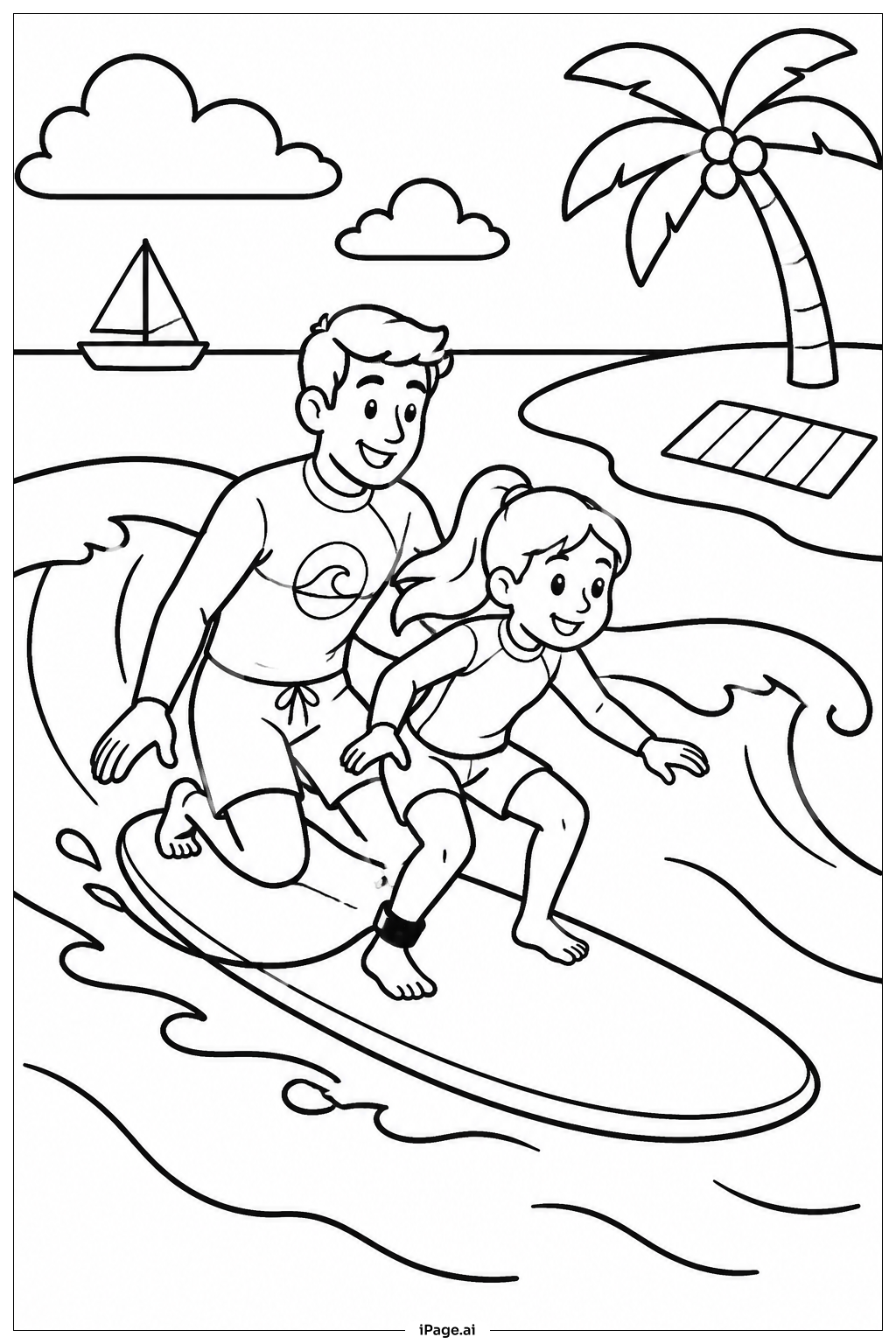
Start with the sky and ocean to set the mood. Use light blue and pale yellow for the sky, blending in soft white for the clouds. For the ocean, try shades of turquoise and deep blue, with white tips on the waves to show movement. Color the sandy beach in warm tan and golden yellow tones. Give the surfboards bold, bright colors like red, orange, or neon green to make them pop. Use natural skin tones for the instructor and student, and dress them in colorful swimwear. The palm trees look great in dark green and brown. Add small details like the seagulls in light gray or white. Try using colored pencils for smooth blending on the sky and water, and markers for the bright surfboards. Keep the overall palette warm and sunny to capture that perfect beach day feel. Have fun mixing colors to make the scene your own!
Coloring challenges: Which parts are difficult to color and need attention for Beach Surf Lesson coloring page?
• Wave Details: The rolling ocean waves have curved, layered lines that can be tricky to color neatly. Each wave has highlights at the crest and deeper tones in the troughs. You will need to blend at least two or three shades of blue and green smoothly to keep the water looking natural and flowing rather than flat or patchy.
• Sand Texture: The beach sand covers a wide area with subtle texture lines and shadows. Using only one shade of tan will make it look too plain. Try layering light yellow, beige, and light brown to create depth and warmth, especially near the waterline where wet sand appears darker.
• Surfboard Patterns: Surfboards often have bold designs, stripes, or patterns on their surfaces. Staying inside the narrow, curved outlines of multiple boards without overlapping takes careful control, especially for younger colorists. Using fine-tipped markers or sharpened colored pencils works best here.
• Figures and Facial Expressions: Coloring the instructor and student requires attention to small details like hands, feet, and facial features. Skin tone shading on curved body shapes can be challenging. Using a light base color first and then adding subtle shadows on one side helps give the figures a more three-dimensional look.
• Palm Tree Leaves: The palm fronds in the background are made up of many thin, overlapping leaf shapes radiating outward. Coloring each leaf individually in slightly different shades of green adds realism, but it requires patience and a steady hand to avoid going outside the lines.
Benefits of coloring books: Advantages of drawing Beach Surf Lesson coloring page
Coloring this Beach Surf Lesson page brings a wide range of benefits for kids and beginners alike. Working through the different elements of the scene, from the waves to the figures, helps build fine motor skills and hand control. Staying within the lines and blending colors strengthens focus and concentration in a fun, relaxed way.
The beach setting sparks creativity as kids choose colors for the surfboards, sky, and ocean. There are no wrong answers, which builds confidence and encourages self-expression. Deciding how to color the waves or the instructor's outfit lets young colorists feel like real artists.
This image also has an educational side. It introduces children to surf culture, beach environments, and the idea of learning something new from a teacher. It can open up conversations about ocean safety, sports, and nature.
The calming quality of coloring is well known. Focusing on a peaceful beach scene can help reduce stress and anxiety, making it a great quiet-time activity after a busy day. For children aged 4 to 16, this page offers the right balance of challenge and enjoyment, keeping them engaged while rewarding their effort with a bright, beautiful finished piece they can be proud of.