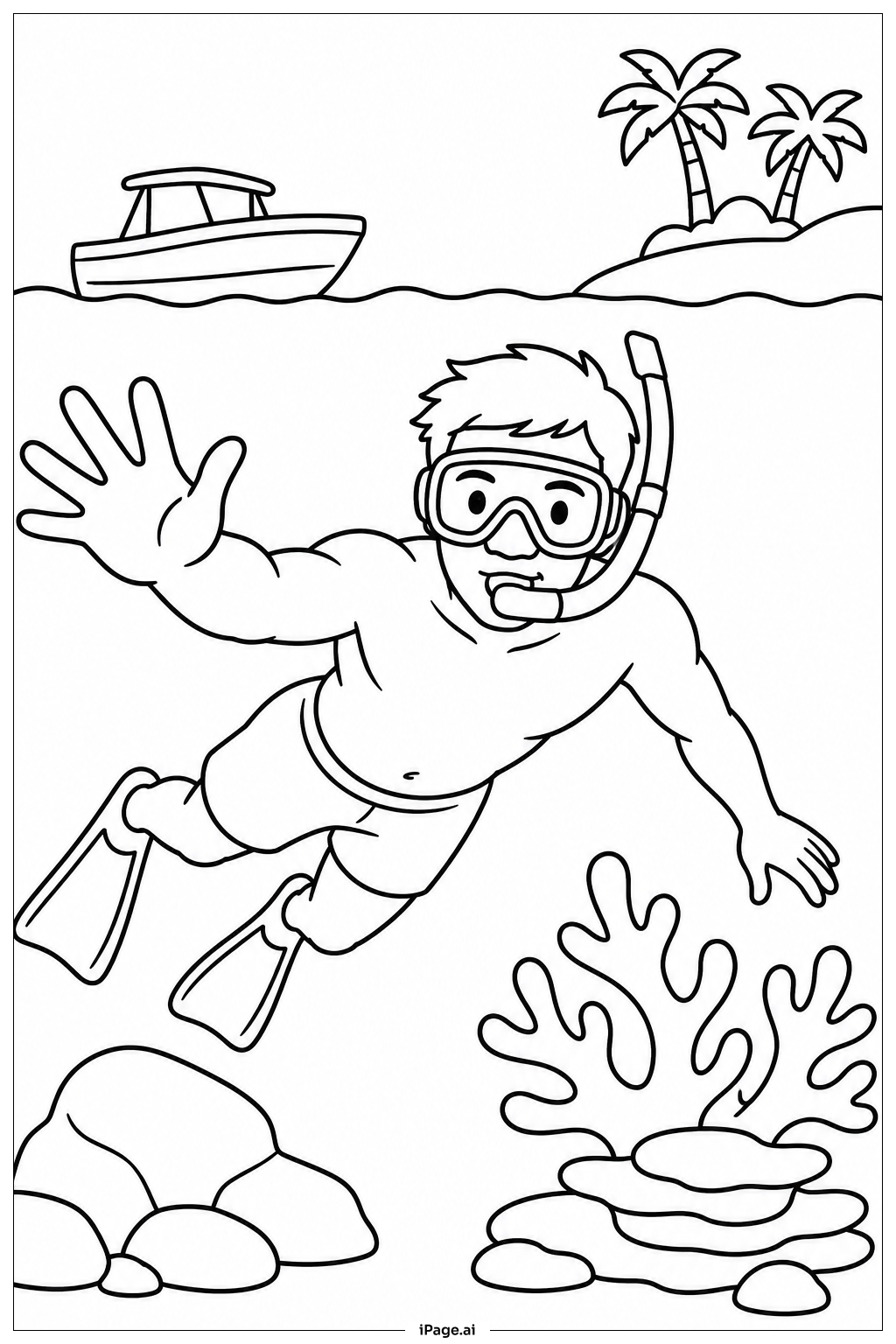
Coloring tips: How to color Beach Snorkel Area coloring page well?
Start with the sky and water using light blues and aquamarines to set the ocean mood. Use a deeper blue or teal for the deeper parts of the water. Color the snorkeler's gear in bright, fun colors like red or orange to make them stand out. For the coral reef, go wild with pinks, purples, oranges, and yellows — coral reefs are one of the most colorful places on Earth! Give each tropical fish its own unique color combo. Try orange and white for clownfish, or blue and yellow for other species. Use a warm sandy yellow for the ocean floor. Paint the sea turtle in earthy greens and browns. Add light greens or soft purples to the sea anemones. Keep the sun a warm golden yellow and the beach a pale sandy tone. Don't be afraid to experiment — the more colors you use, the more alive your underwater world will feel!
Coloring challenges: Which parts are difficult to color and need attention for Beach Snorkel Area coloring page?
• Coral Reef Complexity: The coral reef contains many overlapping shapes, branches, and small details packed closely together. Coloring each section without bleeding into neighboring areas requires a fine-tipped tool and a steady hand. Young colorists may find it helpful to work from the background corals outward to the foreground ones.\n\n• Underwater Light and Depth: Capturing the feeling of being underwater means blending colors to show depth. Lighter, brighter shades near the surface gradually shift to deeper blues and greens lower down. This kind of gradual color transition can be tricky, especially for beginners who are not yet familiar with blending techniques.\n\n• Small Fish Details: The tropical fish scattered throughout the scene have small fins, stripes, and spots that need precise coloring. Using a very fine colored pencil or marker tip is essential to stay within these tiny sections without muddying the design.\n\n• Differentiating Similar Shapes: Several elements in the image — such as sea anemones, coral branches, and seaweed — share similar rounded or elongated shapes. Choosing clearly different colors for each type of plant and creature helps the scene look organized and easy to read visually.\n\n• Snorkeler Gear and Figure: The snorkeler's body, mask, fins, and wetsuit all sit close together in the composition. Each piece of gear should be a different color to help define the figure clearly. Keeping a clean edge between the snorkeler and the surrounding water background adds a polished, professional look to the finished page.
Benefits of coloring books: Advantages of drawing Beach Snorkel Area coloring page
Coloring this Beach Snorkel Area page brings a wonderful mix of fun and learning. Kids get to explore the amazing world beneath the ocean surface while developing important skills at the same time. Here are some great reasons to pick up those colored pencils and dive in!\n\nCreativity and imagination grow as children choose colors for coral, fish, and ocean plants. There are no wrong answers — every choice makes the scene uniquely theirs.\n\nFine motor skills improve with every careful stroke inside the small shapes of fish fins, coral branches, and snorkel gear. This kind of focused hand movement supports handwriting and coordination.\n\nConcentration and focus get a natural boost as kids work through the detailed sections of the reef. Staying focused on a coloring task helps build patience and attention span.\n\nNature awareness blossoms as children learn about real ocean creatures like sea turtles, tropical fish, and coral reefs. Coloring becomes a gentle introduction to marine biology and environmental care.\n\nCalm and relaxation come naturally with the soothing rhythm of coloring. The gentle ocean theme adds an extra sense of peace, making this page a great quiet-time activity for both kids and adults.