Coloring tips: How to color Beach Rock Pool coloring page well?
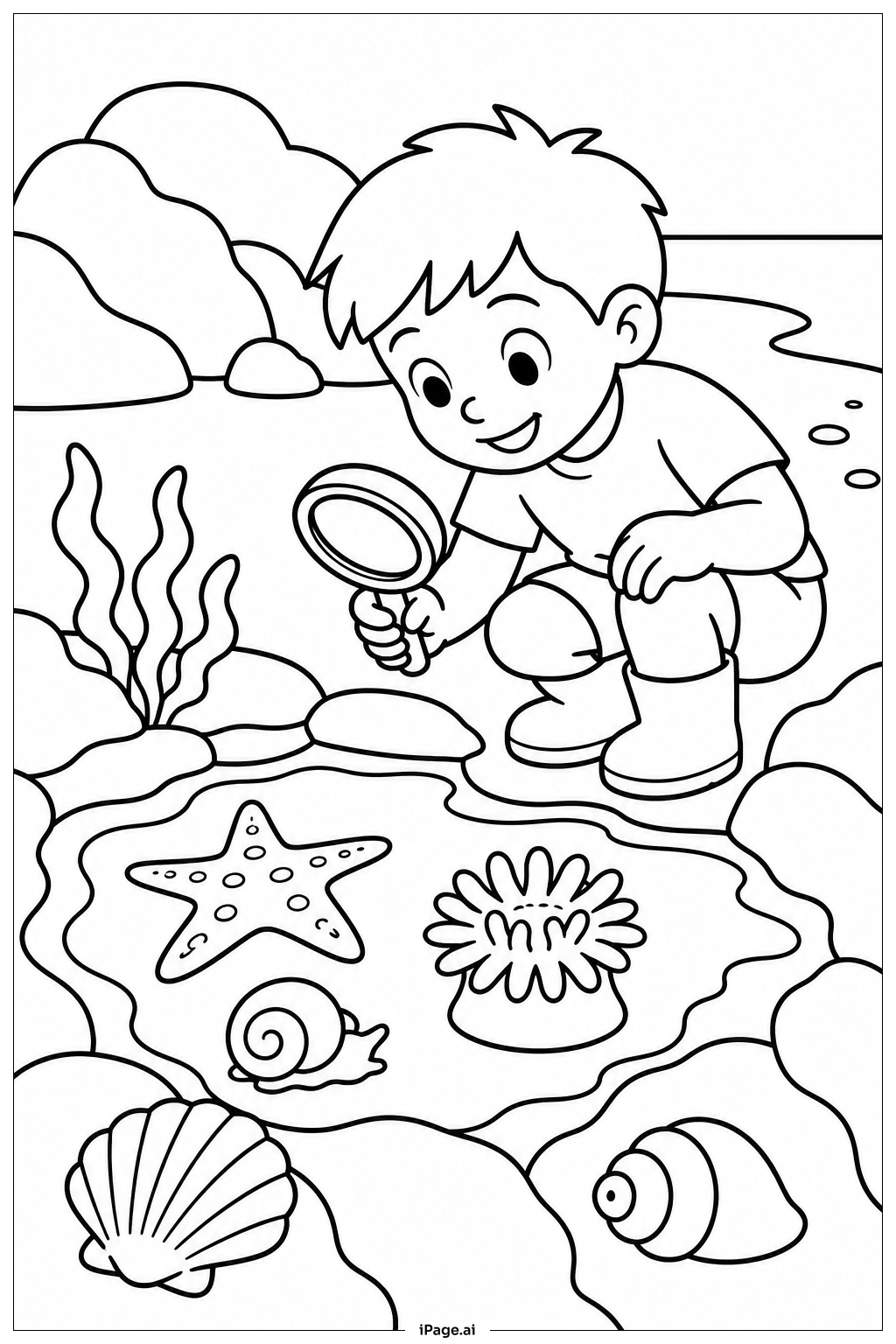
Start with the rocks using shades of gray, tan, and brown. Add darker tones in the cracks and crevices to show depth. Color the water in the pool with light blues and soft greens to give it a clear, shallow look. Use bright colors for the sea creatures. Starfish look great in orange, red, or purple. Sea anemones can be pink, violet, or yellow. Give the crabs shades of orange and red. Color the small fish in bright blues, yellows, or greens. Use dark green and olive tones for the seaweed. Shells can be white, cream, or soft pink. For the ocean waves in the background, use pale blue with white foam tips. Try blending light and dark shades together to make the scene feel alive and three-dimensional.
Coloring challenges: Which parts are difficult to color and need attention for Beach Rock Pool coloring page?
• Rocky Texture Details: The rocks have many uneven surfaces, layers, and cracks. Coloring each section with slightly different shades of gray and brown takes patience. Using a darker tone inside the crevices helps create a realistic, three-dimensional look. This requires careful control of your coloring tool to avoid going outside the lines.
• Water Transparency Effect: The pool water needs to look clear and shallow. Achieving this effect means using very light, thin layers of blue and green. Pressing too hard will make the water look solid and flat. Blending gently is key to showing that you can see through the water to the rocks and creatures below.
• Small Sea Creature Details: Creatures like crabs, tiny fish, and anemone tentacles have very small, detailed outlines. Coloring these areas neatly requires a sharp pencil or a fine-tipped marker. It is easy to accidentally fill in areas that should stay light or to smudge colors together in a way that muddies the details.
• Seaweed and Organic Shapes: The flowing curves of the seaweed can be tricky to follow. The shapes twist and overlap, making it hard to know where one section ends and another begins. Using two or three shades of green and carefully following each curve will help separate the layers and make the seaweed look natural.
• Background Ocean and Foreground Balance: The background waves should feel lighter and less detailed than the rock pool in the foreground. Keeping the background colors soft and pale while using richer, bolder colors up front helps create a sense of distance and makes the main scene stand out.
Benefits of coloring books: Advantages of drawing Beach Rock Pool coloring page
Coloring this beach rock pool scene offers many wonderful benefits for kids and beginners alike. The detailed natural setting encourages creativity as you choose colors for the many sea creatures, rocks, and water. It is a great way to learn about ocean life while having fun. Identifying a starfish, a crab, or an anemone and choosing the right colors for each one builds both knowledge and imagination.
The image also helps develop fine motor skills. Carefully coloring inside the small shapes of shells, crabs, and fish tentacles trains steady hand movements and improves pencil control. This is especially helpful for younger children who are still building hand-eye coordination.
Focusing on a detailed, calming nature scene like this one is a great way to relax. The rhythmic motion of coloring and the peaceful beach theme can help reduce stress and anxiety. It encourages mindfulness, helping both children and adults slow down and stay present in the moment.
Working through the different textures of rocks, water, and sea creatures also teaches color blending and shading techniques in a low-pressure, enjoyable way. Overall, this coloring page combines learning, creativity, and relaxation into one satisfying activity.