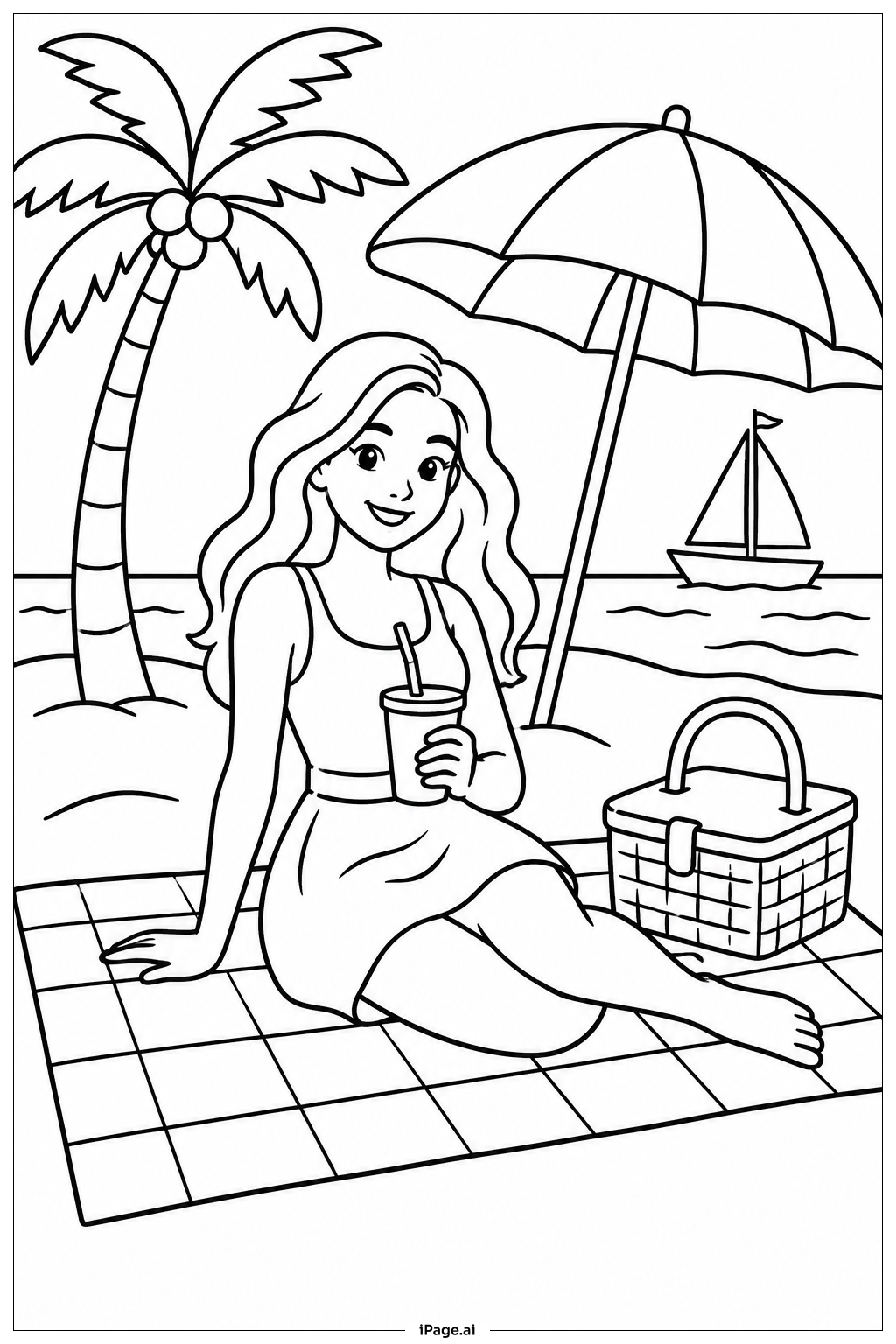
Coloring tips: How to color Beach Picnic Scene coloring page well?
Start with the sky and use a soft, bright blue. Add white or light gray for the fluffy clouds. Color the ocean in shades of blue and teal, making it slightly darker near the horizon. Use warm tan and golden yellow for the sandy beach. Give the picnic blanket bold stripes or a fun checkered pattern in red, white, and blue. The beach umbrella looks great in bright, contrasting colors like orange and yellow. Fill the food items with natural colors — green for the fruit, golden brown for the sandwiches. Use a warm brown for the picnic basket. Color the seagulls light gray or white. The sandcastle can be a slightly darker shade of tan than the surrounding sand. Let the flip-flops and bucket pop with bright, playful colors like pink, green, or purple. Feel free to mix and match colors to make the scene feel lively and full of summer energy.
Coloring challenges: Which parts are difficult to color and need attention for Beach Picnic Scene coloring page?
• Sky and Cloud Blending: The sky takes up a large portion of the background, so achieving a smooth, even blue without streaks can be tricky. Blending the blue carefully around the white cloud shapes requires a steady hand and patience, especially for younger colorists.
• Ocean Wave Details: The waves have curved, layered lines that need at least two or three shades of blue and teal to look realistic. Leaving thin white lines to suggest foam at the wave tips adds depth but requires careful control to avoid going outside the lines.
• Picnic Blanket Pattern: The blanket has a detailed pattern with small, repeating shapes. Staying consistent with the pattern across the whole blanket takes focus and precision. Using a ruler or coloring in a steady rhythm can help keep the design neat.
• Food and Basket Textures: The picnic basket has a woven texture made up of many small crossing lines. Coloring each section accurately without muddying nearby areas demands fine motor control. The food items are small and close together, making it easy to accidentally color outside the intended area.
• Sand Depth and Shadow: The sand appears flat, but adding subtle shading around objects like the sandcastle, bucket, and flip-flops creates a sense of depth. Using light and slightly darker shades of tan in the right places is a challenge that requires an understanding of basic light and shadow.
Benefits of coloring books: Advantages of drawing Beach Picnic Scene coloring page
Coloring this Beach Picnic Scene is a wonderful activity for kids and adults alike. It sparks creativity by encouraging colorists to choose their own color combinations for the food, blanket, umbrella, and ocean. This kind of free creative decision-making builds confidence and self-expression from an early age.
The scene has a wide variety of elements — waves, clouds, food, objects, and textures — which keeps the activity engaging and helps develop fine motor skills. Carefully coloring small details like the picnic basket weave or the food items strengthens hand-eye coordination and pencil control, skills that support writing and drawing development in children.
The relaxing beach theme also has a calming effect. Focusing on a peaceful, happy scene helps reduce stress and anxiety, making it a great mindfulness activity for both kids and adults after a busy day.
For younger children, naming the colors and objects out loud while coloring builds vocabulary and observational skills. For older kids and adults, experimenting with shading and color mixing introduces basic art concepts in a fun, low-pressure setting.
Overall, this coloring page combines relaxation, creativity, and skill-building into one enjoyable experience that the whole family can share.