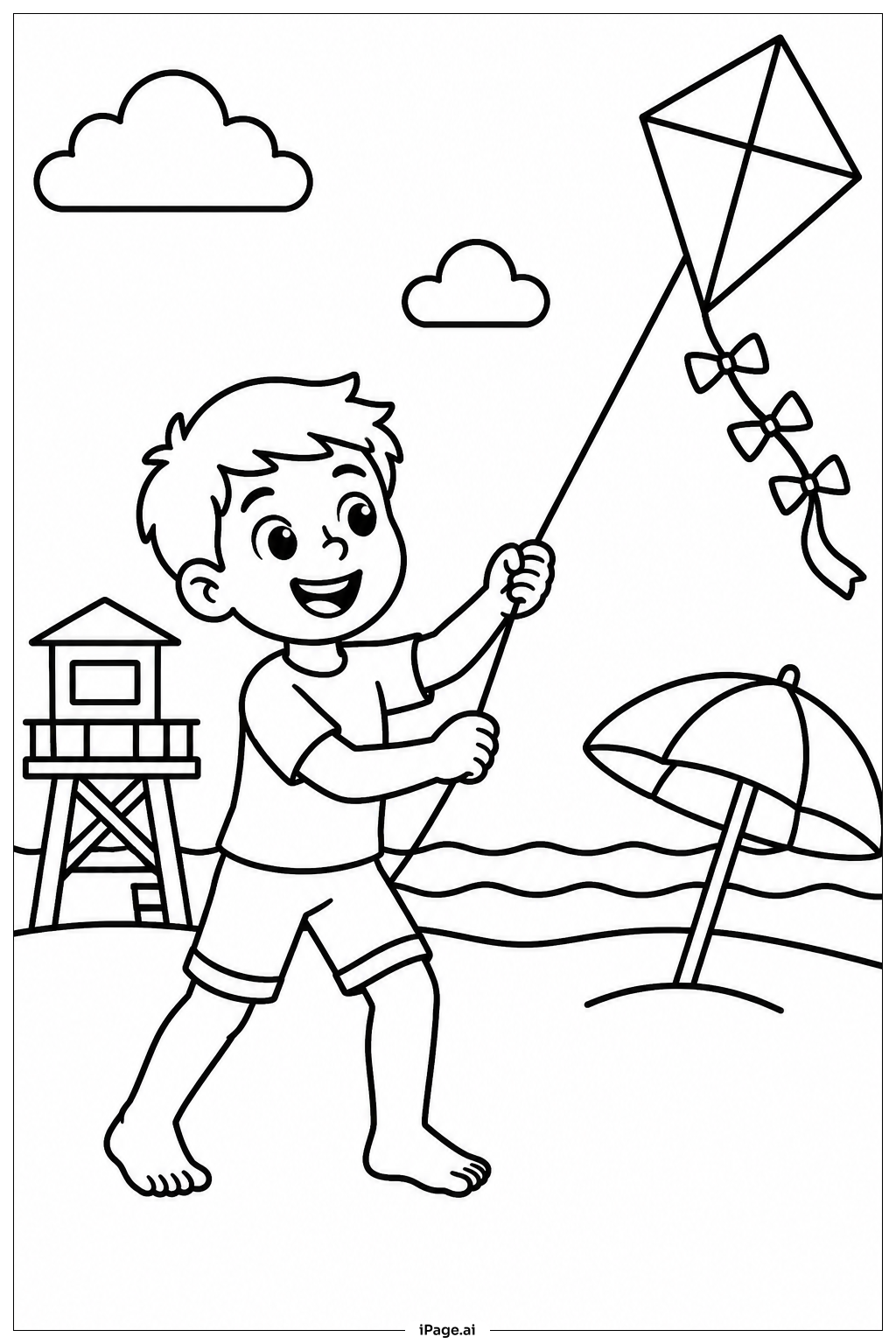
Coloring tips: How to color Beach Kite Flying coloring page well?
Start with the sky. Use light blue for the open sky and soft white for the clouds. Give the kite bright, bold colors like red, yellow, and orange to make it pop against the blue sky. Color the kite tails with alternating colors to show movement. Use golden yellow and tan shades for the sandy beach. The ocean can be a mix of blue and teal, with white tips on the waves to show foam. Color the child's clothes with fun, summery shades like bright pink, green, or purple. Use peach or light brown tones for skin. Add warm yellow to the palm trees and bright green for the leaves. Seashells can be soft pink, cream, or lavender. Keep the seagulls white or light gray. Using a variety of bright, happy colors will bring this beach scene to life and make it feel warm and full of energy.
Coloring challenges: Which parts are difficult to color and need attention for Beach Kite Flying coloring page?
• Kite and Tail Details: The kite has a geometric diamond shape divided into sections, and each section should be colored differently to create a bold, eye-catching pattern. The long flowing tails require careful blending or alternating colors to show movement and rhythm without blending into the sky background. Staying inside the narrow tail lines can be tricky, especially for younger colorists.
• Sky and Cloud Blending: Creating a natural-looking sky means smoothly transitioning from deeper blue near the top to a lighter, airier tone near the horizon. Coloring around the irregular edges of the clouds without smudging or going outside the lines requires a steady hand and patience.
• Ocean Waves: The waves have curved, layered lines that need gradual color shifts from deep blue to lighter blue and white at the tips. Capturing the feeling of moving water with flat coloring tools like crayons or markers can be a real challenge for beginners.
• Figure and Clothing Details: The child's small figure includes fine details like facial features, hair, and clothing folds. These small areas require precise coloring with sharpened pencils or fine-tip markers. Skin tones also require careful layering to look natural and smooth.
• Sandy Beach Texture: The beach area may include small details like pebbles, shells, and footprints. Using multiple shades of tan, beige, and light brown to suggest the texture of sand without making it look flat or muddy takes practice and a light touch.
Benefits of coloring books: Advantages of drawing Beach Kite Flying coloring page
Coloring this beach kite flying scene offers many wonderful benefits for children and families. First, it builds focus and concentration as kids carefully fill in the kite, waves, and sky with their chosen colors. Staying within the lines and planning which colors to use helps strengthen fine motor skills and hand-eye coordination. These are important skills for writing, drawing, and everyday tasks.
Choosing colors for the kite, ocean, and sandy beach encourages creativity and self-expression. There are no wrong choices, so children feel confident and free to explore their imagination. This kind of open-ended activity supports emotional well-being and can be a calming, stress-free experience.
The beach theme also sparks curiosity about nature. Kids may ask questions about the ocean, weather, and how kites fly, turning coloring into a fun learning moment. Parents and children can color together, making it a great bonding activity.
For older children, tackling the more detailed areas like the kite pattern and wave shading builds patience and persistence. Completing the page gives a satisfying sense of accomplishment. Overall, this coloring page is a simple, joyful, and enriching activity for all ages.