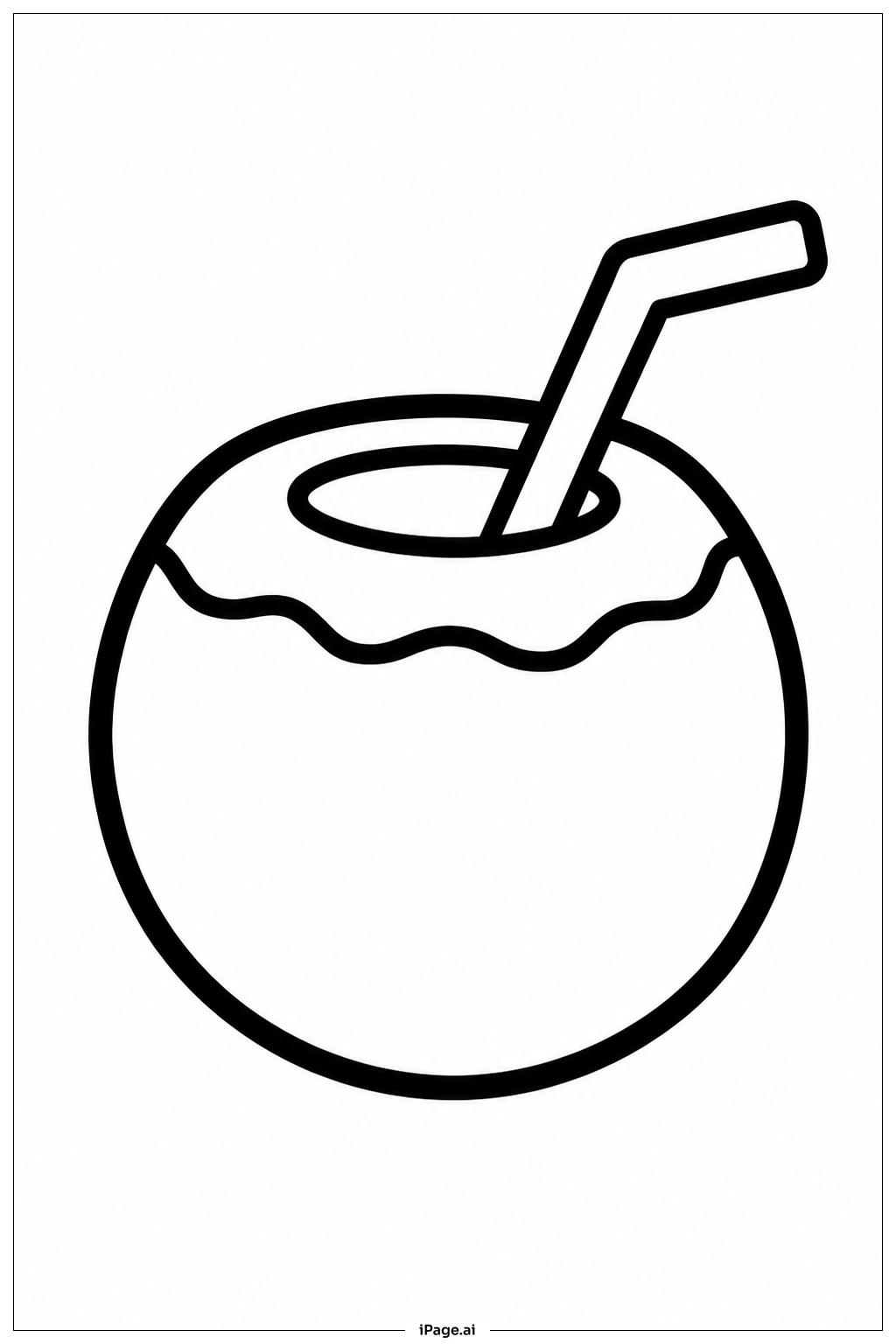
Coloring tips: How to color Beach Coconut coloring page well?
Start with the sky. Use light blue for the open sky and soft white or pale yellow near the sun. Color the sun bright yellow or golden orange. For the clouds, leave them white or add a very light gray shadow.
Next, move to the ocean. Use shades of turquoise and blue. Add lighter blue near the shore where the waves roll in.
For the sandy beach, use tan, sandy yellow, or warm beige. You can add a little orange near the sun's reflection on the sand.
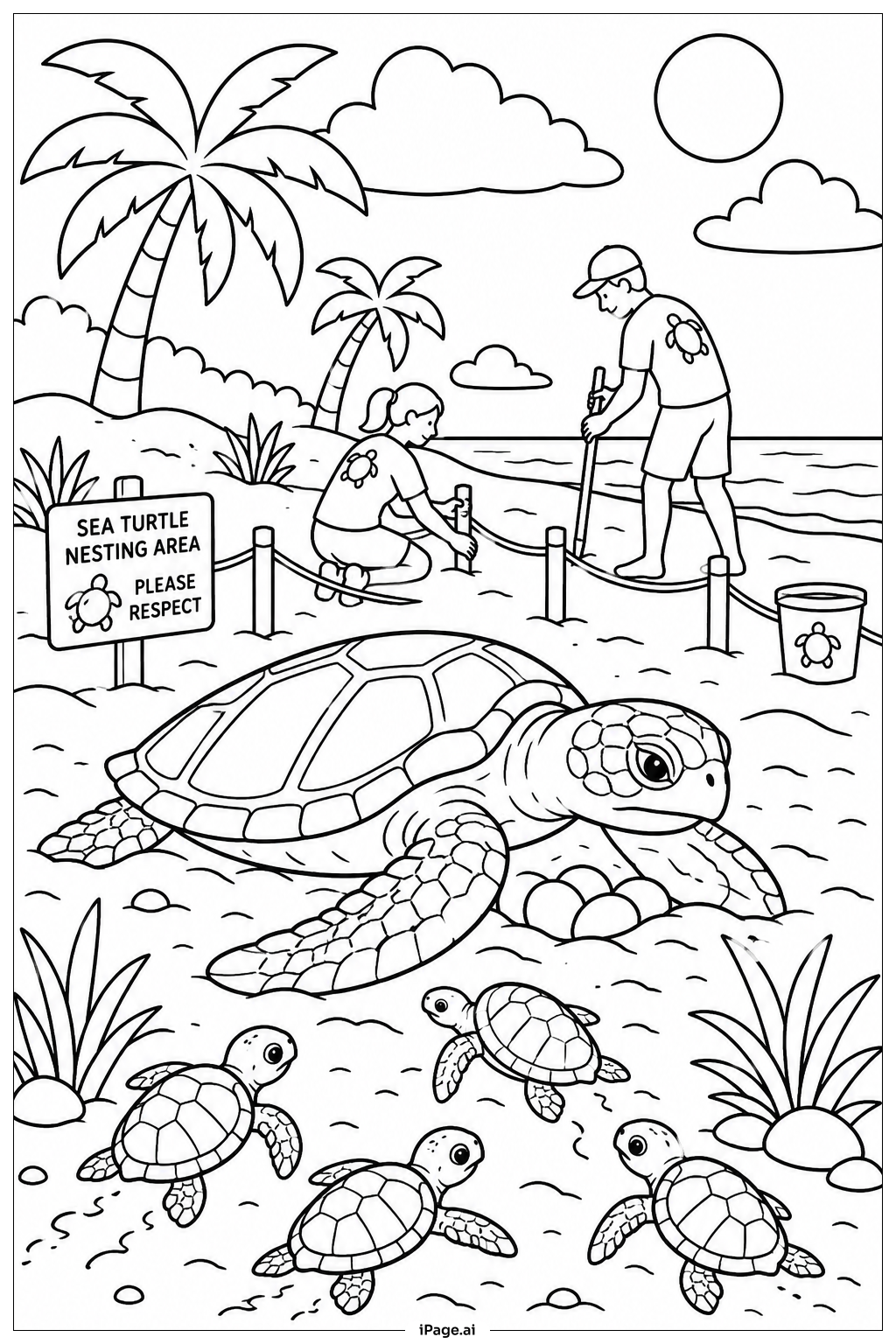
The coconut palm trunk looks great in medium brown or warm tan. Add darker brown streaks to show the texture of the bark.
Color the palm fronds in bright green. Use a darker green on the undersides of the leaves to add depth. The coconuts can be brown, with a touch of dark green if they are not yet ripe.
Feel free to add your own details — a colorful beach towel, a crab in the sand, or a sailboat on the water. Make it your own tropical paradise!
Coloring challenges: Which parts are difficult to color and need attention for Beach Coconut coloring page?
• Palm Frond Details: The long, feathery leaves of the coconut palm have many thin segments branching off a central spine. Coloring each individual leaflet neatly takes patience and a fine-tipped colored pencil or marker. It is easy to accidentally color outside the lines, so working slowly from the tip of each frond down toward the trunk helps maintain control.
• Curved Tree Trunk Texture: The coconut palm trunk has a ringed, rough texture formed by overlapping segments. Capturing this realistic look requires layering at least two shades of brown — a base color and a darker tone for the ring lines and shadow areas. Young colorists may find this shading technique tricky at first.
• Coconut Cluster Shading: The round coconuts grouped together at the top of the trunk overlap each other. Where one coconut sits behind another, a darker shadow should be added to create depth. Without this shading step, the cluster can look flat. Using a small circular motion with a darker pencil helps build a natural shadow effect.
• Ocean Wave Gradients: The water in the background looks most realistic when it transitions smoothly from deep blue in the distance to light turquoise or aqua near the shoreline. Blending two or more shades of blue without harsh lines can be challenging, especially for beginners who are still learning how to layer colors gently.
• Balancing the Overall Scene: Because this image includes sky, water, sand, and a tall tree all in one frame, keeping the colors balanced so no single area looks too dark or too bright requires stepping back often to view the whole picture as you work.
Benefits of coloring books: Advantages of drawing Beach Coconut coloring page
Coloring this tropical beach scene offers a wide range of wonderful benefits for children and beginners alike.
First, it builds focus and concentration. Staying inside the lines of the detailed palm fronds and coconut clusters trains the brain to pay close attention to small areas — a skill that helps in school and everyday tasks.
Second, it develops fine motor skills. Holding colored pencils and controlling pressure to shade and blend strengthens the small muscles in the hands and fingers, which supports better handwriting and coordination.
Third, it sparks creativity. Choosing colors for the sky, ocean, and sand encourages personal expression. There is no single right answer — every child's version of this beach scene can be unique and beautiful.
Fourth, it is calming and relaxing. The peaceful tropical theme — with warm sunshine, gentle waves, and swaying palm trees — naturally reduces stress and creates a sense of calm. Coloring is a great quiet-time activity after a busy day.
Finally, it builds confidence. Finishing a complete coloring page gives children a real sense of pride and accomplishment. Displaying their finished beach artwork is a celebration of their effort and creativity. Grab your colors and bring this sunny paradise to life!