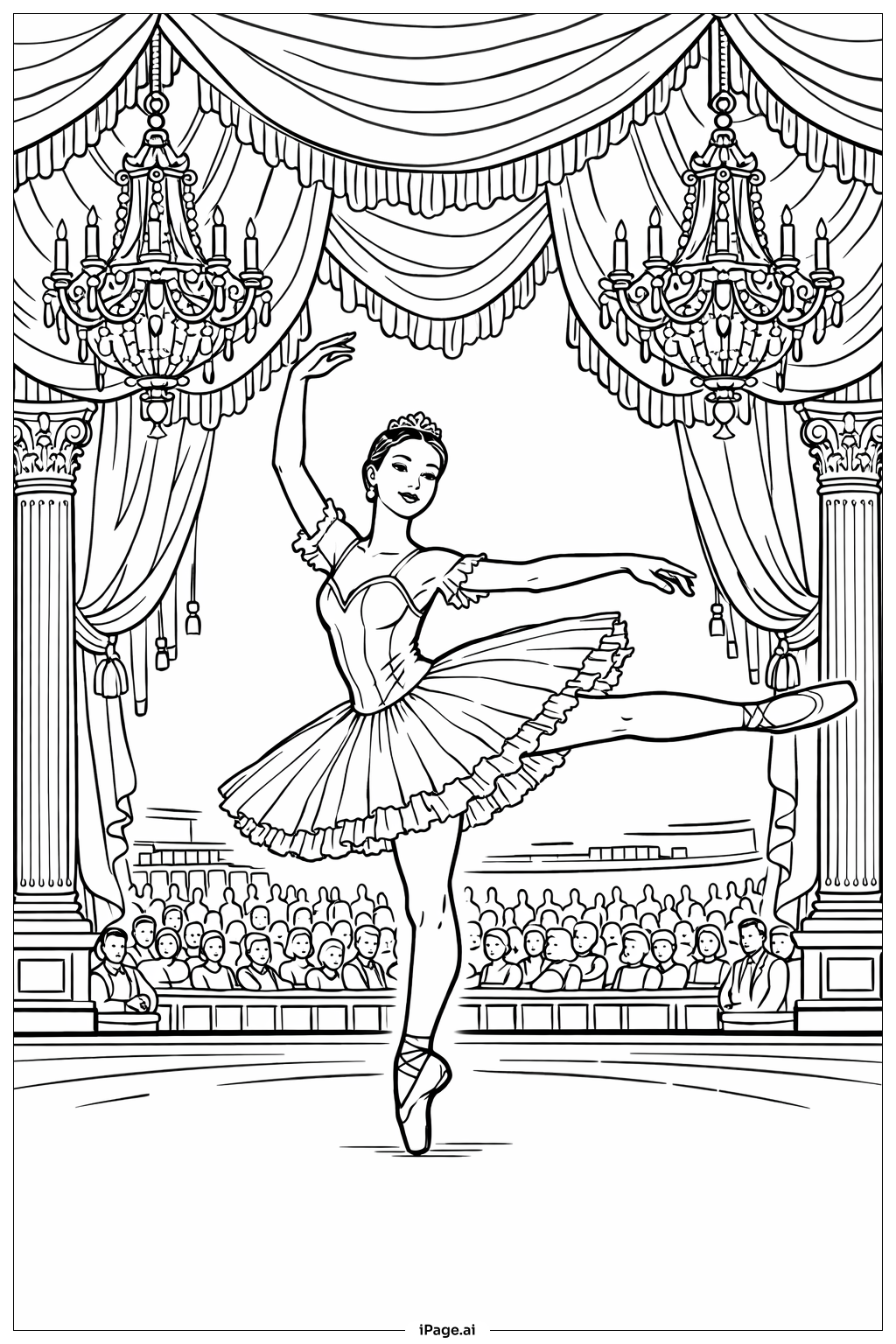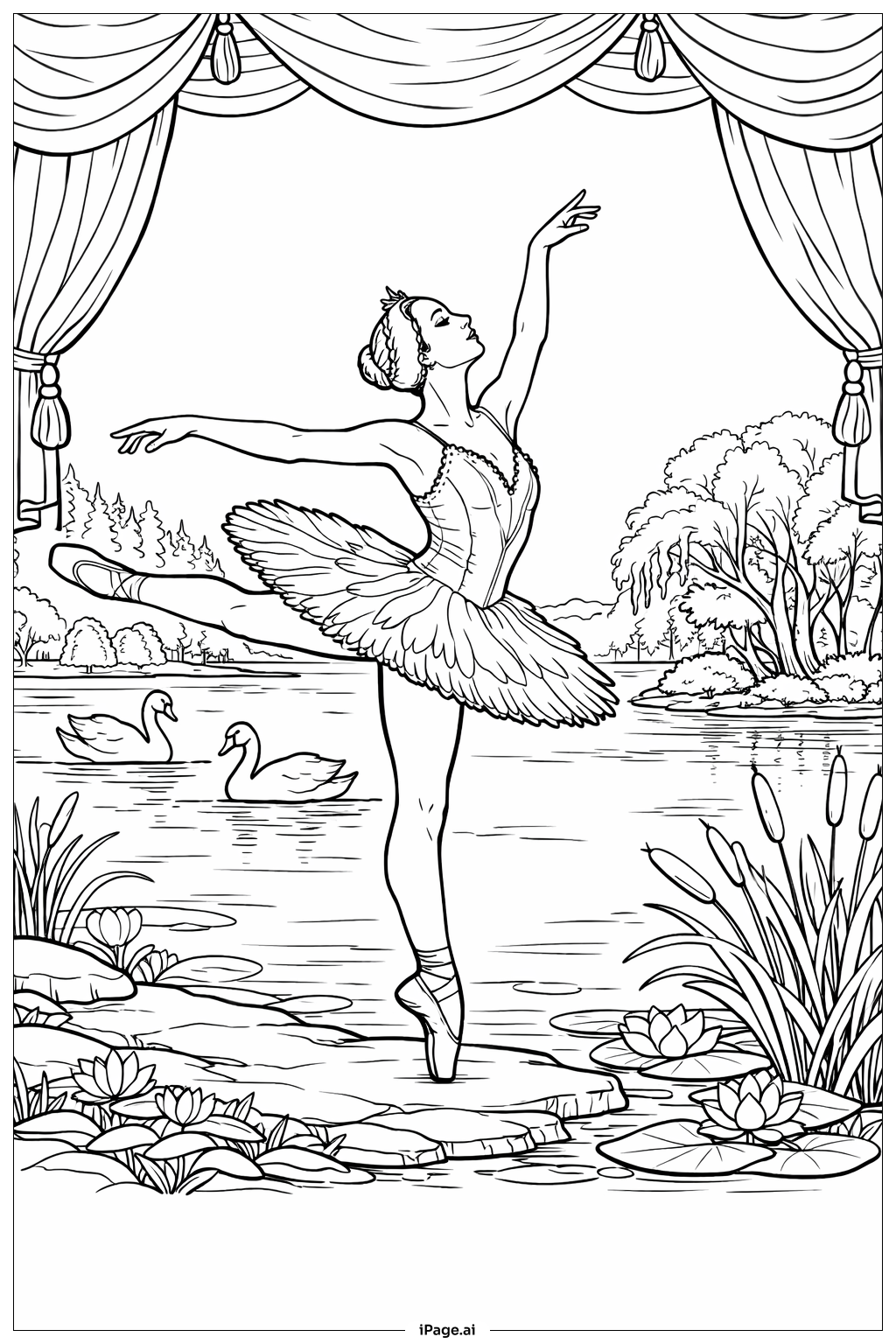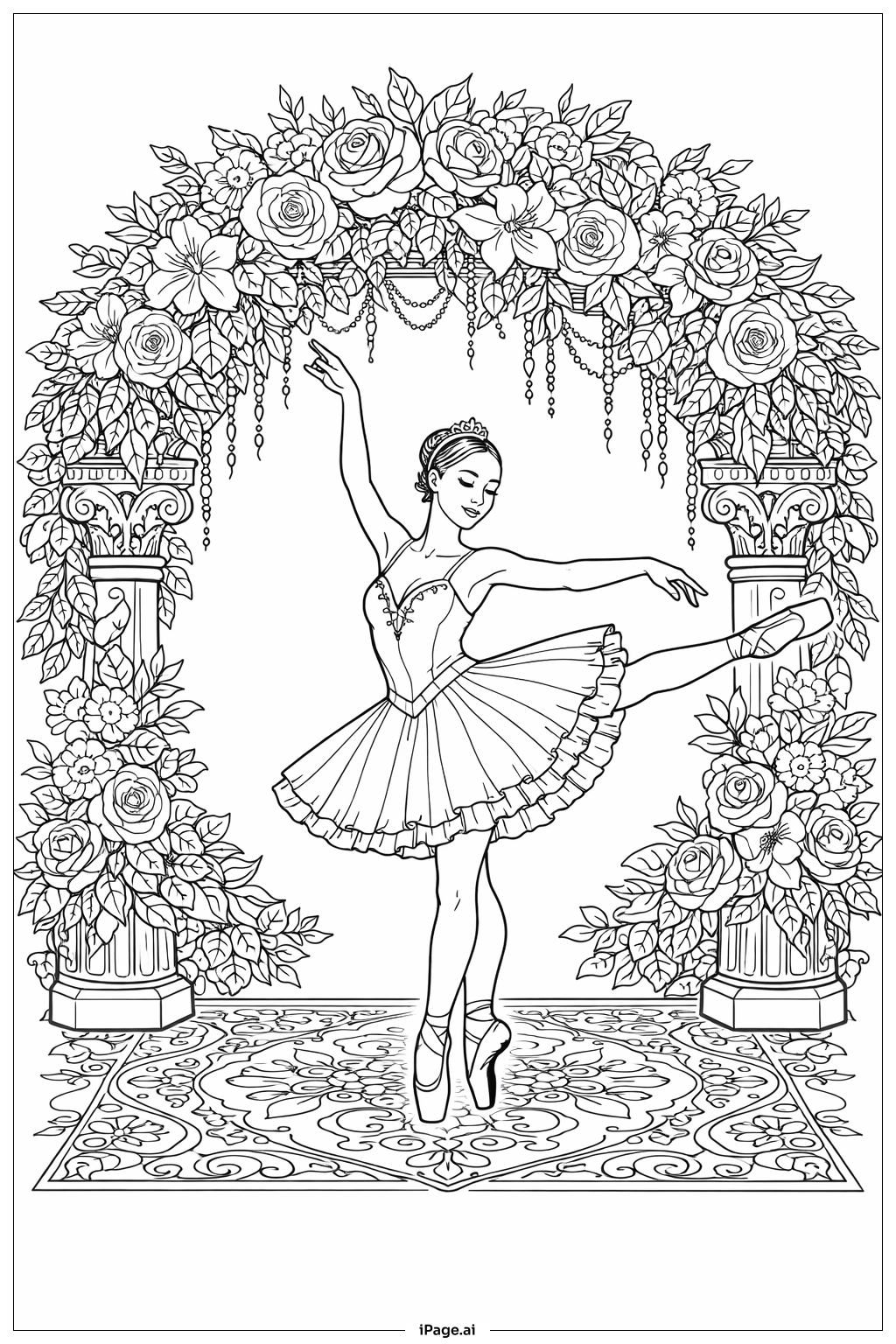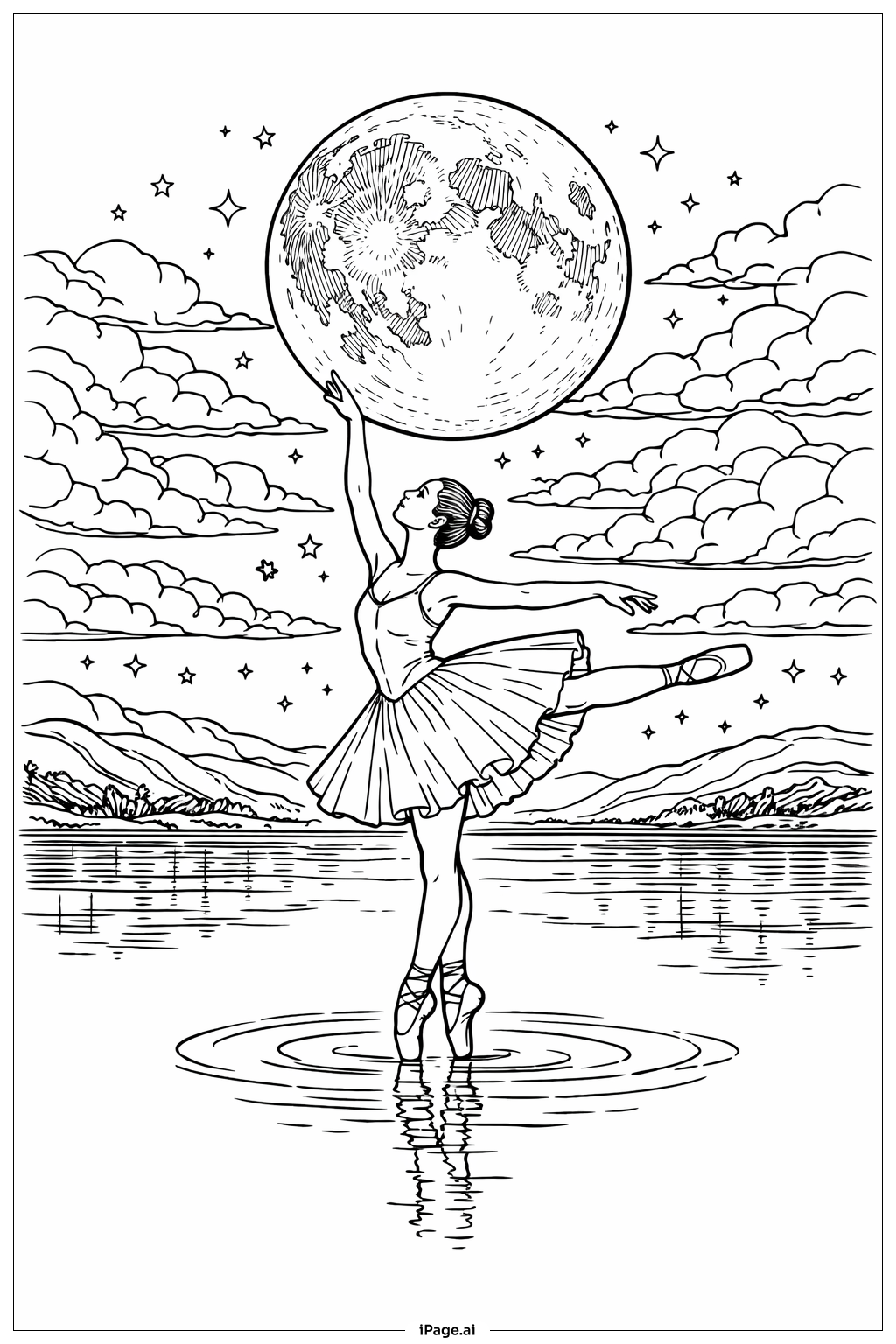
Coloring tips: How to color Ballerina At Mirror coloring page well?
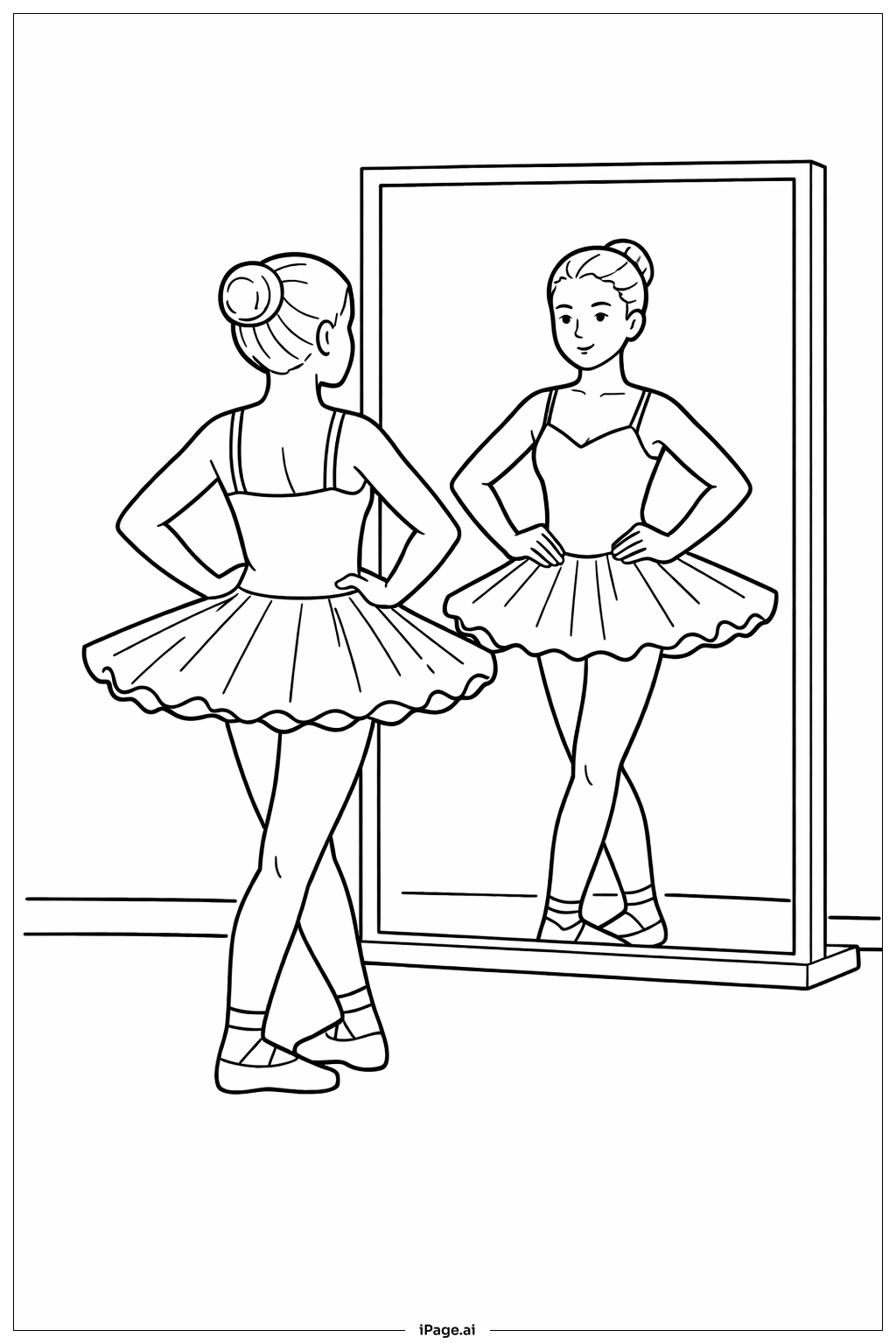
For the ballerina's tutu, consider soft pinks, whites, or lavender to create a traditional ballet look, or try bolder colors like coral or mint green for a modern twist. Her bodice can match or complement the tutu with sparkly accents suggested by gold or silver. Skin tones should be colored gently with light peach or brown shades. The ballet slippers traditionally come in pink or pale peach, with satin ribbon details in matching or slightly darker tones. For the hair, choose realistic browns, blacks, or blondes, and add a tiny hair accessory in a contrasting color. The mirror frame offers wonderful opportunities for metallic effects—gold, bronze, or antique silver work beautifully. Consider adding subtle shading to the mirror's reflection to create depth. The background can remain simple with pale blues, soft grays, or warm creams to keep focus on the dancer.
Coloring challenges: Which parts are difficult to color and need attention for Ballerina At Mirror coloring page?
• Tutu Layers and Ruffles: The multiple layers of the tutu require careful attention to create depth and dimension. Each ruffle should be shaded differently to show that they overlap and extend outward. Light should hit the top layers more brightly while lower layers fall into shadow. Maintaining consistent color while varying the intensity across layers challenges young colorists to understand light and shadow principles.
• Mirror Frame Details: The ornate baroque flourishes and decorative curves of the mirror frame contain intricate small spaces and delicate lines. Staying within these narrow boundaries requires steady hand control and patience. Choosing whether to color each decorative element uniformly or create an aged, antique effect with varied tones adds another layer of complexity.
• Ribbon and Fabric Texture: The ballet slipper ribbons that wrap around the ankles create overlapping sections that need different shading to appear three-dimensional. Similarly, the bodice details and fabric folds require understanding how light reflects off satin and tulle materials. Creating the illusion of shiny satin ribbons versus soft tulle requires different coloring techniques.
• Reflected Image Coordination: The mirror reflection adds a unique challenge as colorists must decide whether to color the reflection identically to the ballerina or create subtle differences to simulate glass reflection effects. This requires planning and color consistency across two similar but separate areas of the image.
Benefits of coloring books: Advantages of drawing Ballerina At Mirror coloring page
Coloring this ballerina scene offers wonderful developmental benefits for children. It enhances fine motor skills through the detailed work required for the tutu ruffles, ribbon laces, and ornate mirror frame. The symmetrical elements of the dancer's pose and the mirror help children understand balance and proportion. This image encourages patience and focus as young artists work through the intricate details of the costume and decorative elements. It also sparks interest in the performing arts and ballet culture, potentially inspiring appreciation for dance and dedication. The elegant subject matter promotes an understanding of grace and poise. Children practice color coordination by matching the reflection to the dancer or creating complementary schemes throughout the composition. The combination of large areas like the tutu and small details like the frame flourishes accommodates different skill levels, making it accessible yet challenging for ages four through sixteen.