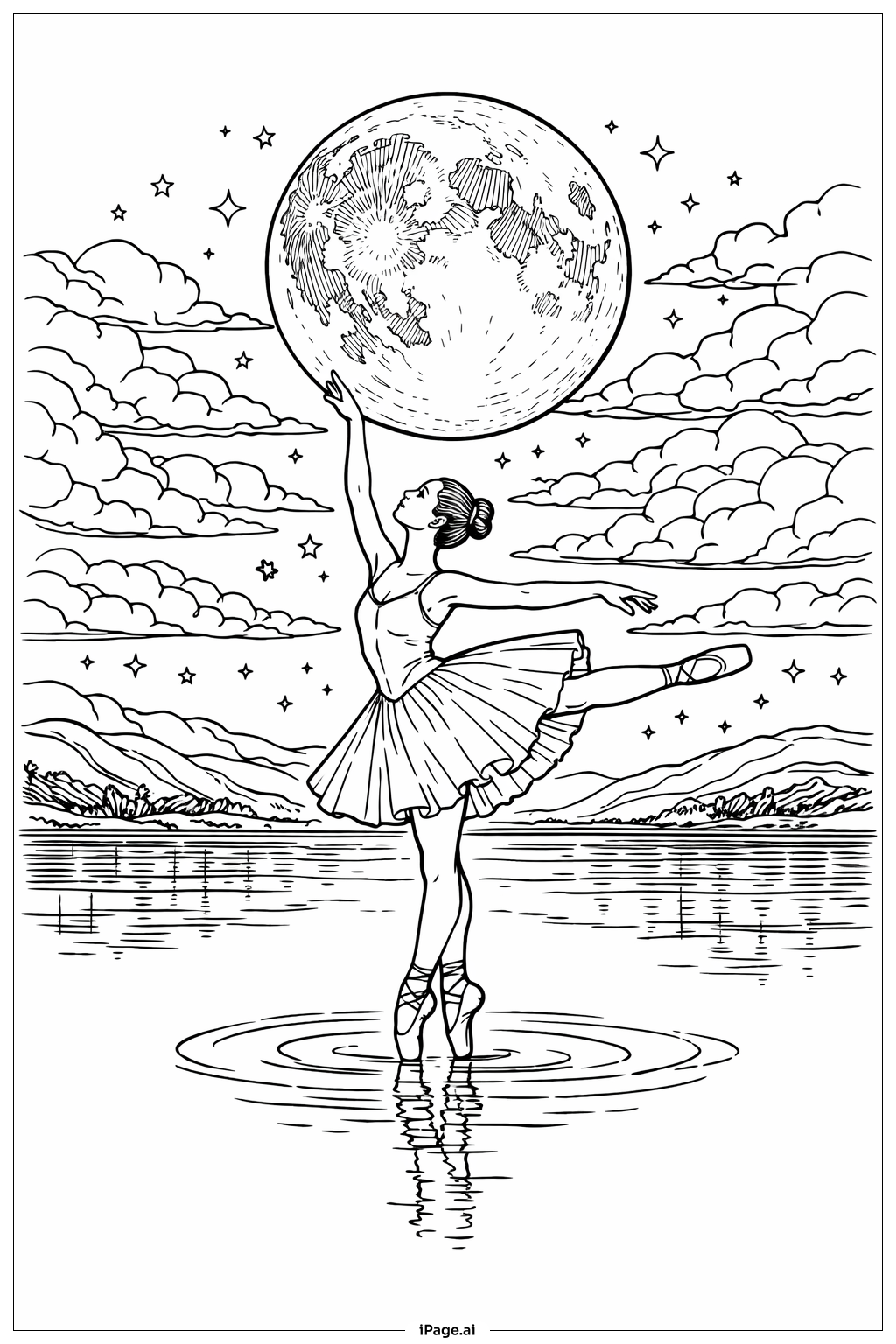
Coloring tips: How to color Ballerina In Moonlight Scene coloring page well?
For the ballerina's skin, use soft peach or light tan tones. Color her tutu in classic ballet shades like pale pink, lavender, or white with gentle shading to show the layers. Her bodice can match or complement the tutu color. Use a rich brown or black for her hair, adding highlights to show dimension. The ballet shoes traditionally come in pink or peach to match the dancer's skin tone. For the magical night sky, blend deep blues and purples, transitioning from darker shades at the edges to lighter tones near the moon. Color the crescent moon in soft yellow or cream, perhaps adding a gentle glow effect with light orange around its edges. Make the stars sparkle with white or pale yellow. The clouds can be colored in light gray or lavender to maintain the nighttime atmosphere while keeping them visible.
Coloring challenges: Which parts are difficult to color and need attention for Ballerina In Moonlight Scene coloring page?
• Tutu Texture and Layers: The ballerina's tutu features multiple layers of ruffles that require careful attention to create depth and dimension. Each layer should be shaded differently to show how they overlap, with darker tones in the creases and lighter tones on the exposed surfaces. This requires patience and a steady hand to avoid making the layers look flat or muddy.
• Smooth Skin Tones and Body Contours: Achieving realistic and even skin tones on the ballerina's arms, legs, and face can be challenging. The curved surfaces of her limbs need gradual shading to show muscle definition and the graceful lines of her extended pose. Avoiding streaks while maintaining smooth color transitions requires light pressure and consistent strokes.
• Night Sky Gradient: Creating a convincing night sky involves blending multiple shades of blue and purple smoothly across a large background area. The sky should appear darker at the edges and gradually lighter near the moon, which requires careful color layering and blending techniques to avoid harsh lines or uneven patches.
• Moonlight Glow Effect: Capturing the soft, luminous quality of moonlight is tricky. The moon itself needs gentle shading to show its curved surface, while the surrounding glow requires delicate blending of yellows and light blues. Adding radiance without making the moon look too bright or the glow too artificial demands subtle color choices and careful application.
Benefits of coloring books: Advantages of drawing Ballerina In Moonlight Scene coloring page
Coloring this ballerina scene helps develop fine motor skills through the precise work needed for the dancer's delicate features and costume details. Children learn about light and shadow by creating the moonlit atmosphere, understanding how nighttime scenes use darker colors while still remaining visible and beautiful. The graceful pose introduces young artists to human anatomy and movement, encouraging observation of how the body balances and extends. Working with the sky's gradient teaches valuable blending techniques that apply to many artistic projects. The magical, peaceful theme promotes relaxation and mindfulness, making it perfect for winding down before bedtime. This image also celebrates the art of dance, inspiring appreciation for ballet and performance arts while building patience through the detailed work required for the layered tutu and starry background.