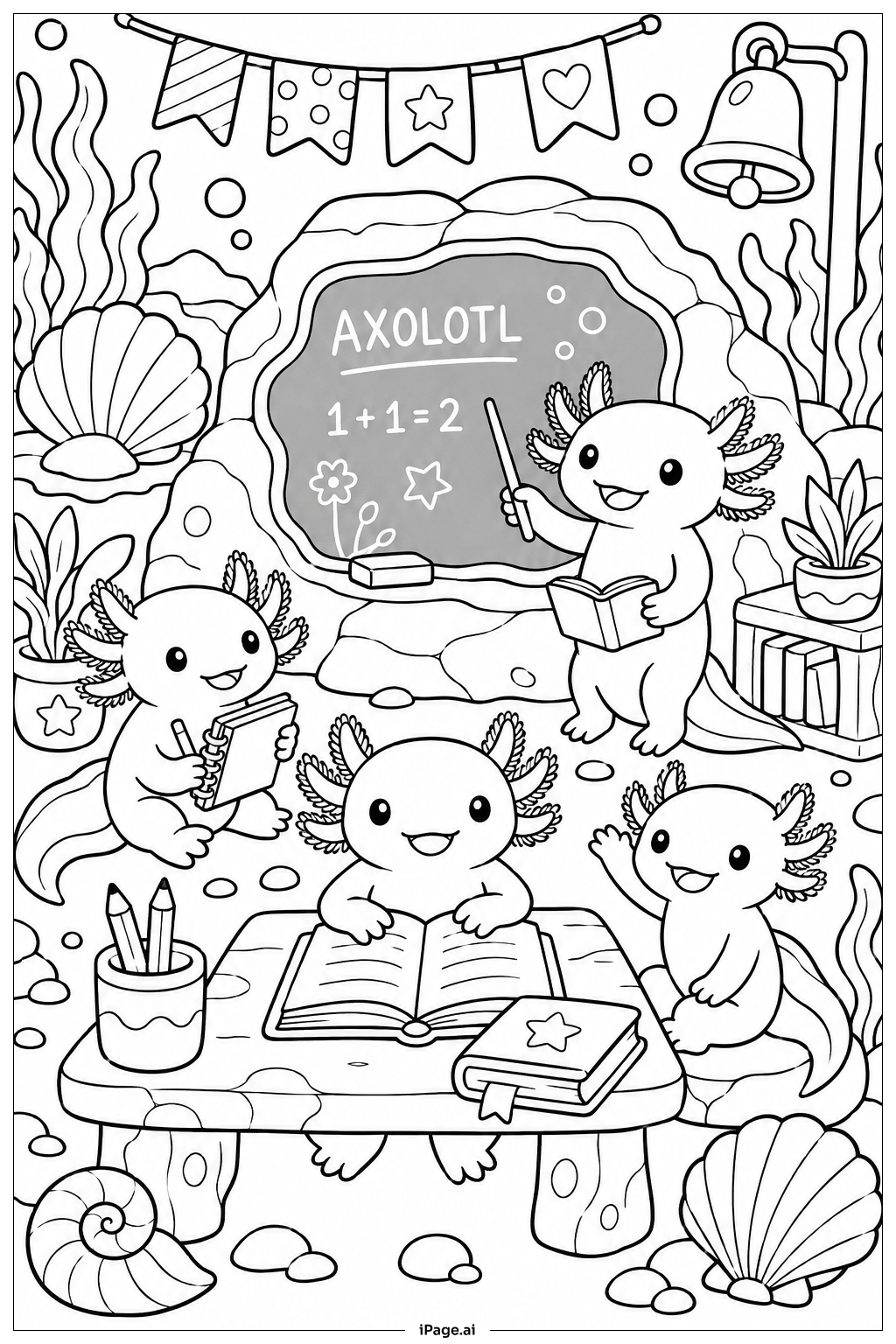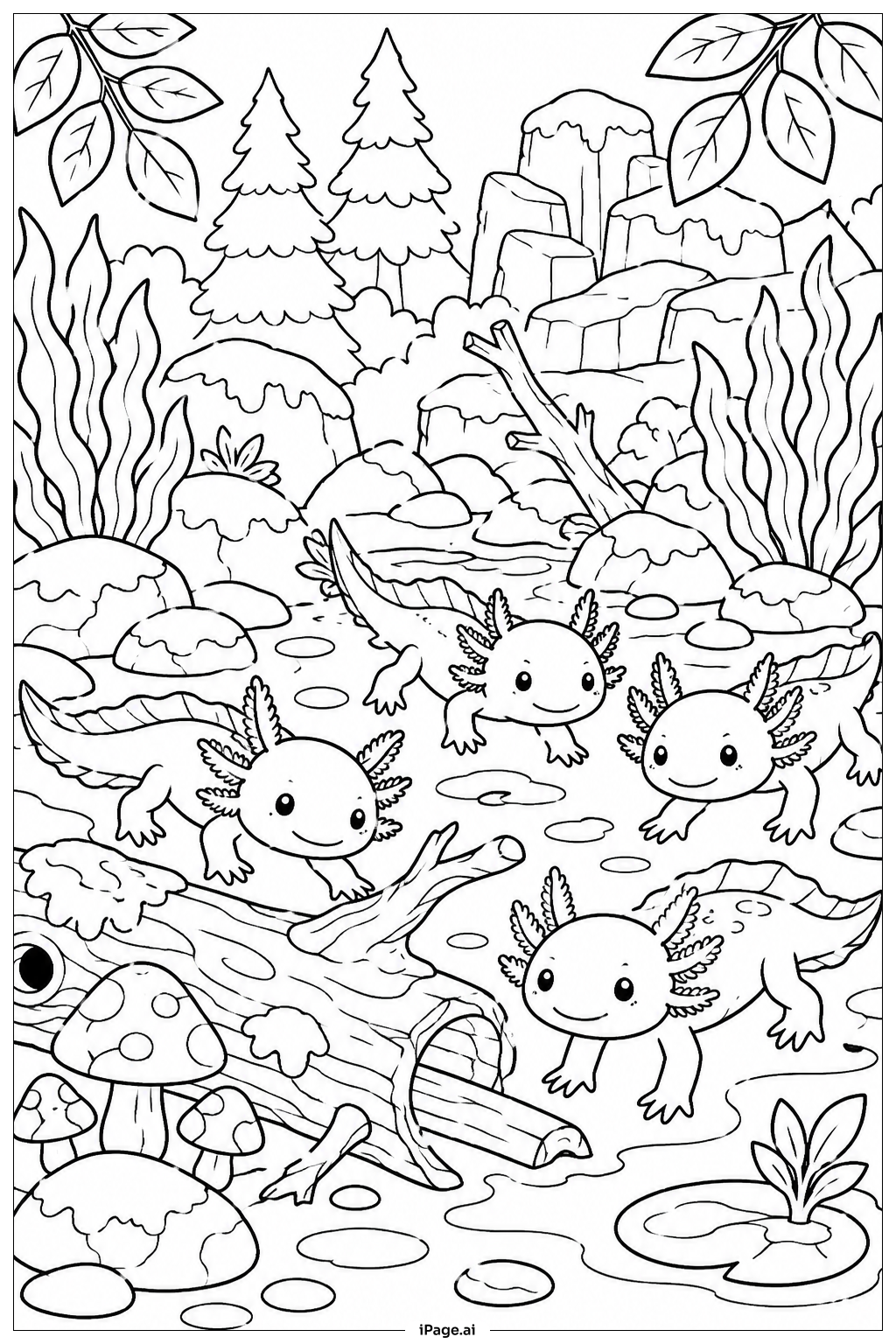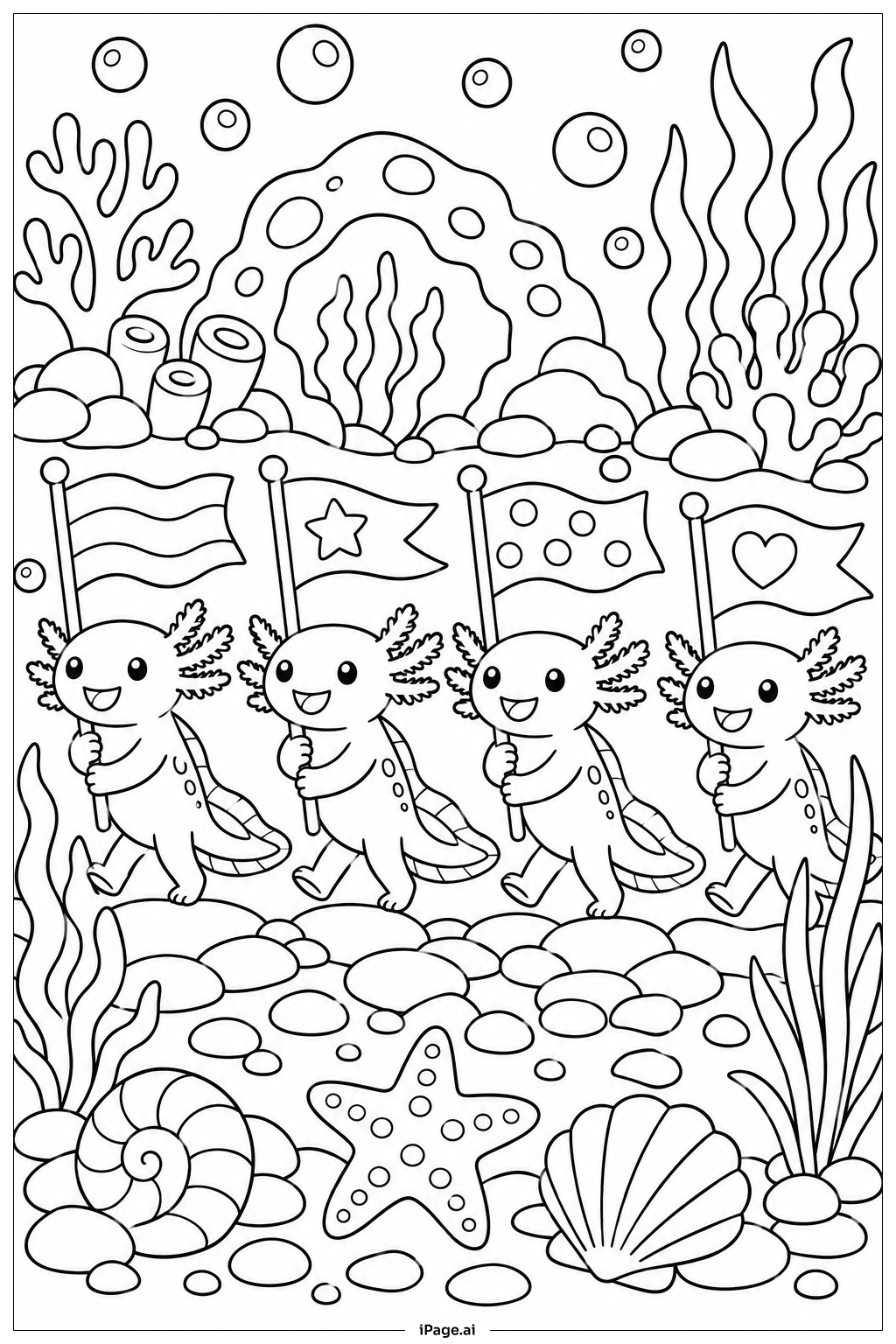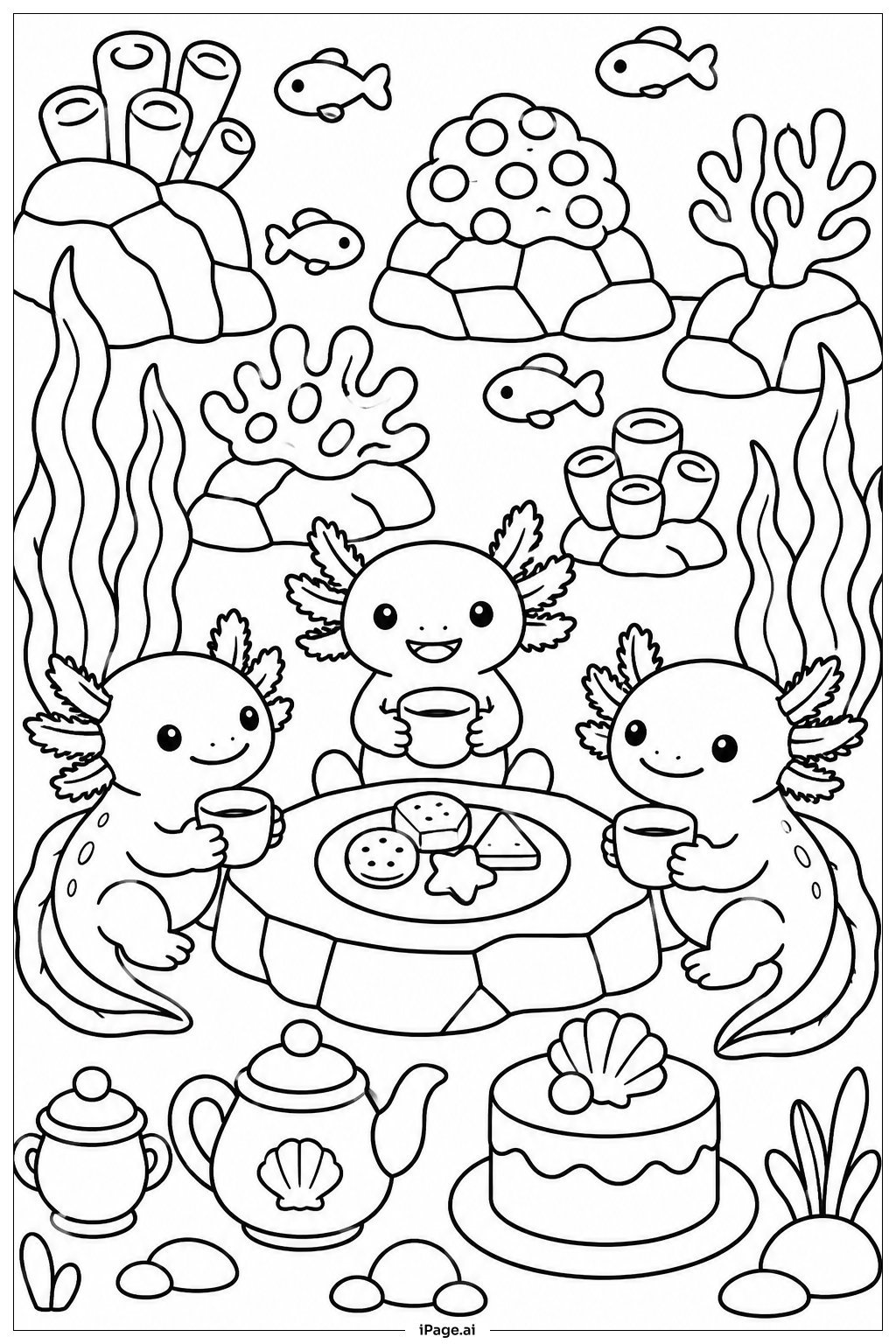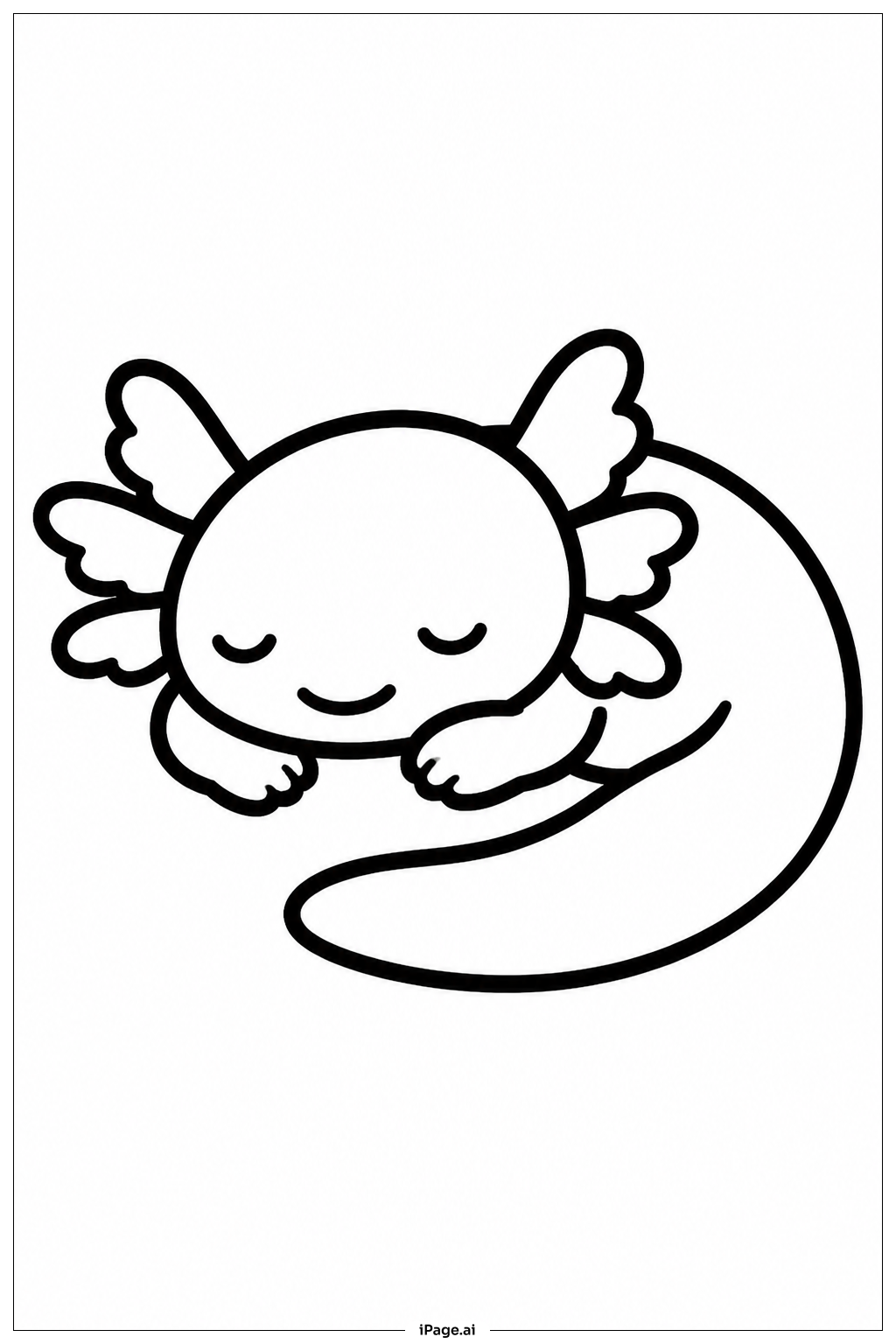
Coloring tips: How to color Sleeping Axolotl coloring page well?
Start with the axolotl's body using soft, light pink or peachy tones to give it that classic axolotl look. You can also try lavender or pale yellow for a more magical feel. Use a slightly darker shade of the same color on the belly and around the edges to add depth. For the feathery gills, use a bright pink or coral red to make them pop. The closed eyes can be colored with a simple dark brown or black outline. The water plants around the scene look great in soft greens, and the bubbles can stay white or be given a light blue tint. Keep the background a calm, cool blue or teal to create a peaceful underwater feeling. Don't be afraid to blend colors gently to make the axolotl look soft and fluffy. The overall mood of this image is calm and dreamy, so sticking with soft, pastel colors will bring out its cozy, sleepy charm. Have fun and let your imagination guide your color choices!
Coloring challenges: Which parts are difficult to color and need attention for Sleeping Axolotl coloring page?
• Feathery Gill Details: The axolotl's external gills are made up of many thin, branching fronds. Coloring these tiny structures requires a steady hand and a fine-tipped pencil or marker. It can be tricky to stay within the small spaces without smudging or going over the lines. Take your time and work from the base of each gill outward for the best results.
• Smooth Body Shading: The axolotl's round, chubby body looks best with smooth, even color blending. Achieving a gradual transition from a lighter center to slightly darker edges can be challenging, especially for younger colorists. Using circular strokes and layering colors slowly will help create a soft, three-dimensional look.
• Small Facial Features: The sleeping face has tiny closed eyes and a small smile. These details are very small and close together, making them easy to color outside the lines. Using a very sharp pencil tip or a fine-liner pen will help you stay precise and keep the expression looking cute and clear.
• Water Plants and Background: The surrounding plants and bubbles have curved, overlapping shapes that can get confusing when deciding which areas belong together. Planning your color zones before you start will prevent muddy or unintended color mixing in these sections.
• Tail and Body Overlap: The tail curves around and overlaps the body, creating a layered effect. Knowing where the tail ends and the body begins can be difficult to judge. Using two slightly different shades of the same color for each area will help separate them clearly and give the image a polished, finished appearance.
Benefits of coloring books: Advantages of drawing Sleeping Axolotl coloring page
Coloring this Sleeping Axolotl page brings many wonderful benefits for kids and anyone who loves to color. First, it helps improve focus and concentration. Staying inside the lines and choosing the right colors trains the brain to pay close attention to details. This is a great skill that helps in school and everyday life. Second, it encourages creativity. There is no single right way to color an axolotl, so kids get to make their own choices and express themselves freely. Third, the calming, sleepy theme of the image helps reduce stress and anxiety. The gentle shapes and peaceful mood make coloring feel relaxing and enjoyable. Fourth, working through the detailed gills and small facial features helps develop fine motor skills and hand-eye coordination, which are important for writing and drawing. Fifth, learning about the axolotl through coloring sparks curiosity about nature and wildlife. Kids may want to find out more about this amazing real-life creature after coloring it. Overall, this page is a fun, creative, and educational activity that brings joy to colorists of all ages.