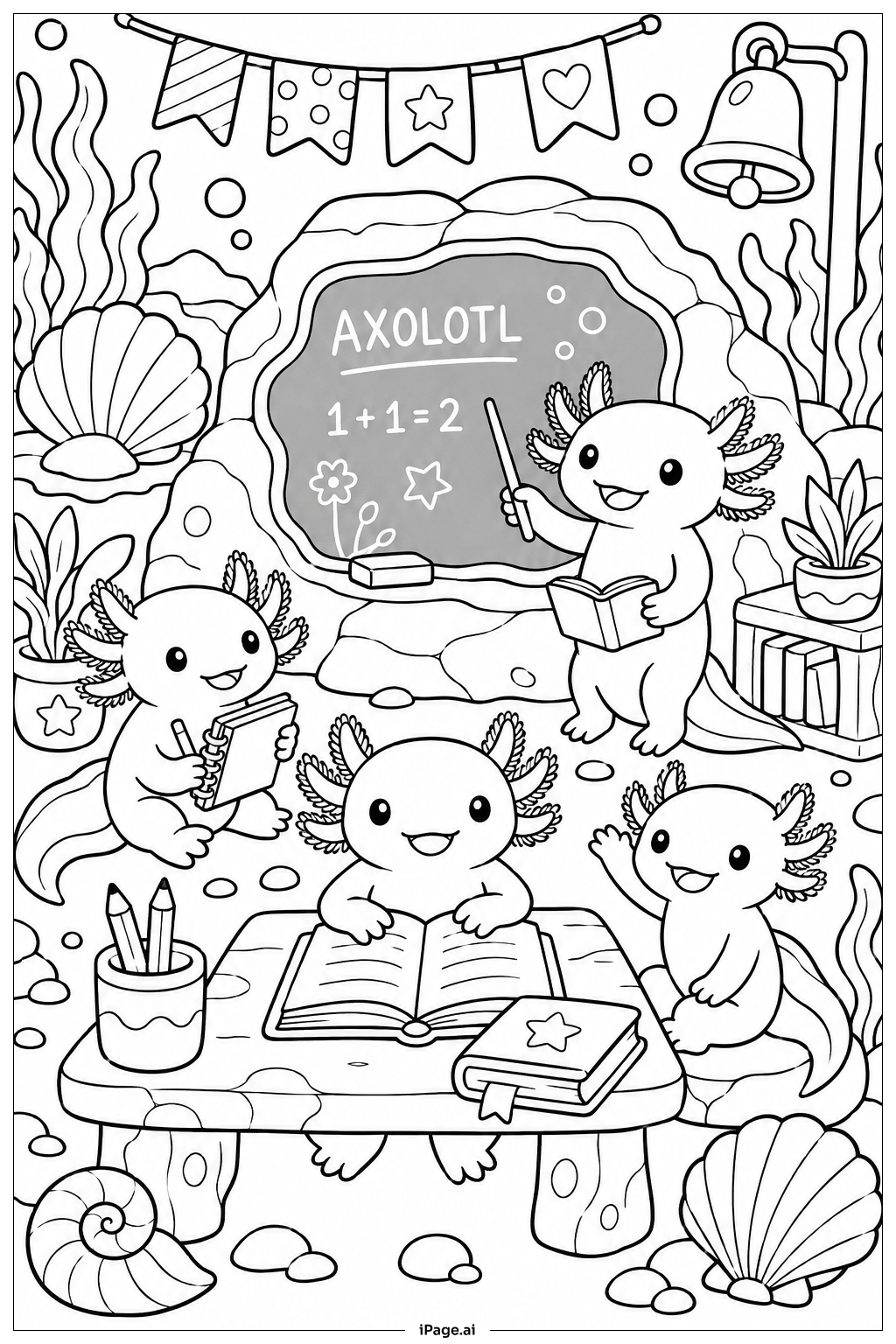
Coloring tips: How to color Axolotl School Group coloring page well?
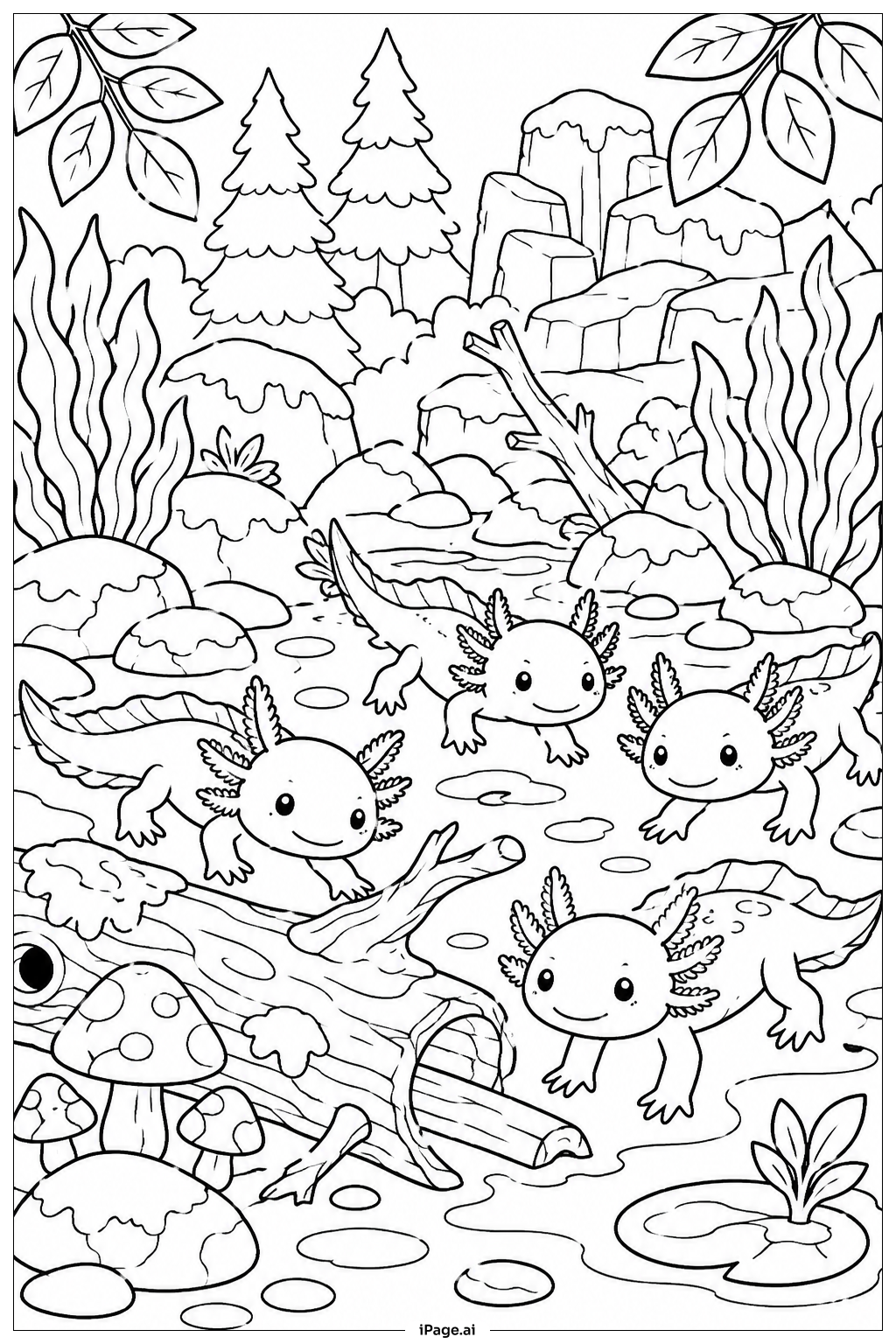
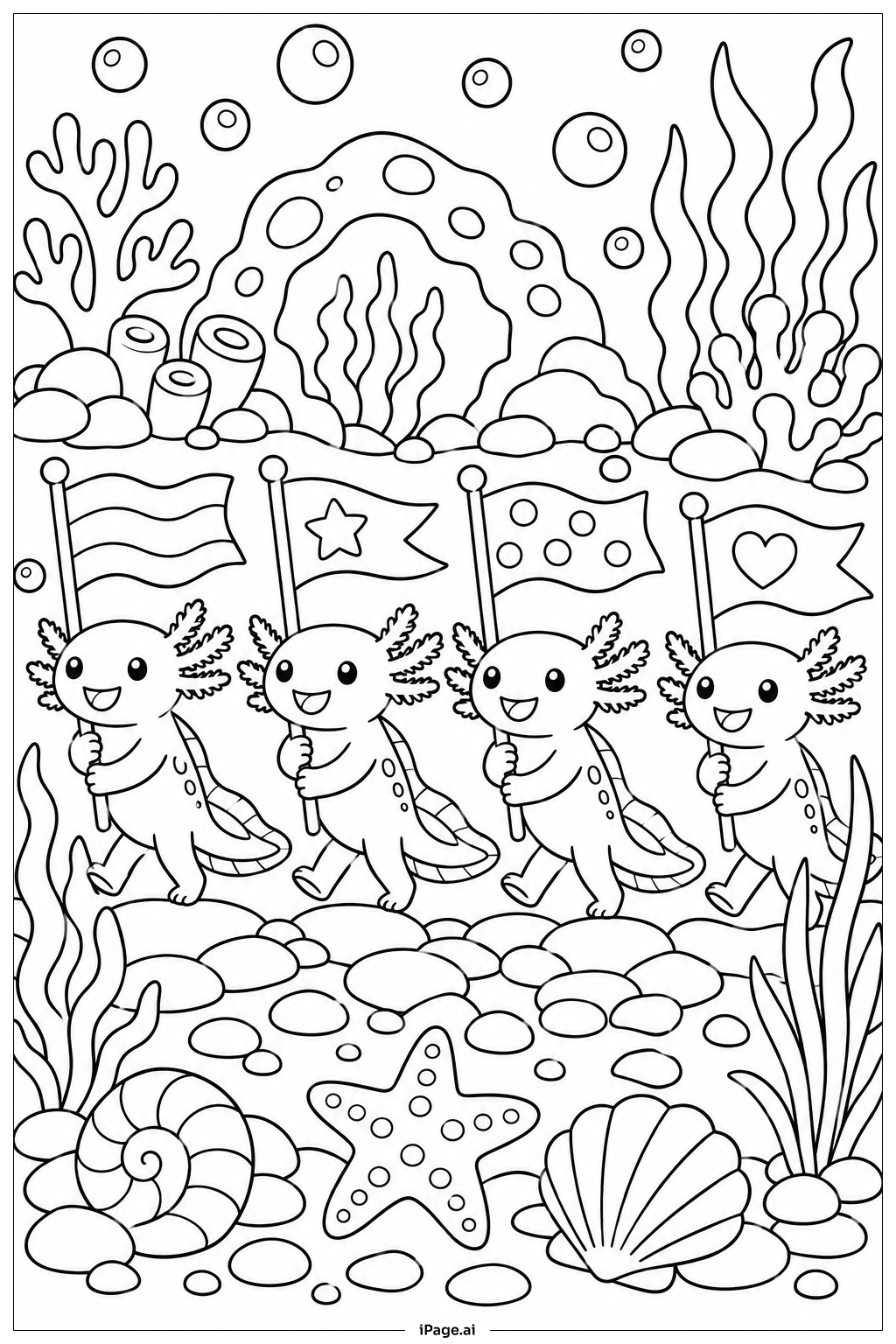
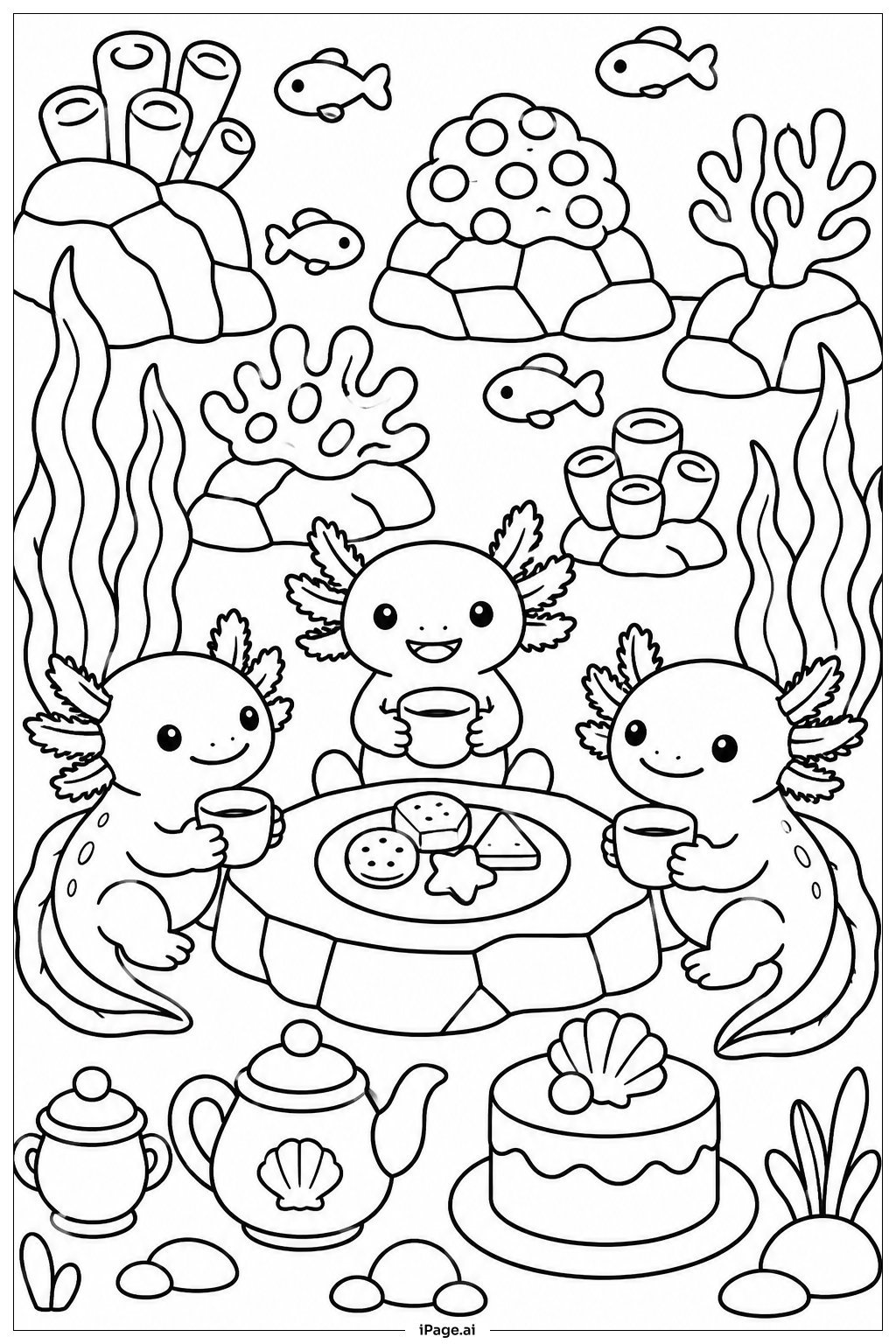
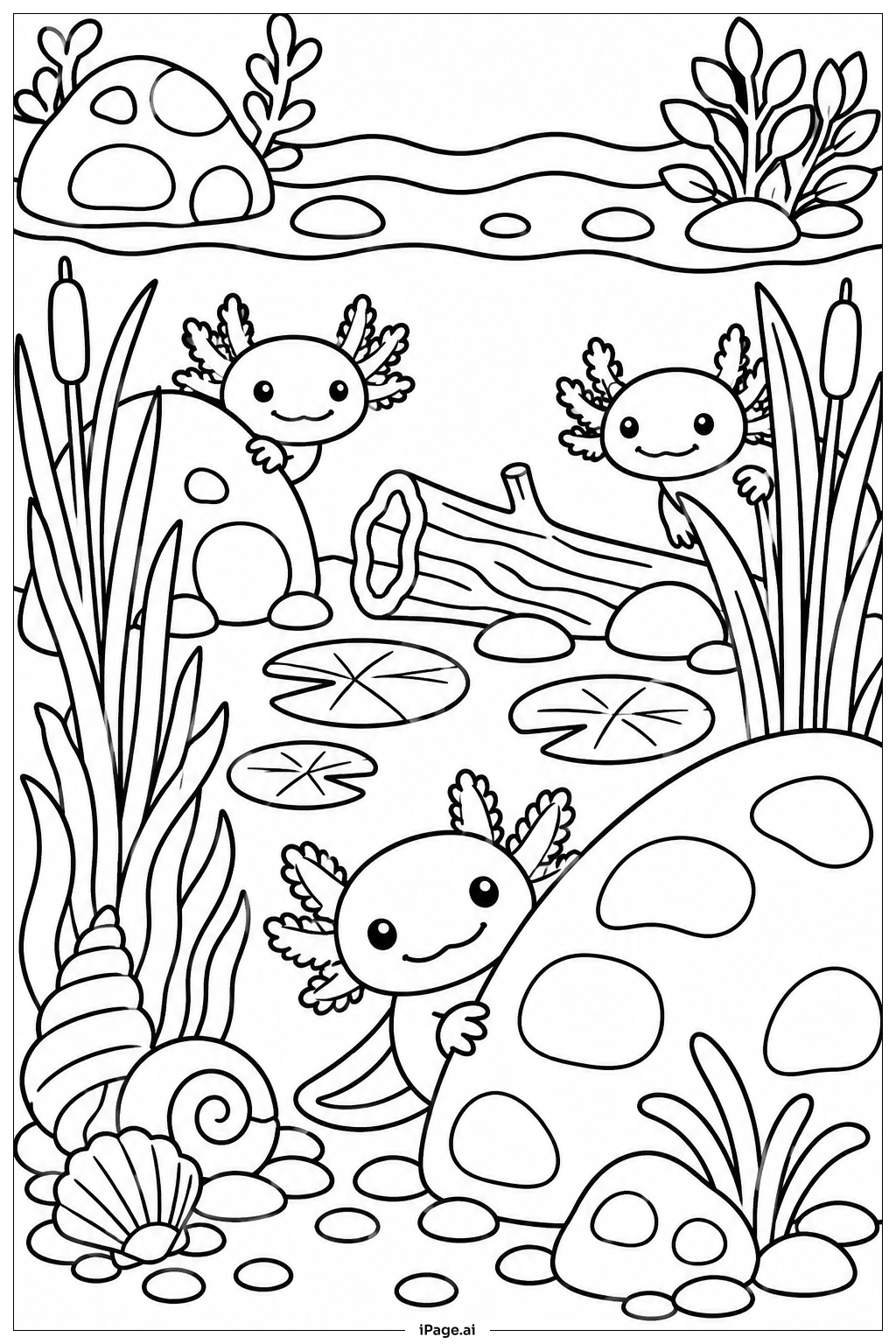
Start with the axolotls' bodies. Real axolotls come in many colors — pink, golden, white, or dark brown. Pick one color per axolotl to make each one unique. Use a light peach or soft pink for the skin, then add a slightly darker shade along the edges to create depth. Color the feathery gills in a bright pink or red to make them pop. Use warm browns or greens for the backpacks and school accessories. For the background, try soft blues and blue-greens to give the scene an underwater feel. Add light yellow or white bubbles throughout. Use leafy greens for aquatic plants. Keep colors bright and cheerful to match the playful mood of the scene. You can mix warm and cool tones across different axolotls so the whole group looks colorful and lively. Don't be afraid to get creative — there's no wrong way to color these cute little creatures!
Coloring challenges: Which parts are difficult to color and need attention for Axolotl School Group coloring page?
• Feathery Gill Details: The branching gills on each axolotl are delicate and closely spaced. Coloring them neatly without going outside the lines requires a fine-tipped colored pencil or marker. Take your time and work from the base of each gill outward to keep the strokes clean and consistent.
• Distinguishing Each Axolotl: Because there are multiple axolotls grouped closely together, it can be tricky to color each one separately without the colors blending into each other. Use clearly different tones for neighboring axolotls so each one stands out on its own.
• Small Accessories and Props: Items like tiny backpacks, pencils, or books are small and packed with fine lines. These areas need careful attention and a very sharp pencil tip to fill in without smudging or overlapping into adjacent sections.
• Background Depth and Layering: Creating an underwater atmosphere means layering different shades of blue and green in the background while keeping the foreground axolotls visually clear and bright. Balancing the background and foreground so neither overpowers the other takes a bit of planning before you start coloring.
• Facial Expressions: Each axolotl has tiny round eyes and a small smile. These features are very small but are key to bringing the characters to life. Use a fine-tipped dark marker or pencil to carefully trace and fill these areas without smearing or covering too much of the face.
Benefits of coloring books: Advantages of drawing Axolotl School Group coloring page
Coloring this Axolotl School Group page brings a wonderful mix of fun and learning for kids and beginners alike. Working through the many small details — like the feathery gills and tiny accessories — helps build fine motor skills and strengthens hand control. Choosing colors for each axolotl encourages creative thinking and color awareness, since kids can mix realistic tones or go completely imaginative with bright fantasy colors. The group setting also makes the page feel like a story, which sparks imagination and storytelling as children decide who each axolotl is and what they are doing in class. Spending focused time coloring promotes patience and concentration, which are skills that carry over into school and daily life. The friendly and playful characters make the experience enjoyable and stress-free, giving kids a sense of calm and accomplishment when they finish. For older children and adults, the layered details offer a satisfying challenge that rewards careful, mindful coloring. Overall, this page is a great way to combine artistic expression with quiet, focused play.