Coloring tips: How to color Baby Axolotl coloring page well?
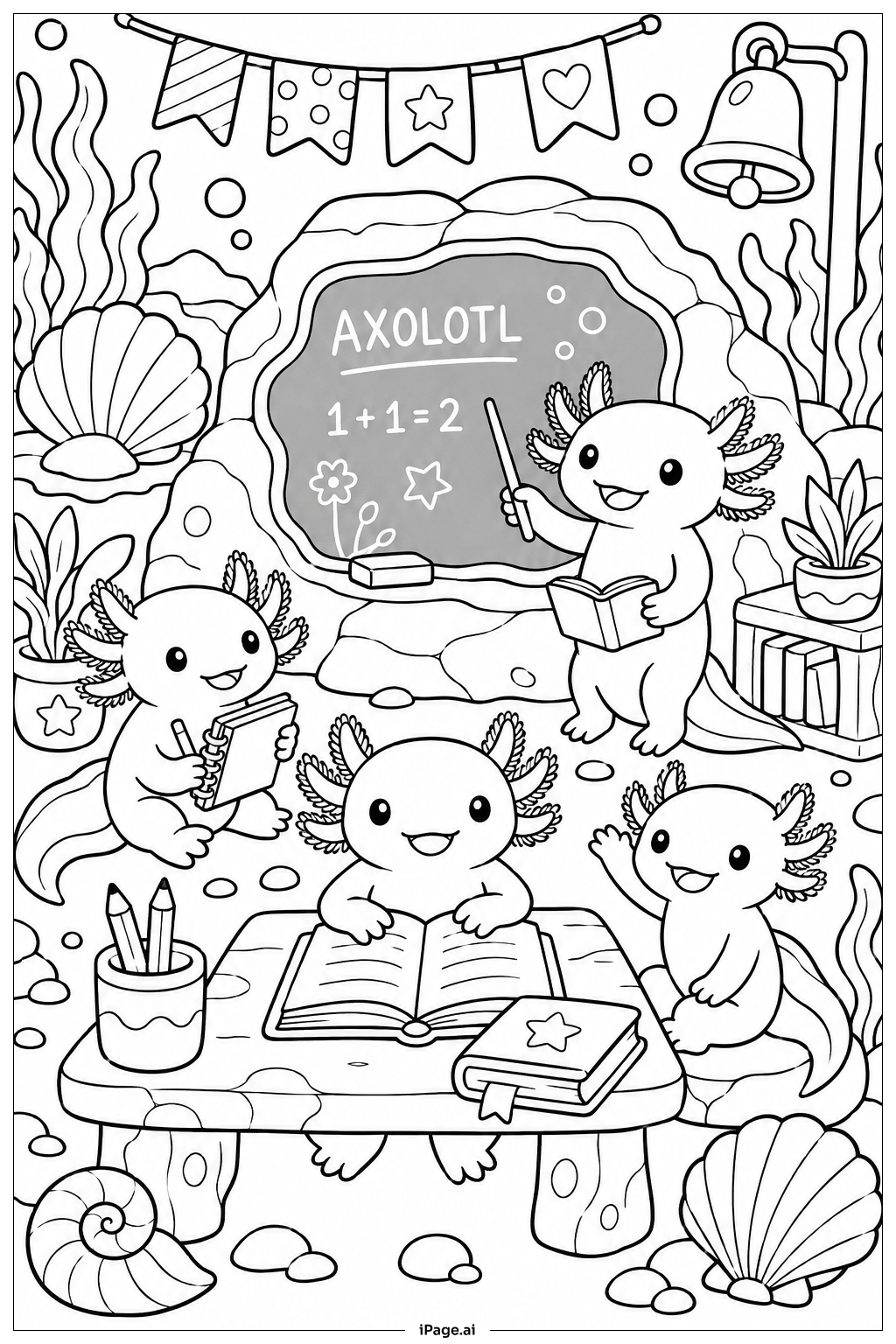
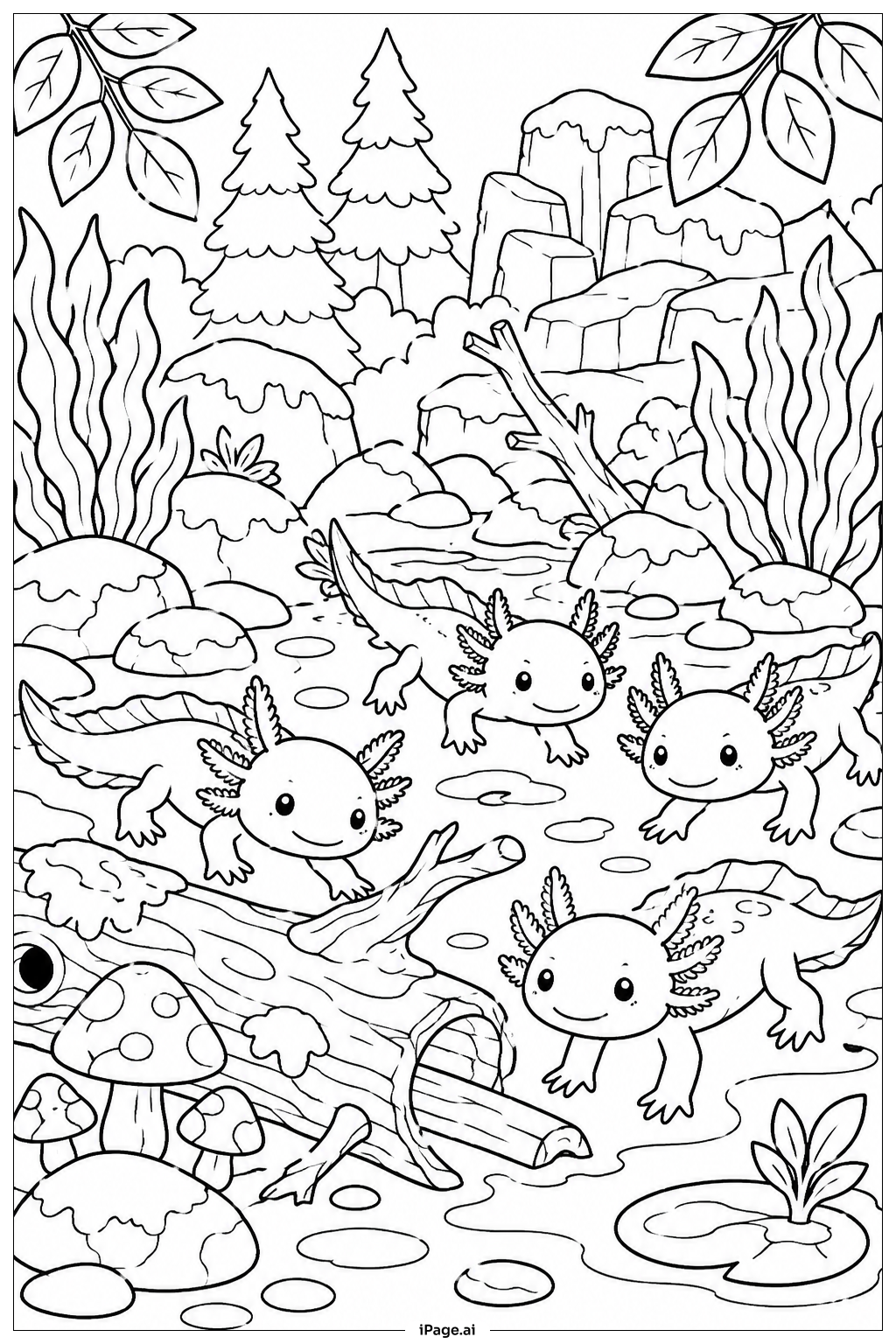
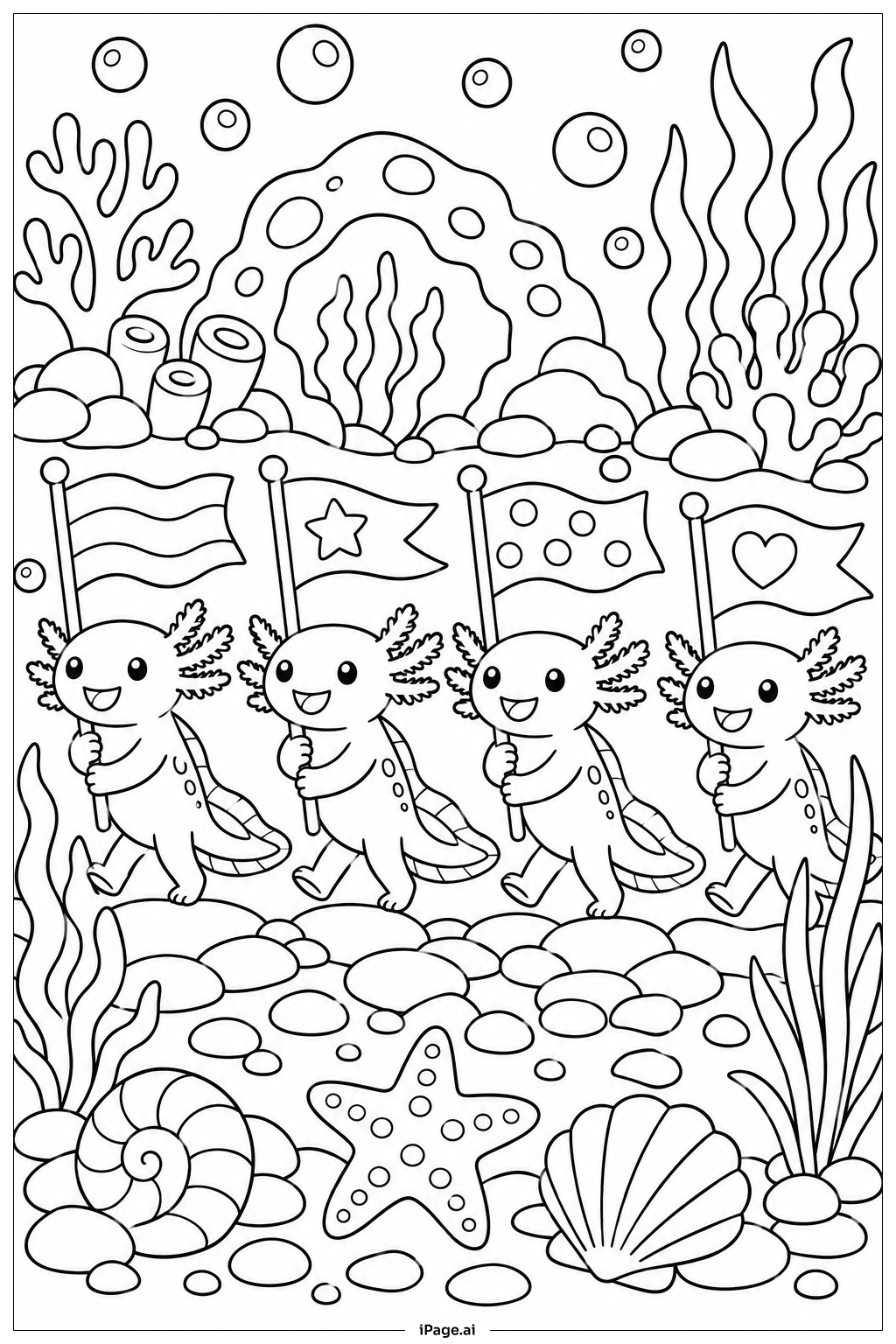
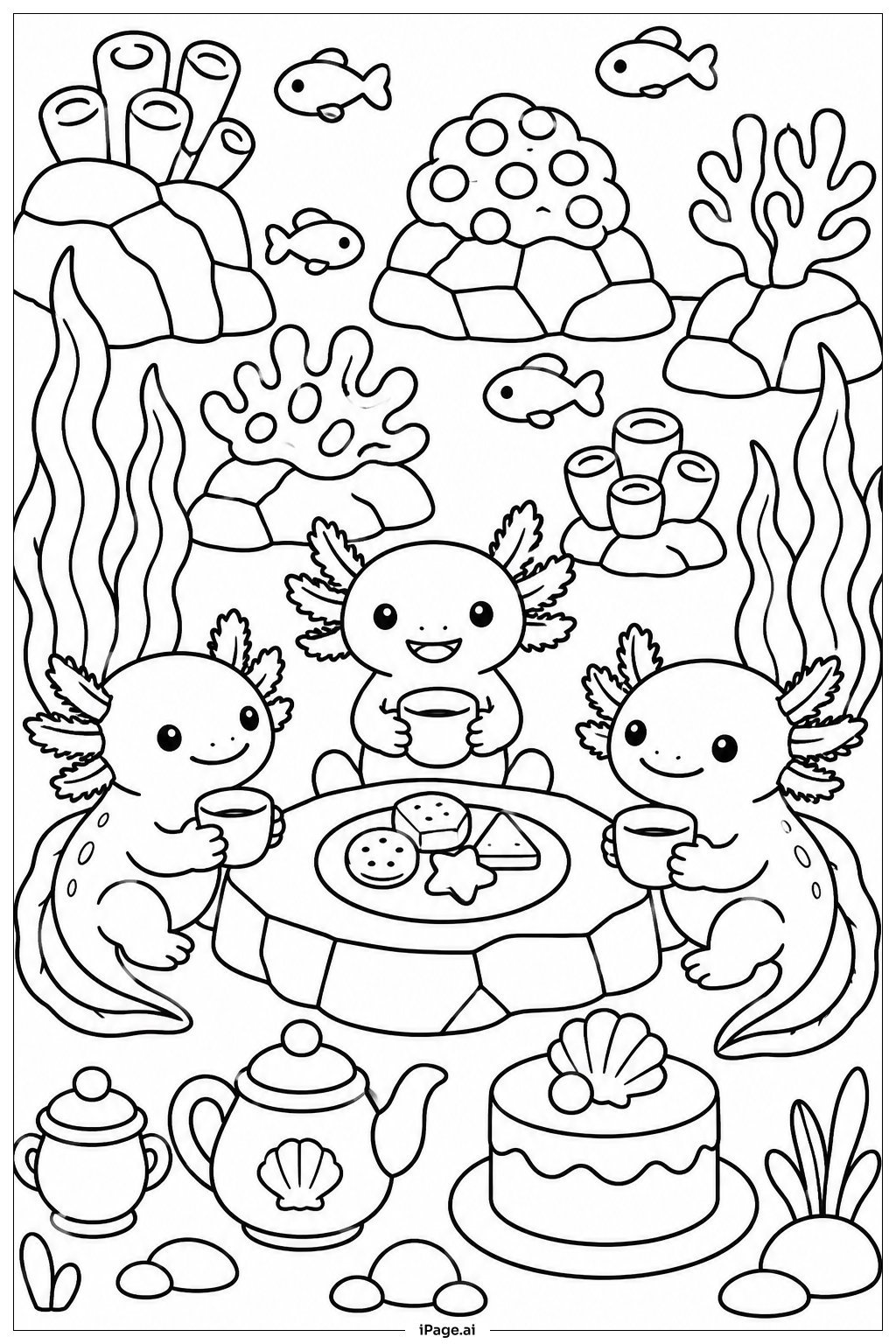
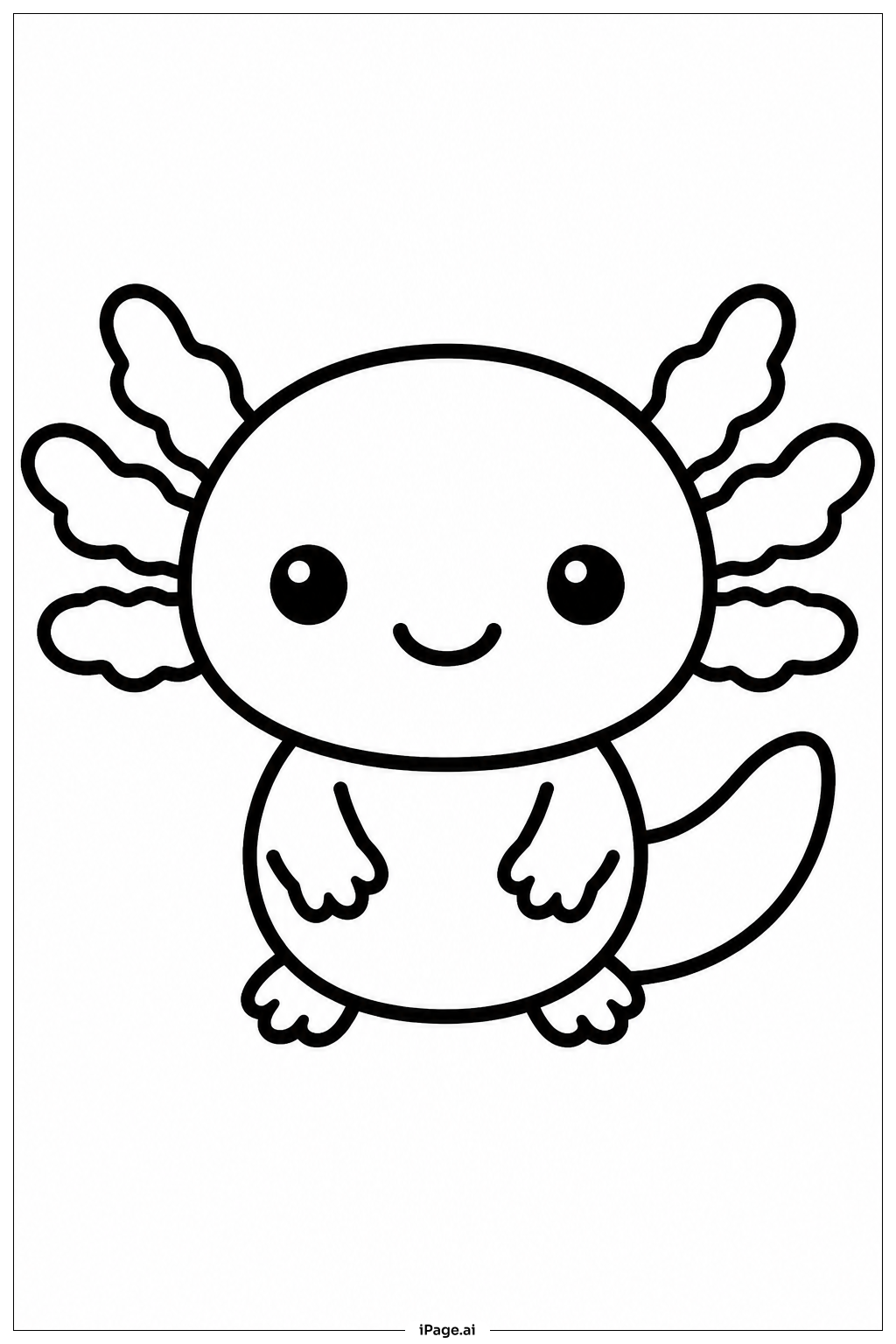
For this Baby Axolotl, try soft pastel colors to bring out its delicate and friendly look. Use light pink or pale peach for the body, as axolotls often have soft tones. Color the external gills in a bright pink or reddish shade to show their feathery texture. For the water plants, choose different greens to create a lively background, like light green, lime, or even a touch of blue-green. The stones can be grays or browns with some hints of highlights to show their smooth surface. You might also want to add light blue or turquoise shades in the water areas to make the scene feel fresh and natural.
Coloring challenges: Which parts are difficult to color and need attention for Baby Axolotl coloring page?
• Fine Details of Gills: The baby axolotl’s external gills have many small branch-like extensions that can be tricky to color neatly. Staying within these tiny spaces requires patience and careful strokes. • Smooth Gradients: To show the soft, almost translucent skin of the axolotl, blending pastel shades smoothly is important but can be challenging for beginners. • Small Feet and Toes: The tiny webbed fingers and toes need gentle, precise coloring to avoid going outside the lines, which can be difficult with traditional crayons or thick markers. • Overlapping Elements: The placement of plants and stones partially overlapping the axolotl may cause some confusion on where to start coloring and how to shade the layers correctly. • Limited Contrast Areas: Because the axolotl’s colors are light and gentle, it may be hard to create enough contrast to make it stand out without overpowering the subtle look.
Benefits of coloring books: Advantages of drawing Baby Axolotl coloring page
Coloring this Baby Axolotl image helps improve fine motor skills as children carefully fill in small and delicate areas like the external gills and tiny toes. It encourages attention to detail and patience, especially when trying to achieve smooth color blending and soft tones. The theme of a gentle water creature fosters interest in nature and aquatic life, inspiring creativity by choosing natural and imaginative color combinations. Moreover, completing the image can boost confidence and provide a relaxing activity that stimulates both focus and artistic expression, making it a fun and educational coloring experience.