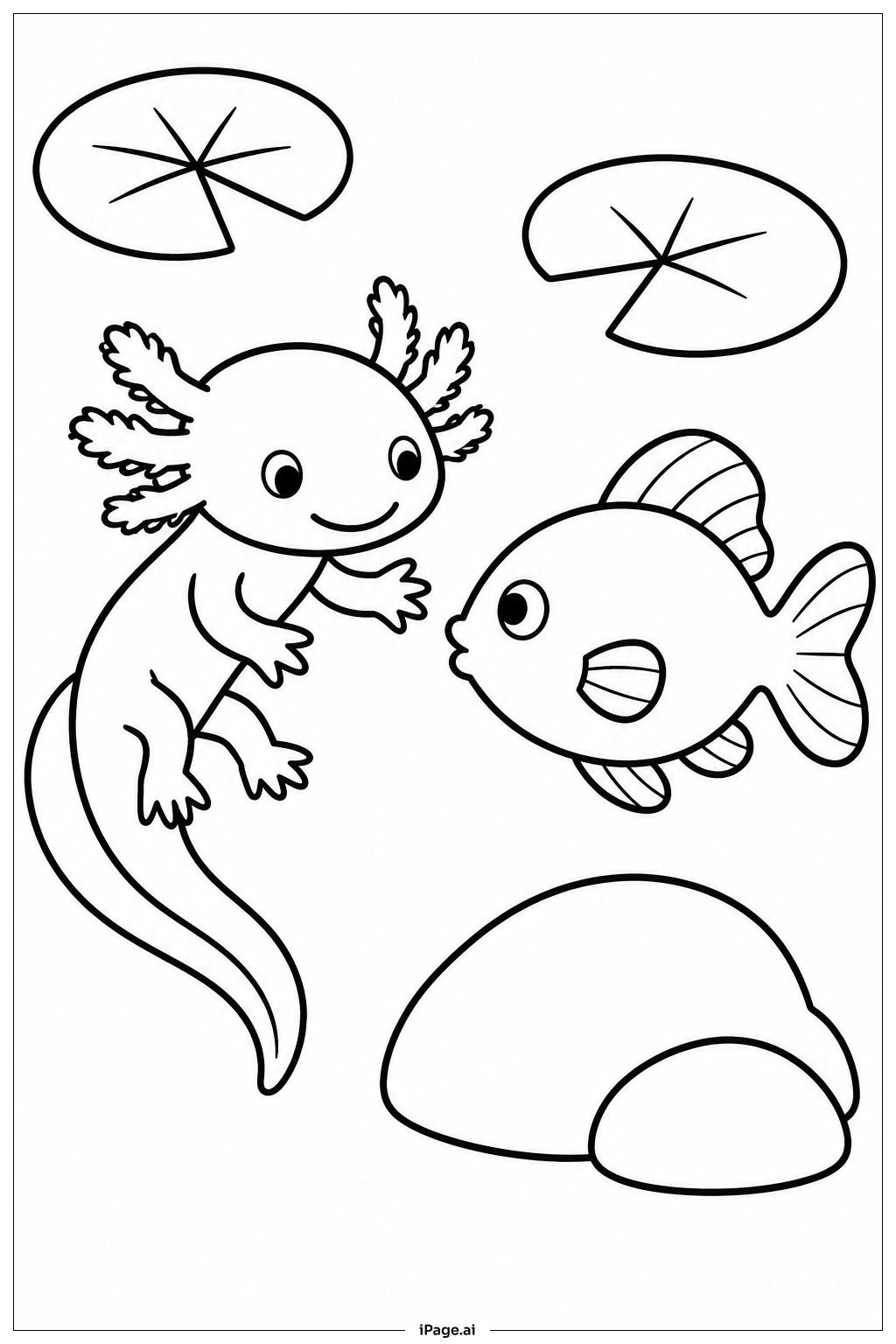
Coloring tips: How to color Axolotl With Fish coloring page well?
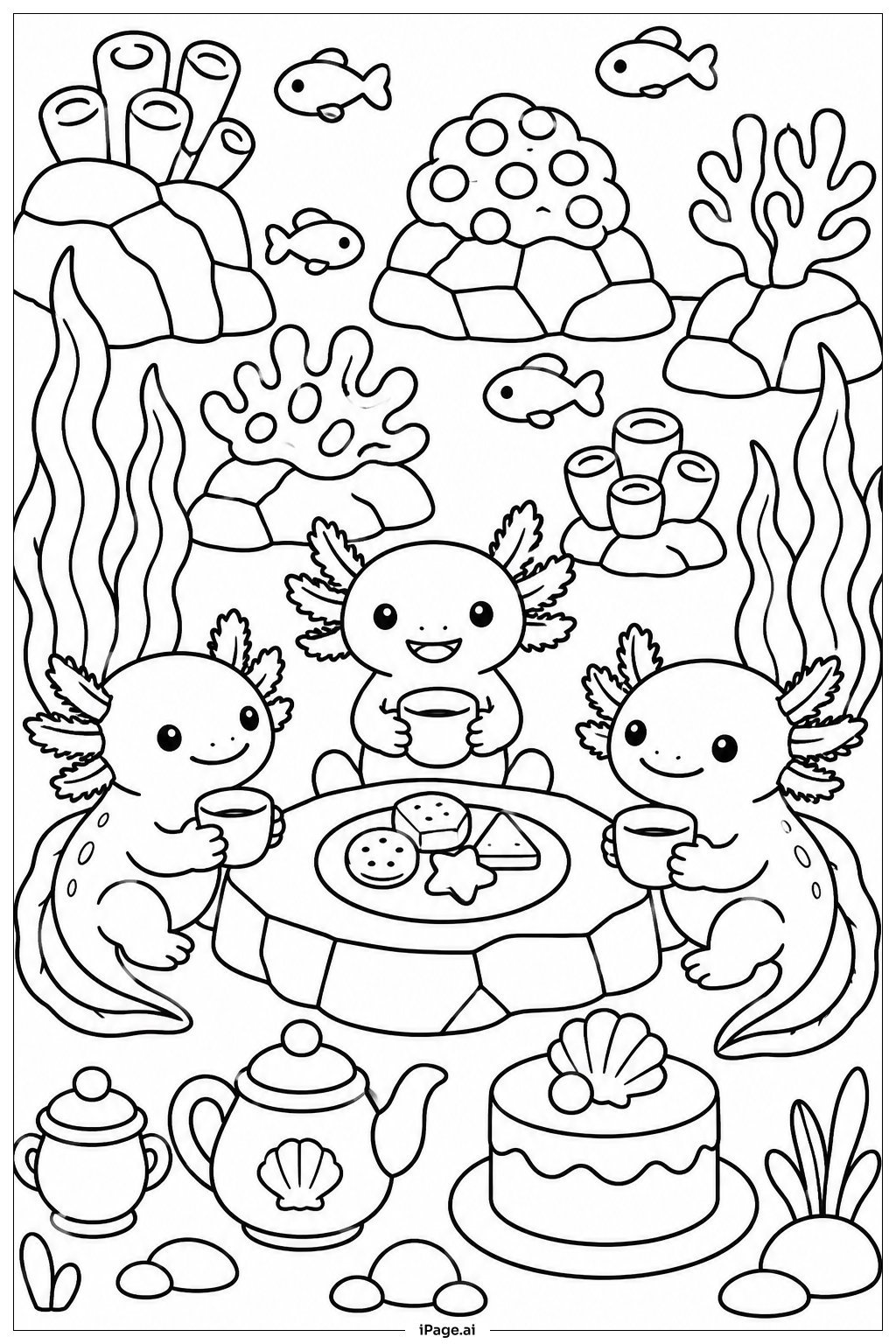
Start with the axolotl's body using soft pink or light peachy tones, as real axolotls are often pale pink or white. Use a slightly darker pink or lavender for the feathery gill plumes to make them stand out. Add gentle shading along the belly and tail to give the body a rounded, three-dimensional feel. Color the fish in bright, cheerful shades like orange, yellow, blue, or red to create a fun contrast with the axolotl. Use different colors for each fish to make the scene lively and colorful. For the water background, try soft blue or teal tones. Color the water plants in shades of green, and use light blue or white for the bubbles. Keep the overall palette fresh and aquatic to capture the feel of an underwater world. This image is great for experimenting with color blending and creative choices.
Coloring challenges: Which parts are difficult to color and need attention for Axolotl With Fish coloring page?
• Axolotl Gill Plumes: The feathery gill plumes branching out from the axolotl's head are made up of many thin, delicate lines. Coloring each individual strand neatly without smudging or overlapping onto the surrounding area requires a fine-tipped tool and a steady hand. This is one of the trickiest parts of the whole image.
• Fish Scale and Fin Details: Each fish has small, curved scale patterns and fine fin lines. These tiny repeating shapes are close together and can be difficult to fill in without going outside the lines. Using a sharp colored pencil or a thin marker will help keep these details clean and precise.
• Water Background Elements: The flowing water lines, scattered bubbles, and aquatic plants fill much of the background. Deciding how to color these without making the scene feel too busy or muddy takes some planning. Choosing soft, consistent blue or teal tones and leaving bubble outlines uncolored or lightly shaded can help the background feel open and natural.
• Keeping the Axolotl and Fish Visually Separate: Since the axolotl and fish are swimming close together, it can be easy for their colors to blend visually. Choosing clearly different color families for the axolotl and the fish helps each character stand out and keeps the composition easy to read at a glance.
• Smooth Blending on the Axolotl's Body: The axolotl has a large, smooth body that benefits from gentle color gradients. Achieving an even blend from light to slightly darker tones without streaks or patches can be challenging, especially with crayons or markers. Working in light, overlapping layers helps build a soft, natural look.
Benefits of coloring books: Advantages of drawing Axolotl With Fish coloring page
Coloring this Axolotl With Fish page offers a wonderful mix of fun and learning for kids of all ages. First, it helps children develop fine motor skills. Carefully filling in the small gill plumes, fish scales, and water details trains hand control and pencil grip in a relaxed, enjoyable way. Second, it sparks curiosity about nature. The axolotl is a real and fascinating animal, and coloring it may inspire children to learn more about aquatic life, ecosystems, and unique creatures from around the world. Third, this image encourages creative thinking. Choosing colors for the fish, plants, and water background gives kids the freedom to express their own style and imagination without a single wrong answer. Fourth, the focused nature of coloring promotes calm and concentration. Sitting quietly to complete a detailed underwater scene helps children build patience and the ability to stay on task. Finally, finishing the page gives a real sense of accomplishment. Seeing a completed, colorful piece of artwork boosts self-confidence and pride in one's own work. This page is a joyful, enriching activity for both Boys and Girls who love animals and adventure.