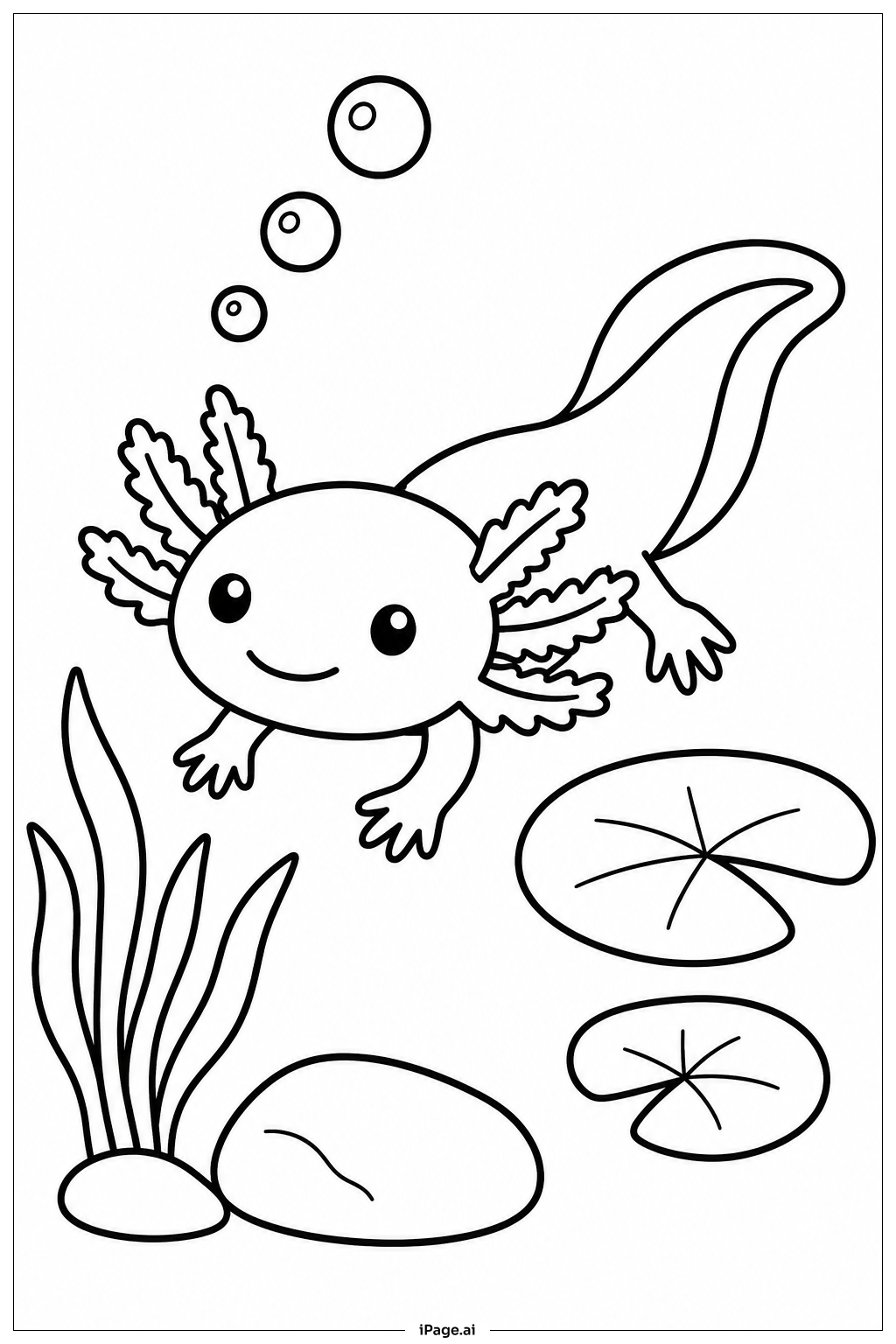
Coloring tips: How to color Axolotl With Bubble Trail coloring page well?
Try using soft pastel colors like light pinks, pale blues, and creamy whites for the Axolotl’s body to capture its gentle and unique look. For the feathery gills, bright colors like coral orange or light red can create a lovely contrast. The bubbles can be shaded with light blue or silver tones to make them appear shiny and transparent. Use shades of blue and green for the water background to make the Axolotl stand out. You can also add sparkles or highlights on the bubbles to give them a magical touch. Feel free to mix soft and bright colors to make this underwater scene lively and fun.
Coloring challenges: Which parts are difficult to color and need attention for Axolotl With Bubble Trail coloring page?
• Fine Details: The delicate gills and small fingers of the Axolotl require careful coloring within tight spaces. Staying inside these lines can be tricky for younger children. • Bubble Transparency: Coloring the bubbles to look transparent and shiny is a challenge. It involves using light shading and leaving some white spaces to create a realistic glass-like effect. • Smooth Shading: The Axolotl's smooth skin benefits from gentle color transitions rather than solid blocks of color, which can be hard to achieve with crayons or markers. • Movement in Water: Conveying the subtle flow of water currents around the Axolotl needs soft and flowing strokes, which require some control and attention. • Layering Colors: Combining different shades for the bubbles and water to create depth involves layering techniques that can be challenging for beginners but rewarding once mastered.
Benefits of coloring books: Advantages of drawing Axolotl With Bubble Trail coloring page
Coloring this Axolotl With Bubble Trail helps improve fine motor skills by practicing control within small areas like gills and fingers. It encourages creativity through color choices for both the creature and its underwater world. Coloring the bubbles and water teaches shading and blending techniques that build artistic confidence. This image also promotes focus and patience, as capturing the movement and details requires careful work. Lastly, it sparks curiosity about unique animals and their habitats, offering an educational as well as enjoyable experience for children and young artists.