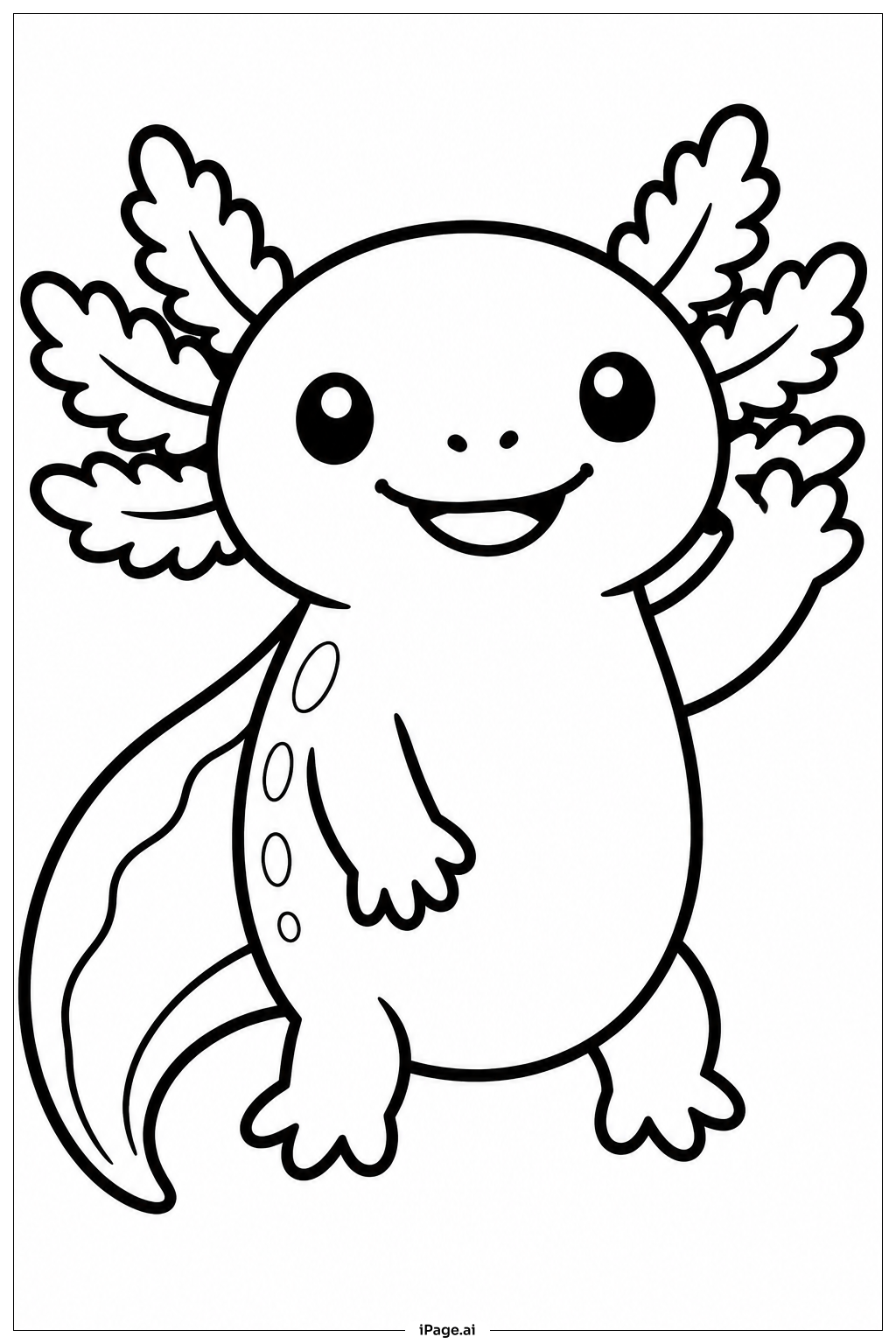
Coloring tips: How to color Axolotl Waving coloring page well?
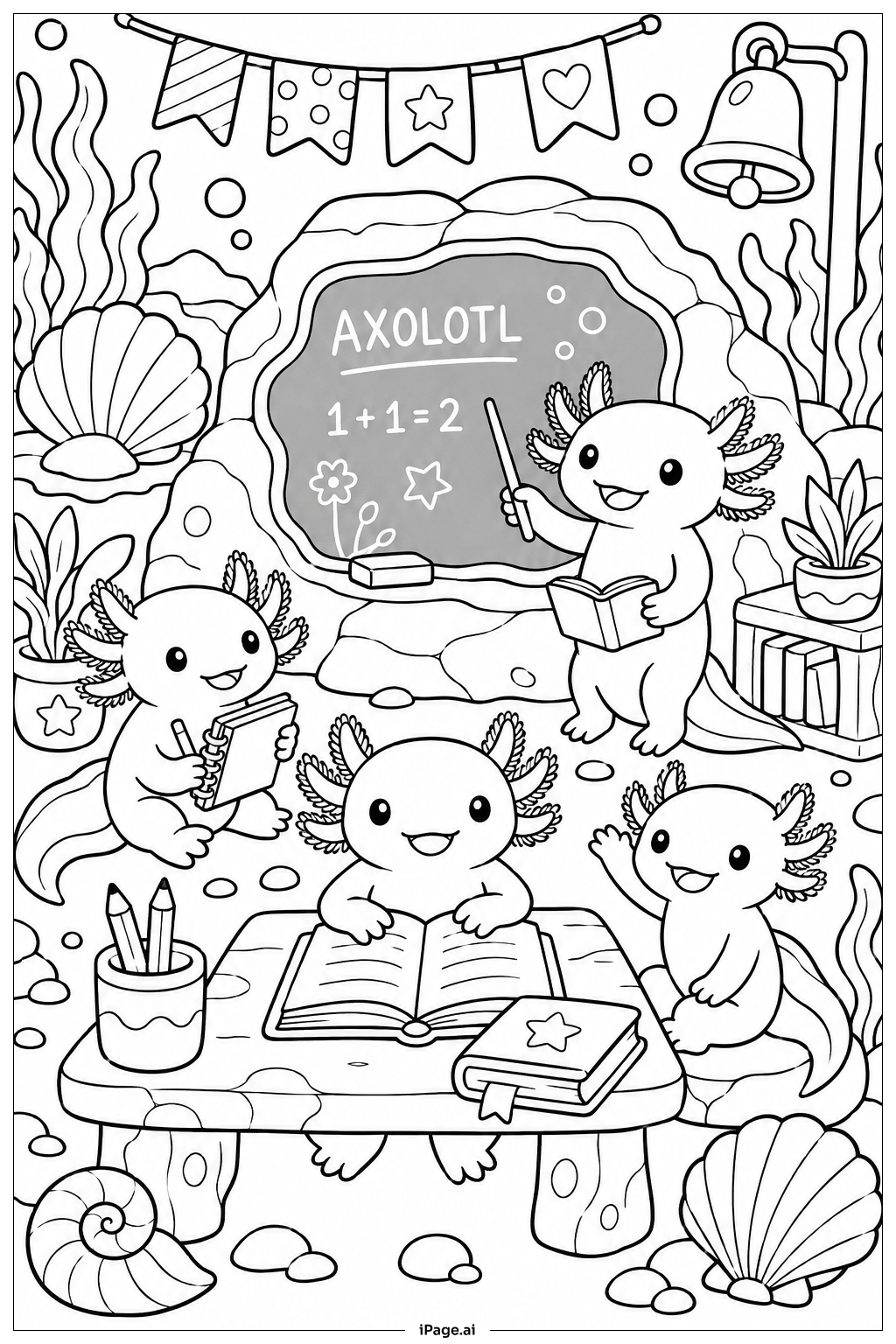
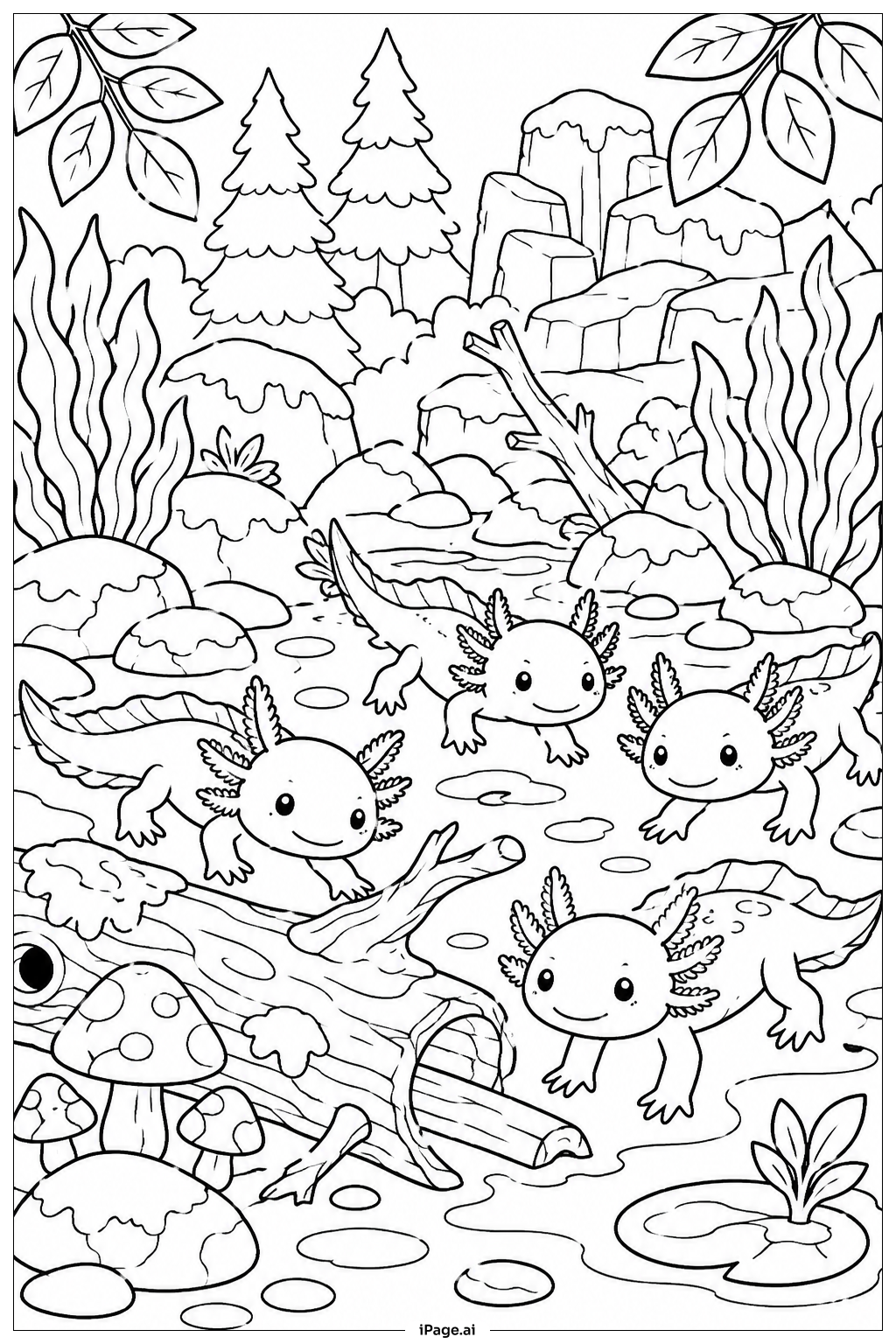
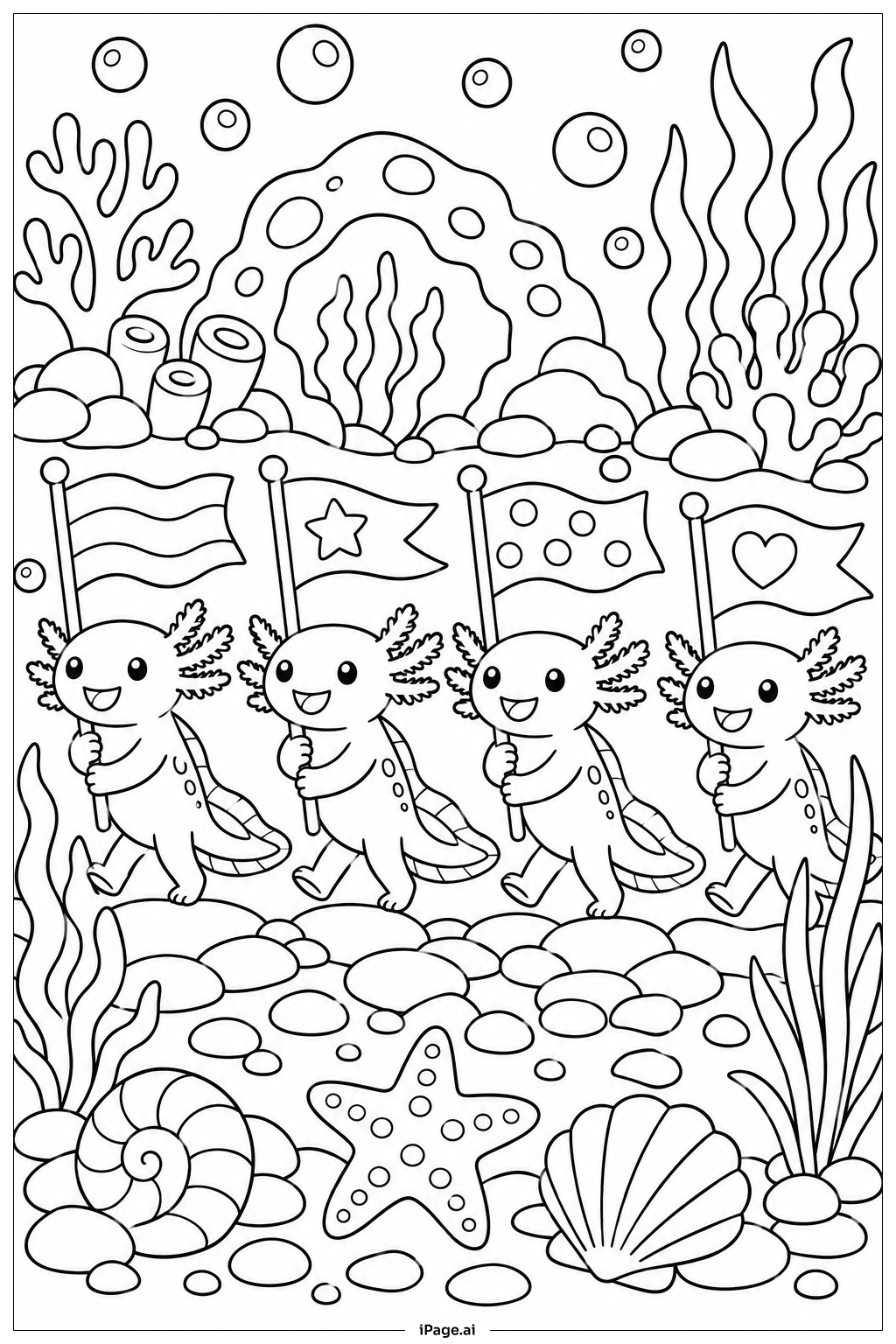
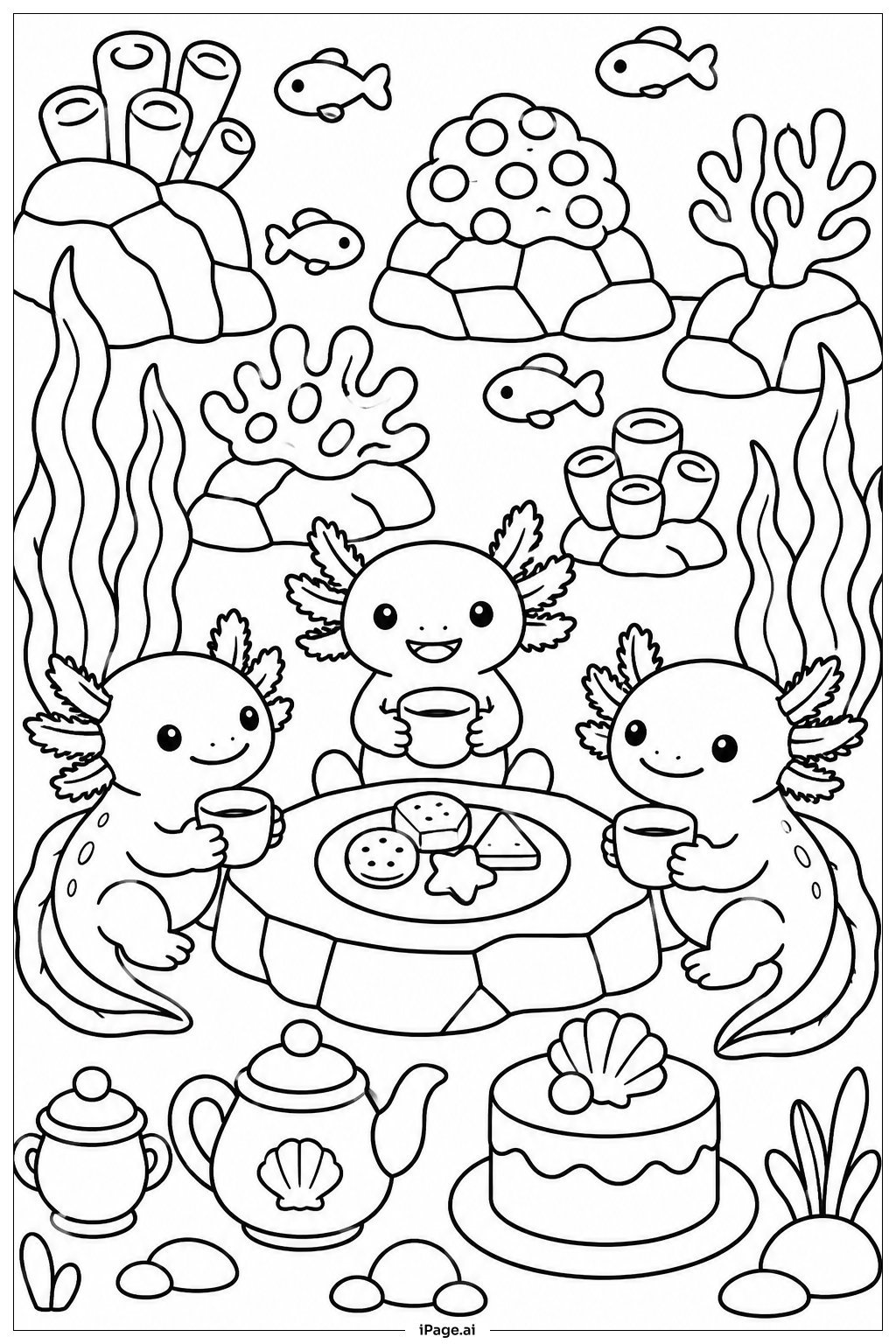
To bring this Axolotl to life, try using soft colors like pale pinks, light purples, or gentle peach tones for its skin. The feathery gills can be colored in shades of rosy pink or a bright coral to make them stand out. You can add some light blue or green accents to the background to suggest a watery environment where Axolotls live. Feel free to use bright, cheerful colors for the water plants or rocks around it if you want to add more fun details. Using varied tones will help highlight its waving arm and expression, making the Axolotl look friendlier and more lively.
Coloring challenges: Which parts are difficult to color and need attention for Axolotl Waving coloring page?
• Fine Details: The delicate external gills on the Axolotl’s head have many thin, feathery parts that require careful coloring to avoid overlapping lines and maintain their distinct shapes.
• Small Fingers: The waving arm has tiny fingers that need attention to detail; coloring inside these small spaces can be tricky for younger children.
• Smooth Gradients: Achieving smooth transitions on the Axolotl’s skin, especially if shading for a 3D effect, can be a challenge as it requires even coloring and blending skills.
• Background Simplification: Since the background is minimal, balancing colors without overwhelming the Axolotl itself might take some practice to keep the focus clear.
• Maintaining Clean Lines: Because the Axolotl’s outline is intricate in parts, staying within the lines to keep the image crisp may be difficult for beginning colorists.
Benefits of coloring books: Advantages of drawing Axolotl Waving coloring page
Coloring this Axolotl helps improve fine motor skills as children carefully fill in small and detailed areas like the tiny fingers and feathery gills. It encourages concentration and patience, especially with the complex shapes. The image also sparks creativity by giving room to choose colors for a friendly underwater creature and its environment. Additionally, this coloring activity can teach kids about unique amphibians, fostering curiosity about nature. Overall, it’s a fun way to develop hand-eye coordination and artistic confidence while enjoying the charm of a waving Axolotl.