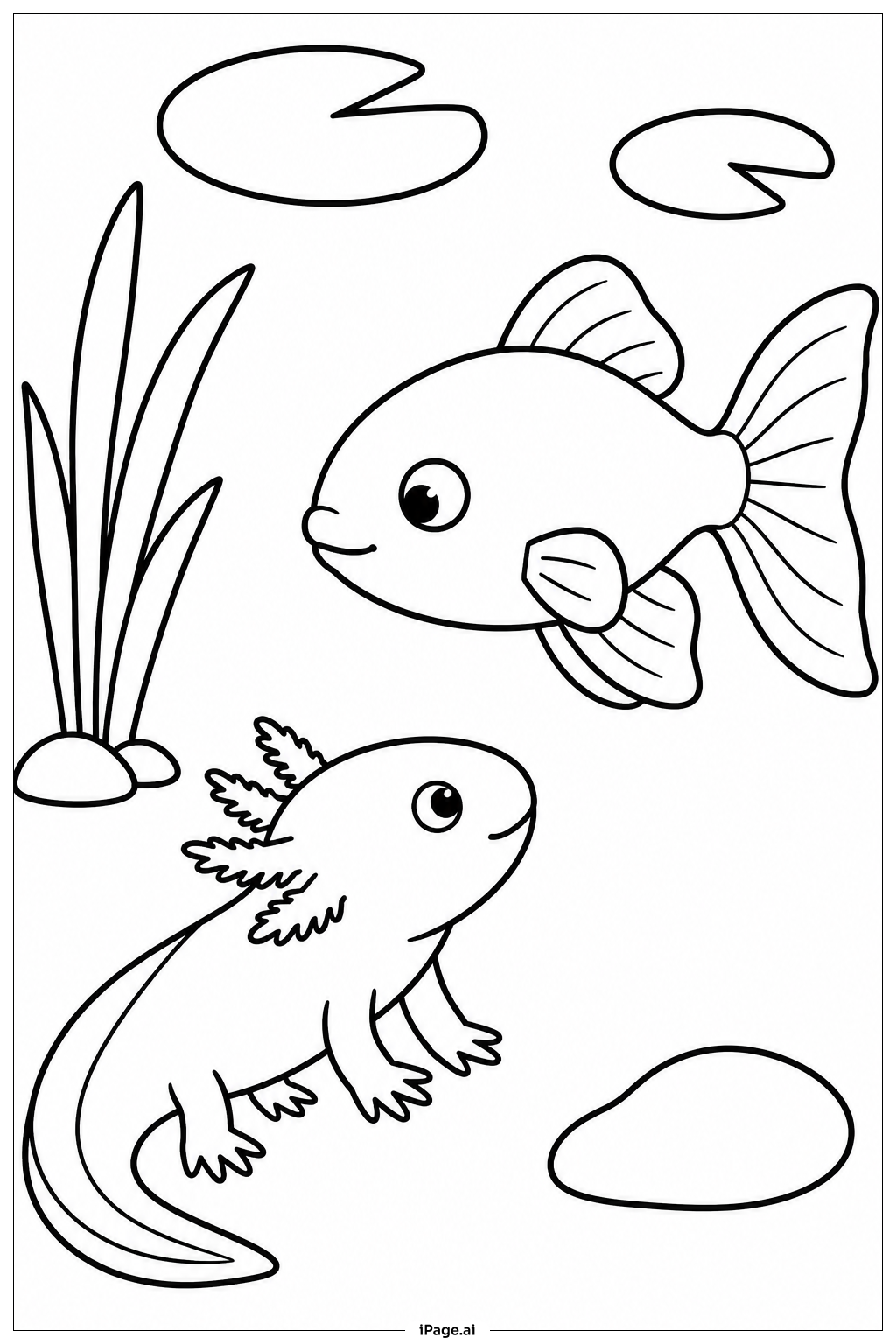
Coloring tips: How to color Axolotl Watching Fish coloring page well?
Use soft pastel colors like light pink, peach, or cream for the Axolotl’s smooth skin to highlight its gentle nature. The feathery gills can be colored in bright pinks or reds to make them stand out. For the fish, choose a mix of bright and lively colors such as blues, oranges, and yellows to show their movement and energy. The water can be shaded in different shades of blue and green to create depth. Don’t forget to color the rocks in earthy browns and grays, and add some green for the plants to bring the scene to life. Using light and shadow effects will add a realistic touch.
Coloring challenges: Which parts are difficult to color and need attention for Axolotl Watching Fish coloring page?
• Feathery Gills Texture: Coloring the Axolotl’s gills can be tricky because they are made of thin, delicate filaments. It is important to color them carefully to keep their wispy, airy appearance without making them look too heavy or dark. • Fish Movement: The fish vary in size and position, requiring careful attention to color blending to show how they swim in the water. Choosing colors that contrast well with the water helps them stand out. • Water Effects: Representing water realistically is challenging. You need to blend shades of blue and green smoothly to suggest clear water with depth and reflections. • Small Details: The image includes little bubbles and plants which need fine coloring. This may be difficult for younger children who are still developing fine motor skills. • Rock Surfaces: The rocks have rough textures that need layering of colors and possibly some shading to look three-dimensional and natural.
Benefits of coloring books: Advantages of drawing Axolotl Watching Fish coloring page
Coloring this image helps develop focus and attention to detail because of its many small elements like fins, gills, bubbles, and plants. It encourages creativity in choosing colors to make the underwater scene lively and balanced. The process can improve fine motor skills, especially when carefully coloring the axolotl’s feathery gills and the small fish. It also teaches patience as shading water and rocks require blending colors gradually. Children can learn about different aquatic animals and environments through this picture, fostering curiosity about nature. Overall, coloring this image can be a calming, enjoyable activity that boosts artistic confidence.