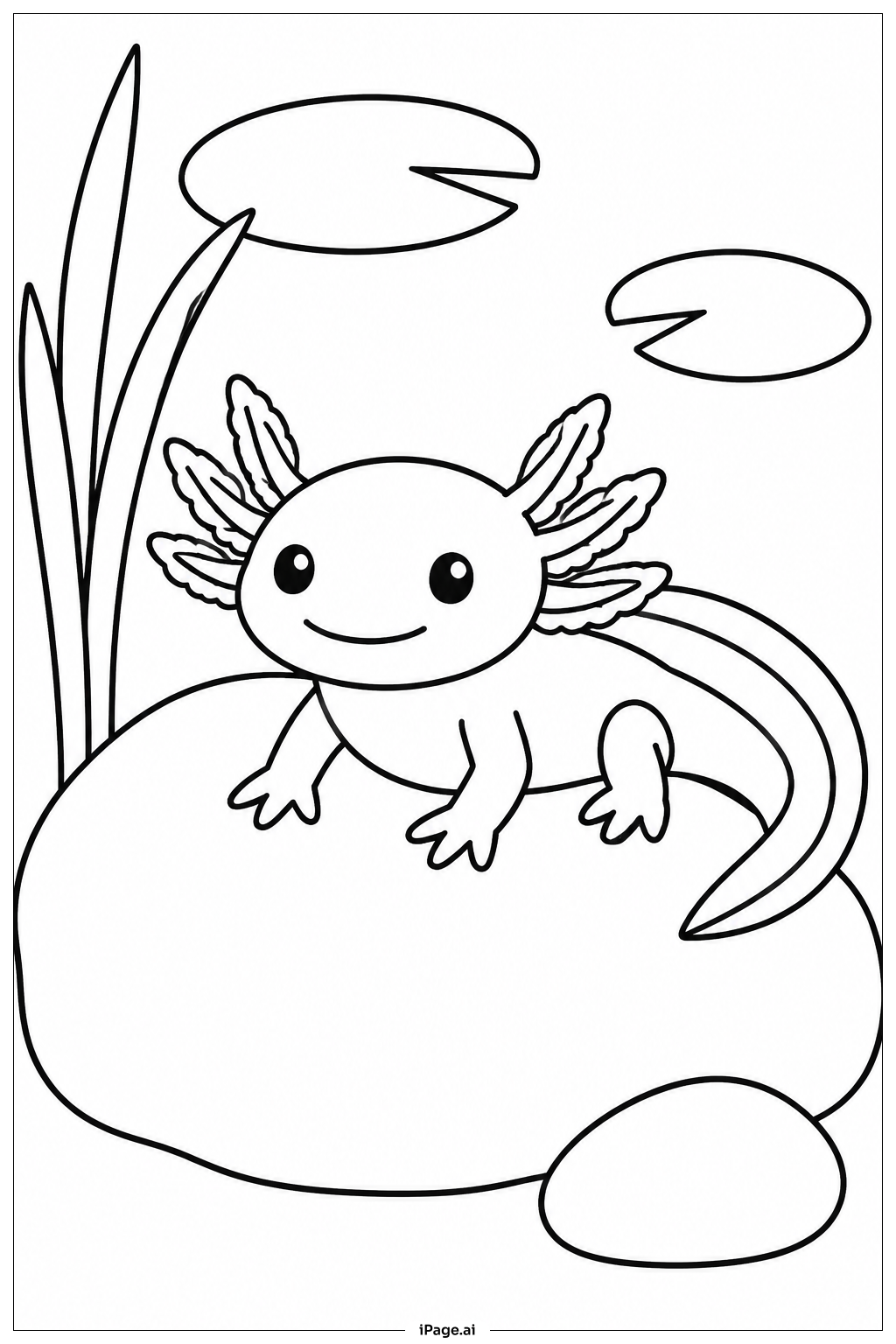
Coloring tips: How to color Axolotl On Rock coloring page well?
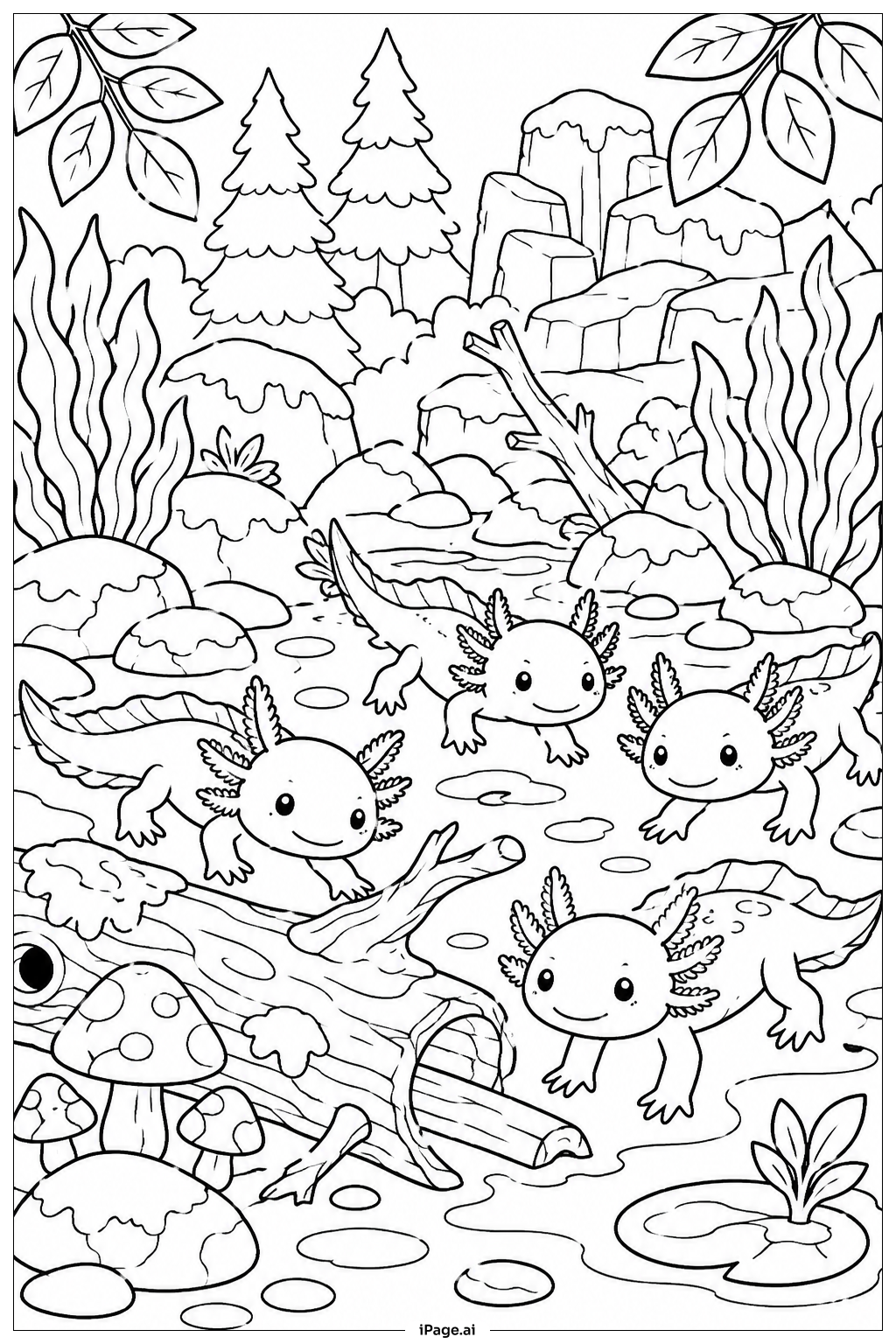
For coloring this Axolotl, start with soft shades of pink or pale peach for its body to highlight its smooth skin and delicate gills. You can add light reds or rosy colors to the gills to make them stand out. The eyes can be colored black or dark brown with small white spots to show shine. The rock can be shaded using different tones of gray or brown to give it a rough texture and natural look. Feel free to add some green or blue around the rock for water plants or water reflections. Bright or pastel colors work well for creating a friendly and inviting scene. Remember to color the small details gently to keep the softness of the Axolotl visible.
Coloring challenges: Which parts are difficult to color and need attention for Axolotl On Rock coloring page?
• Small Details: The Axolotl’s feathery gills have tiny branches that require careful coloring to avoid going outside the lines. Handling these thin shapes can be tricky, especially for younger children.
• Texture Contrast: Coloring the smooth body of the Axolotl differently from the rough texture of the rock needs attention to shading and color choice. Balancing soft skin tones with the rock’s hard surface can be challenging.
• Keeping Expression Clear: The eyes and face of the Axolotl are small but very important for showing its friendly look. Coloring them with precision is necessary to maintain its gentle expression.
• Background Elements: Subtle water ripples and plants around the rock demand light, smooth coloring to not overpower the main subject but still enrich the scene.
• Layering Colors: Achieving depth in the water and rock might require layering of colors or shading. Beginners might find blending or gradual coloring transitions more difficult.
Benefits of coloring books: Advantages of drawing Axolotl On Rock coloring page
Coloring this Axolotl On Rock image helps develop fine motor skills, especially because of the small, intricate gills and the textured rock surface. It encourages attention to detail and patience, as careful coloring is needed to make the Axolotl look soft and natural. Choosing colors for the natural environment introduces children to creative decision-making and color theory basics, like contrasting colors for water and rock. Coloring the peaceful, friendly creature also promotes relaxation and focus, making it a calming activity. Overall, it supports both artistic growth and mindfulness while engaging young colorers with a fascinating aquatic animal.