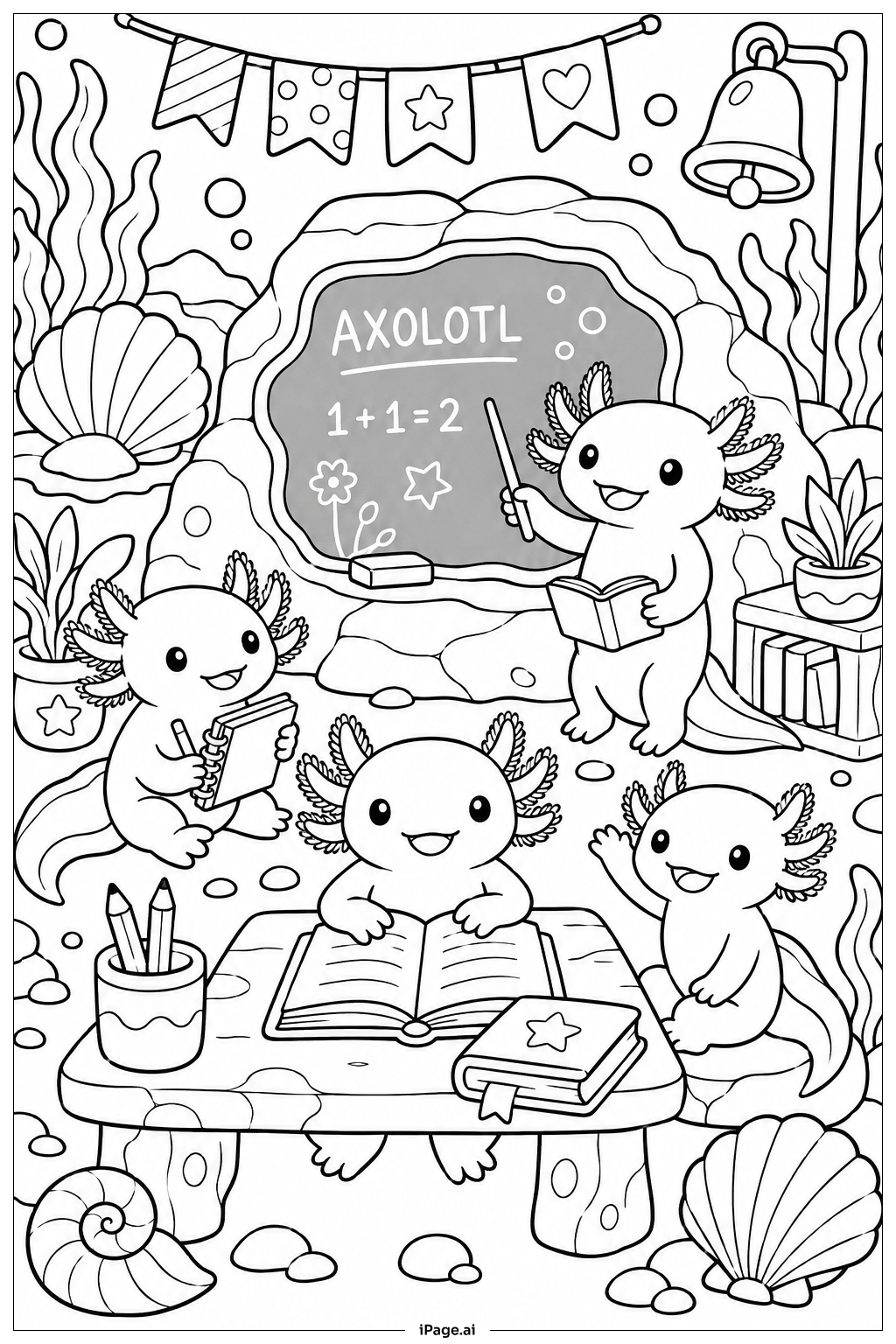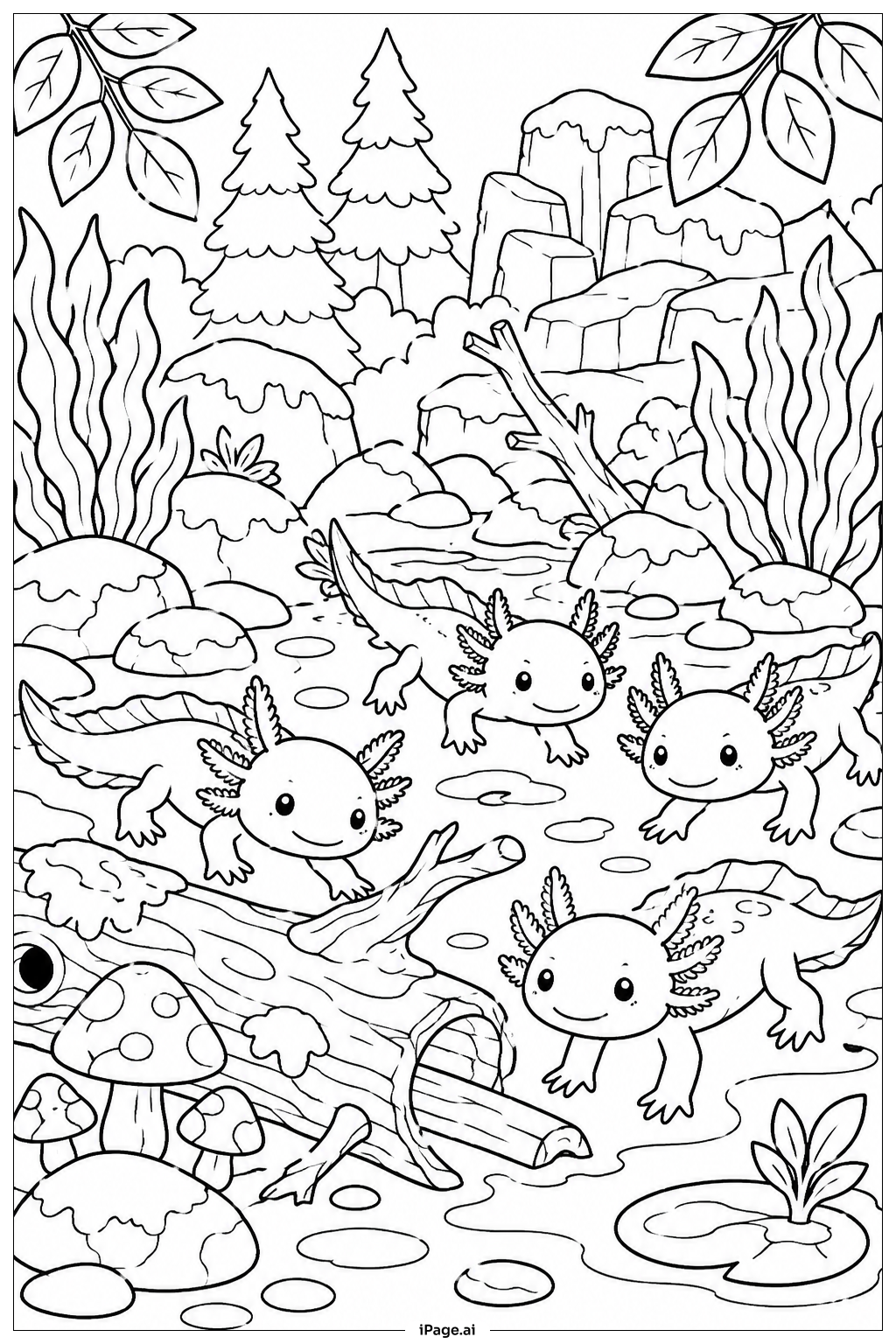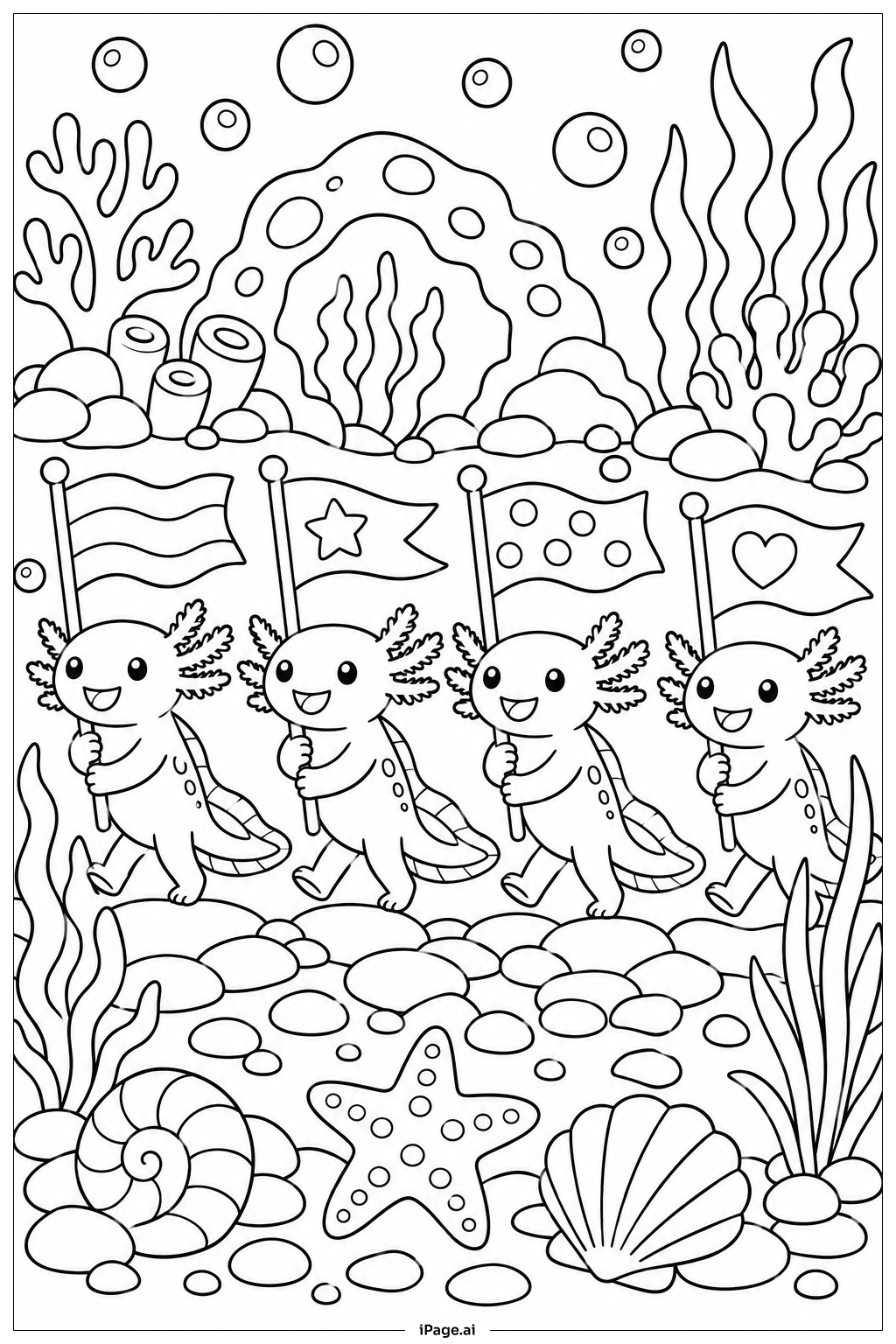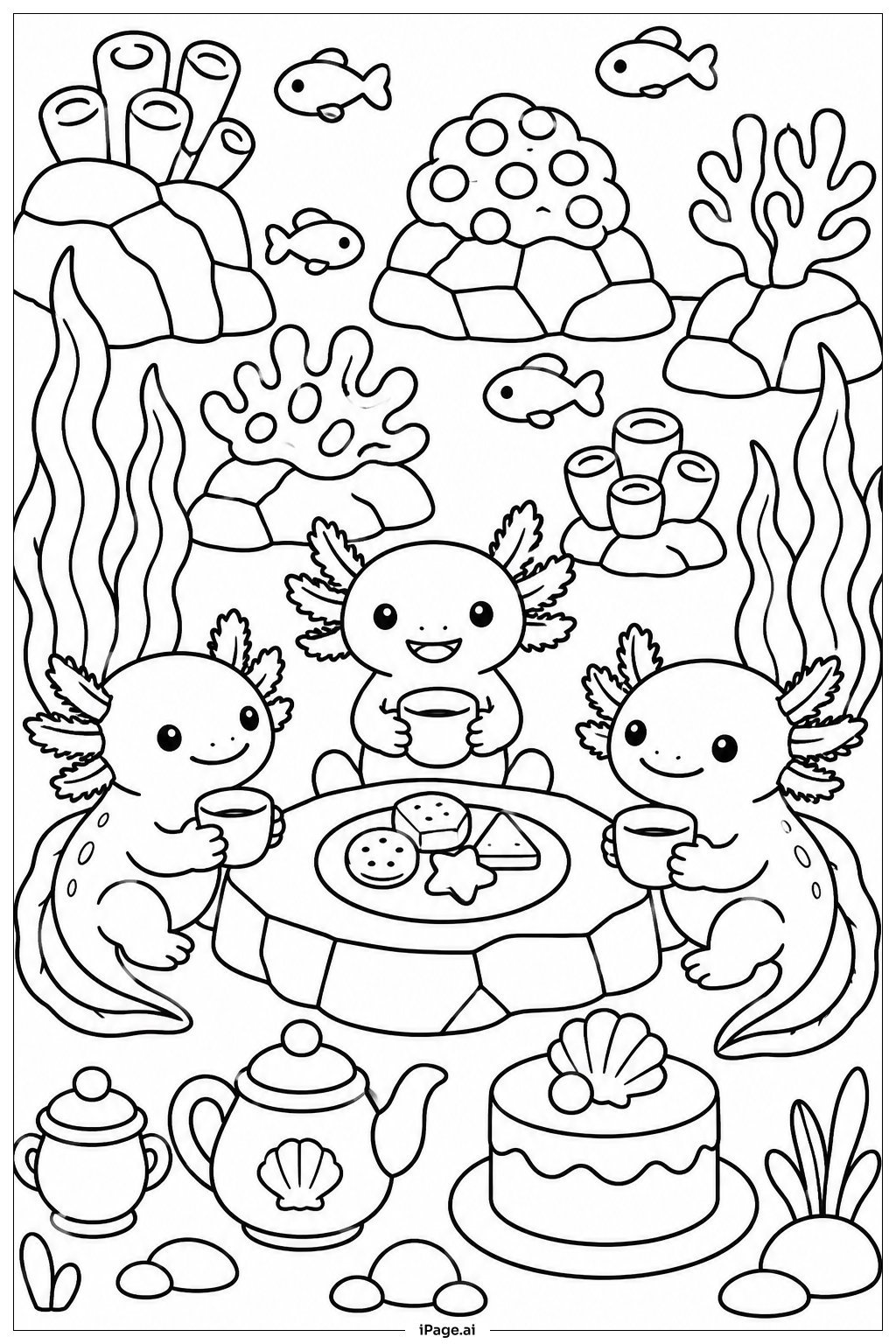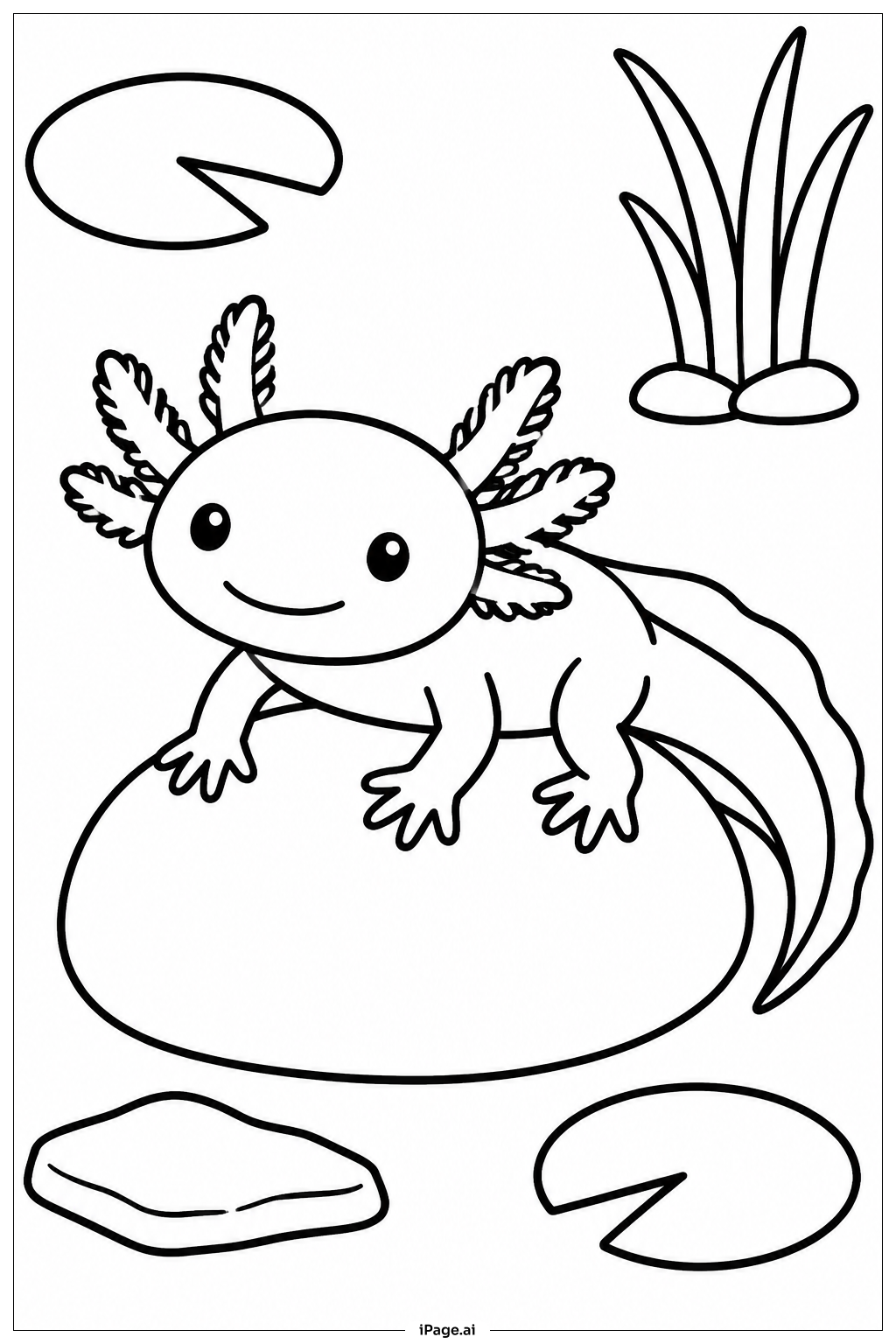
Coloring tips: How to color Axolotl On Pebble coloring page well?
For the axolotl, consider using soft pink or peachy tones for a classic leucistic look, or try golden yellow for an albino variety. Wild-type axolotls can be colored in dark browns or olive greens with speckled patterns. The feathery gills look beautiful in bright pink, red, or deep purple shades. Add lighter highlights on the body to create a glossy, wet appearance. The pebble can be colored in natural stone tones like gray, tan, or warm brown, with subtle shading to show its rounded form. Use darker colors in the crevices and lighter tones on the top surface where light would hit. The background water can be soft blues or aqua greens, kept light to make the axolotl stand out. Add tiny sparkles or highlights to bubbles for a magical underwater effect.
Coloring challenges: Which parts are difficult to color and need attention for Axolotl On Pebble coloring page?
• Gill Details: The feathery external gills are the most intricate part of this image, featuring many thin, branching filaments that extend outward. Each gill strand requires careful coloring to maintain definition without the colors bleeding together. Young colorists may find it challenging to stay within the fine lines, while older children and adults can practice precision and patience with these delicate structures.
• Smooth Gradients on Body: Creating a realistic three-dimensional appearance on the axolotl's smooth, rounded body requires gradual color transitions. Achieving subtle shading from darker tones on the underside to lighter highlights on top takes practice with blending techniques. Children may need guidance on how to layer colors lightly or use gentle strokes to avoid harsh lines.
• Pebble Texture and Dimension: While the pebble appears simple, rendering its natural stone texture with appropriate shading presents a moderate challenge. Colorists must decide where shadows fall and where highlights appear to make the pebble look solid and three-dimensional rather than flat.
• Maintaining Contrast: Balancing colors between the axolotl, pebble, and background requires thoughtful planning. If similar colors are chosen for multiple elements, the image may lose visual clarity. Young artists should be encouraged to use contrasting shades to help each component stand out clearly from the others.
Benefits of coloring books: Advantages of drawing Axolotl On Pebble coloring page
Coloring this delightful axolotl scene offers wonderful benefits for children and adults alike. The intricate gill details provide excellent practice for fine motor skill development and hand-eye coordination, especially for younger children learning pencil control. The varying levels of detail accommodate different skill levels, making it accessible yet challenging. This image introduces children to an unusual and fascinating animal, sparking curiosity about aquatic life and biodiversity. As they color, they can learn interesting facts about axolotls and their unique characteristics. The calming, underwater theme promotes relaxation and stress relief, making it perfect for mindfulness activities. The combination of organic curves and simple shapes helps develop spatial awareness and understanding of form. Choosing colors for the different elements encourages creative decision-making and color theory exploration. Completing this charming scene builds confidence and provides a sense of accomplishment, while the adorable subject matter makes the activity joyful and engaging for all ages.