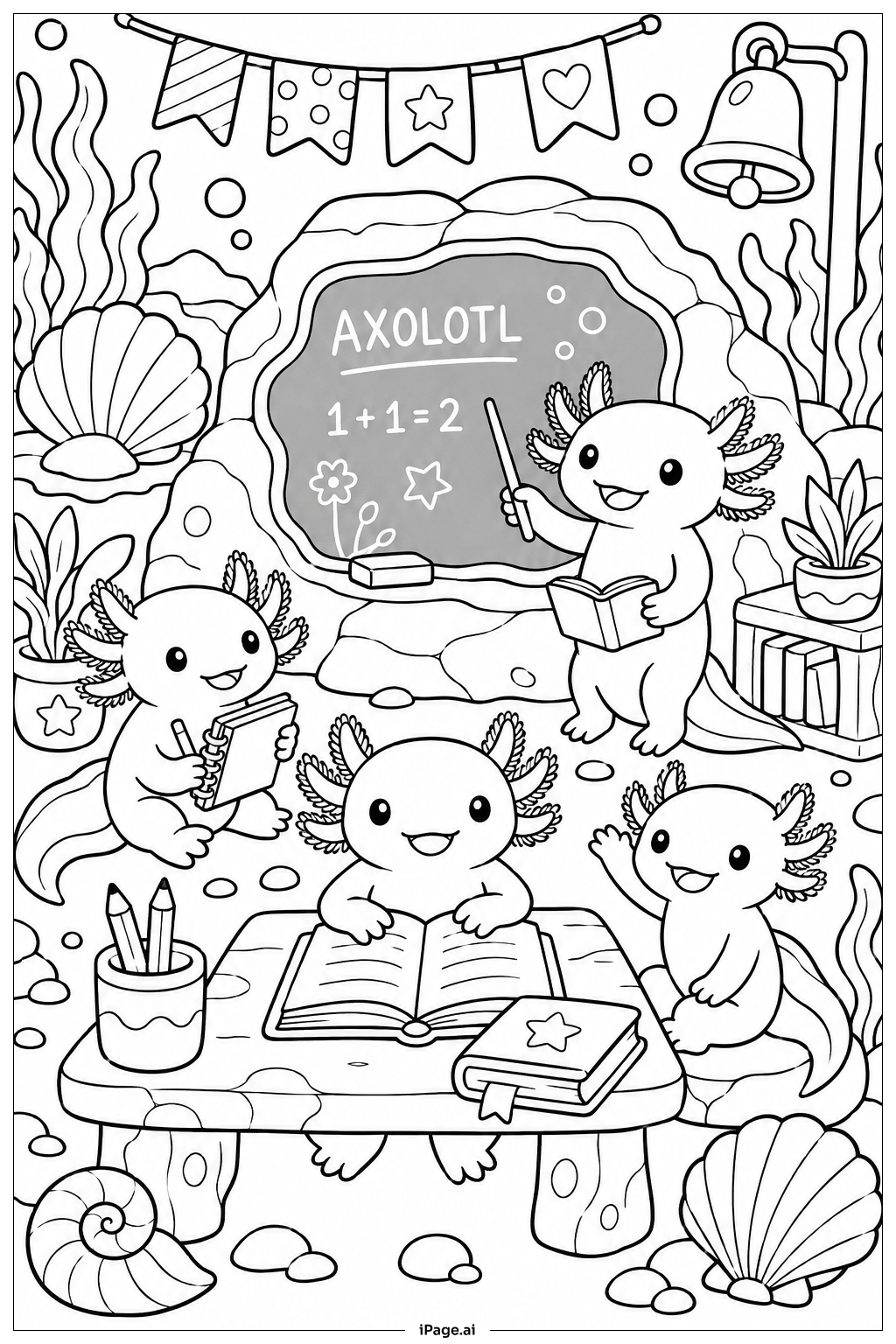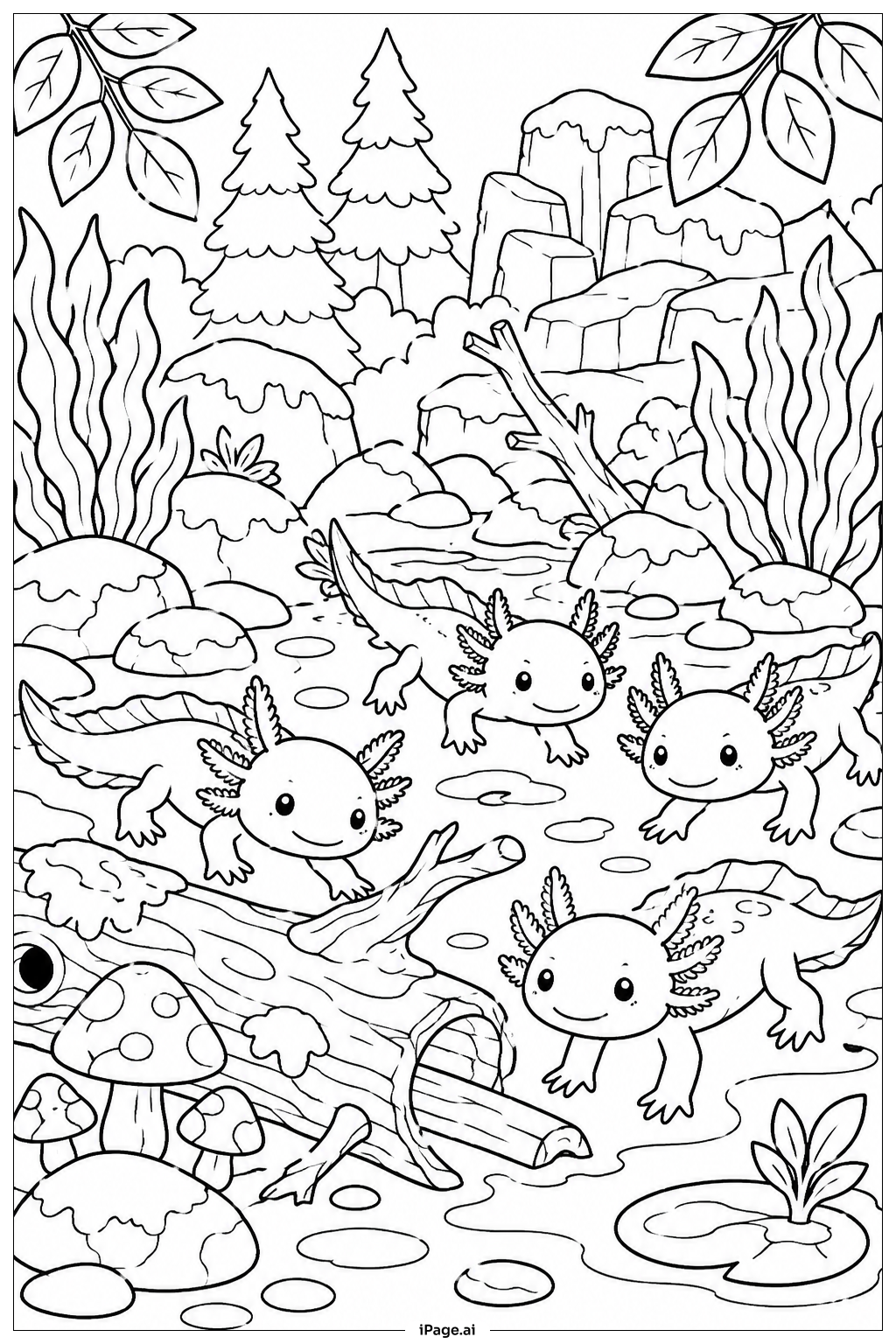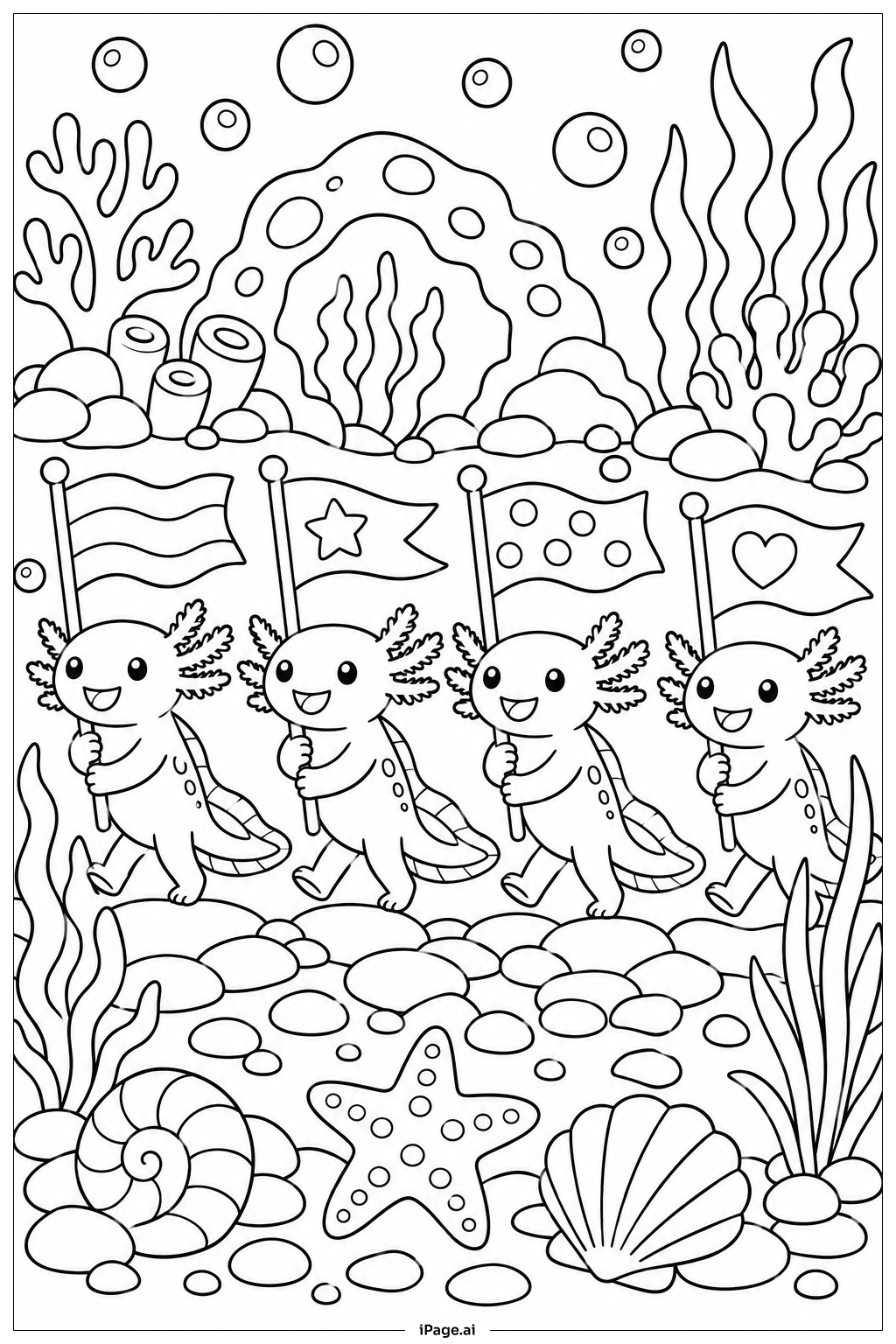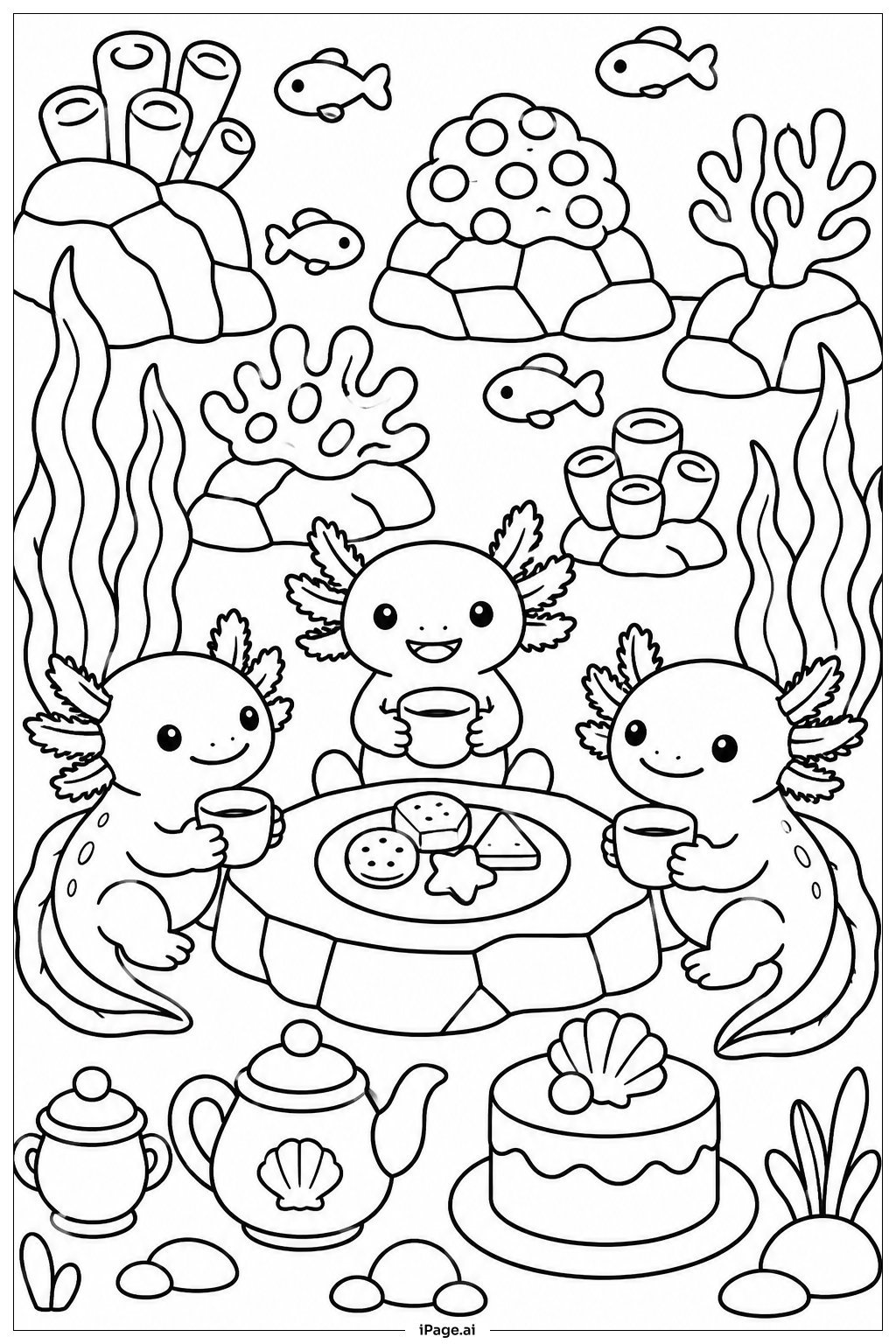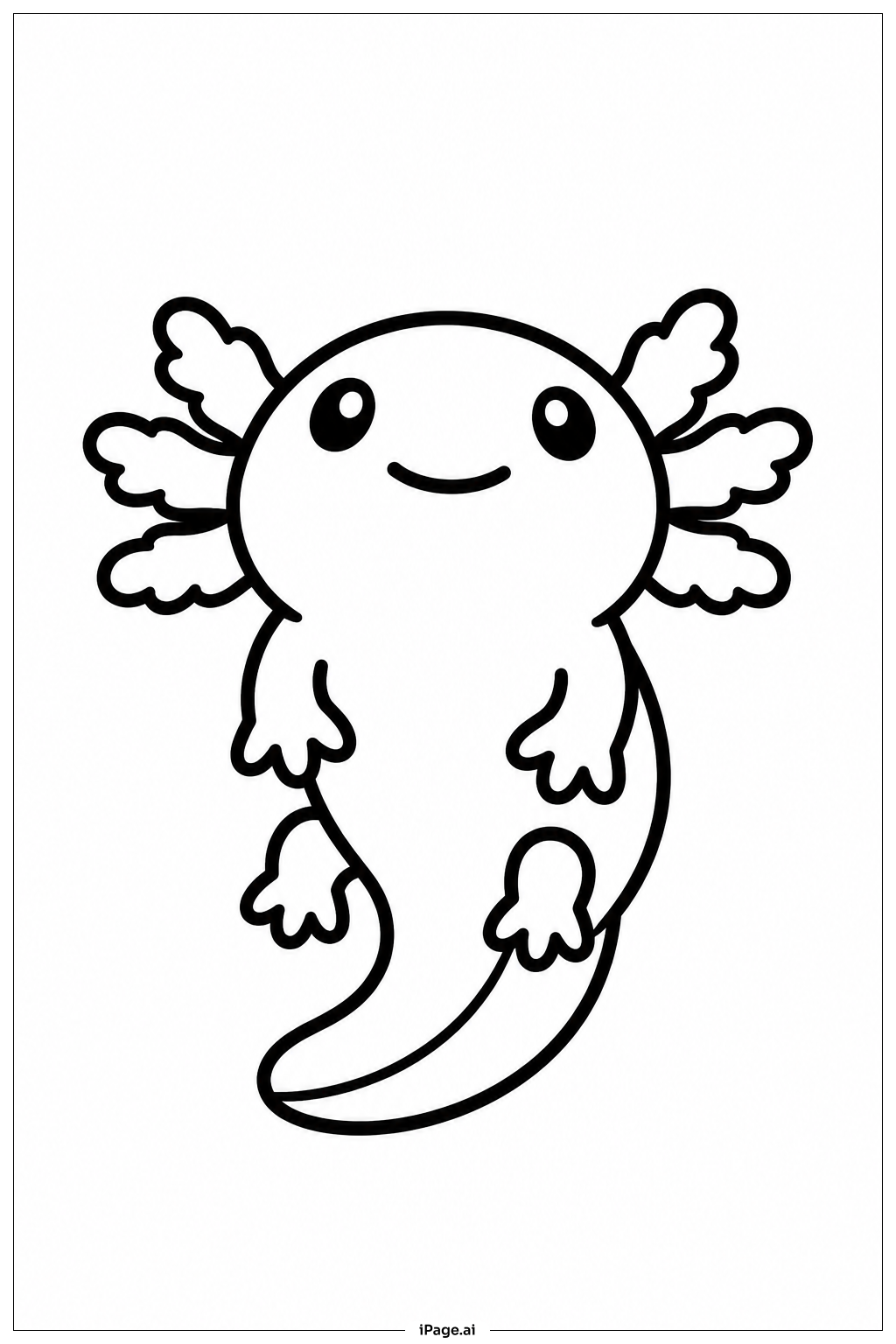
Coloring tips: How to color Axolotl Looking Up coloring page well?
For coloring this Axolotl, you can use soft and gentle colors like pale pink, light peach, or creamy white for its body to show its smooth skin. The frilly gills can be bright pink or red to create a nice contrast and bring them to life. Try using blues and greens in the background to suggest water and plants, making the Axolotl stand out more clearly. Use light shading on the eyes and body parts to give depth but keep it simple for children. Feel free to add small details like bubbles or drops of water around the Axolotl to make the scene more lively and fun. Remember, everyone can pick any colors they like to make it special!
Coloring challenges: Which parts are difficult to color and need attention for Axolotl Looking Up coloring page?
• Fine Details of Gills: The Axolotl’s external gills have thin, delicate branches that require careful and gentle coloring to stay inside the lines without making the gills look blurry or messy. Precision is needed here. • Smooth Body Texture: The smooth skin of the Axolotl can be challenging because it needs a smooth and even coloring style to avoid patchiness or uneven tones, especially when using crayons or colored pencils. • Small Legs and Toes: The tiny legs and toes require close attention to avoid coloring outside the outline, which can be tricky for younger children still developing fine motor skills. • Background Elements: The plants and leaves around the Axolotl, though simple, need different shades of green and blue to avoid a flat look, which can be challenging to blend well. • Maintaining Balance: Since the Axolotl is the main focus, it might be difficult to balance the colors so that the background does not overpower the Axolotl, keeping the main subject clear and appealing.
Benefits of coloring books: Advantages of drawing Axolotl Looking Up coloring page
Coloring this Axolotl image helps children improve fine motor skills by practicing careful coloring inside small areas like the gills and toes. It encourages creativity by allowing them to choose colors for both the Axolotl and its watery environment. The peaceful pose of the Axolotl can inspire calmness and focus while coloring. Additionally, coloring an animal like the Axolotl can spark curiosity about nature and amphibians, making it both fun and educational. This image also supports hand-eye coordination and color recognition, important skills for young learners. Overall, the project offers a relaxing and rewarding experience while helping children develop their artistic abilities.